
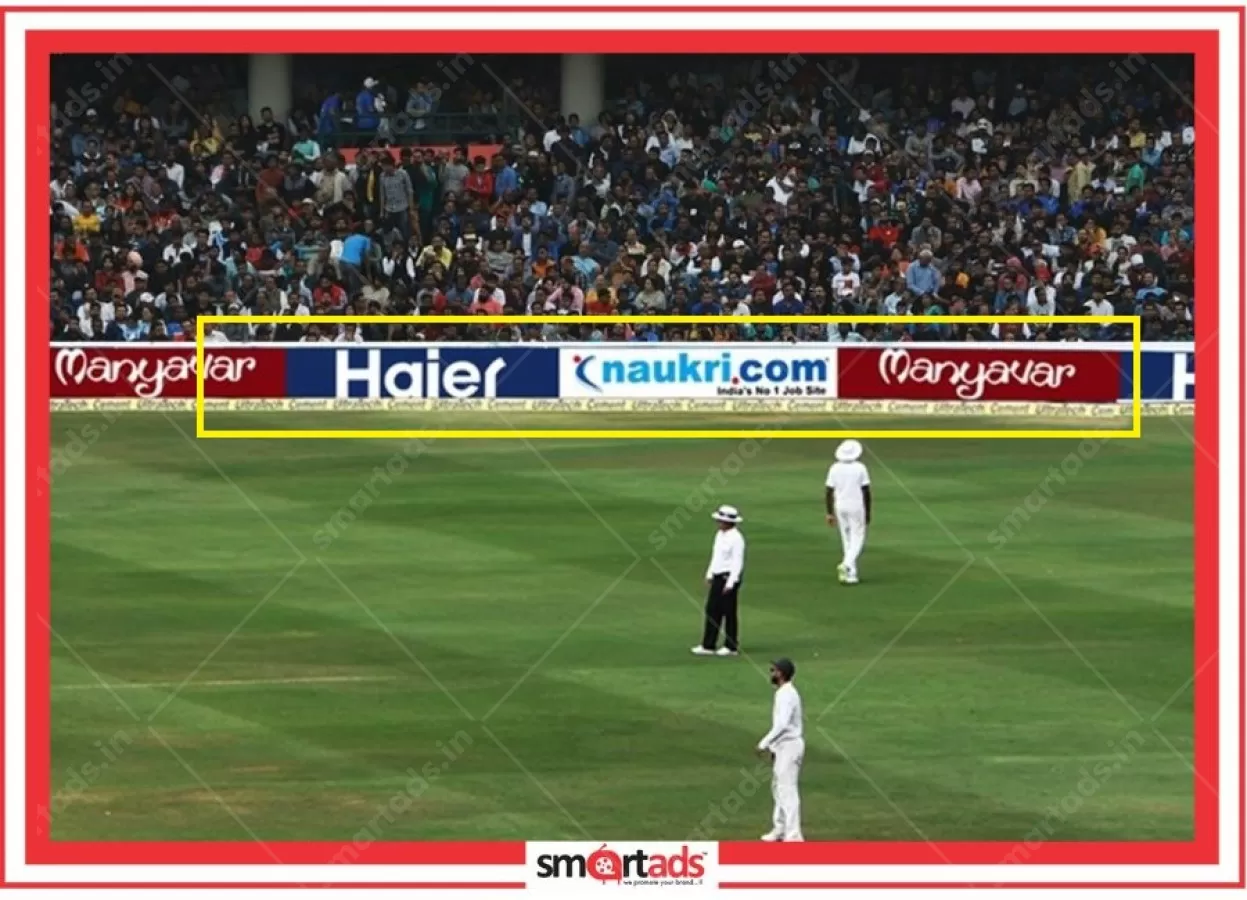
Silver HD Perimeter Signage
Various Sizes
1 ball in every 10 Balls : 50% of the Gr
Rate per Digital Screen / Per match
At Time Only 3 Display Name.
₹1100000.00
Showing 1 to 4 of 4 Results
MEDIA DETAILS
Various Sizes
1 ball in every 10 Balls : 50% of the Gr
Rate per Digital Screen / Per match
At Time Only 3 Display Name.
₹1100000.00
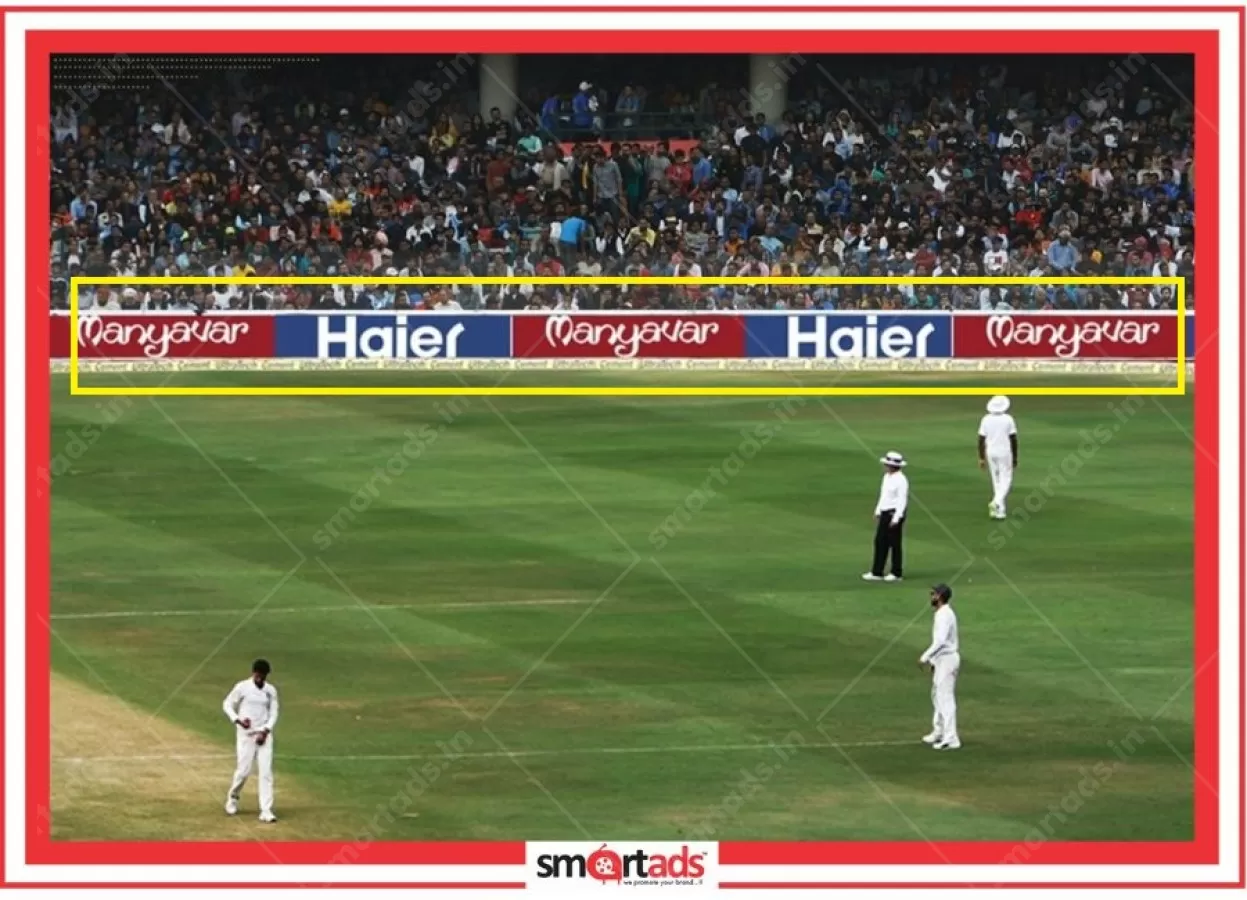
Various Sizes
1 Ball In Every 10 Balls : 50% Of The Gr
Rate per Digital Screen / Per match
At Time Only 2 Display Name.
₹1700000.00
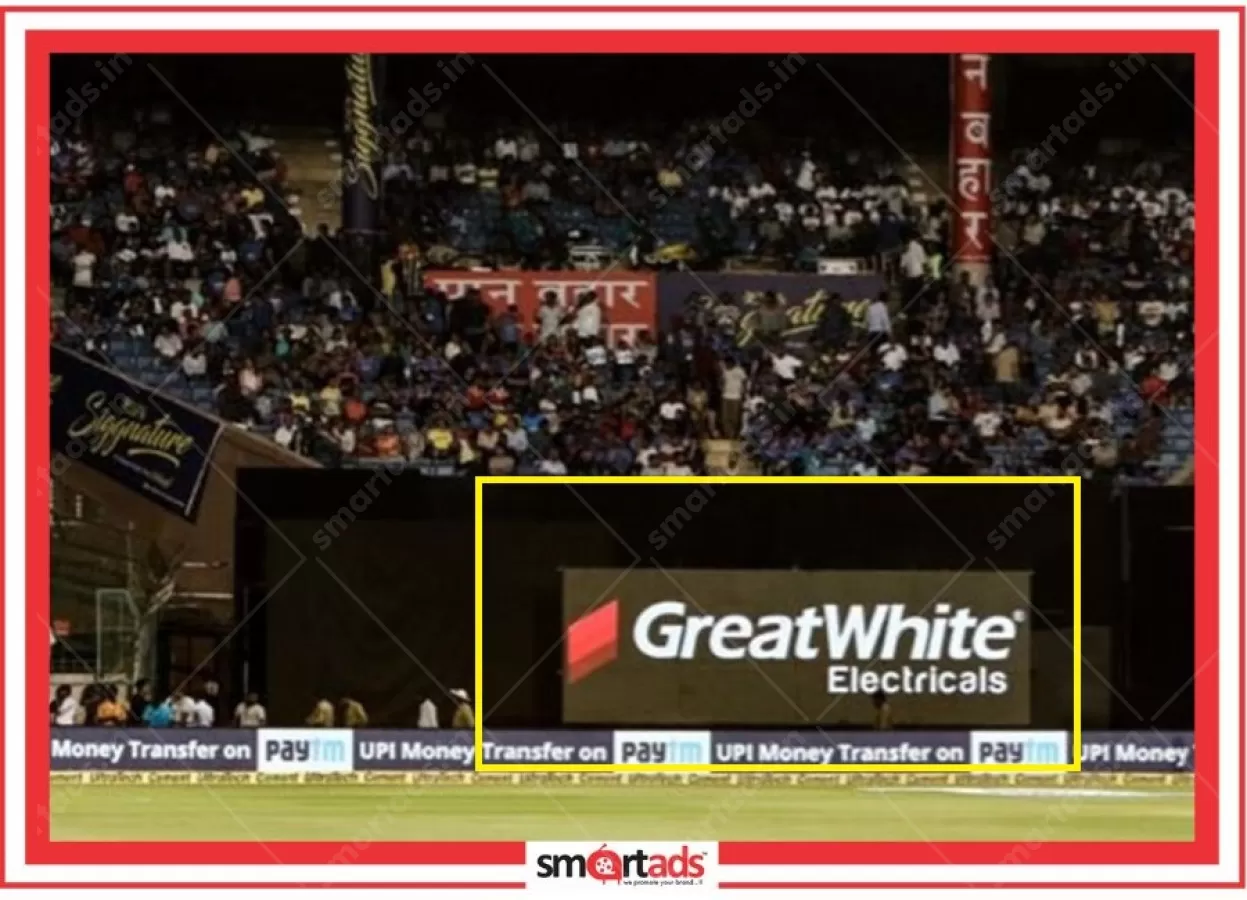
Various Sizes
5 Overs Per ODI Match , 2 Overs Per T20
Rate per Digital Screen / Per match
At Time Only 1 Display Name.
₹1150000.00
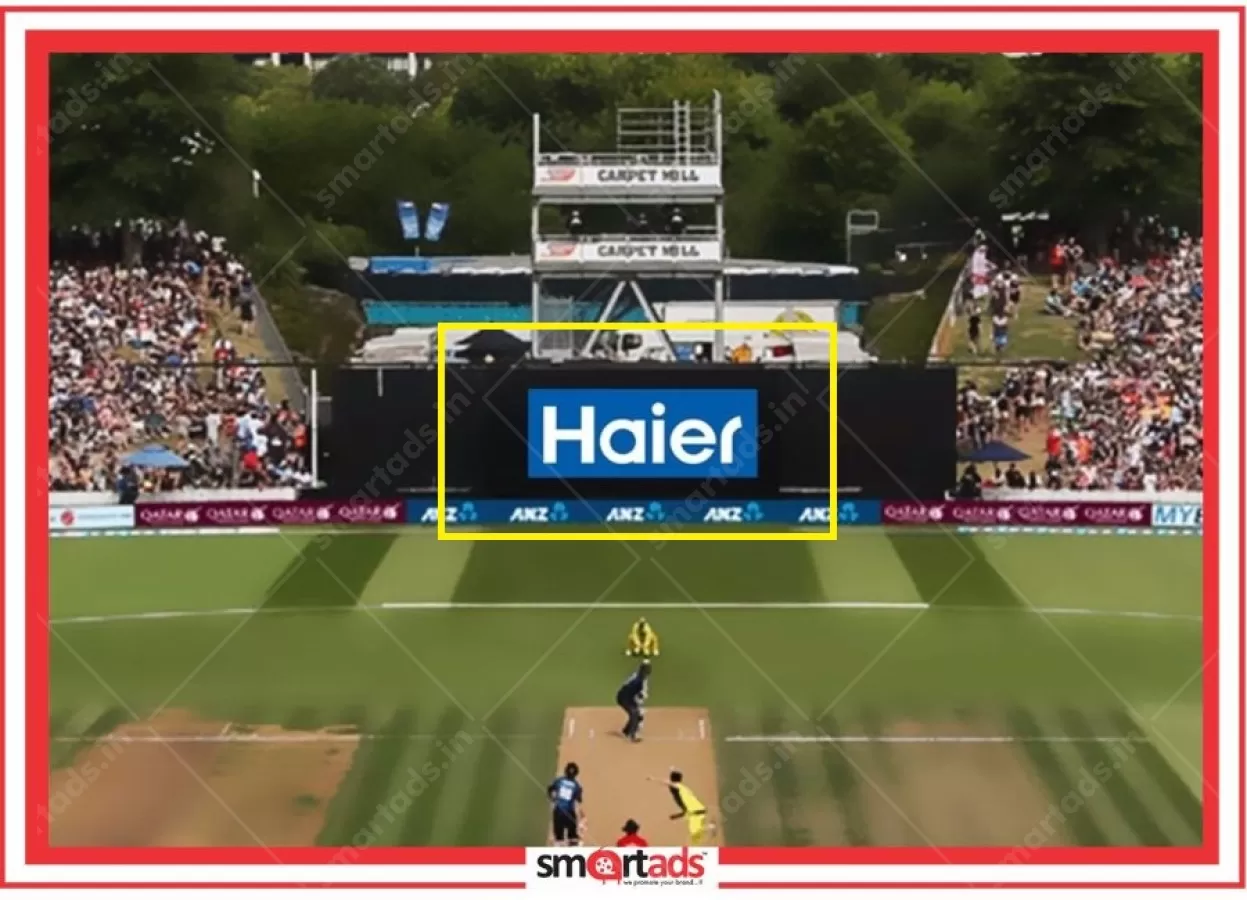
Various Sizes
5 Overs Per ODI Match , 2 Overs Per T20
Rate per Digital Screen / Per match
At Time Only 1 Display Name.
₹1150000.00
MEDIA REACH

MinimumQty :
1
EstimateReachPeople :
70000

Most brand managers we speak to are surprised to learn that a single match day at DY Patil Stadium draws somewhere between 55,000 and 60,000 spectators — a captive audience that no billboard on the Eastern Express Highway can replicate in terms of attention quality. The stadium, which sits in Nerul and has earned a reputation as one of the most visually striking cricket venues in Maharashtra, offers advertising formats that combine the emotional intensity of live sport with the physical presence of outdoor media. What we find consistently, across campaigns we have planned for clients ranging from fintech startups to automobile majors, is that brands which invest in cricket stadium advertising in Navi Mumbai tend to underestimate how much work the environment itself does for them.
Cricket stadium advertising, at its core, is a form of non-traditional advertising that places brand messaging inside or immediately around a sporting venue — but that description undersells what actually happens when a campaign is executed well. At DY Patil Stadium in Navi Mumbai, the mechanism is straightforward: brands secure rights to specific physical or digital inventory within the stadium campus, which then gets exposed to live spectators during the event and, critically, to television audiences watching the broadcast. The broadcast visibility angle is one that a lot of advertisers miss entirely when they are evaluating the cost-benefit of in-stadium branding; a perimeter board placed at the boundary edge does not just speak to 55,000 people in the stands — it gets picked up by cameras dozens of times per session, which effectively turns a BTL placement into a broadcast media asset.
What makes Navi Mumbai's DY Patil Stadium particularly interesting from a media planning perspective is the sheer variety of events it hosts. Originally built for the 2010 Commonwealth Games and designed by architect Hafeez Contractor, the venue has evolved into one of Maharashtra's most versatile sports properties; it has hosted IPL matches, international cricket fixtures, Women's Premier League games, and ISL football matches featuring Mumbai City FC, which means a brand that secures a season-long presence here is not buying into a single event but into a rolling calendar of high-footfall occasions. The Mumbai Cricket Association and BCCI have both used this venue for marquee fixtures, and its proximity to the Mumbai metropolitan area — without the congestion and logistical complexity of reaching Wankhede Stadium — makes it increasingly preferred for large-format events.
At SmartAds, we always tell our clients that the fundamental difference between cricket stadium advertising and most other forms of BTL advertising is the quality of the audience's mental state. A commuter passing a static hoarding on the highway is distracted, in transit, and likely thinking about something else entirely; a spectator at DY Patil Stadium is emotionally engaged, physically present, and spending anywhere between four and eight hours within the brand environment. That difference in attention quality is not easy to put a number on, but the brand recall data we have seen from post-campaign studies consistently shows recall rates for in-stadium formats running significantly higher than equivalent outdoor advertising placements.
The range of advertising formats at DY Patil Stadium is considerably wider than most brands initially expect, and choosing the wrong format for a campaign objective is one of the most common mistakes we see. The most prominent and widely booked format is perimeter board advertising — the boundary LED boards and static hoardings that ring the playing field and appear in virtually every camera frame during a match broadcast. Perimeter boards at DY Patil come in both static and digital variants; the static hoardings offer longer dwell time and a fixed brand presence throughout the event, while boundary LED boards allow for rotating creatives, which means multiple brands can share the same physical space across different time slots during the match.
LED screen advertising inside the stadium operates on a different logic altogether. The large digital screens — positioned at the ends of the ground and in the concourse areas — carry advertising content during breaks in play, between overs, at the fall of wickets, and during drinks breaks, which are precisely the moments when spectator attention shifts from the field to the surrounding environment. Scoreboard advertising is a related but distinct format; the scoreboard carries the brand name or logo alongside match data, which means it is referenced repeatedly by spectators throughout the game and picked up frequently by broadcast cameras. On top of that, concourse signage, standee advertising, and pitch mat branding offer touchpoints at different stages of the spectator journey — from the moment they enter the stadium to the time they take their seats.
Fan zone activation and experiential marketing formats represent the most underutilised category of in-stadium branding at Navi Mumbai's cricket ground, and frankly speaking, this is where the real value lies for brands that want engagement rather than just impressions. The DY Patil Sports Academy campus has designated spaces where brands can set up interactive installations, product sampling stations, or branded experiences that spectators interact with before and after the match. Ground painting — which involves branded artwork or messaging painted directly on the ground surface in non-playing areas — is another format that generates strong visual impact and social media amplification, particularly when the painted design is creative enough to attract spectator photographs. Stadium naming rights, while typically reserved for larger brand sponsorship deals negotiated at the BCCI or MCA level, represent the apex of stadium in-branding and carry multi-year broadcast visibility that no other format can match.
Advertising rates at DY Patil Stadium are not as opaque as many brands assume, though they do vary considerably depending on the event type, format, and duration of the booking. For a standard perimeter board placement during a domestic T20 fixture, the cricket stadium advertising cost works out to roughly ₹3 lakh to ₹8 lakh per match, which is a number that tends to surprise clients when they realise it includes broadcast exposure that would cost multiples of that figure if purchased as airtime on a sports channel. LED screen advertising during the same domestic fixture is typically priced somewhere between ₹1.5 lakh and ₹4 lakh for a package of spots across the match duration, depending on the number of rotations and the specific screens booked.
IPL advertising at DY Patil Stadium operates in an entirely different pricing bracket, as would be expected given the viewership and brand equity associated with the tournament. Perimeter board rates during IPL matches are in the ballpark of ₹15 lakh to ₹40 lakh per match for premium boundary-facing positions, while scoreboard advertising packages for the full IPL season at this venue can run into several crores for a title-level association. Women's Premier League advertising, which is a significantly newer and currently undersaturated opportunity, offers rates that are considerably more accessible — WPL advertising packages at DY Patil have been available at roughly 30 to 40 percent of the equivalent IPL rate, which makes it an exceptionally attractive entry point for brands that want cricket association without the IPL price tag. International cricket match advertising sits between these two extremes, with rates varying based on the bilateral series and the broadcasters involved.
What a lot of people miss is that the most cost-efficient way to buy cricket stadium advertising in Navi Mumbai is through season-long or multi-match packages rather than single-event bookings. A brand that commits to, say, all home matches of a particular franchise or all fixtures in a tournament gets a per-match rate that can be anywhere from 25 to 40 percent lower than the spot rate for a single match; the stadium authorities and rights holders strongly prefer committed partners, which gives the advertiser meaningful negotiating leverage. At SmartAds, our experience shows that clients who approach us with a three-to-six month view of their stadium advertising calendar consistently achieve better value than those who come in looking for a single-match placement. Standee advertising and concourse signage, being lower-profile formats, are considerably more accessible — these formats can be secured for as little as ₹50,000 to ₹2 lakh per event, which puts them within reach of mid-sized brands and even well-funded SMEs.
The case for DY Patil Stadium as a BTL advertising venue rests on a combination of factors that are difficult to replicate elsewhere in Maharashtra, and we say this having planned campaigns across virtually every major outdoor and non-traditional format in the state. The stadium's seating capacity of approximately 55,000 makes it one of the largest cricket venues in India — larger than the Wankhede Stadium in Mumbai, which has a capacity closer to 33,000 — and that raw footfall number is the foundation on which every advertising rate and every reach calculation is built. Spectator footfall of this scale, concentrated in a single location over four to eight hours, represents a density of brand exposure that no outdoor advertising format in Navi Mumbai or greater Mumbai can match on a per-event basis.
The demographic profile of the audience is the second major argument for DY Patil Stadium as a premium BTL venue. Cricket in India — and particularly IPL cricket and international cricket — skews heavily toward the SEC A and SEC B audience segments, with a strong concentration of male viewers between 18 and 45 years of age, though the Women's Premier League has meaningfully expanded the female audience demographic at this venue. The Navi Mumbai catchment area itself is relevant here: the city has a high concentration of IT professionals, financial services employees, and business owners, which means the stadium audience on any given match day is not a generic mass audience but a relatively affluent, brand-responsive demographic that is actively sought by categories like automobiles, consumer electronics, financial products, real estate, and lifestyle brands.
The broadcast multiplier is the third factor, and to be honest, it is the one that makes the economics of cricket stadium advertising in Navi Mumbai genuinely compelling rather than merely interesting. A match at DY Patil Stadium that is broadcast on a major sports network reaches a television audience that can run into tens of millions of viewers, all of whom are exposed to perimeter board and boundary LED board placements as part of the natural broadcast feed. The BARC viewership data for IPL matches consistently shows that cricket remains the single most-watched content category in Indian television, and the GroupM TYNY Report has for several consecutive years identified sports sponsorship India as one of the fastest-growing segments within the broader advertising market. A brand that secures perimeter board placement at DY Patil Stadium during an IPL match is, in effect, buying a hybrid product — part BTL, part broadcast — at a price point that reflects only the BTL component.
The advertising booking process for DY Patil Stadium is more structured than most brands expect, and getting it wrong at the outset can mean losing access to the formats you want for a particular event. The first thing to understand is the rights structure: advertising inventory at DY Patil Stadium is controlled through a combination of the DY Patil Sports Academy administration, the BCCI (for international matches and IPL), and the Mumbai Cricket Association for domestic fixtures. This means that the entity you need to approach — and the permissions you need to secure — depend entirely on the type of event you are targeting, which is why working with an experienced advertising agency that already has established relationships with these bodies is not a convenience but a practical necessity.
For IPL advertising, the rights to in-stadium inventory are typically held by the franchise (in this case, Mumbai Indians, when DY Patil serves as a home or neutral venue) and by the BCCI's commercial arm; brands need to approach through official channels, and the booking window for IPL season inventory typically opens three to four months before the tournament begins. For international cricket matches, the MCA and BCCI jointly control the rights, and the permissions process involves submitting creative artwork for approval, signing a rights agreement that specifies the exact format and placement, and in some cases obtaining a no-objection certificate from the stadium administration. Domestic T20 and one-day fixtures have a somewhat more accessible booking process, with the DY Patil Sports Academy administration handling inventory directly for many format categories.
At SmartAds, we manage the entire advertising booking process on behalf of our clients — from identifying the right event and format combination for the campaign objective, to liaising with the relevant rights holders, to getting creative artwork approved and produced to the technical specifications required for each format. One automotive brand we worked with came to us wanting to advertise at DY Patil Stadium for the first time; they had already lost a booking window by approaching the wrong entity directly, and by the time they came to us, the premium boundary-facing perimeter board positions for their target match were gone. We were able to secure them scoreboard advertising and fan zone activation space instead, which turned out to be a better fit for their campaign objective anyway — but the lesson about lead time and process knowledge was an expensive one for them to learn independently. The practical advice we give every client is to start the booking process at least eight to twelve weeks before the target event, and ideally earlier for IPL and international fixtures.
The honest answer to this question is that the brand categories which benefit most from cricket stadium advertising in Navi Mumbai are those whose target audience overlaps most significantly with the stadium's demographic profile — which, as we described earlier, skews toward affluent, urban, professionally employed adults between 18 and 45. Automobile brands have historically been among the heaviest investors in in-stadium branding at venues like DY Patil, and with good reason: the purchase decision for a car or two-wheeler is heavily influenced by brand association and aspiration, and the emotional environment of a live cricket match is one of the most powerful brand association contexts available in Indian media. One automobile brand we worked with ran a perimeter board and scoreboard advertising campaign across six matches at DY Patil Stadium and reported a measurable uplift in showroom walk-ins in the Navi Mumbai and Thane catchment areas in the weeks following the campaign.
Financial services, real estate, and consumer electronics brands represent the next tier of natural fit, and we have planned campaigns across all three categories at this venue. A real estate developer client in Navi Mumbai used in-stadium branding — specifically concourse signage and standee advertising positioned at the entry and exit points — to reach exactly the kind of high-income, locally based audience that their project was targeting; the campaign generated qualified leads at a cost per lead that was roughly 40 percent lower than what they were achieving through digital advertising at the time. The key insight there was that the audience was not just demographically right but geographically right — people attending a match at DY Patil Stadium are, by definition, people who are comfortable travelling to and spending time in Navi Mumbai, which is exactly the audience a Navi Mumbai real estate project needs to reach.
To be fair, cricket stadium advertising in Navi Mumbai is not automatically the right choice for every brand, and we would rather say that clearly than oversell the medium. FMCG brands with very broad target audiences and tight CPM requirements may find that the absolute reach numbers, while impressive in absolute terms, do not justify the investment when compared to television or digital at scale. Similarly, brands targeting very specific niche demographics — say, B2B software or industrial equipment — are unlikely to find the stadium audience a particularly efficient vehicle. The medium works best when the brand has something to gain from the emotional context of cricket, from the specific demographic profile of the stadium audience, or from the broadcast visibility that comes with on-field placements; brands that tick all three of those boxes will find cricket stadium advertising in Navi Mumbai to be one of the highest-return items in their media plan.
The comparison between in-stadium branding and traditional OOH advertising in Navi Mumbai is one that comes up in almost every client conversation we have about this medium, and the answer is more nuanced than a simple cost-per-impression calculation would suggest. A large-format hoarding on the Palm Beach Road or the Sion-Panvel Highway in Navi Mumbai reaches a daily traffic count of somewhere between 80,000 and 1.5 lakh vehicles, depending on the specific location; at a standard outdoor advertising rate for a premium Navi Mumbai location, that works out to a monthly cost in the ballpark of ₹2 lakh to ₹6 lakh, which on a pure CPM basis looks very competitive against stadium advertising rates. But the comparison breaks down the moment you account for attention quality, which is the variable that CPM calculations systematically ignore.
A driver passing a hoarding on the Sion-Panvel Highway is exposed to the creative for roughly two to three seconds, in a distracted state, while managing traffic; a spectator at DY Patil Stadium is exposed to a perimeter board or scoreboard advertisement repeatedly over four to eight hours, in a state of high emotional engagement, in a physical environment where the brand is one of a limited number of messages competing for attention. The brand recall implications of this difference are substantial — post-campaign brand recall studies in the Indian context, which have been referenced in both the FICCI-EY Media Report and various TAM AdEx analyses, consistently show that sports venue advertising generates recall rates that are two to three times higher than equivalent outdoor advertising exposures. The OOH format also lacks the broadcast visibility component entirely; a hoarding on Palm Beach Road is seen only by people who physically pass it, while a perimeter board at DY Patil Stadium during a televised match is seen by a national audience.
That said, traditional OOH advertising in Navi Mumbai has genuine advantages that stadium advertising cannot match — primarily continuity and geography. A hoarding runs 24 hours a day, seven days a week, building frequency over weeks and months; stadium advertising is event-dependent, which means there are gaps in the campaign calendar between matches. The smartest media plans we have built for clients in this market combine both formats: a static hoarding or digital screen on a key Navi Mumbai arterial road provides the continuous frequency foundation, while in-stadium branding at DY Patil provides the high-intensity, high-recall peaks that drive brand association and top-of-mind awareness. Below the line advertising and traditional OOH are, in our experience, more complementary than competitive — and the brands that treat them as either-or choices are usually leaving value on the table.
Return on investment from cricket stadium advertising in Navi Mumbai is a question that deserves a more honest answer than most agencies give, because the ROI calculation depends heavily on what the brand is trying to achieve and how it is measuring outcomes. For brand awareness and brand association objectives — which are the most common goals for in-stadium branding campaigns — the relevant metrics are brand recall, brand consideration, and brand association scores, which need to be measured through pre-and-post campaign research rather than through direct sales attribution. Our experience shows that brands which run well-executed in-stadium branding campaigns at DY Patil Stadium over a full tournament season typically see measurable improvements in unaided brand recall within their target demographic in the Navi Mumbai and greater Mumbai market.
For brands with more direct-response objectives — lead generation, footfall to a physical location, or product trial — the ROI calculation is more tractable, and the results we have seen are encouraging. A retail client in Pune who ran a fan zone activation campaign at DY Patil Stadium during a domestic T20 series generated over 4,000 direct consumer interactions across three match days, with a cost per interaction that worked out to roughly ₹180 — a figure that compared favourably to what the same client was paying for digital lead generation in the same period. The experiential marketing element was key: the brand had set up an interactive product demonstration station in the fan zone, which meant that the interactions were not passive impressions but active engagements with the product, which drove significantly higher conversion rates downstream.
The broadcast visibility component of ROI is the hardest to quantify but potentially the most valuable for brands that secure on-field placements. A perimeter board that appears in broadcast footage across a match that reaches, say, 15 to 20 million television viewers represents an advertising exposure that, if purchased as airtime on the same broadcast, would cost many times the stadium advertising rate. The FICCI-EY Media Report has consistently valued sports broadcast advertising at a premium over general entertainment advertising, reflecting the higher attention levels and demographic quality of sports audiences; brands that understand this implicit media value in their stadium advertising investment tend to have a more accurate picture of their true return on investment. At SmartAds, we build this broadcast equivalency calculation into our post-campaign reporting for clients who have on-field placements, because without it, the ROI picture is systematically understated.
DY Patil Stadium's event calendar has expanded considerably over the past several years, and the range of advertising opportunities it now offers is broader than most brands realise. The IPL remains the flagship event from an advertising perspective — Mumbai Indians have used DY Patil as a home venue, and the combination of the franchise's brand equity, the tournament's viewership, and the stadium's capacity makes IPL advertising at this venue among the most sought-after sports marketing inventory in Maharashtra. IPL advertising opportunities at DY Patil include the full range of formats, from perimeter boards and boundary LED boards to scoreboard advertising, fan zone activation, and concourse signage, with the premium positions typically sold out well in advance of the season.
The Women's Premier League represents what we genuinely believe is the most undervalued advertising opportunity in Indian cricket stadium advertising right now. WPL advertising at DY Patil Stadium offers brands a chance to associate with a fast-growing cricket property — the 2025 ICC Women's Cricket World Cup Final, which was held in India, significantly elevated the profile of women's cricket and drove meaningful growth in viewership and stadium attendance — at rates that are a fraction of the equivalent IPL inventory. Brands in categories like women's apparel, personal care, financial services, and education have a particularly strong strategic argument for WPL advertising, both because of the audience demographic and because the competitive clutter in this space is far lower than in IPL advertising. This is a window that will not stay open indefinitely; as WPL viewership and attendance continue to grow, the rates will follow.
International cricket matches at DY Patil — bilateral series, ICC tournament fixtures, and other BCCI-organised events — offer a third category of advertising opportunity that sits between IPL and WPL in terms of both reach and cost. The stadium also hosts ISL football matches for Mumbai City FC, which creates an interesting crossover opportunity for brands that want sports marketing association without the cricket-specific premium; the football audience at DY Patil has a somewhat different demographic profile from the cricket audience, skewing slightly younger and with a stronger urban millennial concentration, which may be a better fit for certain brand categories. A media plan that combines cricket and football advertising at the same venue can sometimes be negotiated as a bundled package, which improves the economics for both formats.
The value that a specialist BTL advertising agency brings to cricket stadium advertising in Navi Mumbai is not primarily about access — though access to rights holders and established relationships with stadium authorities does matter — but about campaign architecture. Most brands that approach stadium advertising for the first time focus almost entirely on the format selection question: should we do perimeter boards or LED screens? What they tend to underweight is the strategic question of how stadium advertising fits into the broader media plan, which events and matches offer the best audience-to-cost ratio for their specific target demographic, and how the creative needs to be adapted for an environment where it will be seen from 50 metres away, in a noisy and visually competitive setting, for a dwell time that varies from two seconds to several minutes depending on the format.
At SmartAds, our campaign planning process for cricket stadium advertising in Navi Mumbai starts with a detailed audience brief — not just the demographic profile the brand wants to reach, but the specific behaviour and mindset it wants to influence. From there, we map the DY Patil Stadium event calendar against the brand's campaign timing requirements, identify the format combinations that best serve the campaign objective, and build a media plan that integrates the stadium advertising with complementary formats — typically outdoor advertising in the Navi Mumbai catchment area and digital advertising targeted to the same geographic and demographic segment. The integration piece is where a lot of value gets created; a brand that runs perimeter board advertising at DY Patil Stadium while simultaneously running geo-targeted digital advertising to people within a 10-kilometre radius of the stadium creates a frequency and reinforcement effect that neither medium achieves independently.
The permissions and logistics management piece is also genuinely complex, and it is an area where inexperienced advertisers consistently run into problems. Creative artwork for in-stadium formats needs to meet specific technical specifications — resolution, format, aspect ratio, and content guidelines set by the BCCI or the stadium authority — and non-compliant artwork gets rejected, sometimes with very little lead time before the event. The rights agreements for IPL advertising in particular involve detailed contractual obligations around category exclusivity, competitive advertising restrictions, and brand visibility guidelines, which require careful review and negotiation. Our experience across 500-plus Indian cities has given us a working knowledge of how these processes operate across different venues and rights holders, which means our clients avoid the costly mistakes that come from navigating these processes for the first time.
Q: What are the available cricket stadium advertising formats at DY Patil Stadium in Navi Mumbai?
DY Patil Stadium offers a wide range of advertising formats across different price points and campaign objectives. The primary on-field formats include perimeter boards — both static hoardings and boundary LED boards — which ring the playing surface and appear consistently in broadcast footage; scoreboard advertising, which places the brand name or logo alongside live match data and is referenced repeatedly by spectators throughout the game; and pitch mat branding, which places branded artwork in the outfield area and is particularly visible in aerial broadcast shots. Beyond the playing surface, the stadium offers LED screen advertising on the large digital screens in the stands and concourse areas, concourse signage at entry and exit points, standee advertising in spectator areas, and fan zone activation spaces within the DY Patil Sports Academy campus. Ground painting in non-playing areas and digital screen advertising in the concourse are also available for certain events, and stadium naming rights represent the most premium form of brand association available at this venue, though these are negotiated at the BCCI or stadium authority level for multi-year terms.
Q: How much does cricket stadium advertising cost in Navi Mumbai?
Cricket stadium advertising cost at DY Patil Stadium varies considerably based on the event type, format, and booking duration. For domestic T20 fixtures, perimeter board placements are typically in the range of ₹3 lakh to ₹8 lakh per match, while LED screen advertising packages run somewhere between ₹1.5 lakh and ₹4 lakh for a full match. IPL advertising at DY Patil operates at a significant premium, with boundary-facing perimeter board positions running from ₹15 lakh to ₹40 lakh per match for premium placements; full-season scoreboard advertising packages for IPL can reach into the crores. WPL advertising is currently available at roughly 30 to 40 percent of equivalent IPL rates, making it an accessible entry point for brands with smaller budgets. Concourse signage and standee advertising are the most accessible formats, available from approximately ₹50,000 to ₹2 lakh per event. Season-long or multi-match packages consistently offer 25 to 40 percent savings over single-match spot rates, and we always recommend clients consider this structure if their campaign timeline allows for it.
Q: Which matches and events at DY Patil Stadium offer advertising opportunities?
DY Patil Stadium hosts a diverse event calendar that includes IPL matches (with Mumbai Indians as the primary franchise association), Women's Premier League fixtures, international cricket matches organised by the BCCI and MCA, domestic T20 and one-day tournaments, and ISL football matches featuring Mumbai City FC. Each event category has a different rights structure and a different advertising rate card; IPL and international matches offer the highest reach and broadcast visibility but come at premium rates, while domestic fixtures and WPL matches offer more accessible pricing with a still-substantial live audience. The stadium has also been used for non-cricket sporting events and entertainment events, which create additional advertising opportunities outside the cricket calendar. The event calendar for any given year is typically confirmed by the BCCI and MCA several months in advance, and the booking window for premium events opens well before the event date — typically three to four months for IPL and two to three months for other events.
Q: How do I book an advertising campaign at DY Patil Cricket Stadium, Navi Mumbai?
The advertising booking process at DY Patil Stadium depends on the event type. For IPL matches, rights to in-stadium advertising inventory are typically held by the franchise and the BCCI's commercial arm, and bookings need to be made through official channels or through an authorised advertising agency. For international cricket matches, the MCA and BCCI jointly control the rights, and the process involves submitting creative artwork for approval, signing a rights agreement, and in some cases obtaining a no-objection certificate from the stadium administration. For domestic fixtures and WPL matches, the DY Patil Sports Academy administration handles much of the inventory directly. In all cases, we recommend initiating the booking process at least eight to twelve weeks before the target event — and earlier for IPL and international fixtures, where premium inventory sells out quickly. Working with an experienced agency that has established relationships with the relevant rights holders significantly streamlines this process and reduces the risk of losing preferred positions to competitors.
Q: What is the audience reach and footfall at DY Patil Stadium per match?
DY Patil Stadium has a seating capacity of approximately 55,000 spectators, making it one of the largest cricket venues in India and significantly larger than Wankhede Stadium in Mumbai. For high-profile events like IPL matches and international fixtures, the stadium typically operates at or near capacity, which means spectator footfall per match is in the range of 50,000 to 55,000. Domestic fixtures and WPL matches draw somewhat lower attendance, with footfall estimates typically in the 20,000 to 40,000 range depending on the specific match and teams involved. Beyond live spectators, the broadcast audience for televised matches at DY Patil adds a national reach component that can run into tens of millions of viewers for IPL and international matches; BARC viewership data consistently shows cricket as the highest-rated content category in Indian television, and matches at a venue of DY Patil's profile are broadcast on major sports networks with significant national reach. The combination of live footfall and broadcast reach makes the total audience exposure per match substantially larger than the in-stadium attendance figure alone.
Q: Is cricket stadium advertising in Navi Mumbai suitable for small and medium businesses?
Cricket stadium advertising in Navi Mumbai is accessible to SMEs, though the format and event selection need to be matched carefully to the available budget. The most accessible formats — standee advertising, concourse signage, and fan zone activation — can be secured for as little as ₹50,000 to ₹2 lakh per event, which is within reach for a well-funded small business, particularly one that is targeting the Navi Mumbai and greater Mumbai market. Domestic T20 fixtures and WPL matches offer lower rates than IPL and international events while still delivering meaningful footfall and local brand visibility. The key for SMEs is to focus on formats and events that deliver geographic and demographic precision rather than raw reach; a local real estate developer, a regional automobile dealership, or a Navi Mumbai-based retail brand can generate genuine business outcomes from a well-placed concourse signage or fan zone activation campaign at DY Patil Stadium, even with a relatively modest budget. What we tell SME clients is to think of stadium advertising not as a mass media buy but as a high-intensity, high-quality touchpoint with a specific local audience — and to measure success accordingly.
Q: What permissions are needed to advertise inside DY Patil Stadium?
Advertising inside DY Patil Stadium requires permissions from multiple authorities, depending on the event type and the specific format being used. For events organised under BCCI's aegis — including IPL matches and international fixtures — the BCCI's commercial and events team has approval authority over all in-stadium advertising, and brands must ensure their category is not excluded by existing sponsorship agreements (for example, if a competing brand in the same category holds an official BCCI or franchise sponsorship, category exclusivity provisions may prevent other brands in that category from advertising at the venue). The DY Patil Sports Academy administration controls access to the physical venue and has its own approval process for creative content and installation. For formats that require physical installation — standees, hoardings, fan zone structures — the stadium's operations team needs to approve the installation plan, including the materials, dimensions, and installation timeline. Creative artwork for all formats needs to meet the technical specifications set by the relevant authority, and non-compliant artwork is typically rejected with limited opportunity to revise before the event. An experienced advertising agency manages all of these permission layers as part of the campaign booking process.
Q: What is the difference between perimeter board advertising and LED screen advertising at Navi Mumbai's cricket stadium?
Perimeter boards and LED screen advertising serve different functions within the stadium advertising ecosystem, and the choice between them should be driven by the campaign objective rather than by cost alone. Perimeter boards — which include both static hoardings and boundary LED boards positioned around the playing surface — are the formats that appear most consistently in broadcast footage, because the cameras covering the action on the field inevitably capture the boundary area in the background. Static hoardings offer a fixed, continuous brand presence throughout the match, which builds frequency with both live spectators and broadcast viewers; boundary LED boards allow for rotating creatives, which means multiple brands can share the same physical space across different time slots, and the brand can run different messages at different points during the match. LED screen advertising on the large digital screens inside the stadium, by contrast, is primarily a spectator-facing format rather than a broadcast-facing one; these screens carry advertising content during breaks in play, and the audience is the live crowd rather than the television viewer. LED screen advertising offers higher creative flexibility — video content, animated graphics, and dynamic messaging are all possible — and the dwell time during a break in play can be longer than the brief exposure of a perimeter board in broadcast footage. The most effective in-stadium branding campaigns typically combine both formats: perimeter boards for broadcast visibility and continuous presence, LED screens for creative storytelling and spectator engagement.
Q: Can brands advertise during IPL and WPL matches at DY Patil Stadium?
Yes, brands can advertise during both IPL and WPL matches at DY Patil Stadium, though the process and pricing differ significantly between the two tournaments. IPL advertising at DY Patil is among the most premium inventory in Indian sports marketing; the rights structure involves the BCCI, the franchise (
