
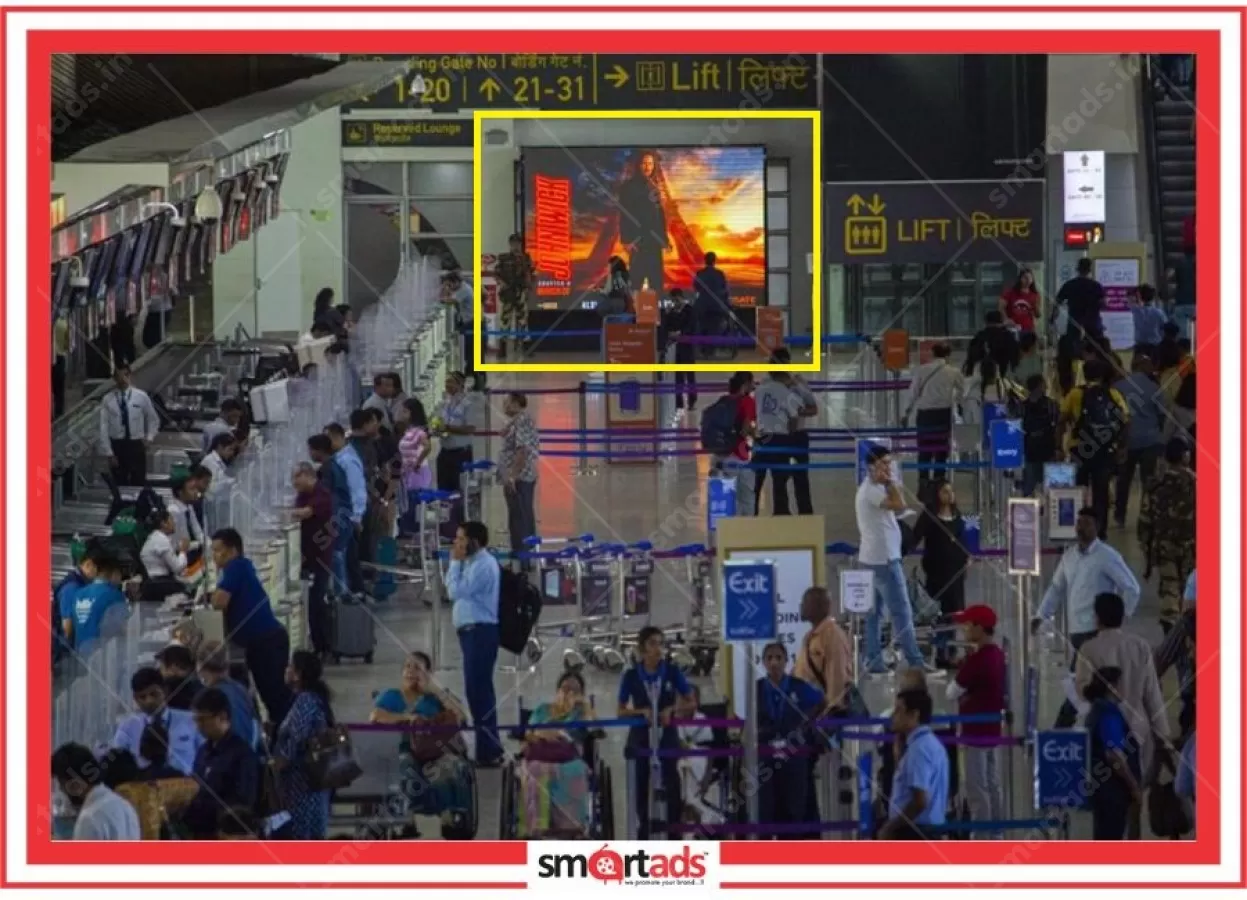
Video Wall
44 x 9 Ft
High Impact Head on site, clutter breaki
Rate per Wall / Month
Domestic Arrival
₹2400000.00
Showing 1 to 5 of 5 Results
MEDIA DETAILS
44 x 9 Ft
High Impact Head on site, clutter breaki
Rate per Wall / Month
Domestic Arrival
₹2400000.00

55 Inches
Experiential zones present at left and r
Rate per Pole / Month
Digital Pole - Unit 6 Common Arrivals at
₹800000.00

65 inches
Frequency building digital units spread
Rate per Screens / Month
Digital Screen - Unit 25 International A
₹1200000.00
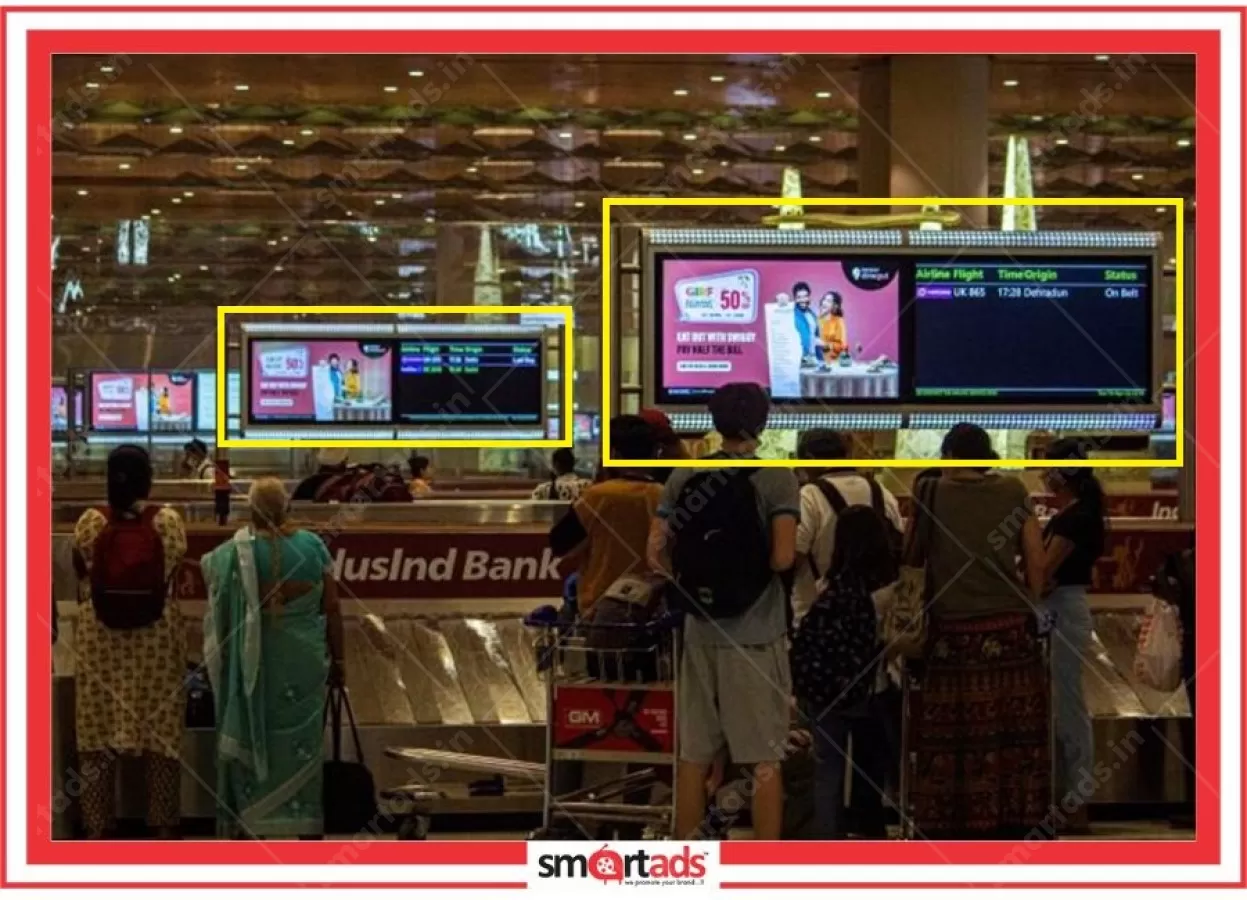
55 inches
Dynamic advertising media, with no conte
Rate per Screen / Month
Digital - Unit 56 Common Arrivals : No.
₹2800000.00

55 inches
Present across Duty Free and Boarding Pi
Rate per Pole / Month
Digital Screen - Unit 24 International
₹1500000.00
MEDIA REACH

Airports :
Chhatrapati Shivaji Maharaj International Airport (CSMIA)
MonthlyFootfall :
4333000
MonthlyFlights :
28887
Terminal :
Domestic & International
Location :
Sahar, Andheri (E), Western Express Hwy, Mumbai

Mumbai International Airport stands as India's busiest aviation hub, which makes it the most coveted advertising destination for brands seeking affluent, mobile audiences; this comprehensive analysis covers current advertising rates, format effectiveness, and strategic insights based on real campaign data across Terminal 1 and Terminal 2.
The advertising rates at Mumbai airport vary dramatically based on format and location, which is something most brands discover only after they start comparing options across different terminals. Digital screens in the departure lounge command premium pricing that works out to roughly ₹8-12 lakh per month for a 10-second slot every minute, while static billboards in high-traffic corridors can be secured for somewhere between ₹2-4 lakh monthly depending on size and positioning.
What surprises many first-time airport advertisers is how the rates fluctuate based on passenger seasonality; peak travel months like December and summer vacation periods see rate increases of 20-30%, which we always factor into our media planning recommendations at SmartAds. The thing is, these premium periods also deliver the highest passenger volumes — Mumbai airport handles over 4.5 million passengers monthly during peak seasons, which translates to exceptional reach for brands willing to invest in prime inventory.
Terminal 2's international section commands the highest advertising rates because of its affluent passenger demographics and longer dwell times; business travelers and international passengers spend an average of 90 minutes in the terminal, which gives brands multiple touchpoints for message reinforcement. We have found that clients who invest in premium terminal advertising formats often see CPM rates that work out to be surprisingly competitive when compared to traditional outdoor advertising in Mumbai's commercial districts.
Digital screens dominate the airport advertising landscape because they offer dynamic content capabilities that static billboards simply cannot match; the large-format LED displays at security checkpoints and boarding gates deliver the highest engagement rates in our campaign experience. Digital pods positioned near departure lounges perform exceptionally well for luxury brands, which makes sense given the captive audience of business travelers who have completed security checks and are waiting for their flights.
The programmatic DOOH options available through Mumbai airport's digital advertising inventory allow for real-time content optimization based on flight schedules and passenger demographics; we recently executed a campaign for a financial services client where we adjusted messaging based on international vs domestic flight timings, which resulted in a 40% improvement in recall metrics compared to static creative approaches. Interactive digital displays in the arrival hall work particularly well for hospitality and automotive brands targeting incoming passengers who are making ground transportation decisions.
Frankly speaking, the newer digital formats like curved LED walls and floor projection systems are still experimental, but early adopters are seeing impressive engagement rates. The key advantage of digital airport advertising lies in its ability to integrate with broader digital marketing campaigns; QR codes and social media amplification strategies work naturally in airport environments where passengers are actively using mobile devices during wait times.
Airport advertising cost at Mumbai International operates on a tiered pricing structure that reflects the premium nature of the audience and the exclusivity of the medium; entry-level options like trolley advertising start at around ₹50,000 monthly, while premium digital installations can reach ₹15-20 lakh for prime locations during peak seasons. The total investment includes not just media costs but also production, installation, and maintenance fees, which typically add 25-35% to the base advertising rates.
What most brands overlook is the significant cost difference between Terminal 1 and Terminal 2 advertising opportunities; Terminal 2's international wing commands premium pricing because it captures both departing international passengers and the high-value domestic business travel segment. We always advise clients to consider the passenger value rather than just volume — a single international passenger represents significantly higher purchasing power than domestic travelers, which justifies the premium pricing structure.
The minimum campaign duration at Mumbai airport is typically three months, which allows brands to capture multiple passenger cycles and seasonal variations; shorter campaigns are possible but come with setup cost penalties that make the effective CPM less attractive. At SmartAds, we have found that six-month campaigns offer the best balance of cost efficiency and market impact, particularly when timed to include both peak and shoulder travel periods.
Mumbai airport advertising delivers unmatched audience quality because it captures India's most affluent and mobile demographic segment in a controlled, distraction-free environment; passengers are naturally more receptive to advertising messages during the extended dwell times that air travel requires. The captive audience factor cannot be overstated — unlike outdoor advertising where exposure is measured in seconds, airport advertising benefits from minutes or even hours of potential engagement.
The global connectivity aspect of Mumbai International Airport means that brands can reach not just domestic travelers but also international passengers who represent premium purchasing power; this dual audience composition is particularly valuable for luxury goods, financial services, and technology brands seeking affluent customer segments. We executed a campaign for a premium automotive client where airport advertising generated leads with 3x higher conversion rates compared to traditional outdoor media, which demonstrates the quality advantage of airport audiences.
To be honest, the brand association with air travel itself adds credibility and aspirational value to advertising messages; passengers are in a mindset of mobility, success, and premium experiences, which creates natural alignment with brands positioned in the premium or luxury segments. The professional environment of airports also means that B2B messaging performs exceptionally well, particularly in Terminal 2's business lounge areas where corporate travelers spend significant time.
Terminal 2 consistently delivers higher ROI for premium brands despite its higher advertising rates because of its superior passenger demographics and extended dwell times; the international terminal captures business travelers, luxury consumers, and high-net-worth individuals who represent the most valuable audience segments. The newer infrastructure in Terminal 2 also provides better advertising formats with enhanced visibility and engagement opportunities compared to Terminal 1's more limited inventory.
However, Terminal 1 should not be dismissed entirely — it handles a significant volume of domestic business travel and offers more cost-effective entry points for brands testing airport advertising for the first time; the passenger throughput is substantial, and the advertising rates are roughly 40-50% lower than Terminal 2 premium locations. We often recommend a mixed approach where brands start with Terminal 1 to understand airport advertising dynamics before scaling to Terminal 2's premium inventory.
The ROI calculation becomes particularly interesting when considering campaign objectives; brand awareness campaigns often perform well in Terminal 1's high-volume environment, while conversion-focused campaigns typically see better results in Terminal 2's premium passenger segments. One retail client achieved a 250% ROI improvement by shifting their campaign from Terminal 1 static displays to Terminal 2 digital screens, which illustrates how format and location selection directly impacts campaign performance.
The airport advertising landscape requires specialized expertise because of the complex approval processes, technical installation requirements, and unique audience dynamics that differentiate airport media from traditional outdoor advertising; agencies with established relationships with Mumbai International Airport Limited (MIAL) and Adani Airport Holdings can navigate these complexities more efficiently. Experience with airport-specific regulations and safety protocols is crucial, particularly for large-format installations and digital displays that require technical integration with airport systems.
What separates effective airport advertising agencies from generalist outdoor media buyers is their understanding of passenger flow patterns, seasonal variations, and the nuanced differences between terminal environments; at SmartAds, our media planning team maintains detailed passenger demographic profiles and traffic pattern data that inform strategic recommendations for format selection and timing optimization. The ability to integrate airport advertising with broader digital marketing campaigns is increasingly important as brands seek omnichannel approaches.
The agency's creative capabilities matter significantly in airport environments where premium production values are expected and technical specifications are demanding; wall wraps, digital content creation, and interactive installations require specialized skills that not all outdoor agencies possess. We always recommend evaluating an agency's portfolio of successful airport campaigns, their relationships with airport authorities, and their ability to provide comprehensive campaign analytics and performance measurement.
Mumbai International Airport attracts India's most affluent passenger demographic, with over 60% of travelers falling into the upper-middle and high-income categories; the average passenger income is significantly higher than general population metrics, which makes airport advertising particularly valuable for premium brands and luxury services. Business travelers constitute roughly 40% of total passenger traffic, representing decision-makers and influencers across various industries who are difficult to reach through traditional media channels.
The international passenger segment brings additional demographic advantages, including higher education levels, global exposure, and premium purchasing power; these travelers are often early adopters of new products and services, making them valuable targets for technology, financial services, and luxury goods brands. Age demographics skew toward the 25-55 range, which represents the prime earning and spending years for most consumer categories.
Here's where it gets interesting — the passenger mix varies significantly by time of day and season, which creates opportunities for targeted messaging strategies; morning flights capture business travelers, while evening and weekend flights include more leisure travelers and families. We have successfully executed campaigns that adjust messaging based on these passenger patterns, resulting in improved relevance and engagement rates compared to static demographic targeting approaches.
Digital wall wraps in Terminal 2's international departure area consistently generate the highest impact metrics because they combine large format visibility with premium passenger exposure during peak dwell times; these installations can dominate entire corridor experiences, which creates immersive brand environments that are impossible to ignore. The curved LED displays at baggage claim areas perform exceptionally well for automotive and luxury brands because passengers are stationary and focused while waiting for luggage.
Experiential advertising formats are gaining traction as brands seek to create memorable interactions beyond traditional display advertising; we recently managed an activation for a technology client that combined digital displays with interactive demonstrations, resulting in over 15,000 direct passenger engagements during a three-month campaign. Lounge advertising represents the ultimate premium format, delivering extended exposure to business travelers and frequent flyers who represent the highest value passenger segments.
The effectiveness of premium advertising formats often depends on integration with digital amplification strategies; QR codes, social media integration, and mobile app connections can extend the airport advertising impact beyond the physical terminal environment. Sponsorship opportunities like gate branding and boarding pass integration offer unique touchpoints that create multiple brand exposures throughout the passenger journey, which amplifies the overall campaign impact.
Mumbai airport advertising rates and effectiveness fluctuate significantly based on seasonal passenger patterns, which smart media planners factor into their annual planning cycles; December through January represents peak travel season with passenger volumes reaching 5+ million monthly, making it the most expensive but also most impactful period for airport campaigns. Summer vacation months from April to June also see elevated passenger traffic, particularly in the leisure travel segments that include family travelers and students.
The monsoon season creates interesting dynamics for airport advertising because delayed flights and extended terminal stays increase passenger dwell times, which can actually improve advertising exposure metrics despite lower overall passenger volumes; we have measured dwell time increases of 30-40% during monsoon months, which translates to higher message frequency for active campaigns. Business travel patterns also create micro-seasons throughout the year, with quarterly peaks that align with corporate travel cycles.
Festival seasons like Diwali and regional celebrations drive specific passenger demographics that can be valuable for targeted campaigns; luxury goods and gifting categories perform particularly well during these periods when passengers are in purchasing mindsets. At SmartAds, we maintain detailed seasonal performance data that helps clients optimize their campaign timing for maximum impact and cost efficiency.
Modern airport advertising campaigns achieve maximum effectiveness when integrated with broader digital marketing strategies, which allows brands to extend airport exposure through social media amplification and retargeting campaigns; passengers who photograph or interact with airport ads can be captured through location-based targeting and served follow-up messages across digital channels. The high smartphone usage in airport environments creates natural opportunities for QR code interactions and social media engagement.
Programmatic DOOH capabilities at Mumbai airport enable real-time content optimization based on flight data, passenger demographics, and external factors like weather or events; this dynamic approach allows campaigns to remain relevant and timely rather than relying on static creative approaches. We have successfully integrated airport campaigns with LinkedIn targeting for B2B clients, using airport exposure as the awareness driver and digital channels for detailed product information and lead capture.
The measurement and analytics capabilities available through integrated campaigns provide much richer insights than traditional outdoor advertising metrics; brands can track not just impressions and reach but also engagement rates, social amplification, and downstream conversion metrics. This comprehensive measurement approach helps justify airport advertising investments and optimize future campaign strategies based on actual performance data.
Q: What are the current advertising rates at Mumbai International Airport?
Current advertising rates at Mumbai International Airport range from ₹50,000 monthly for basic trolley advertising to ₹20 lakh for premium digital displays in Terminal 2's international section; the pricing structure reflects the premium audience quality and limited inventory availability. Digital screens in high-traffic areas like security checkpoints command rates between ₹8-12 lakh monthly, while static billboards in departure lounges start around ₹2-4 lakh depending on size and location. Seasonal variations can increase these base rates by 20-30% during peak travel periods, which typically occur in December-January and summer vacation months.
Q: Which advertising formats are available at Mumbai Airport Terminal 2?
Terminal 2 offers the most comprehensive range of advertising formats including large-format digital LED walls, interactive digital pods, static billboards, wall wraps, baggage claim advertising, and premium lounge sponsorships; the international terminal's newer infrastructure supports advanced formats like curved displays and floor projections that are not available in Terminal 1. Experiential advertising opportunities include gate branding, boarding pass integration, and custom activation spaces that can accommodate product demonstrations and brand experiences. The digital advertising inventory includes programmatic DOOH options that allow for real-time content optimization based on flight schedules and passenger demographics.
Q: How much passenger traffic does Mumbai Airport handle monthly?
Mumbai International Airport handles approximately 4-5 million passengers monthly, with peak periods reaching over 5 million during December and summer vacation seasons; this volume makes it India's busiest airport and one of the highest-traffic advertising environments in the country. Terminal 2 processes roughly 60% of total passenger traffic including all international flights and premium domestic services, while Terminal 1 handles the remaining domestic volume. The passenger mix includes approximately 40% business travelers, 35% leisure travelers, and 25% international passengers, creating diverse demographic opportunities for targeted advertising campaigns.
Q: What is the minimum duration for airport advertising campaigns in Mumbai?
The minimum campaign duration at Mumbai International Airport is typically three months, which allows brands to capture multiple passenger cycles and seasonal variations while justifying the setup and installation costs associated with airport advertising formats; shorter campaigns are technically possible but come with cost penalties that make the effective CPM less attractive. Most successful campaigns run for six months or longer to maximize audience reach and message frequency, particularly for brand awareness objectives that require sustained exposure. Digital advertising formats offer more flexibility with shorter minimum durations, sometimes as brief as one month, but static installations require longer commitments due to production and installation requirements.
Q: Which terminal offers better visibility - Terminal 1 or Terminal 2?
Terminal 2 offers superior visibility and engagement opportunities due to its modern infrastructure, longer passenger dwell times, and premium audience composition; the international terminal features wider corridors, higher ceilings, and better lighting that enhance advertising impact compared to Terminal 1's more constrained spaces. However, Terminal 1 should not be overlooked as it handles significant domestic business travel volume and offers more cost-effective entry points for brands new to airport advertising. The visibility advantage of Terminal 2 is particularly pronounced in areas like the international departure lounge and baggage claim, where passengers spend extended time and have fewer distractions compared to Terminal 1's higher-traffic, faster-moving environment.
Q: How do I book airport advertising space at Mumbai International Airport?
Booking airport advertising space requires working with authorized advertising agencies that have established relationships with Mumbai International Airport Limited (MIAL) and Adani Airport Holdings, as direct bookings are not typically available to individual brands; the process involves site selection, creative approval, technical specifications review, and coordination with airport authorities for installation. At SmartAds, we manage the entire booking process including rate negotiation, contract execution, production coordination, and installation supervision to ensure campaigns launch on schedule. The booking timeline typically requires 6-8 weeks advance notice for static formats and 4-6 weeks for digital placements, with additional time needed during peak seasons when inventory is limited.
Q: What are the peak seasons for airport advertising in Mumbai?
Peak seasons for Mumbai airport advertising align with high travel periods including December-January (winter holidays and New Year), April-June (summer vacations), and October-November (post-monsoon business travel and festival seasons); these periods see passenger volumes increase by 20-30% and advertising rates rise accordingly. The December period is particularly valuable as it captures both leisure travelers and year-end business travel, creating optimal conditions for brand awareness and conversion campaigns. Monsoon season (July-September) represents a shoulder period with lower passenger volumes but extended dwell times due to flight delays, which can actually improve message exposure metrics for active campaigns.
Q: Which demographics can I target with Mumbai airport advertising?
Mumbai airport advertising reaches India's most affluent demographic segments including business executives, entrepreneurs, high-net-worth individuals, and international travelers with above-average income and education levels; approximately 60% of passengers fall into upper-middle and high-income categories with household incomes exceeding ₹10 lakh annually. The age demographic skews toward 25-55 years representing prime earning and spending years, while the professional mix includes decision-makers across industries like finance, technology, pharmaceuticals, and manufacturing. International passengers add global exposure and premium purchasing power to the demographic mix, making airport advertising particularly valuable for luxury goods, financial services, and technology brands seeking affluent customer segments.
Q: What are the production and installation costs for airport ads in Mumbai?
Production and installation costs typically add 25-35% to base advertising rates depending on format complexity and technical requirements; static billboards require printing, mounting, and installation costs of ₹50,000-₹1.5 lakh, while digital content creation and technical setup for LED displays can range from ₹1-3 lakh. Large-format installations like wall wraps and experiential setups involve higher production costs due to custom fabrication, safety compliance, and specialized installation requirements that can add ₹2-5 lakh to campaign budgets. Digital advertising formats have lower ongoing production costs as content can be updated remotely, but initial technical setup and creative development require specialized expertise that commands premium pricing compared to traditional outdoor advertising production.
Q: How effective is digital vs static advertising at Mumbai Airport?
Digital advertising consistently outperforms static formats in airport environments due to dynamic content capabilities, higher visibility, and ability to capture attention in busy terminal environments; our campaign data shows digital formats generating 40-60% higher recall rates compared to static billboards in similar locations. The flexibility of digital advertising allows for real-time content optimization, multiple advertiser rotations, and integration with flight data for contextual messaging that static formats cannot match. However, static advertising still has value in specific applications like large-format wall wraps and premium locations where extended exposure compensates for lack of dynamic content; the choice between digital and static often depends on campaign objectives, budget constraints, and specific location characteristics within the terminal environment.
The success of airport advertising campaigns at Mumbai International depends heavily on strategic alignment between format selection, timing, and audience targeting, which requires deep understanding of passenger patterns and terminal dynamics that most brands lack when approaching this medium for the first time. We have consistently found that campaigns performing comprehensive audience analysis and seasonal planning achieve 2-3x better ROI compared to opportunistic or reactive approaches to airport media buying.
The integration of airport advertising with broader marketing strategies amplifies impact beyond the terminal environment; brands that connect airport exposure with digital retargeting, social media amplification, and CRM systems create sustained engagement that extends the campaign value far beyond the physical advertising period. One technology client achieved a 400% improvement in lead quality by using airport advertising as the awareness driver and following up with targeted LinkedIn campaigns to passengers in their database, which demonstrates the power of omnichannel integration in premium media environments.
At SmartAds, we approach Mumbai airport advertising as part of comprehensive media strategies that leverage the unique advantages of this premium environment while connecting to measurable business outcomes; our experience across 500+ Indian cities gives us perspective on how airport advertising fits within broader outdoor media strategies and digital marketing ecosystems. The investment in airport advertising represents more than just reach and frequency — it positions brands within India's most affluent and mobile audience segment while creating association with premium travel experiences that enhance brand perception across all customer touchpoints.
For brands considering airport advertising at Mumbai International, the key lies in understanding that this medium requires specialized expertise, strategic planning, and integration with broader marketing objectives to achieve maximum impact; the premium investment is justified by the exceptional audience quality and engagement opportunities that simply cannot be replicated through traditional advertising channels. Connect with SmartAds.in for customized media planning that maximizes your airport advertising investment through strategic format selection, optimal timing, and comprehensive campaign integration.
