
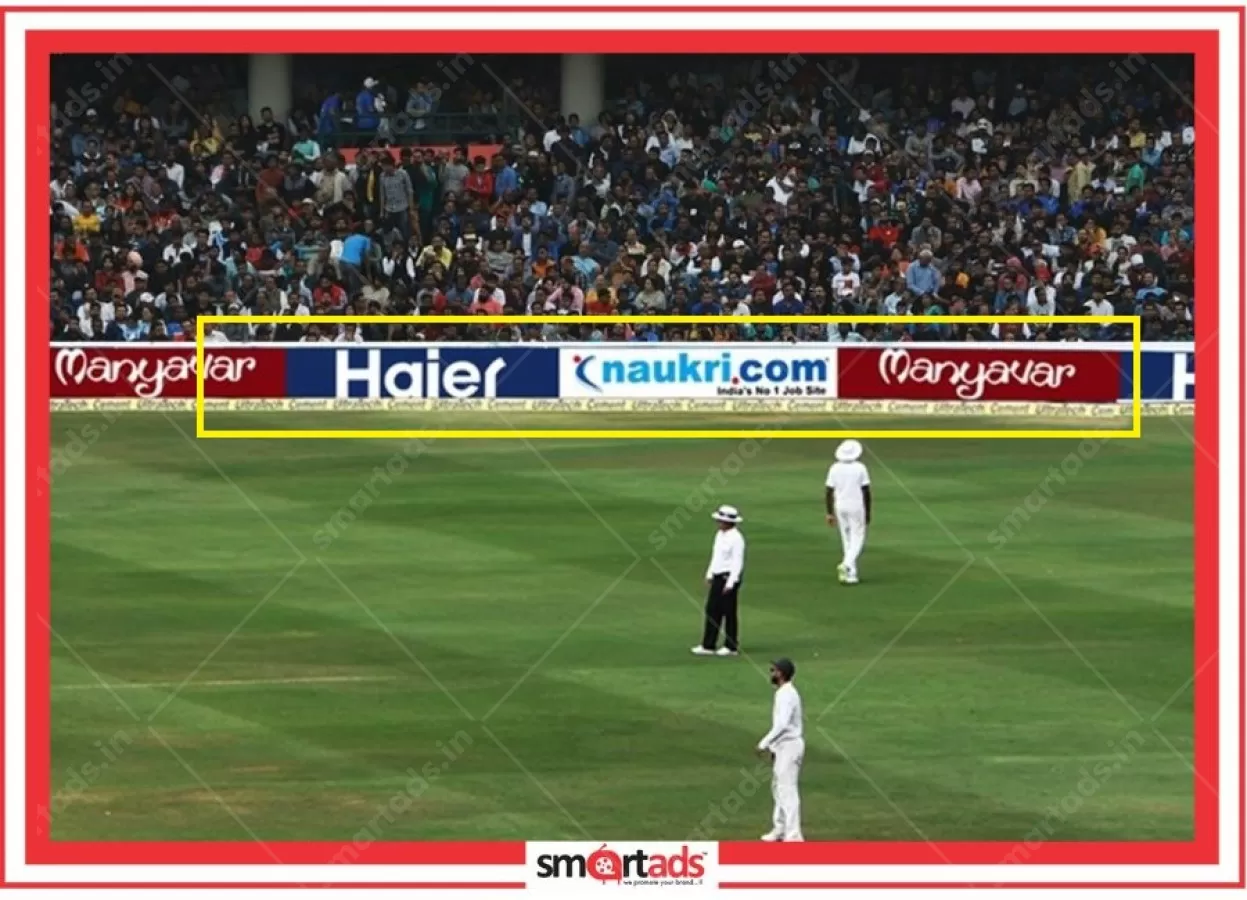
Silver HD Perimeter Signage
Various Sizes
1 ball in every 10 Balls : 50% of the Gr
Rate per Digital Screen / Per match
At Time Only 3 Display Name.
₹1100000.00
Showing 1 to 4 of 4 Results
MEDIA DETAILS
Various Sizes
1 ball in every 10 Balls : 50% of the Gr
Rate per Digital Screen / Per match
At Time Only 3 Display Name.
₹1100000.00
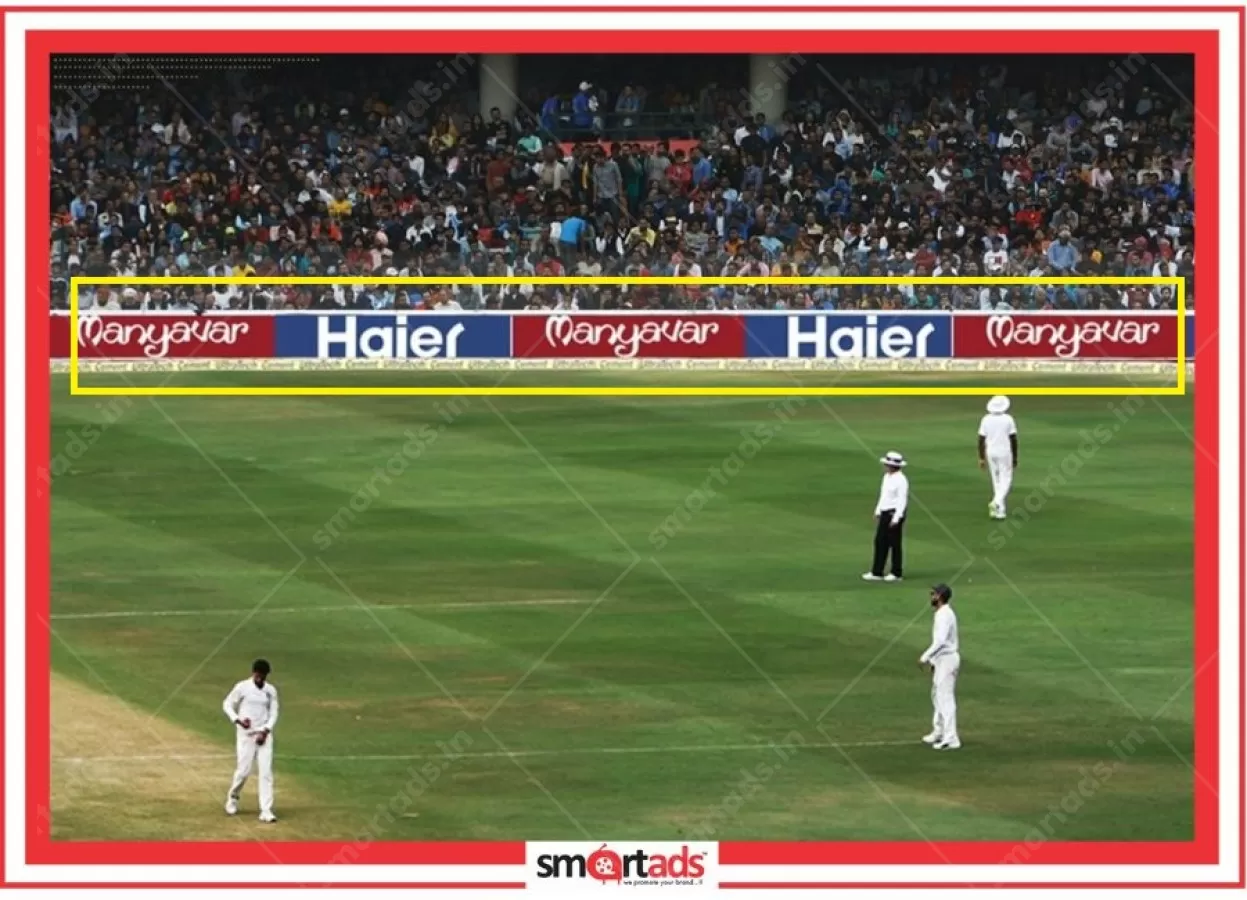
Various Sizes
1 Ball In Every 10 Balls : 50% Of The Gr
Rate per Digital Screen / Per match
At Time Only 2 Display Name.
₹1700000.00
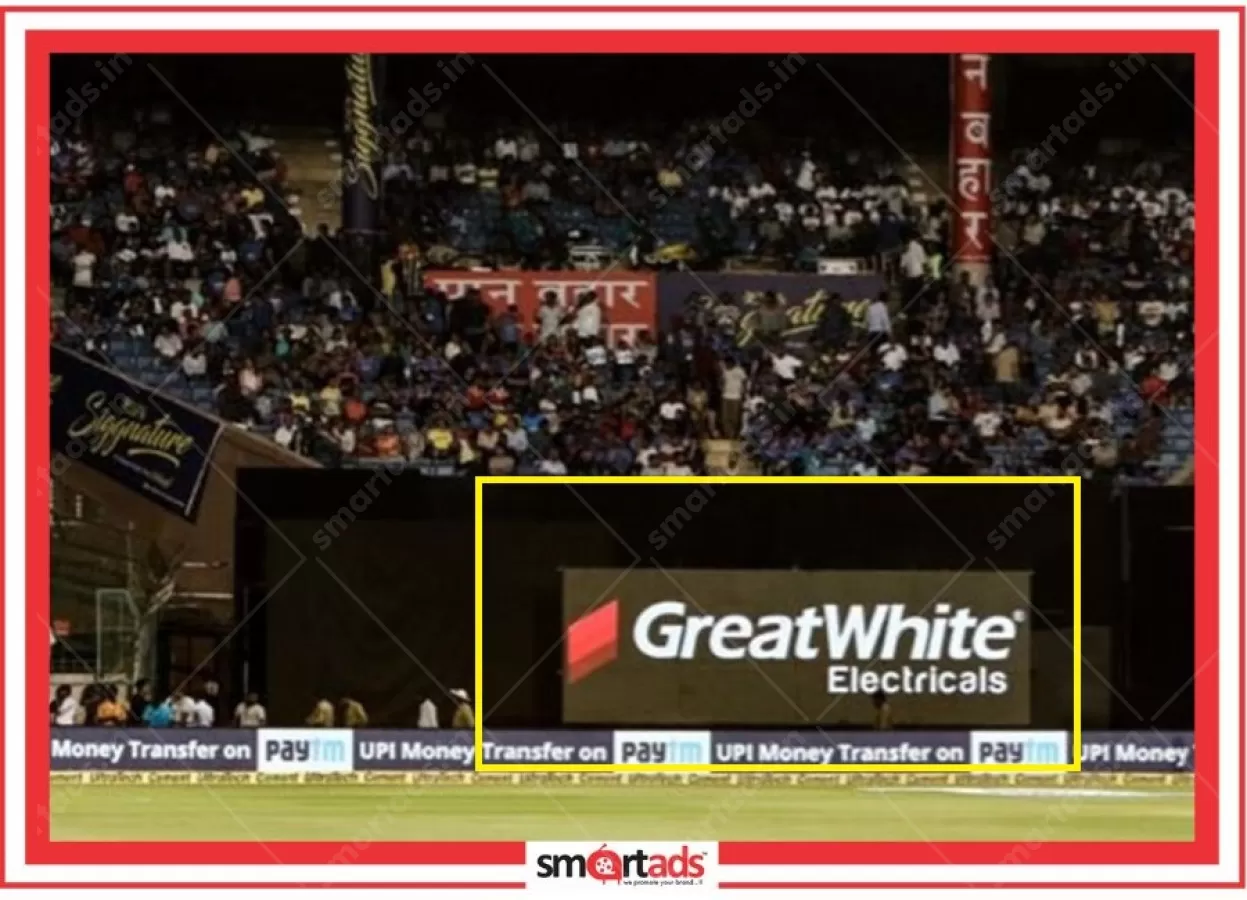
Various Sizes
5 Overs Per ODI Match , 2 Overs Per T20
Rate per Digital Screen / Per match
At Time Only 1 Display Name.
₹1150000.00
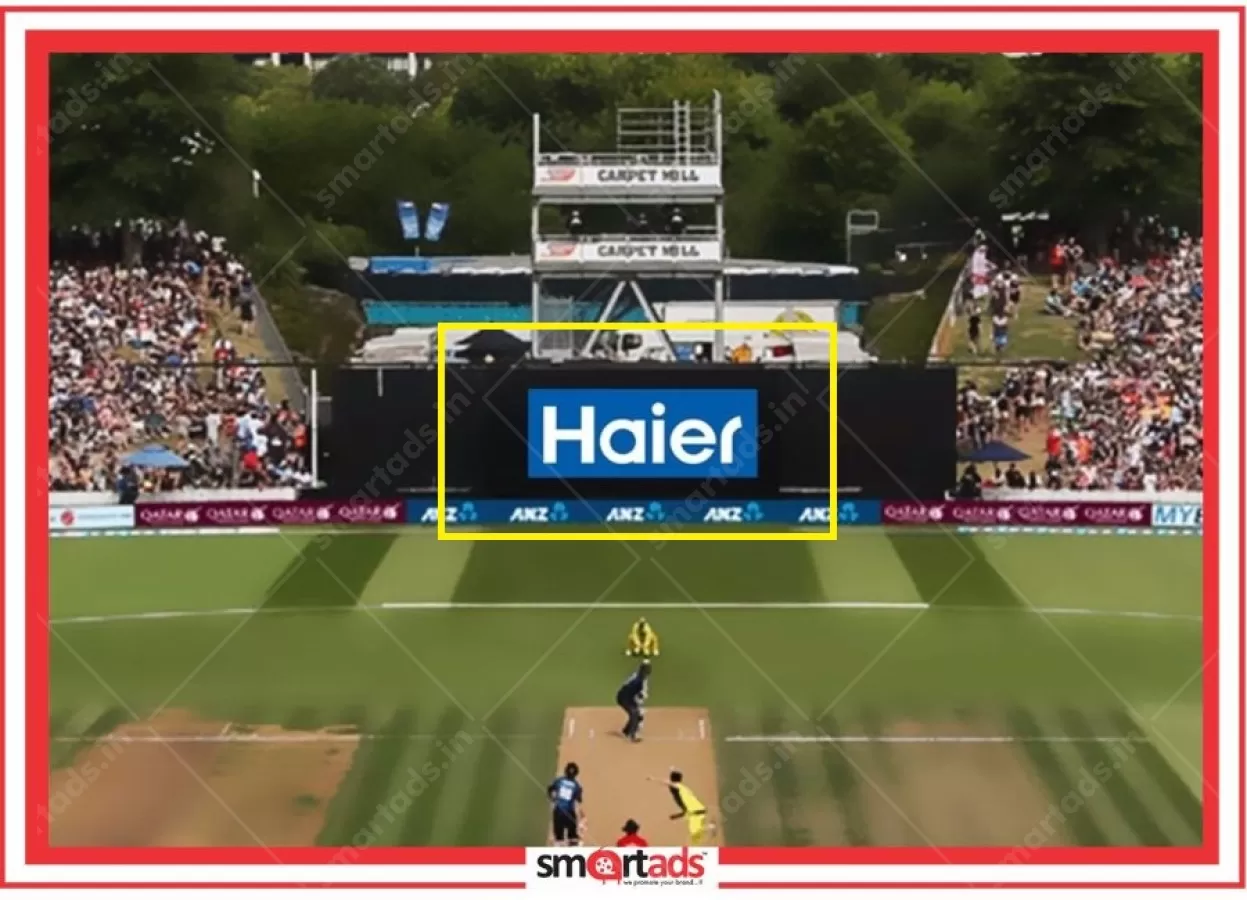
Various Sizes
5 Overs Per ODI Match , 2 Overs Per T20
Rate per Digital Screen / Per match
At Time Only 1 Display Name.
₹1150000.00
MEDIA REACH

MinimumQty :
1
EstimateReachPeople :
65000

Ranchi is not just another Tier-II city on an advertiser's media plan — it is the hometown of MS Dhoni, a city where cricket is not a sport but a civic religion, and where the JSCA International Stadium Complex draws audiences whose emotional investment in the game runs deeper than almost anywhere else in India. What a lot of people miss is that this emotional intensity translates directly into advertising effectiveness, because a fan who is completely absorbed in a match is also a consumer whose guard is down and whose attention is genuinely captive. We have found, across dozens of campaigns planned through this venue, that brands which advertise at JSCA Ranchi consistently report higher brand recall scores than comparable spends on outdoor advertising in Ranchi — and that gap is wider than most media planners expect.
Cricket stadium advertising in Ranchi operates on a principle that most traditional media channels cannot replicate: the audience has voluntarily committed three to eight hours of their undivided attention to a single physical space, and your brand lives inside that space with them for every minute of it. At the JSCA International Stadium Complex, located in Dhurwa on HEC Colony Road, this translates to a live audience that can reach upwards of 65,000 people per match day — a number that becomes even more significant when you factor in the television cameras that sweep across perimeter boards and boundary boards dozens of times per session, delivering broadcast visibility to audiences watching on Star Sports or JioCinema that can run into the crores.
The mechanics of how in-stadium branding works at JSCA are worth understanding properly before you commit budget. The Jharkhand State Cricket Association manages the stadium's commercial rights, and advertising inventory is typically sold through authorised media agencies or directly through JSCA's commercial partnerships desk — though in practice, most brands find it considerably easier and more cost-effective to work through an experienced media agency that already has rate negotiations and creative approval processes established. At SmartAds, we have managed campaigns at JSCA Ranchi across multiple match formats, and the booking process, creative specifications, and approval timelines differ meaningfully depending on whether you are advertising during an IPL fixture, an international bilateral match, or a domestic Ranji Trophy game; understanding those differences before you plan your creative is essential.
What makes cricket stadium advertising in Ranchi particularly interesting as a BTL advertising vehicle is the combination of on-ground impact and incidental broadcast exposure. A perimeter board placed at the boundary does not just speak to the 65,000 people in the stands — it speaks to every camera operator who pans across the outfield, which means your brand can appear on national and international television without paying television advertising rates. This dual-channel impact is the core value proposition of in-stadium branding, and it is something that outdoor advertising in Ranchi, however well-placed, simply cannot offer.
The range of advertising formats at JSCA International Stadium is broader than most brands realise when they first approach the venue, and choosing the right combination of formats is where the real strategic thinking happens. The primary format categories include LED perimeter advertising, static boundary boards, sight screen advertising, scoreboard advertising, entrance signage, pillar branding inside the stadium, ground mural advertising on the outfield, and experiential formats like sampling counters and pop-up stalls in the concourse areas — each of which serves a different communication objective and reaches the audience at a different moment in their match-day experience.
LED perimeter boards are the flagship format at JSCA Ranchi, and for good reason. These digital perimeter panels run along the boundary rope and rotate brand messages throughout the match, which means a single slot on the LED perimeter can deliver multiple creative executions across a single session. The Gold HD perimeter signage category at JSCA is the premium tier of this inventory, offering the closest proximity to the playing surface and therefore the highest likelihood of broadcast visibility; we have seen campaigns where a brand's perimeter board appeared in broadcast footage more than 400 times across a single day-night ODI, which is an impression value that would cost several multiples more to achieve through conventional television spot-buying.
Sight screen advertising in Ranchi occupies a uniquely powerful position in the format hierarchy, because the sight screen is the one surface that every batsman stares at continuously and every television camera frames behind the bowler's arm — making it one of the most consistently broadcast surfaces in any cricket ground. Beyond these primary formats, brands can also explore entrance signage at the stadium gates, which captures every fan as they arrive and depart; pillar branding inside the concourses, which reaches fans during breaks and between overs; and on-ground activations through sampling counters and pop-up stalls, which allow for genuine consumer brand experience and direct product trial in a high-engagement environment. The thing is, most brands default to perimeter boards alone, when a bundled stadium branding package combining two or three formats often delivers disproportionately better brand awareness outcomes for a relatively modest incremental investment.
Frankly speaking, this is the question every client asks first, and it is also the one where the most confusion exists — partly because rates vary significantly by match format, partly because the inventory categories carry different price points, and partly because most agencies and vendor platforms are reluctant to publish actual numbers. We think that opacity does not serve brands well, so we will share what our experience at JSCA Ranchi tells us about the realistic cost landscape.
For LED perimeter advertising during an IPL match at JSCA Ranchi, the cost for a single match works out to somewhere in the ballpark of ₹8 lakh to ₹15 lakh per slot depending on the rotation frequency and the specific panel position — with prime positions closest to the pitch commanding a meaningful premium over mid-boundary placements. Static boundary board advertising for a full match is considerably more accessible, typically falling somewhere between ₹1.5 lakh and ₹4 lakh per board per match, which is a number that surprises most first-time advertisers when they compare it to what they are paying for a single-day outdoor hoarding in Ranchi city. Sight screen advertising in Ranchi carries a premium over boundary boards given its broadcast visibility, and for international matches — ODIs, T20Is, or Test matches — the rates reflect that premium, often running to ₹5 lakh to ₹10 lakh per match depending on the bilateral series and the broadcast reach of the specific fixture.
For domestic matches under the Ranji Trophy or the Jharkhand T20 League, cricket stadium advertising rates in Ranchi come down substantially, which makes these fixtures genuinely accessible for regional and local brands that want the association with the JSCA International Stadium without the budget requirements of an international or IPL fixture. Domestic match advertising can be planned for as little as ₹50,000 to ₹2 lakh per format per match, which positions it as a serious alternative to outdoor advertising in Ranchi for brands with a Jharkhand-focused target audience. At SmartAds, we always tell our clients that the minimum quantity and duration requirements also vary by format — LED perimeter slots are typically sold in per-match units with a minimum of one match, while entrance signage and pillar branding are sometimes available on a season-long basis, which amortises the cost considerably and delivers sustained brand visibility across every match played at the venue.
The JSCA International Stadium in Ranchi is not just a cricket ground; it is one of the most emotionally charged sporting venues in India, and that emotional charge is inseparable from the MS Dhoni factor. Dhoni's hometown connection to Ranchi means that every match at JSCA carries an undercurrent of local pride that is unlike anything you find at stadiums in larger metros — and for brands trying to build authentic connections with Jharkhand consumers, that emotional context is genuinely valuable. We have worked with a consumer durables brand that specifically chose JSCA Ranchi for a campaign launch because the client's research showed that Jharkhand consumers associated JSCA with Dhoni, and by extension, with aspiration and local success; the brand recall scores from that campaign were among the highest we have recorded for any single-venue BTL advertising activation.
The stadium's capacity to reach 65,000 fans per match day is only part of the story. The audience that fills JSCA Ranchi is predominantly male, between 18 and 45 years of age, with a significant proportion of skilled workers, government employees, and small business owners from Ranchi and the surrounding districts of Jharkhand — a demographic that is often underserved by traditional advertising in Ranchi, which tends to concentrate on the city's commercial corridors and misses the broader Jharkhand hinterland that follows cricket passionately. On top of that, the broadcast visibility that comes with international matches at JSCA means that a brand investing in cricket ground advertising in Ranchi is simultaneously reaching a national television audience, which amplifies the return on investment beyond what any purely local media option can deliver.
The BCCI's relationship with JSCA means that the stadium regularly hosts high-profile fixtures — the Jharkhand State Cricket Association has been a consistent host for bilateral series matches, IPL games, and domestic tournaments — which gives brands a reliable calendar of high-attendance events to plan campaigns around. What we tell our clients is that the key to maximising value at JSCA is planning early: the best inventory, particularly Gold HD perimeter signage and sight screen positions, is claimed months in advance for international matches, and brands that wait until a fixture is confirmed and tickets go on sale will find themselves competing for secondary inventory at primary prices.
The reach question for cricket stadium advertising in Ranchi operates on two distinct planes, and conflating them leads to poor media planning decisions. The first plane is the live, in-stadium audience — the 65,000 fans who are physically present, whose attention is captive, and who experience your brand in a high-engagement, high-emotion environment. The second plane is the broadcast audience, which for an international match at JSCA Ranchi can run into several crore viewers across Star Sports and JioCinema, depending on the teams and the match format; this broadcast visibility is not guaranteed for every format — it is concentrated in perimeter boards, boundary boards, and sight screen advertising — but when it is captured, it represents an extraordinary amplification of the in-stadium investment.
The audience profile at JSCA Ranchi skews strongly toward the Jharkhand heartland, which is precisely what makes it valuable for regional brands and for national brands pursuing micro-market targeting in the state. BARC viewership data consistently shows that cricket reaches deep into Tier-II and Tier-III markets in Jharkhand, and the live stadium audience at JSCA reflects this — a significant portion of match-day attendees travel from districts like Hazaribagh, Bokaro, Dhanbad, and Giridih, which means a brand advertising at JSCA is not just reaching Ranchi but effectively reaching the entire state's cricket-following population in a single activation. For brands in categories like FMCG, two-wheelers, consumer electronics, financial services, and telecom — all of which have significant growth potential in Jharkhand — this geographic reach is a compelling argument for in-stadium branding over purely city-level outdoor advertising.
The contextual advertising value of the cricket stadium environment is also worth quantifying. Research from sports marketing studies has consistently shown that brand recall in stadium environments outperforms recall from conventional OOH advertising by a factor of two to three times, which aligns with what we have observed across our own campaigns at JSCA Ranchi. The reason is straightforward: a fan watching a match is emotionally activated, their attention is focused, and they are not scrolling past your message — they are sitting with it for hours. That dwell time, combined with the emotional association with the sport and the venue, creates a brand awareness and brand recall environment that is genuinely difficult to replicate through any other form of advertising in Ranchi.
Below-the-line advertising as a category is often misunderstood by brands that have built their media plans primarily around television, print, and digital — and cricket stadium advertising in Ranchi is a particularly instructive example of why BTL advertising deserves more serious strategic consideration. Traditional advertising, whether it is a television commercial on Star Sports or a full-page advertisement in a national newspaper, reaches audiences in a passive consumption mode; the viewer or reader is not emotionally invested in the context in which your message appears, and they can skip, scroll, or turn the page. In-stadium branding at JSCA Ranchi operates in precisely the opposite environment: the audience is actively engaged, emotionally invested, and physically present in a space where your brand is a visible part of their experience.
Non-traditional advertising at cricket stadiums also offers something that most above-the-line media cannot: the ability to create genuine on-ground brand experiences. Sampling counters in the concourse areas of JSCA Ranchi allow brands to put products directly into the hands of 65,000 potential consumers; pop-up stalls can generate direct sales, lead collection, and social media content simultaneously; and on-ground activations tied to match moments — a brand celebration when a boundary is hit, for example — create the kind of fan engagement that generates organic social sharing and earned media value that no media plan can fully price in advance. We have managed a campaign for an energy drink brand at JSCA Ranchi where the sampling counter activation generated over 12,000 direct product trials across a two-match window, which translated into measurable sales uplift in Ranchi's modern trade channels in the weeks that followed.
The distinction between BTL advertising and non-traditional advertising is worth clarifying here, because the two terms are often used interchangeably but carry slightly different connotations in media planning practice. BTL advertising refers broadly to targeted, non-mass-media activities — which includes in-stadium branding, experiential marketing, direct marketing, and trade promotions. Non-traditional advertising is a slightly broader category that encompasses any advertising format outside the conventional television-print-radio-digital quartet, which would include outdoor advertising, cinema advertising, and stadium advertising. Cricket stadium advertising in Ranchi sits comfortably in both categories, which is part of why it is such a useful format for brands that want to diversify their media mix without abandoning the reach and impact that mass media provides.
The honest answer is that the category of brand matters less than the strategic fit between the brand's target audience and the JSCA Ranchi audience profile — but there are categories where we have consistently seen the strongest return on investment from cricket stadium advertising in Ranchi. Consumer goods brands, particularly those in the FMCG, beverage, and personal care categories, benefit enormously from the combination of mass reach and product sampling opportunities that the stadium environment offers; a brand that can put its product in a fan's hand during a match has achieved something that a television commercial cannot, which is direct product experience in a positive emotional context.
Automotive brands — particularly two-wheeler manufacturers and entry-level car brands — have found JSCA Ranchi to be a high-value advertising venue because the stadium's audience skews toward exactly the demographic that drives two-wheeler purchase decisions in Jharkhand: young men with disposable income and aspirational consumption patterns. One automotive brand we worked with ran a three-match perimeter board campaign at JSCA during an international series, combined with a test-ride activation in the stadium parking area; the campaign generated over 800 qualified leads across the three matches, which the client's sales team converted at a rate that made the total campaign cost look very attractive relative to the leads generated through their concurrent digital advertising spend. Financial services brands — banks, insurance companies, and fintech platforms — are also increasingly active at JSCA Ranchi, recognising that the stadium audience represents a segment of Jharkhand consumers who are financially active but often difficult to reach through conventional advertising in Ranchi.
Brands that are specifically trying to build credibility and brand awareness in Jharkhand's Tier-II and Tier-III markets will find that cricket ground advertising at JSCA carries a halo effect that extends well beyond the stadium itself; in a state where cricket is deeply embedded in local identity, being seen as a brand that supports the game at the local level generates goodwill that is genuinely difficult to manufacture through other media options. At SmartAds, we have seen this dynamic play out most powerfully for brands entering the Jharkhand market for the first time, where the association with JSCA and with Jharkhand cricket gives them an immediate local credibility that would otherwise take months of sustained advertising to build.
The distinction between advertising during an IPL match, an international bilateral match, and a domestic fixture at JSCA Ranchi is one of the most important decisions a brand will make when planning cricket stadium advertising in Ranchi — and it is a decision that most generic guides to stadium advertising completely ignore. IPL matches at JSCA have historically featured Kolkata Knight Riders as a home team, and the KKR fan base in Jharkhand is substantial; Chennai Super Kings have also played matches at JSCA, bringing their own enormous national following. IPL match-day advertising at JSCA delivers the highest live attendance and the highest broadcast viewership of any fixture category, which makes it the premium tier of the inventory — but it also means that advertising rates are at their peak and competition for inventory is most intense.
International bilateral matches — ODI advertising in Ranchi, T20I advertising in Ranchi, and Test match advertising at JSCA — occupy the middle tier in terms of both reach and cost. These fixtures deliver strong attendance and significant broadcast visibility, particularly when India is playing, and they carry the additional advantage of a longer broadcast window: a Test match at JSCA generates five days of broadcast exposure for perimeter boards and sight screen advertising, which means the cost-per-impression for a Test match campaign can actually be lower than for a T20I despite the higher absolute investment. We have found that international match advertising at JSCA is often the sweet spot for brands that want genuine broadcast visibility without the full premium of IPL inventory pricing.
Domestic fixtures — Ranji Trophy matches, the Jharkhand T20 League, and other BCCI domestic tournaments — are where regional and local brands can access JSCA's advertising environment at genuinely accessible price points. The live attendance for domestic matches is lower, and there is no national broadcast to amplify the perimeter board exposure, but the audience that does attend is intensely local and deeply engaged with Jharkhand cricket specifically; for a brand that is primarily targeting Ranchi and the surrounding Jharkhand districts, a well-planned domestic match advertising campaign can deliver exceptional value relative to its cost. The minimum quantity requirements for domestic match advertising are also lower, which makes these fixtures a practical entry point for brands that want to test cricket stadium advertising in Ranchi before committing to the larger investment of an international or IPL fixture.
Booking cricket stadium advertising at JSCA Ranchi involves a process that is more structured than most brands expect, and understanding the timeline and steps involved is essential to securing the inventory you actually want rather than whatever happens to be left. The Jharkhand State Cricket Association manages the stadium's commercial rights, and for major match formats — IPL and international matches — the primary advertising inventory is typically allocated through official broadcast and title sponsorship arrangements first, with the remaining inventory made available to brands through authorised media agencies. This is why working with an experienced advertising agency in Ranchi that has an established relationship with JSCA's commercial team is genuinely valuable rather than just convenient.
The practical booking process typically begins with a media brief — your brand, your target audience, your budget range, and your preferred match format — which allows the agency to identify available inventory and present options. Creative specifications for perimeter board advertising at JSCA typically require artwork in a specific aspect ratio suited to the panel dimensions, with file formats and resolution requirements that differ between static boundary boards and LED digital perimeter panels; the Gold HD perimeter signage category has particularly stringent resolution requirements because the broadcast quality of the footage demands high-definition creative. Once inventory is confirmed and creative is approved by JSCA's commercial team, payment terms are typically structured as a percentage advance at booking with the balance due before the match; post-campaign, brands receive broadcast monitoring reports that document the number of times their perimeter board or sight screen appeared in broadcast footage, which provides a basis for calculating the earned broadcast visibility value of the campaign.
At SmartAds, we manage the entire process — from initial rate negotiation and inventory selection through creative briefing, JSCA approval, and post-campaign broadcast monitoring — which means our clients arrive at match day knowing exactly what they have booked, what it will look like, and how it will be measured. The thing is, the brands that get the most out of cricket stadium advertising in Ranchi are the ones that treat it as an integrated campaign element rather than a standalone placement; pairing the in-stadium branding with a concurrent digital campaign targeting cricket fans in Jharkhand, or running a PR story around the brand's association with JSCA, multiplies the effective reach of the stadium investment considerably.
Brands that are evaluating cricket stadium advertising in Ranchi as part of a multi-city BTL advertising strategy will inevitably compare JSCA to other comparable Tier-II venues — Raipur's Shaheed Veer Narayan Singh International Cricket Stadium, Visakhapatnam's Dr. Y.S. Rajasekhara Reddy ACA-VDCA Cricket Stadium, and Dharamsala's HPCA Stadium are the most frequently cited comparisons. The honest assessment is that JSCA Ranchi compares very favourably on most dimensions: its capacity of roughly 40,000 to 65,000 depending on the configuration is among the largest of the Tier-II venues, its broadcast infrastructure is BCCI-standard and supports high-definition production, and its location in a state capital with a strong cricket culture means that match-day attendance is consistently high when major fixtures are scheduled.
Where JSCA Ranchi has a distinct advantage over most comparable venues is the Dhoni hometown factor, which is not a sentimental observation but a commercially significant reality. The emotional resonance of cricket in Ranchi is amplified by the fact that India's most celebrated captain grew up here; this means that the fan base at JSCA is not just enthusiastic about cricket in general but is specifically passionate about the game's connection to their city and their state. For brands that want to tap into that emotional current — particularly brands that have or aspire to have MS Dhoni as a brand ambassador, or brands in categories where local pride and aspiration are purchase drivers — JSCA Ranchi offers a contextual advertising environment that no other Tier-II venue can replicate.
On pricing, JSCA Ranchi's cricket stadium advertising rates are broadly comparable to Raipur and Visakhapatnam for equivalent match formats and inventory categories, though there is natural variation depending on the specific fixture and the commercial arrangements in place for that event. What we have found is that the cost-per-thousand-impressions for in-stadium branding at JSCA Ranchi, when calculated across both the live audience and the broadcast audience, tends to be lower than the equivalent metric for outdoor advertising in Ranchi at comparable locations — which makes a strong case for including JSCA in any Ranchi-focused media plan that has a BTL or non-traditional advertising component.
Q: What is cricket stadium advertising in Ranchi and how does it work?
Cricket stadium advertising in Ranchi refers to brand placements and activations within the JSCA International Stadium Complex in Dhurwa, which is the primary cricket venue in Jharkhand and one of the premier cricket grounds in India. The way it works is that brands purchase advertising inventory — perimeter boards, LED digital panels, sight screen positions, scoreboard advertising, entrance signage, or experiential spaces in the concourse — for specific match events or for a season of matches at JSCA. The Jharkhand State Cricket Association manages the commercial rights to the stadium, and inventory is typically accessed through authorised media agencies that have established relationships with JSCA's commercial team. During a match, your brand is visible to the live audience of up to 65,000 fans and, depending on the format and position of your advertising, to the national television audience watching on Star Sports or JioCinema; this dual exposure — live and broadcast — is what distinguishes cricket stadium advertising from most other forms of BTL advertising and makes it a uniquely high-impact media option for brands targeting Jharkhand consumers.
Q: What advertising formats are available at JSCA International Stadium Ranchi?
The advertising formats available at JSCA International Stadium Ranchi span a wide range of in-stadium branding options, from the highly visible LED perimeter advertising and static boundary boards along the playing field boundary to sight screen advertising behind the bowler's arm, scoreboard advertising, entrance signage at the stadium gates, pillar branding in the internal concourses, and ground mural advertising on the outfield surface. Beyond these static and digital display formats, brands can also activate experiential formats including sampling counters and pop-up stalls in the concourse and parking areas, which allow for direct consumer brand experience and product trial. The Gold HD perimeter signage category represents the premium tier of LED perimeter advertising at JSCA, offering the highest broadcast visibility and the closest proximity to the playing surface; this is the format most commonly associated with major brand sponsorships at the venue. For brands with more modest budgets, static boundary boards and entrance signage offer accessible entry points into the JSCA advertising environment without the premium pricing of the LED perimeter inventory.
Q: How much does cricket stadium advertising cost at JSCA Ranchi?
Cricket stadium advertising rates in Ranchi vary considerably depending on the match format, the specific inventory category, and the position of the advertising within the stadium. For IPL matches at JSCA, LED perimeter advertising works out to somewhere in the ballpark of ₹8 lakh to ₹15 lakh per match per slot, while static boundary boards for the same fixture are typically available in the range of ₹1.5 lakh to ₹4 lakh per board. International match advertising — ODI advertising in Ranchi, T20I advertising, and Test match advertising — is priced at a slight discount to IPL rates but still commands a meaningful premium over domestic fixtures, with sight screen advertising for international matches typically falling somewhere between ₹5 lakh and ₹10 lakh per match. For domestic Ranji Trophy or Jharkhand T20 League matches, cricket stadium advertising rates in Ranchi are substantially lower, with formats available from roughly ₹50,000 to ₹2 lakh per match, making these fixtures accessible for regional and local brands. These figures are indicative benchmarks based on our experience at SmartAds; actual rates depend on current JSCA commercial arrangements and should be confirmed at the time of booking.
Q: What is the audience reach of JSCA International Stadium Ranchi for advertisers?
The live audience at JSCA International Stadium can reach up to 65,000 fans per match day for major fixtures, which represents an extraordinary concentration of engaged, emotionally invested consumers in a single location. Beyond the live audience, the broadcast reach for international matches at JSCA — carried on Star Sports and JioCinema — can extend to several crore viewers nationally, with perimeter board and sight screen advertising capturing a significant share of that broadcast exposure. The audience profile skews strongly toward males aged 18 to 45, with a geographic spread that extends well beyond Ranchi to include fans from across Jharkhand's districts, making JSCA a genuinely state-wide advertising platform rather than a purely city-level one. For brands targeting Jharkhand consumers specifically, the JSCA audience represents one of the most concentrated and contextually relevant reach opportunities available through any media option in the state.
Q: Is cricket stadium advertising in Ranchi considered BTL or non-traditional advertising?
Cricket stadium advertising in Ranchi is classified as both BTL advertising and non-traditional advertising, and the distinction is worth understanding for media planning and budget allocation purposes. Below-the-line advertising refers to targeted, non-mass-media activities, and in-stadium branding at JSCA fits this definition because it is a specific, venue-based activation rather than a broadcast campaign. Non-traditional advertising is the broader category that encompasses any format outside the conventional television-print-radio-digital quartet, which includes outdoor advertising, cinema advertising, and stadium advertising. In practice, most media planners and brand managers categorise cricket stadium advertising under the BTL or experiential line of their media budgets, though the broadcast visibility component of perimeter board advertising creates a hybrid that blurs the line between BTL and above-the-line exposure. For budget allocation purposes, we recommend treating the live in-stadium component as BTL and valuing the broadcast visibility as earned media, which allows you to demonstrate a more complete return on investment to your management.
Q: What is the difference between advertising during IPL matches and international matches at JSCA Ranchi?
The difference between IPL match advertising and international match advertising at JSCA Ranchi comes down to three dimensions: audience size, broadcast reach, and cost. IPL matches typically draw the largest live crowds and the highest broadcast viewership, making them the premium inventory tier; they also attract the most competition for advertising space, which means rates are highest and inventory sells out earliest. International bilateral matches — ODIs, T20Is, and Tests — deliver strong attendance and significant broadcast exposure, particularly for India home games, and they offer the additional advantage of longer broadcast windows for Test matches, which can make the cost-per-impression for a Test match campaign more attractive than it first appears. Domestic matches under the Ranji Trophy or Jharkhand T20 League have lower attendance and no national broadcast, but they are significantly more affordable and reach a deeply local, highly engaged Jharkhand cricket audience; for regional brands, domestic match advertising at JSCA can deliver excellent value relative to its cost.
Q: How do I book a cricket stadium advertising slot at JSCA Ranchi?
Booking a cricket stadium advertising slot at JSCA Ranchi begins with identifying your target match format, your preferred inventory category, and your budget range — after which the practical next step is to engage an authorised media agency that has an established relationship with JSCA's commercial team. The agency will confirm available inventory, present rate options, and guide you through the creative specifications required for your chosen format. Once inventory is confirmed, creative artwork is submitted for JSCA approval — a process that typically takes one to two weeks for major match formats — and payment is structured as an advance at booking with the balance due before the match. Post-campaign, broadcast monitoring reports document your brand's appearance in match footage, providing a measurable record of the broadcast visibility your campaign generated. Starting the booking process at least two to three months before the target match is strongly recommended for IPL and international fixtures, as premium inventory is typically claimed well in advance.
Q: What are the creative specifications for perimeter board and LED advertising at JSCA Stadium?
Creative specifications for advertising at JSCA International Stadium vary by format. Static boundary boards typically require artwork sized to the specific panel dimensions — commonly in a wide horizontal format — supplied as high-resolution print-ready files, with the exact dimensions confirmed at the time of booking. LED perimeter advertising, particularly the Gold HD perimeter signage category, requires digital creative files in specific pixel dimensions suited to the LED panel resolution, typically supplied as video files or animated graphics in formats compatible with the stadium's LED management system; the high-definition broadcast environment at JSCA means that creative quality standards are stringent, and low-resolution artwork will be rejected at the approval stage. Sight screen advertising has its own dimension specifications, which are confirmed by JSCA's technical team at the time of booking. All creative must comply with BCCI advertising guidelines, which restrict certain categories of advertising and require specific content standards; your media agency should guide you through these requirements as part of the booking process.
Q: Why is JSCA Ranchi a good choice for regional brand advertising in Jharkhand?
JSCA Ranchi is one of the most effective regional advertising platforms in Jharkhand for several reasons that go beyond the raw audience numbers. The stadium's association with MS Dhoni's hometown legacy gives it an emotional resonance that is unique among cricket venues in eastern India; brands that advertise at JSCA benefit from an implicit association with local pride and aspiration that is genuinely difficult to manufacture through other media. The audience at JSCA draws from across Jharkhand's districts, making it a state-wide reach platform rather than a purely Ranchi-centric one; for brands that want to build brand awareness across Jharkhand without the complexity and cost of a multi-city outdoor advertising campaign, a well-planned cricket stadium advertising campaign at JSCA can deliver comparable or superior reach with the added benefit of a high-engagement, high-recall environment. On top of that, the combination of live audience impact and broadcast visibility — for international and IPL fixtures — means that a single JSCA campaign can simultaneously deliver local brand awareness and national broadcast exposure.
Q: How does advertising at JSCA Ranchi compare to billboard or outdoor advertising in Ranchi?
Outdoor advertising in Ranchi — hoardings, bus shelters, transit advertising — offers broad, sustained city-wide visibility at a cost that is typically lower per impression than cricket stadium advertising; a well-placed hoarding on a major Ranchi arterial road might generate 50,000 to 100,000 impressions per day over a 30-day campaign at a total cost that is competitive with a single match at JSCA. However, the quality of those impressions is fundamentally different: a commuter passing a hoarding at 40 kilometres per hour in traffic is not in the same psychological state as a cricket fan sitting in the JSCA stands for five hours, emotionally invested in every ball. Brand recall research consistently shows that in-stadium branding outperforms outdoor advertising on recall metrics, which means the higher cost-per-impression of cricket stadium advertising in Ranchi is partially offset by the higher effectiveness per impression. The most effective approach, which we recommend to most of our clients, is to use outdoor advertising in Ranchi for sustained city-wide awareness and cricket stadium advertising for high-impact brand moments — treating them as complementary rather than competing media options.
Q: Can small or local brands afford cricket stadium advertising in Ranchi?
Yes — and this is one of the most underappreciated aspects of the JSCA advertising opportunity. While IPL match advertising at JSCA is priced at a level that suits national and large regional brands, domestic match advertising under the Ranji Trophy or Jharkhand T20 League is accessible for local and small brands at price points that are genuinely competitive with mid-tier outdoor advertising in
