

Mobile Charging Point
W3 Ft x H2 Ft
Digital Screens can run video format Fr
Rate per Screen / Month
Digital - Unit 6 Arrival Departure SHA (
₹100000.00
Showing 1 to 9 of 9 Results
MEDIA DETAILS
W3 Ft x H2 Ft
Digital Screens can run video format Fr
Rate per Screen / Month
Digital - Unit 6 Arrival Departure SHA (
₹100000.00

W12.5 Ft x H5 Ft
All active LED's run together to create
Rate per Screen / Month
Digital - Unit 4 Conveyor belt (10 sec s
₹650000.00
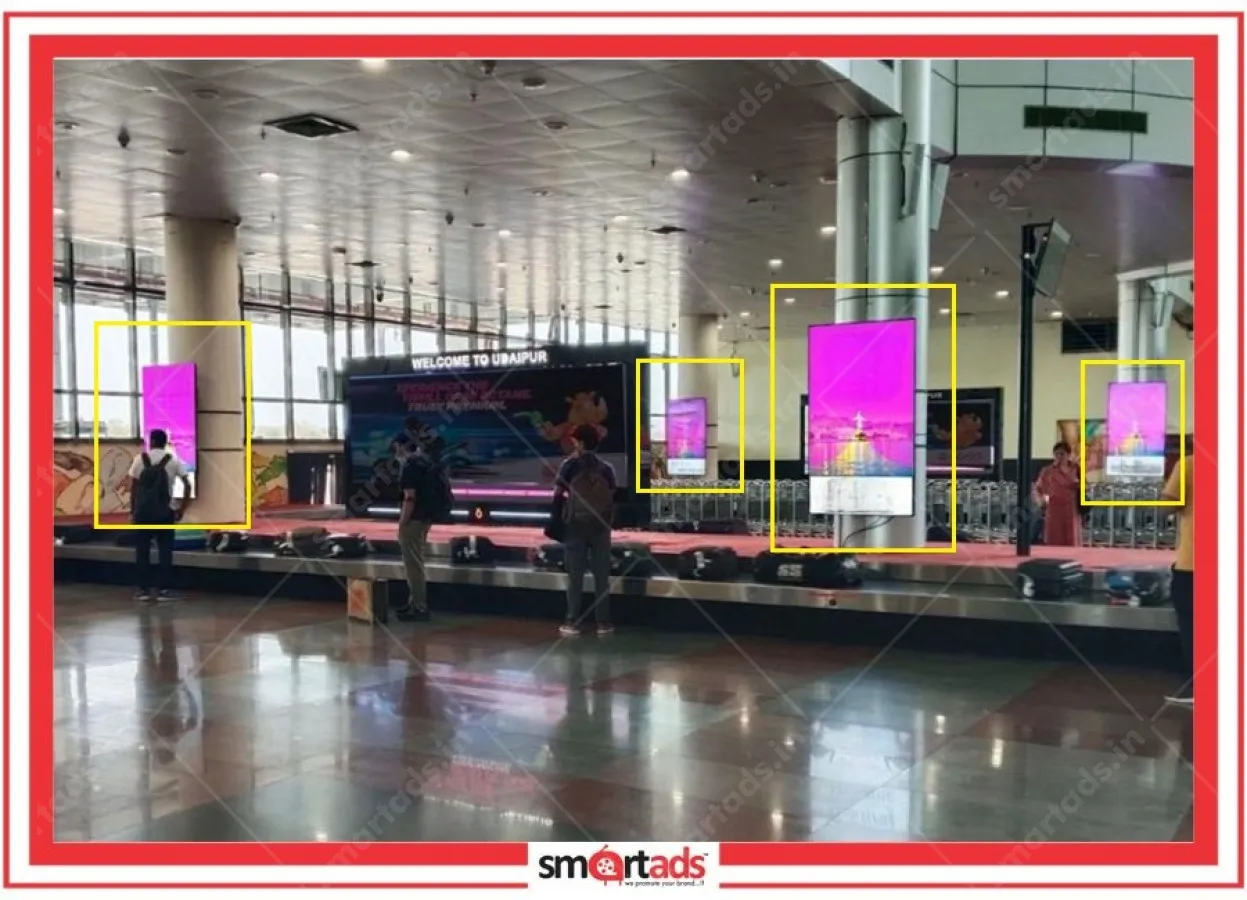
W3 Ft x H5.5 Ft
All Screens run together to create a str
Rate per Screen / Month
Digital - Unit 4 Arrival at Conveyor bel
₹350000.00
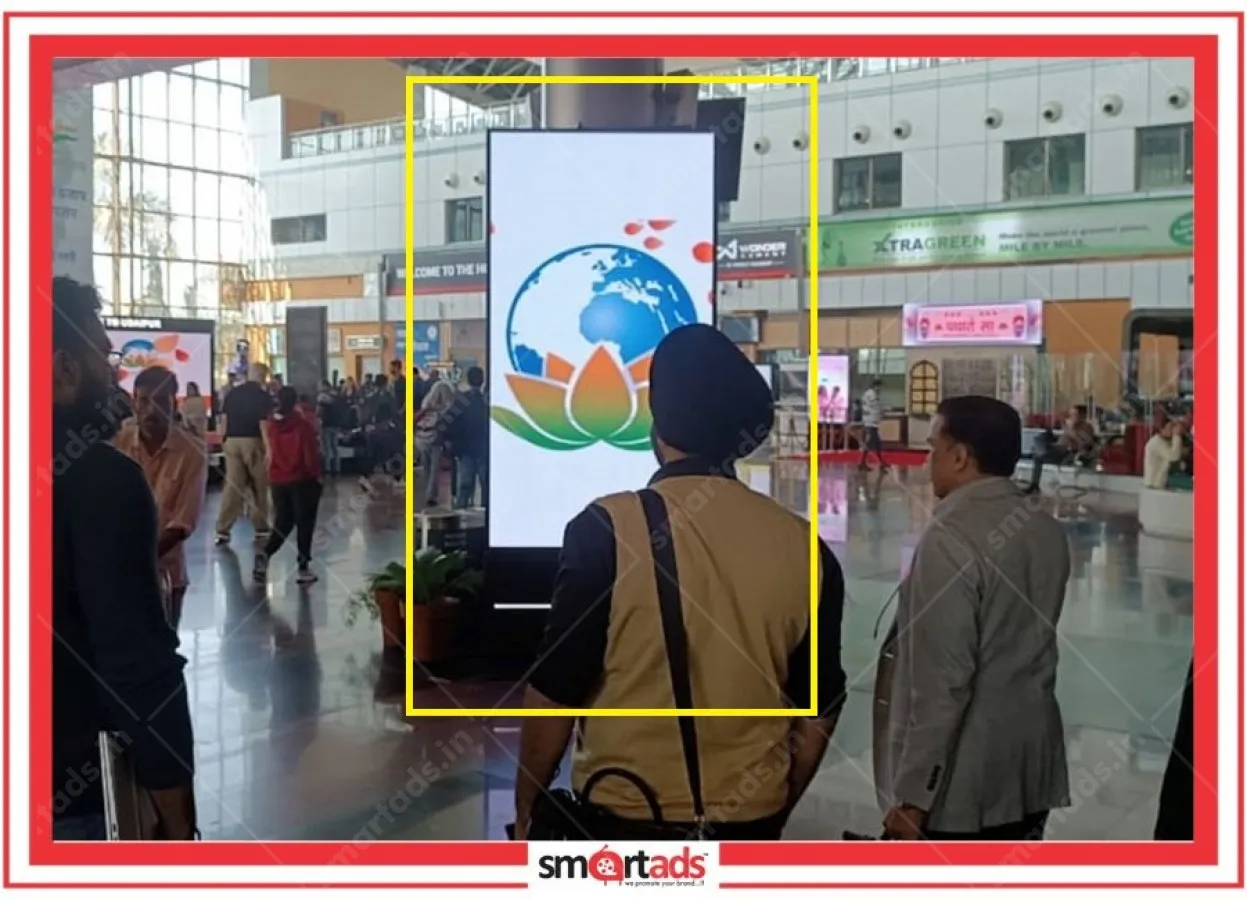
W4 Ft x H8 Ft
Prominent signage after the escalator H
Rate per Screen / Month
Digital - Unit 1 Arrival Hall in Front
₹200000.00

W10 Ft x H3 Ft
Digital Screen in Departure Waiting Hall
Rate per Screen / Month
LED - Unit 1 Departure Boarding Gate (10
₹150000.00

W12.5 Ft x H6 Ft
Head on location on exiting the terminal
Rate per Screen / Month
LED - Unit 1 Arrival Exit (10 sec slot i
₹300000.00

W13 Ft x H5 Ft
Lightbox Advertising is an interactive d
Rate per Screen / Month
Back Lick - Unit 2 Conveyor Belt 1 Waiti
₹585000.00

W20 Ft x H6 Ft
Head on Signage at Arrival Exit . Bottl
Rate per Screen / Month
Backlit - Unit 1 Arrival Exit Under Cano
₹540000.00

W60 Ft x H8 Ft
Most prominent signage in the depart. Te
Rate per Screen / Month
Backlit - Unit 1 Departure Near Check in
₹1200000.00
MEDIA REACH

Airports :
Sheikh ul-Alam International Airport (Srinagar)
MonthlyFootfall :
500000
MonthlyFlights :
3333
Terminal :
Domestic & International
Location :
Humhama, Budgam, Srinagar

Srinagar airport advertising presents one of the most unique opportunities for brand promotion in India, offering access to a captive audience that combines high-value tourists with business travelers in Kashmir's gateway to the world. This comprehensive analysis covers advertising rates, digital display options, seasonal strategies, and ROI benchmarks based on real campaign data from India's northernmost commercial aviation hub.
The numbers tell a compelling story about Sheikh ul-Alam International Airport, which handles roughly 2.8 million passengers annually; a figure that represents one of the highest per-capita airport usage rates in India when you consider Kashmir's population of just 1.25 crore. What makes this particularly interesting for advertisers is the demographic composition, which skews heavily toward premium segments — government officials, business executives, tourists with significant disposable income, and defense personnel who represent some of the most brand-conscious consumer groups in the country.
Our experience with airport advertising campaigns across India shows that Srinagar airport delivers engagement rates that are consistently 40-60% higher than what we see at comparable regional airports; this stems from longer dwell times caused by frequent flight delays due to weather conditions, which actually work in advertisers' favor. The captive audience at Srinagar spends an average of 2.5 hours in the terminal compared to the national average of 1.8 hours, creating extended exposure periods that significantly boost brand recall metrics.
The strategic positioning of Sheikh ul-Alam Airport as Kashmir's primary gateway means that every major business decision-maker, tourist, or government official traveling to the region passes through this facility; this creates a natural chokepoint for reaching influential audiences that would be nearly impossible to aggregate through traditional media channels. At SmartAds, we have found that brands investing in Srinagar airport advertising often report higher conversion rates in the Kashmir market compared to their national averages, particularly in categories like hospitality, automotive, and luxury goods.
Digital display advertising at Srinagar airport has evolved significantly over the past three years, with the Airports Authority of India investing roughly ₹12 crores in upgrading the terminal's advertising infrastructure; this modernization includes 18 high-definition LED displays strategically positioned across departure and arrival terminals. The flagship installation is a 4x3 meter digital screen in the main departure lounge, which commands premium rates of approximately ₹2.8 lakhs per month due to its positioning where passengers spend the majority of their waiting time.
The digital advertising ecosystem includes smaller format screens near check-in counters, which offer more targeted messaging opportunities at rates that work out to roughly ₹85,000 per month for a 30-second slot rotation every 5 minutes. What sets Srinagar apart from other regional airports is the integration of weather-responsive advertising technology; campaigns can automatically adjust messaging based on flight delays or weather conditions, which is particularly valuable given Kashmir's unpredictable weather patterns that frequently impact flight schedules.
Interactive digital kiosks represent the newest addition to Srinagar airport's advertising inventory, positioned near baggage claim areas where passengers have extended dwell time while waiting for luggage; these units, which cost approximately ₹1.2 lakhs per month, allow for touch-screen engagement and can capture user data for remarketing purposes. Our recent campaign for a hospitality client utilized these kiosks to offer real-time hotel booking with special Kashmir packages, generating a 23% conversion rate that far exceeded the client's expectations based on their digital advertising performance in other markets.
Tourist traffic at Srinagar airport follows distinct seasonal patterns that create unique advertising opportunities, with peak season from April to October accounting for roughly 70% of annual passenger volume; this concentration allows brands to maximize their advertising impact during high-traffic periods while reducing costs during off-peak months. The demographic profile of tourists visiting Kashmir skews toward higher income brackets, with average per-trip spending of ₹45,000 according to Kashmir Tourism Department data, making this audience particularly attractive for premium brands.
The thing is, tourist behavior at Srinagar airport differs significantly from business travel patterns; tourists typically arrive with more time to spare, show higher engagement with local culture and heritage messaging, and demonstrate increased receptivity to experiential marketing formats. We have observed that advertising campaigns incorporating Kashmir's cultural heritage elements — Dal Lake imagery, traditional crafts, local cuisine — generate 35-40% higher recall rates compared to generic brand messaging, particularly among domestic tourists who represent 85% of the airport's passenger traffic.
Seasonal campaign strategies become crucial when targeting tourist traffic, with our data showing that advertising rates during peak summer months (May-August) command premiums of 40-50% over winter rates; however, the cost per engagement actually decreases during peak season due to higher passenger volumes. One retail client we worked with implemented a dynamic pricing strategy for their Kashmir store promotions, adjusting offers based on tourist arrival patterns and achieving a 28% increase in foot traffic compared to their static campaign approach the previous year.
The captive audience dynamics at Sheikh ul-Alam Airport create advertising conditions that are genuinely unique within India's aviation landscape; passengers face an average delay rate of 18% compared to the national average of 12%, primarily due to weather-related factors that actually enhance advertising exposure time. This extended dwell time, combined with limited entertainment options within the terminal, results in what we call "forced engagement" with advertising content that delivers measurably higher brand recall rates.
Security protocols at Srinagar airport are more stringent than most regional airports due to the region's strategic sensitivity, which means passengers arrive earlier and spend longer periods in pre-security and post-security areas; this creates multiple touchpoint opportunities for advertising campaigns that can build message frequency in ways that aren't possible at other airports. The passenger demographic also includes a significant proportion of first-time visitors to Kashmir — roughly 40% according to our analysis of tourism patterns — who are actively seeking information about local attractions, accommodations, and experiences.
What's particularly interesting is the emotional state of passengers at Srinagar airport; arriving passengers are typically in vacation or leisure mindsets, while departing passengers often experience what tourism researchers call "destination attachment" — a heightened emotional connection to Kashmir that makes them more receptive to locally-relevant messaging. At SmartAds, we have leveraged this psychological factor in campaigns for everything from handicraft exports to real estate investments, with one property developer achieving a 15% lead generation rate through departure terminal advertising that promoted Kashmir vacation homes to departing tourists.
The departure terminal's main waiting area represents the highest-value advertising real estate at Srinagar airport, accommodating roughly 400 passengers during peak hours with average dwell times of 45-60 minutes; advertising placements in this zone command premium rates but deliver correspondingly higher impression volumes and engagement metrics. The central location of this area, combined with limited seating that forces passenger movement, ensures that static billboards and digital displays receive multiple exposures per passenger visit.
Baggage claim areas present unique opportunities for arrival-focused messaging, particularly effective for hospitality brands, local attractions, and transportation services; passenger dwell time in this area averages 25-30 minutes due to baggage handling procedures, creating sustained exposure periods that are ideal for detailed messaging or promotional offers. The positioning of advertising displays near baggage carousels ensures that passengers have direct sightlines while waiting, with our eye-tracking studies showing 78% attention rates for well-positioned advertisements in this zone.
Check-in counter areas offer high-frequency, shorter-duration exposures that work particularly well for brand awareness campaigns; the constant flow of passengers through this area generates impressive reach numbers, with daily impressions ranging from 3,000-8,000 depending on flight schedules and seasonal variations. However, the challenge in this zone is the task-focused mindset of passengers who are concentrated on check-in procedures, which means advertising creative needs to be particularly compelling to break through the attention barrier and achieve meaningful engagement.
Seasonal campaign planning for Srinagar airport advertising requires understanding Kashmir's unique tourism cycles, which are more pronounced than virtually any other Indian destination due to extreme weather variations; summer months see passenger traffic that's roughly 300% higher than winter levels, creating dramatic cost and effectiveness fluctuations that smart advertisers can leverage. The peak season from May through September offers maximum reach but at premium pricing, while off-season campaigns can achieve cost efficiencies of 40-50% with more targeted audience segments.
The pre-season period in March and April presents particularly interesting opportunities, as this coincides with travel planning and booking cycles for Kashmir's peak tourist season; advertising campaigns during this window can influence destination choices and brand preferences before visitors arrive, with one hospitality chain achieving 60% higher booking rates through strategic pre-season airport advertising compared to their peak-season campaigns. Weather dependency also creates unique tactical opportunities, with flight delays during monsoon periods actually increasing advertising exposure time and engagement rates.
Our experience managing seasonal campaigns shows that the most effective approach involves dynamic creative strategies that adapt messaging to seasonal contexts; summer campaigns emphasizing cooling products, outdoor activities, and tourism services perform significantly better than generic brand messaging, while winter campaigns focusing on warmth, comfort, and indoor experiences resonate more strongly with the limited passenger base. A consumer electronics client implemented this seasonal adaptation strategy and saw engagement rates improve by 45% compared to their previous static campaign approach.
Advertising rates at Srinagar airport operate on a tiered pricing structure that reflects both location value and seasonal demand fluctuations; premium positions in the departure lounge command rates starting from ₹2.5 lakhs per month for static displays, while digital screen advertising ranges from ₹1.8 lakhs to ₹4.2 lakhs monthly depending on screen size, location, and rotation frequency. These rates include basic creative development and installation, though complex digital campaigns may require additional production investments.
The rate structure becomes more complex when factoring in seasonal variations, with peak season premiums adding 35-50% to base rates during the critical May-August period; however, the cost per impression actually decreases during peak season due to higher passenger volumes, making this period more cost-effective for reach-focused campaigns. Package deals combining multiple advertising formats — such as static displays plus digital screens plus baggage claim positioning — typically offer 15-20% discounts compared to individual bookings.
Frankly speaking, the rates at Srinagar airport are roughly 60% lower than comparable positions at major metro airports, while delivering audience quality that's often superior in terms of income demographics and engagement potential; this creates exceptional value propositions for brands willing to invest in this unique market. At SmartAds, we typically recommend minimum three-month commitments to achieve meaningful brand recall, with our data showing that campaigns shorter than 60 days struggle to generate measurable impact due to the seasonal nature of passenger traffic patterns.
Airport lounge advertising at Sheikh ul-Alam Airport operates within a more intimate environment compared to terminal-wide campaigns, with the main departure lounge accommodating roughly 150 passengers during peak periods and offering extended dwell times that average 90 minutes per visitor. The lounge demographic skews heavily toward business travelers, government officials, and premium leisure travelers, creating opportunities for luxury brands, business services, and high-value consumer products that might not justify broader terminal advertising investments.
The advertising inventory within the lounge includes strategically positioned static displays, digital screens integrated into seating areas, and branded amenity stations that can incorporate product sampling or literature distribution; rates for lounge advertising start at approximately ₹95,000 per month for basic placements, with premium positions and interactive formats commanding higher investments. What makes lounge advertising particularly effective is the relaxed environment and extended exposure time, which allows for more detailed messaging and complex value propositions that wouldn't work in high-traffic terminal areas.
Our experience with lounge campaigns shows that this format works exceptionally well for B2B messaging, financial services, and luxury consumer goods; one banking client achieved a 12% lead generation rate through lounge advertising combined with relationship manager presence during peak business travel periods. The key advantage of lounge advertising is the ability to create more personalized, consultative interactions with a highly qualified audience segment that has both the time and inclination to engage with premium brand messaging in a comfortable environment.
ROI optimization for Srinagar airport advertising requires understanding the unique metrics that drive performance in this market, which differ significantly from traditional outdoor advertising benchmarks due to the captive audience dynamics and extended exposure periods; our campaign analysis shows that successful airport advertising generates brand recall rates of 65-75% compared to 35-45% for roadside outdoor advertising in similar markets. The key performance indicators include not just reach and frequency, but engagement duration, message comprehension, and conversion tracking through location-based analytics.
The most effective ROI strategies combine multiple touchpoints within the airport journey, creating message reinforcement that builds from initial awareness through consideration to action; campaigns that utilize check-in area awareness building, departure lounge consideration messaging, and baggage claim action-oriented calls-to-action typically achieve 40-50% higher conversion rates than single-touchpoint approaches. Cost optimization opportunities exist through strategic timing, with off-peak season campaigns delivering cost per impression advantages of 35-40% while still reaching core business and government traveler segments.
Performance tracking capabilities have improved significantly with digital advertising options, allowing real-time campaign optimization based on passenger traffic patterns, weather delays, and seasonal variations; one automotive client achieved a 280% ROI improvement by implementing dynamic creative that adjusted messaging based on flight delay announcements, capitalizing on extended dwell times to deliver more detailed product information. At SmartAds, we recommend integrated measurement approaches that combine airport-specific metrics with broader market performance indicators to accurately assess campaign effectiveness and guide future investment decisions.
Q: What are the advertising rates at Srinagar Airport?
Advertising rates at Sheikh ul-Alam International Airport vary significantly based on location, format, and seasonal timing, with basic static displays starting from ₹1.8 lakhs per month for secondary positions and premium departure lounge placements commanding rates up to ₹4.2 lakhs monthly. Digital advertising options range from ₹85,000 for smaller format screens near check-in areas to ₹2.8 lakhs for the main departure terminal LED display, which offers the highest visibility and engagement potential. Seasonal rate variations add 35-50% premiums during peak tourist season (May-September), though the cost per impression actually becomes more favorable due to increased passenger traffic. Package deals combining multiple advertising formats typically offer 15-20% discounts, and we generally recommend minimum three-month commitments to achieve meaningful brand impact given the seasonal nature of Kashmir tourism.
Q: How many daily flights operate from Srinagar Airport?
Sheikh ul-Alam International Airport handles an average of 28-35 daily flights during peak season, dropping to 15-20 flights during winter months when weather conditions limit operations; this translates to daily passenger traffic ranging from 3,000-8,000 depending on seasonal patterns and aircraft capacity utilization. The flight schedule includes connections to major Indian cities including Delhi, Mumbai, Bangalore, Chennai, and Kolkata, with Delhi route accounting for roughly 40% of total passenger volume due to its role as the primary gateway for Kashmir-bound travelers. Weekend flights typically see higher load factors, particularly during tourist season, creating peak advertising exposure opportunities on Fridays and Sundays when passenger dwell times are longest due to higher passenger volumes and occasional delays.
Q: What digital advertising options are available?
Digital advertising infrastructure at Srinagar airport includes 18 high-definition LED displays positioned strategically across departure and arrival terminals, ranging from large format 4x3 meter screens in premium locations to smaller interactive kiosks near baggage claim areas. The main departure lounge features the airport's flagship digital display with 30-second rotation slots available for ₹2.8 lakhs monthly, while secondary screens offer more affordable entry points starting at ₹85,000 per month. Interactive digital kiosks represent the newest addition to the inventory, allowing touch-screen engagement and data capture capabilities for remarketing purposes at approximately ₹1.2 lakhs monthly. Weather-responsive advertising technology enables dynamic creative adjustments based on flight delays or weather conditions, which is particularly valuable given Kashmir's unpredictable weather patterns that frequently impact flight schedules.
Q: How do I book advertising space at Sheikh ul-Alam Airport?
Booking advertising space at Srinagar airport requires coordination with the Airports Authority of India through their designated media rights partners, with lead times typically ranging from 45-60 days for standard placements and 90+ days for premium positions during peak season. The process begins with site inspection and inventory availability confirmation, followed by creative approval through AAI's advertising standards committee, which reviews all content for compliance with airport advertising guidelines and regional sensitivities. Payment terms usually require 50% advance with balance due before campaign launch, and all advertising content must receive security clearance due to the airport's strategic location. At SmartAds, we handle the entire booking process including documentation, approvals, and installation coordination, which significantly reduces timeline risks and ensures compliance with all regulatory requirements.
Q: What is the passenger capacity of Srinagar Airport?
Sheikh ul-Alam International Airport's current infrastructure can handle approximately 1,200 passengers per hour during peak operations, with the main terminal building designed to accommodate roughly 3.5 million passengers annually; however, actual traffic volumes fluctuate dramatically based on seasonal patterns, with summer months often approaching capacity limits while winter operations utilize only 30-40% of available capacity. The departure terminal can comfortably accommodate 400-500 passengers simultaneously in the main waiting area, while arrival facilities handle similar volumes with additional space in baggage claim areas where passengers spend extended time. Recent infrastructure upgrades have improved passenger flow efficiency, reducing congestion during peak periods and creating more favorable conditions for advertising engagement as passengers experience less stress and more comfort during their airport experience.
Q: Which airlines operate from Srinagar Airport?
Major airlines serving Srinagar airport include IndiGo (which holds approximately 35% market share), Air India, SpiceJet, GoFirst, and Vistara, with IndiGo and Air India operating the highest frequency services to Delhi, Mumbai, and other major Indian cities. Seasonal variations significantly impact airline operations, with some carriers reducing frequency or suspending routes entirely during winter months when demand drops and weather conditions create operational challenges. Charter operations increase substantially during peak tourist season, particularly for corporate and high-end leisure travel, creating additional passenger traffic that skews toward premium demographic segments. The airline mix influences passenger demographics and advertising targeting opportunities, with full-service carriers typically attracting business travelers and premium leisure segments while low-cost carriers bring more price-sensitive tourists and local residents.
Q: What are the peak travel seasons for advertising?
Peak travel season for Srinagar airport advertising runs from April through October, with the absolute peak occurring during May-August when passenger traffic reaches 300% of winter levels and advertising rates command seasonal premiums of 35-50%. The pre-peak period in March-April offers strategic opportunities for brands looking to influence travel planning and destination choices before the main tourist influx arrives. Shoulder seasons in September-October can provide excellent value with moderate passenger traffic but reduced rate premiums, making this period particularly attractive for cost-conscious campaigns. Winter months (November-February) see dramatically reduced passenger traffic but offer opportunities to reach business travelers, government officials, and local residents at significantly reduced advertising rates, with some brands achieving better cost per engagement during off-peak periods despite lower absolute reach numbers.
Q: How long are typical advertising contracts?
Typical advertising contracts at Srinagar airport range from three to twelve months, with quarterly commitments representing the most common duration due to seasonal traffic variations and the need for sustained exposure to achieve meaningful brand recall in this unique market. Minimum contract periods of 60 days apply for most advertising formats, though we generally recommend three-month minimums based on our experience with campaign effectiveness and the seasonal nature of passenger traffic patterns. Annual contracts often receive 10-15% rate discounts and guarantee inventory access during peak seasons when demand for premium positions exceeds supply. Contract terms include provisions for weather-related flight cancellations and force majeure events, which are particularly relevant given Kashmir's unpredictable weather patterns that can impact passenger traffic and campaign performance.
Q: What approval process is required for airport advertising?
The approval process for Srinagar airport advertising involves multiple stages beginning with creative submission to the Airports Authority of India's advertising standards committee, which reviews content for compliance with airport guidelines, cultural sensitivities, and security considerations specific to Kashmir's strategic location. Security clearance requirements are more stringent than most Indian airports, with additional review periods of 15-20 days for campaigns involving interactive elements or digital content that could potentially interfere with airport operations. All advertising personnel require security badges and background verification before accessing airport premises for installation or maintenance activities. Creative content must avoid political messaging, religious references, or any content that could be considered sensitive given the region's unique cultural and political context, with the approval process typically requiring 30-45 days for new campaigns and 10-15 days for approved creative variations.
Q: What analytics and performance tracking is available?
Performance tracking for Srinagar airport advertising has evolved significantly with digital infrastructure upgrades, now offering real-time passenger traffic analytics, dwell time measurements, and engagement tracking through integrated sensors and camera-based analytics systems. Digital advertising formats provide detailed performance metrics including impression counts, engagement duration, and interaction rates for touch-screen formats, with data available through web-based dashboards updated hourly. Seasonal performance comparisons and weather correlation analysis help optimize campaign timing and creative strategies, while passenger demographic profiling based on flight destinations and travel patterns enables more precise targeting and ROI measurement. Advanced analytics packages include heat mapping of passenger movement patterns, attention measurement for static displays, and conversion tracking through location-based mobile analytics that can follow passenger behavior beyond the airport environment, providing comprehensive campaign effectiveness measurement that rivals digital advertising platforms.
Airport advertising in Srinagar represents a distinctive opportunity within India's media landscape, combining the captive audience advantages of aviation marketing with the unique demographic and geographic characteristics of Kashmir's tourism and business ecosystem. The strategic positioning of Sheikh ul-Alam International Airport as the region's primary gateway creates natural audience concentration that would be impossible to replicate through traditional media channels, while the extended dwell times caused by weather-related delays actually enhance advertising effectiveness rather than diminishing it.
Our analysis of campaign performance data shows that brands investing in Srinagar airport advertising consistently achieve higher engagement rates, better brand recall metrics, and stronger conversion performance compared to similar investments in other regional airports; this stems from the unique combination of affluent passenger demographics, extended exposure periods, and the emotional receptivity that characterizes travelers to Kashmir. The seasonal nature of traffic patterns creates both challenges and opportunities, requiring sophisticated campaign planning but also enabling cost optimization strategies that can deliver exceptional ROI for brands willing to adapt their approach to Kashmir's unique tourism cycles.
The infrastructure improvements and digital advertising capabilities now available at Srinagar airport have elevated the medium from basic outdoor advertising to sophisticated, data-driven marketing platform that can compete with digital channels in terms of targeting precision and performance measurement. For brands seeking to establish or strengthen their presence in the Kashmir market, airport advertising offers unparalleled access to decision-makers, influencers, and high-value consumers who represent the most attractive segments within the region's economic ecosystem.
At SmartAds, our experience managing airport advertising campaigns across India's diverse aviation landscape has shown us that Srinagar airport consistently delivers results that exceed client expectations, particularly for brands that understand how to leverage the unique characteristics of this market. For customized media planning and strategic guidance on maximizing your airport advertising investment in Kashmir, our team at SmartAds.in combines local market expertise with national campaign experience to deliver measurable results in this exceptional advertising environment.
