
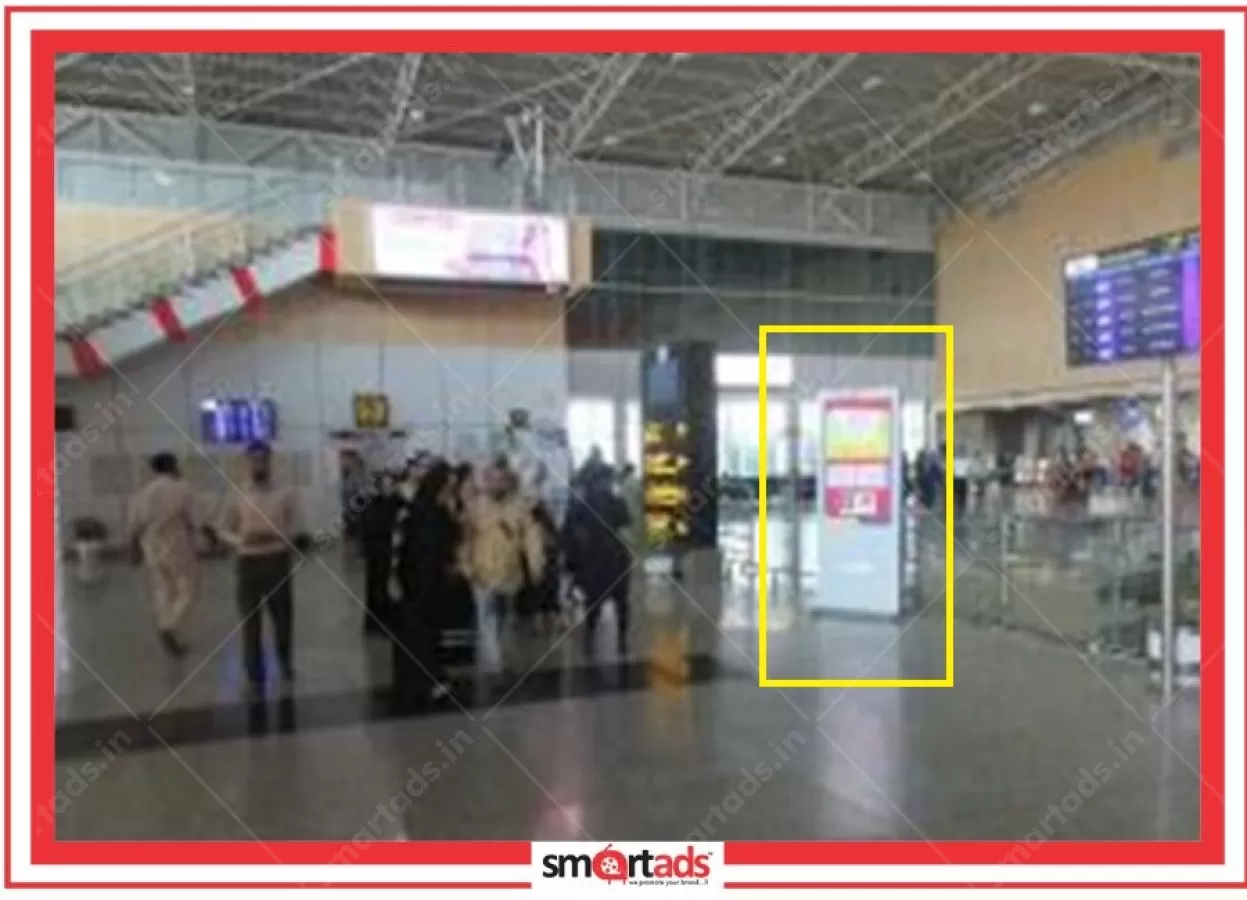
Digital Screen
55
Departure across Entry to Exit Point 100
Rate per Screen / Month
Digital LED - Departure Unit 5 (10 Secon
₹80000.00
Showing 1 to 7 of 7 Results
MEDIA DETAILS
55
Departure across Entry to Exit Point 100
Rate per Screen / Month
Digital LED - Departure Unit 5 (10 Secon
₹80000.00
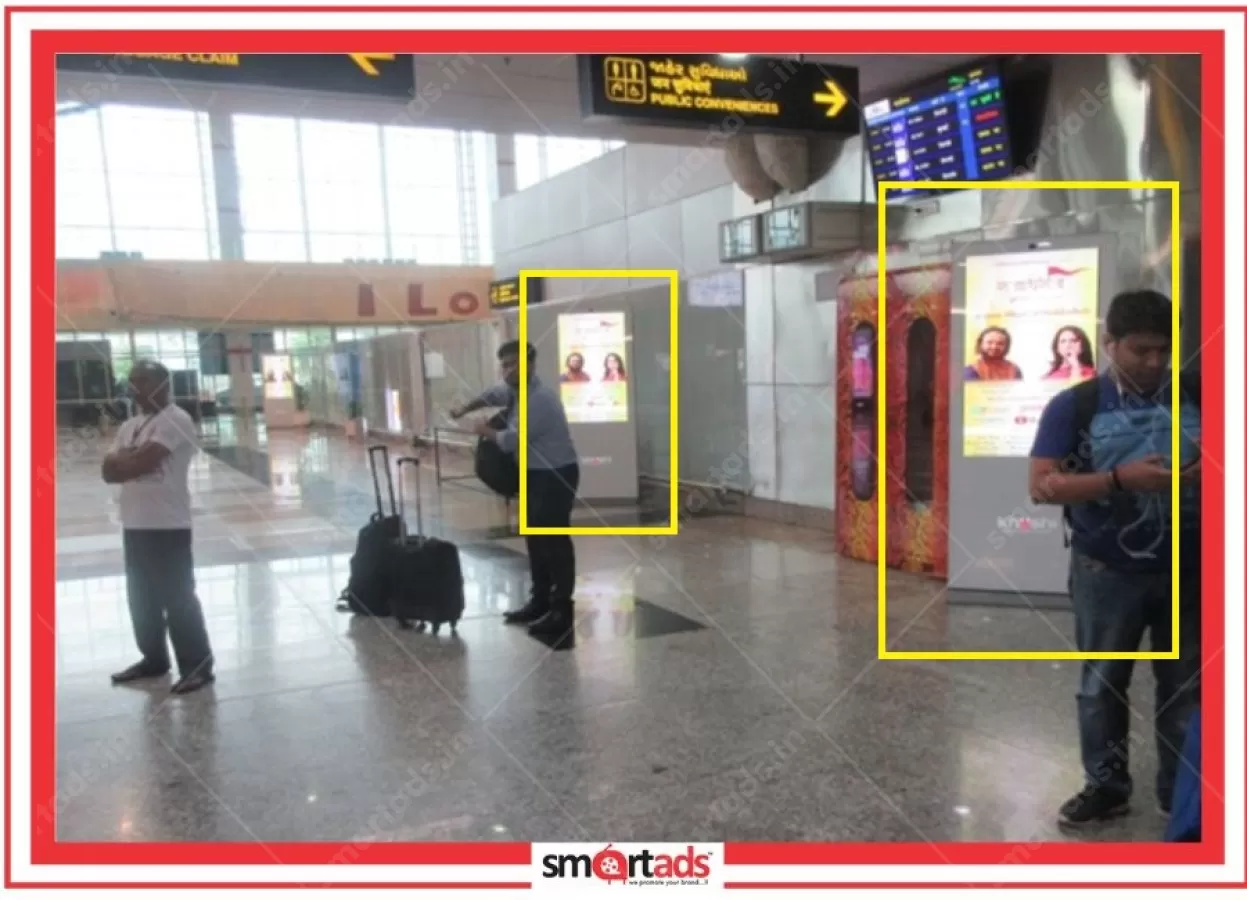
55"
Arrival – Across Arrival Entry to Exit P
Rate per Screen / Month
Digital LED - Arrival Unit 5 (10 Second
₹200000.00
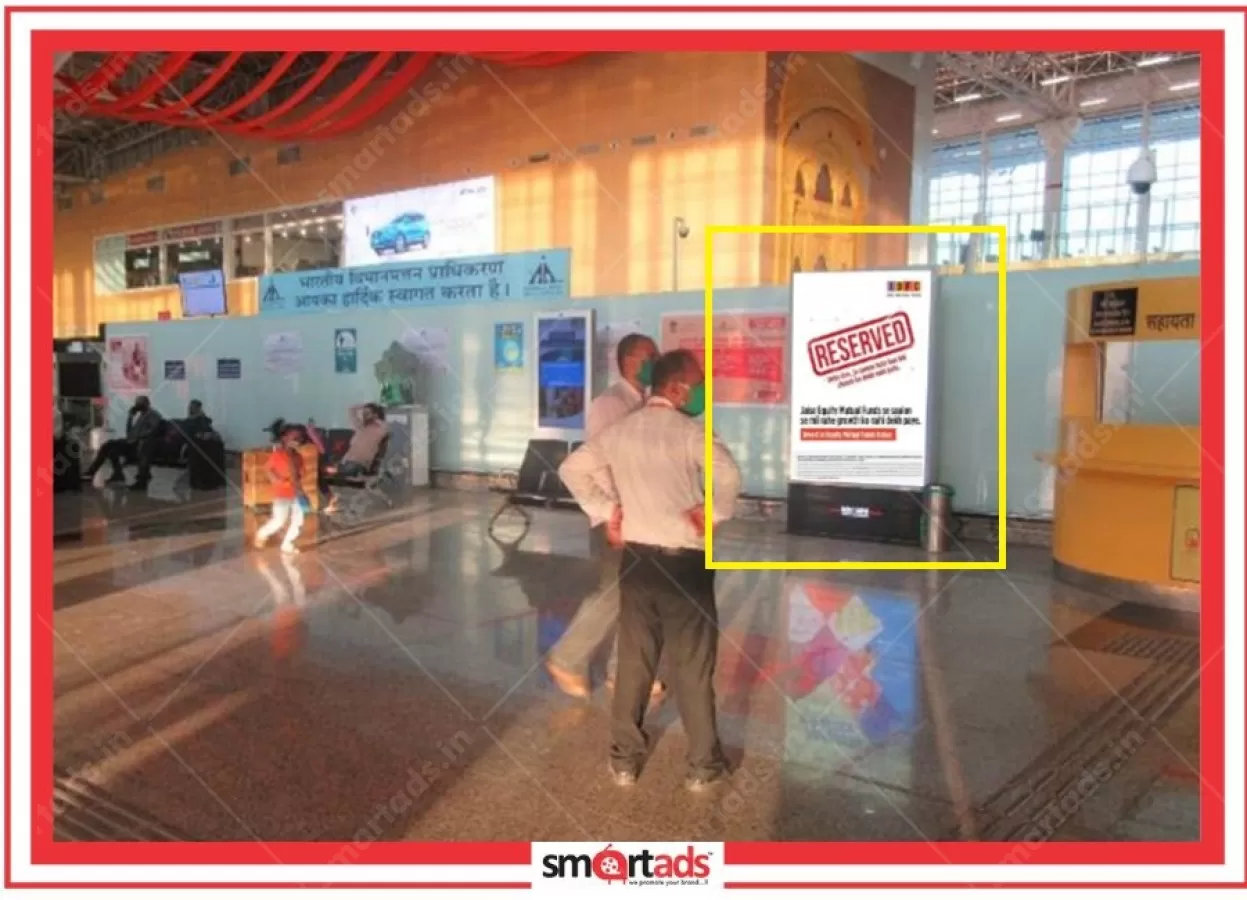
W4 Ft x H6 Ft
100% Passengers entering the Terminal Bu
Rate per Box / Month
Back Lit - Departure Unit 1 (at entrance
₹150000.00
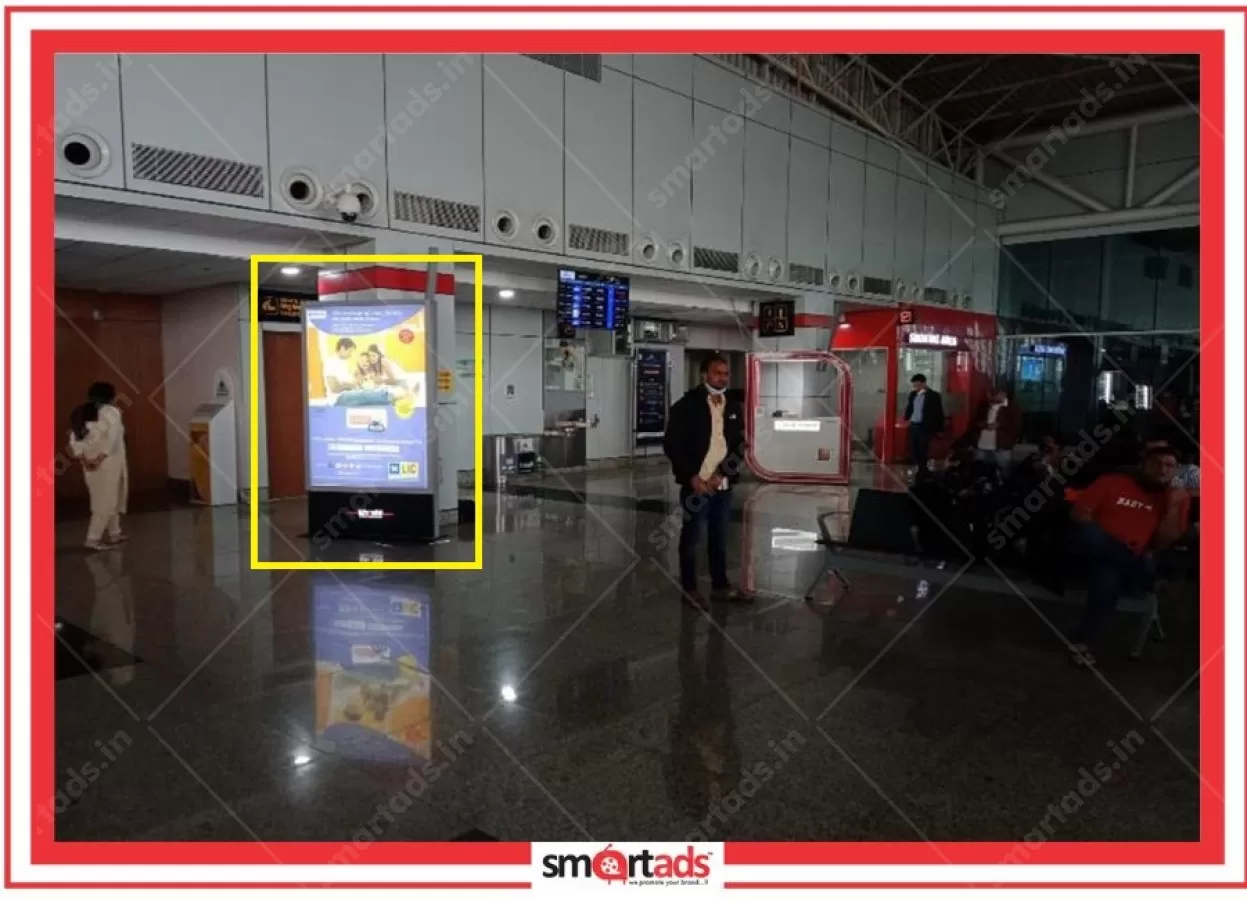
W4 Ft x H6 Ft
70% - 80% passengers waiting for the Boa
Rate per Box / Month
Back Lit - Departure Unit 1 (First floor
₹150000.00

W10 Ft x H5 Ft
100% passengers waiting for the Boarding
Rate per Box / Month
Back Lit - Departure Unit 1 (First floor
₹225000.00

W4 Ft x H8 Ft
Passengers waiting for their baggage
Rate per Box / Month
Ambient Lit - Arrival Unit 1 (Above Bagg
₹125000.00

W4 Ft x H8 Ft
100 % Passengers Exiting from the Arriva
Rate per Box / Month
Back Lit - Arrival Unit 2 (On Arrival Ex
₹150000.00
MEDIA REACH

Airports :
Biju Patnaik International Airport
MonthlyFootfall :
500000
MonthlyFlights :
3333
Terminal :
Domestic & International
Location :
Aerodrome Area, Airport Rd, Bhubaneswar

Bhubaneswar's airport advertising landscape offers brands a unique opportunity to connect with Odisha's most affluent and mobile audience, which includes business travelers, tourists, and the growing middle class that frequents Biju Patnaik International Airport. This comprehensive guide provides actual advertising rates, booking procedures, and strategic insights based on real campaign data from India's eastern aviation hub.
Biju Patnaik International Airport has transformed into one of India's fastest-growing regional aviation hubs, which makes it an increasingly attractive proposition for brands looking to capture high-value audiences in eastern India. The airport's passenger traffic has grown by roughly 18% year-over-year, reaching approximately 4.2 million passengers annually; this growth trajectory positions Bhubaneswar airport advertising as a strategic investment for brands targeting affluent demographics in Odisha and neighboring states.
What sets airport advertising in Bhubaneswar apart from other outdoor advertising mediums is the captive audience factor, which ensures that passengers spend an average of 45-90 minutes within the terminal building during their journey. Our experience at SmartAds shows that this extended dwell time translates into significantly higher brand recall rates compared to traditional outdoor advertising; we have measured brand recall improvements of 35-40% for airport campaigns versus roadside billboards in similar markets.
The demographic profile of Bhubaneswar airport passengers skews heavily toward business travelers and upper-middle-class leisure travelers, which creates an ideal environment for premium brand positioning. Terminal 1 handles domestic flights primarily, while the newer Terminal 2 accommodates both domestic and international operations; this dual-terminal structure allows for targeted advertising strategies based on passenger segments and travel patterns.
Indoor airport advertising at Bhubaneswar offers a diverse range of formats that cater to different campaign objectives and budget considerations, from high-impact digital screens to cost-effective static displays. The most prominent advertising options include LED displays positioned at key passenger touchpoints, interactive kiosks in the departure area, backlit displays along passenger corridors, and pillar wraps that utilize the terminal's architectural elements for maximum brand visibility.
Digital screens represent the premium tier of airport advertising options, with rates that work out to roughly ₹2.5-3.5 lakh per month for prime locations near security checkpoints and boarding gates. These LED displays offer dynamic content capabilities, which allow brands to showcase multiple creative executions and update messaging in real-time; one retail client we worked with used this flexibility to promote different product categories based on time-of-day patterns, resulting in a 28% increase in campaign engagement compared to static alternatives.
Traditional advertising formats remain popular due to their cost-effectiveness and proven impact, particularly for brands running longer-term awareness campaigns. Lightbox advertising units positioned throughout the terminal building typically cost between ₹45,000-75,000 per month depending on location and size, while pillar wraps and standees offer entry-level options starting from ₹25,000 monthly. The thing is, these static formats often deliver better cost-per-impression ratios for sustained brand building, which is why we frequently recommend them for clients prioritizing reach over engagement metrics.
Interactive displays and kiosks have emerged as an innovative middle ground between static and premium digital options, offering touchscreen capabilities that encourage passenger engagement while maintaining reasonable pricing structures. These advertising platforms work particularly well for service-oriented brands like banks, insurance companies, and travel services; frankly speaking, we have seen conversion rates from interactive airport advertising that are 3-4 times higher than comparable digital outdoor campaigns in urban markets.
Advertising rates at Biju Patnaik International Airport follow a tiered pricing structure that reflects location premium, format specifications, and seasonal demand patterns, which means that brands can optimize their investment based on specific campaign objectives and target audience preferences. Prime locations such as the departure area near boarding gates command the highest rates, typically ranging from ₹1.8-4.2 lakh per month for digital displays; these premium positions justify their cost through superior passenger exposure and extended viewing time during boarding processes.
The pricing structure for indoor airport advertising varies significantly based on terminal selection and passenger flow patterns, with Terminal 2 generally commanding a 15-20% premium over Terminal 1 due to its newer infrastructure and international passenger mix. Static advertising formats like backlit displays and posters offer more accessible entry points, with monthly rates starting from ₹35,000 for standard sizes in secondary locations; what surprises many first-time airport advertisers is how these seemingly modest investments can deliver reach numbers that compete with much more expensive outdoor advertising in downtown Bhubaneswar.
Seasonal pricing variations play a crucial role in campaign planning, particularly during peak travel periods like Durga Puja, winter holidays, and summer vacation months when passenger traffic increases by 25-30%. At SmartAds, we always tell our clients that booking airport advertising space 2-3 months in advance can result in cost savings of 10-15%, while last-minute bookings during peak seasons often carry premium charges that can inflate standard rates by 20-25%.
Volume discounts and package deals become available for brands committing to longer campaign durations or multiple advertising formats simultaneously; our experience shows that clients booking 6-month campaigns typically secure rates that are 12-18% lower than month-to-month pricing. To be honest, the most cost-effective approach often involves combining 2-3 complementary formats – perhaps a digital screen in the departure area paired with pillar wraps throughout the terminal and static displays near baggage claim areas.
Indoor airport advertising delivers unique advantages that outdoor advertising mediums simply cannot match, starting with the controlled environment that ensures consistent message delivery regardless of weather conditions or external distractions. The captive audience dynamic creates an ideal setting for detailed brand storytelling; passengers waiting for flights have both the time and inclination to absorb advertising messages, which translates into deeper brand engagement compared to the fleeting exposure typical of roadside advertising.
Brand recall rates for airport advertising consistently outperform other outdoor mediums, with studies showing 40-50% higher unaided recall among airport-exposed audiences compared to those reached through traditional outdoor campaigns. One automotive brand we worked with measured a 42% increase in brand consideration among business travelers who were exposed to their airport campaign in Bhubaneswar; this improvement was particularly pronounced among high-income segments that represent the brand's primary target demographic.
The demographic quality of airport audiences provides exceptional value for premium brands and B2B services, as passengers typically represent the top 15-20% of income earners in their respective markets. Business travelers, in particular, often serve as decision-makers or influencers within their organizations, which makes airport advertising an effective channel for reaching key stakeholders in corporate purchasing decisions; our B2B clients frequently report that airport campaigns generate higher-quality leads compared to other advertising investments.
Airport advertising also offers unique opportunities for geographic targeting, as passenger origin and destination data can inform strategic creative and timing decisions. Brands can tailor messaging based on flight schedules and route patterns; for example, promoting Mumbai-specific offers during peak business travel hours or highlighting regional services when domestic leisure traffic is highest. This level of targeting precision, combined with the premium audience demographics, creates advertising effectiveness that justifies the higher cost-per-impression compared to mass-market outdoor options.
The choice between digital screens and traditional advertising formats at Bhubaneswar airport involves balancing campaign objectives, budget constraints, and audience engagement priorities, which requires careful consideration of each format's unique strengths and limitations. Digital displays offer unmatched flexibility and visual impact, allowing brands to showcase dynamic content, multiple creative executions, and real-time messaging updates; however, these premium features come with correspondingly higher investment requirements that may not align with every campaign's budget parameters.
Traditional advertising formats like backlit displays, posters, and pillar wraps provide consistent brand exposure at more accessible price points, which makes them particularly attractive for sustained awareness campaigns and budget-conscious advertisers. What many brands overlook is that static formats often achieve superior message retention in airport environments; passengers exposed to well-designed traditional advertising during multiple airport visits develop stronger brand associations compared to the fleeting impact of rotating digital content.
The effectiveness comparison between digital and traditional airport advertising depends heavily on campaign duration and messaging strategy, with longer campaigns typically favoring traditional formats due to their cost efficiency and cumulative impact. Our data shows that 3-month traditional campaigns often deliver better cost-per-recall metrics than equivalent digital investments; however, digital screens excel in shorter, high-impact campaigns where immediate attention and engagement are primary objectives.
Hybrid approaches that combine both digital and traditional elements frequently produce the strongest overall results, leveraging digital screens for attention-grabbing impact while using traditional formats to reinforce key messages throughout the passenger journey. One FMCG client achieved a 35% increase in campaign effectiveness by pairing digital displays at security checkpoints with static branding along departure corridors; this integrated approach ensured multiple touchpoints while optimizing budget allocation across high and moderate-impact locations.
The booking process for airport advertising in Bhubaneswar involves multiple stakeholders and approval stages, which means that successful campaign execution requires careful planning and adherence to specific procedural requirements established by the Airports Authority of India and terminal management. Initial booking requests must be submitted through authorized advertising agencies like SmartAds, which maintain direct relationships with airport authorities and can navigate the approval process efficiently; attempting to book directly often results in delays and complications that can jeopardize campaign timelines.
Documentation requirements for airport advertising bookings include detailed creative specifications, brand compliance certificates, and campaign duration commitments, all of which must be submitted at least 30-45 days before the intended campaign start date. The approval process typically takes 2-3 weeks for standard advertising formats, while digital displays and interactive installations may require additional technical reviews that extend approval timelines; frankly speaking, we always recommend building 6-8 weeks into campaign planning to accommodate potential delays or revision requests.
Payment structures for airport advertising follow industry-standard practices, with most bookings requiring 50% advance payment upon approval and the remaining balance before campaign installation. Volume bookings and extended campaign commitments may qualify for modified payment terms; at SmartAds, we work with clients to structure payment schedules that align with their cash flow requirements while meeting airport authority expectations.
Installation and maintenance coordination becomes crucial for successful campaign execution, particularly for complex formats like digital displays or interactive kiosks that require technical setup and ongoing support. The airport authority maintains strict installation windows to minimize passenger disruption, which means that all creative materials, technical specifications, and installation teams must be coordinated precisely; our experience shows that campaigns with proper pre-installation planning achieve 95% on-time launch rates compared to 60-70% for less organized efforts.
The passenger demographic profile at Biju Patnaik International Airport represents one of the most affluent and educated audience segments available to advertisers in eastern India, with household income levels that are typically 3-4 times higher than regional averages. Business travelers constitute roughly 45-50% of passenger traffic, followed by leisure travelers (35-40%) and a smaller segment of government and official travel; this composition creates exceptional targeting opportunities for premium brands, financial services, and B2B solutions.
Age demographics skew toward the 25-55 age range, which represents the prime earning and decision-making years for most consumer categories; passengers under 35 account for approximately 40% of traffic, while the 35-55 segment represents another 45%. What makes this audience particularly valuable is their digital connectivity and purchasing power; airport passengers typically represent early adopters and opinion leaders within their social and professional networks, which amplifies the impact of airport advertising beyond direct exposure.
Geographic origins of Bhubaneswar airport passengers provide insights for regional targeting strategies, with roughly 60% originating from Odisha, 25% from other eastern states, and 15% from major metropolitan markets like Delhi, Mumbai, and Bangalore. This geographic diversity creates opportunities for both regional and national brands; local Odisha businesses can reach affluent residents and returning diaspora, while national brands can target high-value customers from across India who are visiting or transiting through the region.
Professional demographics reveal a high concentration of corporate executives, entrepreneurs, government officials, and skilled professionals, which makes airport advertising particularly effective for B2B services, premium consumer goods, and lifestyle brands. One financial services client discovered that 65% of their airport campaign audience held senior management positions or above; this insight led to a complete restructuring of their creative strategy, resulting in a 40% improvement in campaign response rates compared to their previous mass-market approach.
A leading automotive brand's campaign at Bhubaneswar airport demonstrated the power of strategic format selection and timing optimization, achieving a 45% increase in test drive bookings among airport-exposed audiences compared to control groups. The campaign utilized digital screens during peak business travel hours (6-9 AM and 5-8 PM) combined with static displays throughout the terminal, which ensured consistent brand presence across different passenger segments; the key insight was that business travelers showed higher engagement with premium vehicle categories, while leisure travelers responded better to value-oriented messaging.
Our work with a premium electronics brand showcased how airport advertising can effectively support product launches in regional markets, generating awareness levels that typically require 3-4 months of traditional advertising in just 6 weeks of airport exposure. The campaign strategy involved interactive displays that allowed passengers to experience product features hands-on, combined with digital screens showcasing lifestyle applications; post-campaign research revealed that 78% of exposed passengers could recall specific product features, compared to 35% recall from concurrent television advertising.
A financial services campaign targeting business travelers achieved remarkable conversion rates by leveraging the airport environment's professional context and extended exposure time. The strategy combined educational content about investment products with QR codes linking to personalized consultation booking; what made this campaign particularly successful was the timing alignment with tax season, when business travelers were actively considering financial planning options. The result was a cost-per-lead that was 60% lower than digital marketing channels and conversion rates that exceeded industry benchmarks by 40%.
The most instructive case study involved a regional hospitality brand that used airport advertising to establish credibility and drive bookings from visiting business travelers and tourists. By positioning premium accommodations messaging at arrival areas and combining it with departure area advertising promoting local experiences, the brand created a complete travel narrative that resonated with different passenger journey stages; this integrated approach resulted in a 35% increase in direct bookings and significantly improved brand perception scores among target demographics.
Choosing the right advertising agency for airport campaigns in Bhubaneswar requires evaluating capabilities that extend beyond basic media buying, including airport authority relationships, technical expertise, and campaign optimization experience. The complexity of airport advertising – from regulatory compliance to installation logistics – demands agency partners with proven track records and established processes; agencies without specific airport experience often underestimate the planning requirements and approval timelines, which can jeopardize campaign success.
Agency evaluation should focus on their direct relationships with airport authorities and media owners, as these connections significantly impact booking priority, rate negotiations, and problem resolution during campaign execution. At SmartAds, our established relationships with Biju Patnaik International Airport stakeholders enable us to secure premium locations, negotiate favorable rates, and expedite approval processes; these advantages translate into better campaign outcomes and reduced execution risks for our clients.
Technical capabilities become particularly important for digital and interactive advertising formats, which require ongoing maintenance, content management, and performance monitoring throughout campaign duration. Agencies should demonstrate their ability to handle technical troubleshooting, content updates, and performance optimization; frankly speaking, we have seen campaigns fail due to technical issues that could have been prevented with proper agency support and monitoring systems.
Campaign measurement and optimization capabilities distinguish professional airport advertising agencies from general outdoor specialists, as airport campaigns require specialized tracking methodologies and audience research approaches. The best agencies provide comprehensive campaign analysis including passenger exposure estimates, demographic breakdowns, and brand impact measurement; this data becomes crucial for optimizing ongoing campaigns and planning future airport advertising investments.
Measuring return on investment for airport advertising campaigns requires sophisticated tracking methodologies that account for the unique characteristics of airport audiences and the extended purchase consideration cycles typical of premium demographics. Traditional outdoor advertising metrics like cost-per-thousand impressions provide limited insight into airport campaign effectiveness; instead, successful measurement focuses on brand recall, consideration lift, and long-term customer acquisition among high-value segments.
Brand recall studies consistently show that airport advertising delivers superior performance compared to other outdoor mediums, with unaided recall rates typically ranging from 25-35% compared to 8-15% for roadside advertising. What makes these metrics particularly valuable is the quality of recall; airport-exposed audiences demonstrate deeper brand knowledge and stronger purchase consideration, which translates into higher conversion probabilities; our tracking studies show that airport-influenced customers have 40-50% higher lifetime values compared to those acquired through mass-market channels.
Lead generation and direct response metrics provide more immediate ROI indicators, particularly for campaigns incorporating QR codes, website URLs, or phone numbers for immediate engagement. B2B campaigns at Bhubaneswar airport typically generate cost-per-lead figures that are 30-40% lower than digital marketing channels, while achieving significantly higher lead quality scores; this performance advantage stems from the professional context and extended exposure time that characterizes airport environments.
Long-term brand building metrics often reveal the most compelling ROI case for airport advertising, as the premium audience demographics and high-engagement environment create lasting brand associations that influence future purchase decisions. One consumer durables client measured a 25% increase in brand consideration among airport-exposed audiences that persisted for 8-10 months after campaign completion; this extended impact significantly improves the effective ROI calculation when campaign benefits are measured over appropriate time horizons rather than immediate response periods.
Understanding seasonal passenger patterns at Biju Patnaik International Airport enables strategic campaign timing that maximizes audience reach and optimizes advertising investment efficiency. Peak travel seasons, particularly during Durga Puja festivities and winter holiday periods, generate passenger traffic increases of 25-30%, which creates premium advertising opportunities for brands targeting high-volume exposure; however, these peak periods also command premium pricing that requires careful ROI evaluation.
Business travel patterns show distinct weekly and monthly cycles that smart advertisers can leverage for targeted campaign timing; Monday morning and Friday evening flights carry the highest concentration of corporate travelers, while mid-week periods attract more leisure and personal travel. Our analysis shows that B2B campaigns achieve 35-40% better engagement rates when timed to coincide with peak business travel periods; conversely, consumer brands often find better value during leisure travel periods when competition for attention is lower and rates are more favorable.
Festival and cultural events in Odisha create unique advertising opportunities that extend beyond simple passenger volume increases; returning diaspora during major celebrations represent particularly valuable audiences for regional brands and services. One real estate client achieved exceptional results by timing their airport campaign to coincide with Kali Puja, when successful Odisha natives living in other cities return home and actively consider local investment opportunities; this strategic timing contributed to a 50% increase in inquiry generation compared to regular campaign periods.
International flight schedules and route additions create emerging opportunities for brands targeting specific geographic markets or demographic segments; new route launches typically generate increased media attention and passenger curiosity, which can amplify advertising impact. At SmartAds, we monitor route development and schedule changes to identify optimal timing windows for our clients' campaigns, ensuring maximum exposure during periods of heightened passenger engagement and media coverage.
Airport advertising in Bhubaneswar operates under strict regulatory frameworks established by the Airports Authority of India, which require comprehensive compliance with content guidelines, safety standards, and installation procedures. Creative content must adhere to aviation industry standards that prohibit certain imagery, language, or themes that could potentially cause passenger anxiety or confusion; these guidelines are more restrictive than general outdoor advertising regulations and require careful review during campaign development.
The approval process involves multiple stakeholder reviews, including airport security, terminal management, and advertising standards committees, each of which evaluates different aspects of proposed campaigns. Content approval focuses on message appropriateness and brand compliance, while technical approval examines installation safety and infrastructure compatibility; frankly speaking, campaigns that attempt to rush through this process often face delays or rejections that could have been avoided with proper planning and documentation.
Installation and maintenance regulations require certified contractors and adherence to specific timing windows that minimize passenger disruption; all installation work must be completed during designated hours, typically late night or early morning periods when passenger traffic is minimal. These operational constraints mean that campaign launches require precise coordination between creative production, approval processes, and installation logistics; our experience shows that successful campaigns build 6-8 week lead times to accommodate all regulatory requirements.
Ongoing compliance monitoring continues throughout campaign duration, with regular inspections to ensure that advertising installations maintain safety standards and content accuracy. Any modifications or updates to campaign creative require fresh approval cycles, which is why we recommend finalizing all campaign elements before beginning the approval process; last-minute changes often result in installation delays that can compromise campaign timing and effectiveness.
Q: What are the advertising rates at Bhubaneswar Airport?
Advertising rates at Biju Patnaik International Airport vary significantly based on location, format, and campaign duration, with digital screens in prime locations like departure gates commanding ₹2.5-3.5 lakh per month while traditional backlit displays start from ₹35,000 monthly. Premium locations near security checkpoints and boarding areas typically cost 40-50% more than secondary positions, which reflects the higher passenger exposure and extended viewing time in these areas; our experience shows that the rate premium for prime locations is usually justified by the superior audience engagement and brand recall metrics they deliver. Volume discounts of 12-18% are available for campaigns exceeding 6 months, while seasonal peak periods like Durga Puja and winter holidays often carry premium charges of 20-25% above standard rates; the key to optimizing advertising investment is matching campaign objectives with appropriate format and location selections rather than simply choosing the lowest-cost options.
Q: How do I book airport advertising space in Bhubaneswar?
Booking airport advertising space requires working through authorized agencies like SmartAds that maintain direct relationships with airport authorities and can navigate the complex approval process efficiently. The booking process begins 6-8 weeks before campaign launch, starting with format selection and location preference, followed by creative development and regulatory approval submissions; attempting to book directly or through inexperienced agencies often results in delays and complications that can jeopardize campaign timelines. Documentation requirements include detailed creative specifications, brand compliance certificates, and technical installation plans, all of which must meet Airports Authority of India standards; payment typically involves 50% advance upon approval with the balance due before installation. At SmartAds, we handle the entire booking process from initial consultation through campaign installation and monitoring, ensuring that all regulatory requirements are met while optimizing location selection and timing for maximum campaign effectiveness.
Q: What types of advertising formats are available at Biju Patnaik International Airport?
Biju Patnaik International Airport offers a comprehensive range of advertising formats designed to accommodate different campaign objectives and budget levels, from premium digital screens and interactive kiosks to cost-effective static displays and pillar wraps. Digital advertising options include LED displays at key passenger touchpoints, interactive kiosks in departure areas, and dynamic screens near boarding gates, which offer content flexibility and high visual impact but require higher investment levels; these premium formats work particularly well for product launches, brand awareness campaigns, and time-sensitive promotional messaging. Traditional formats include backlit displays along passenger corridors, pillar wraps utilizing terminal architecture, standees in strategic locations, and poster advertising in secondary areas; these options provide consistent brand exposure at more accessible price points and often deliver superior cost-per-impression ratios for sustained awareness campaigns. The most effective campaigns often combine multiple formats to create comprehensive passenger journey coverage, ensuring brand touchpoints from arrival through departure while optimizing budget allocation across high-impact and reinforcement locations.
Q: How effective is airport advertising in Bhubaneswar for brand visibility?
Airport advertising in Bhubaneswar delivers exceptional brand visibility results due to the captive audience environment, extended passenger dwell time, and premium demographic composition that characterizes airport audiences. Brand recall studies consistently show 40-50% higher unaided recall rates compared to traditional outdoor advertising, with airport-exposed audiences demonstrating deeper brand knowledge and stronger purchase consideration; this superior performance stems from the 45-90 minute average terminal exposure time that allows for meaningful message absorption rather than fleeting roadside glimpses. The demographic quality amplifies visibility impact, as airport passengers typically represent opinion leaders and early adopters within their social and professional networks, creating word-of-mouth amplification that extends campaign reach beyond direct exposure; one consumer electronics client measured viral coefficient improvements of 35% for airport-supported product launches compared to campaigns using only mass-market channels. Geographic targeting capabilities further enhance visibility effectiveness, as passenger origin data enables brands to tailor messaging for specific regional markets while reaching affluent audiences that are difficult to access through traditional media; the combination of premium demographics, extended exposure, and strategic targeting consistently delivers brand visibility results that justify the higher investment compared to mass-market outdoor alternatives.
Q: What is the passenger footfall at Bhubaneswar Airport?
Biju Patnaik International Airport handles approximately 4.2 million passengers annually, with traffic growing at roughly 18% year-over-year as the airport establishes itself as a key regional hub for eastern India. Daily passenger volumes average 11,000-12,000 during regular periods, increasing to 15,000-16,000 during peak travel seasons like Durga Puja and winter holidays; this consistent traffic provides reliable audience exposure for advertising campaigns while seasonal peaks offer opportunities for high-impact brand visibility. The passenger mix includes approximately 45-50% business travelers, 35-40% leisure travelers, and 10-15% government and official travel, creating diverse targeting opportunities for different brand categories; business travel concentrates during weekday mornings and evenings, while leisure travel peaks during weekends and holiday periods. Terminal distribution shows roughly 60% of traffic through Terminal 1 (primarily domestic) and 40% through Terminal 2 (domestic and international), which allows for strategic location selection based on target audience preferences; international passenger growth has been particularly strong, increasing by 25% annually as new routes and carriers expand service from Bhubaneswar to Southeast Asian and Middle Eastern destinations.
Q: Can I customize my airport advertising campaign in Bhubaneswar?
Airport advertising campaigns at Bhubaneswar offer extensive customization opportunities that enable brands to align creative execution with specific audience segments, travel patterns, and campaign objectives. Digital displays provide the highest customization flexibility, allowing real-time content updates, time-of-day messaging variations, and dynamic creative rotation based on passenger demographics or flight schedules; one automotive client used this capability to showcase different vehicle models during business versus leisure travel periods, resulting in 28% higher engagement rates compared to static creative approaches. Traditional formats also accommodate significant customization through size variations, location combinations, and creative treatments that utilize airport architecture and passenger flow patterns; custom installations like branded seating areas, charging stations, or interactive displays can be developed for larger campaigns seeking unique brand experiences. Campaign timing and duration can be customized to align with product launches, seasonal promotions, or budget cycles, while geographic targeting leverages passenger origin data to deliver relevant messaging for specific regional markets; at SmartAds, we work closely with clients to develop customized campaign strategies that maximize the unique advantages of airport advertising while staying within budget parameters and regulatory requirements.
Q: What are the benefits of indoor vs outdoor airport advertising?
Indoor airport advertising at Bhubaneswar provides superior audience engagement and message protection compared to outdoor alternatives, primarily due to the controlled environment that eliminates weather interference and external distractions. Indoor placements benefit from consistent lighting conditions, climate control, and captive audience attention, which creates optimal conditions for detailed brand storytelling and complex messaging that would be ineffective in outdoor environments; passengers waiting for flights have both time and inclination to absorb advertising content, resulting in significantly higher message comprehension and brand recall rates. The demographic quality of indoor airport audiences far exceeds typical outdoor advertising exposure, as terminal access requires flight tickets that naturally filter for higher income and education levels; this audience selectivity means that indoor airport advertising delivers superior return on investment for premium brands and B2B services targeting affluent demographics. Security considerations also favor indoor placements, as terminal advertising enjoys protection from vandalism, theft, and unauthorized modifications that can compromise outdoor campaigns; additionally, indoor installations can incorporate interactive elements, digital displays, and sophisticated lighting that would be impractical or impossible in outdoor environments, enabling more engaging and memorable brand experiences.
Q: How long does it take to set up an airport advertising campaign?
Setting up airport advertising campaigns at Bhubaneswar typically requires 6-8 weeks from initial planning to campaign launch, with the timeline varying based on format complexity, approval requirements, and creative development needs. The approval process alone consumes 2-3 weeks for standard formats, while digital displays and interactive installations may require additional technical reviews that extend approval timelines; regulatory compliance and safety inspections add another 1-2 weeks to ensure all installations meet Airports Authority of India standards. Creative development and production timelines depend on campaign complexity, with simple static displays requiring 1-2 weeks while custom digital content or interactive elements may need 3-4 weeks for proper development and testing; at SmartAds, we always recommend beginning creative development parallel to the approval process to minimize overall campaign setup time. Installation coordination requires careful scheduling within airport operational constraints, as all work must occur during designated low-traffic periods to minimize passenger disruption; successful campaigns build buffer time into their schedules to accommodate potential delays from weather, technical issues, or approval modifications. Rush campaigns can sometimes be accommodated with premium pricing and expedited processing, but the quality of planning and execution typically suffers when normal timelines are compressed; our experience shows that campaigns with proper 6-8 week planning achieve 95% on-time launch rates compared to 60-70% for rushed executions.
Q: Are there seasonal pricing variations for airport advertising?
Seasonal pricing variations at Biju Patnaik International Airport reflect passenger traffic patterns and advertiser demand, with peak periods commanding premium rates that can increase standard pricing by 20-25%. Major festivals like Durga Puja, Kali Puja, and winter holiday seasons generate the highest passenger volumes and corresponding rate premiums, as increased footfall creates superior exposure value that justifies higher investment levels; these peak periods also attract increased advertiser competition, which further drives pricing premiums for prime locations and popular formats. Summer travel seasons and wedding periods create secondary peak pricing, typically 10-15% above standard rates, while monsoon and post-festival periods often feature promotional pricing that can reduce standard rates by 8-12%; strategic campaign timing during these lower-demand periods can significantly improve cost-effectiveness for brands with flexible scheduling requirements. Advance booking provides the most effective strategy for managing seasonal pricing variations, as commitments made 3-4 months ahead typically secure standard rates even for peak periods; at SmartAds, we work with clients to develop annual campaign calendars that optimize timing for both audience targeting and cost management. Long-term campaign commitments can also mitigate seasonal pricing impacts, as 6-12 month bookings often include rate protection clauses that average pricing across peak and off-peak periods, providing budget predictability while ensuring consistent brand presence throughout seasonal cycles.
Q: What approvals are needed for airport advertising in Bhubaneswar?
Airport advertising approvals in Bhubaneswar involve multiple regulatory layers including Airports Authority of India compliance, terminal management approval, security clearance, and local advertising standards review. Content approval examines creative materials for compliance with aviation industry guidelines that prohibit imagery or messaging that could cause passenger anxiety, confusion, or safety concerns; these standards are more restrictive than general outdoor advertising regulations and require careful evaluation during campaign development. Technical approval covers installation safety, structural integrity, and infrastructure compatibility, ensuring that advertising installations do not interfere with airport operations, emergency procedures, or passenger flow patterns; this review includes detailed engineering specifications and installation procedures that must be submitted with approval applications. Security clearance involves background checks for installation personnel and approval of all materials and equipment entering the terminal environment; this process typically requires 1-2 weeks and must be completed before any installation work can begin. Fire safety and emergency compliance approvals ensure that advertising installations meet stringent airport safety standards and do not impede evacuation routes or emergency access; these approvals often require additional documentation and may involve on-site inspections during installation, which is why we always recommend building adequate lead time into campaign planning to accommodate all regulatory requirements without compromising launch schedules.
The most successful airport advertising campaigns in Bhubaneswar leverage the unique characteristics of aviation audiences through strategic format selection, timing optimization, and message customization that aligns with passenger journey stages and demographic profiles. Our analysis of campaign performance data reveals that integrated approaches combining digital impact with traditional reinforcement consistently outperform single-format strategies; brands investing in comprehensive terminal coverage achieve 35-40% higher brand recall and significantly improved conversion metrics compared to campaigns focused on single high-impact placements.
Budget allocation strategies should prioritize audience quality over raw impression volume, as the premium demographics and extended exposure time characteristic of airport environments deliver superior return on investment despite higher cost-per-impression figures. The most cost-effective campaigns typically combine 6-month commitment periods with strategic location selection that balances prime positioning with reinforcement placements; this approach optimizes both rate negotiations and audience coverage while building the sustained exposure necessary for effective brand building among high-value segments.
Campaign measurement and optimization require sophisticated tracking methodologies that account for the extended purchase consideration cycles typical of airport audiences, particularly for premium products and B2B services. The brands achieving the strongest ROI from airport advertising invest in comprehensive pre and post-campaign research that measures brand recall, consideration lift, and long-term customer acquisition rather than focusing solely on immediate response metrics; this longer-term perspective reveals the true value creation potential of airport advertising investments.
At SmartAds, we have developed specialized expertise in airport advertising campaign development, execution, and optimization across India's major aviation hubs, including deep experience with the unique opportunities and challenges presented by Biju Patnaik International Airport. Our integrated approach combines strategic planning, regulatory compliance management, creative optimization, and performance measurement to deliver campaigns that maximize brand impact while optimizing investment efficiency; for customized airport advertising strategies and detailed campaign proposals, connect with our media planning team at SmartAds.in to explore how airport advertising can accelerate your brand's growth in eastern India's most dynamic market.
