
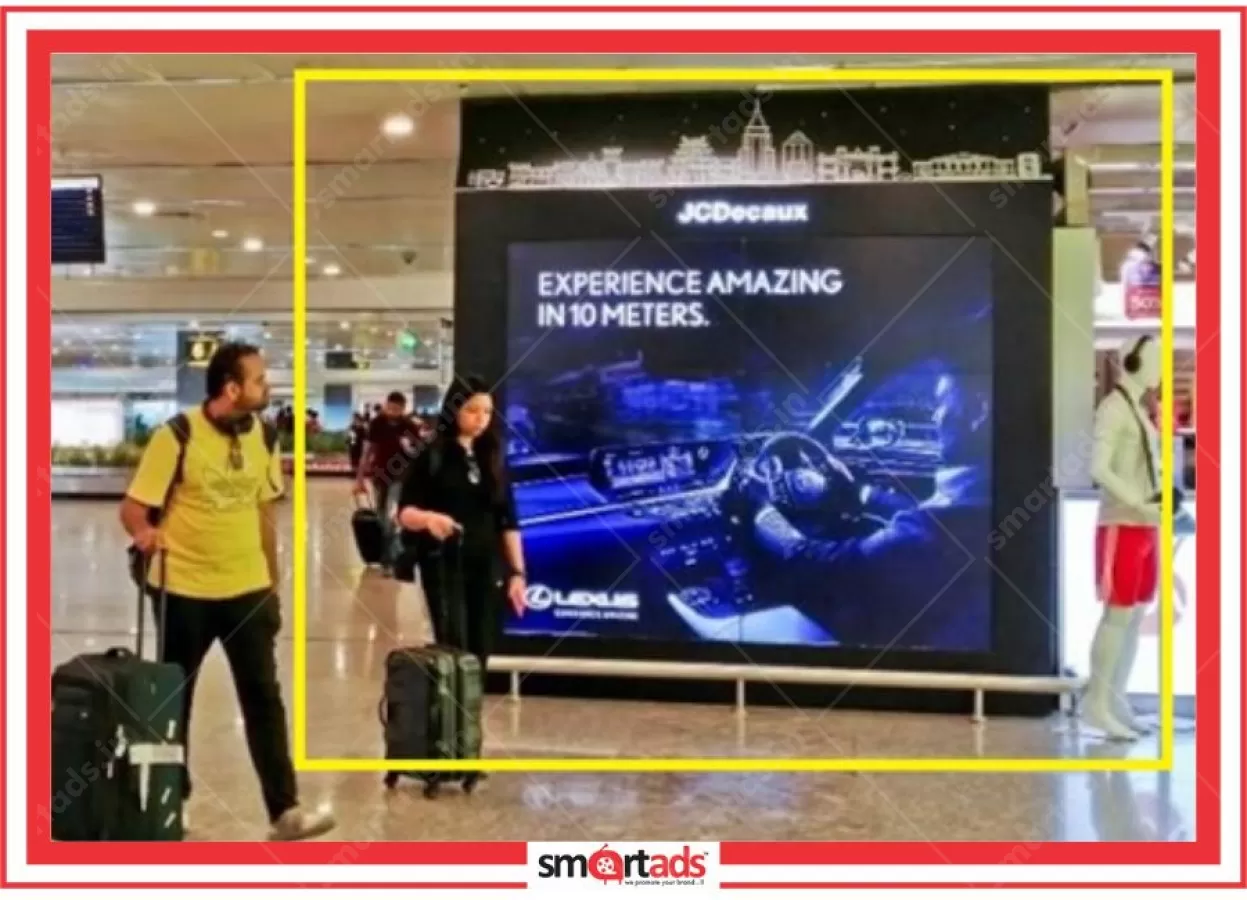
Video Wall
W8 Ft x H7 Ft
Advanced Digital Pillars provide cutting
Rate per Wall / Month
Domestic Arrival - Unit 2 Spot Duration
₹3700000.00
Showing 1 to 12 of 19 Results
MEDIA DETAILS
W8 Ft x H7 Ft
Advanced Digital Pillars provide cutting
Rate per Wall / Month
Domestic Arrival - Unit 2 Spot Duration
₹3700000.00
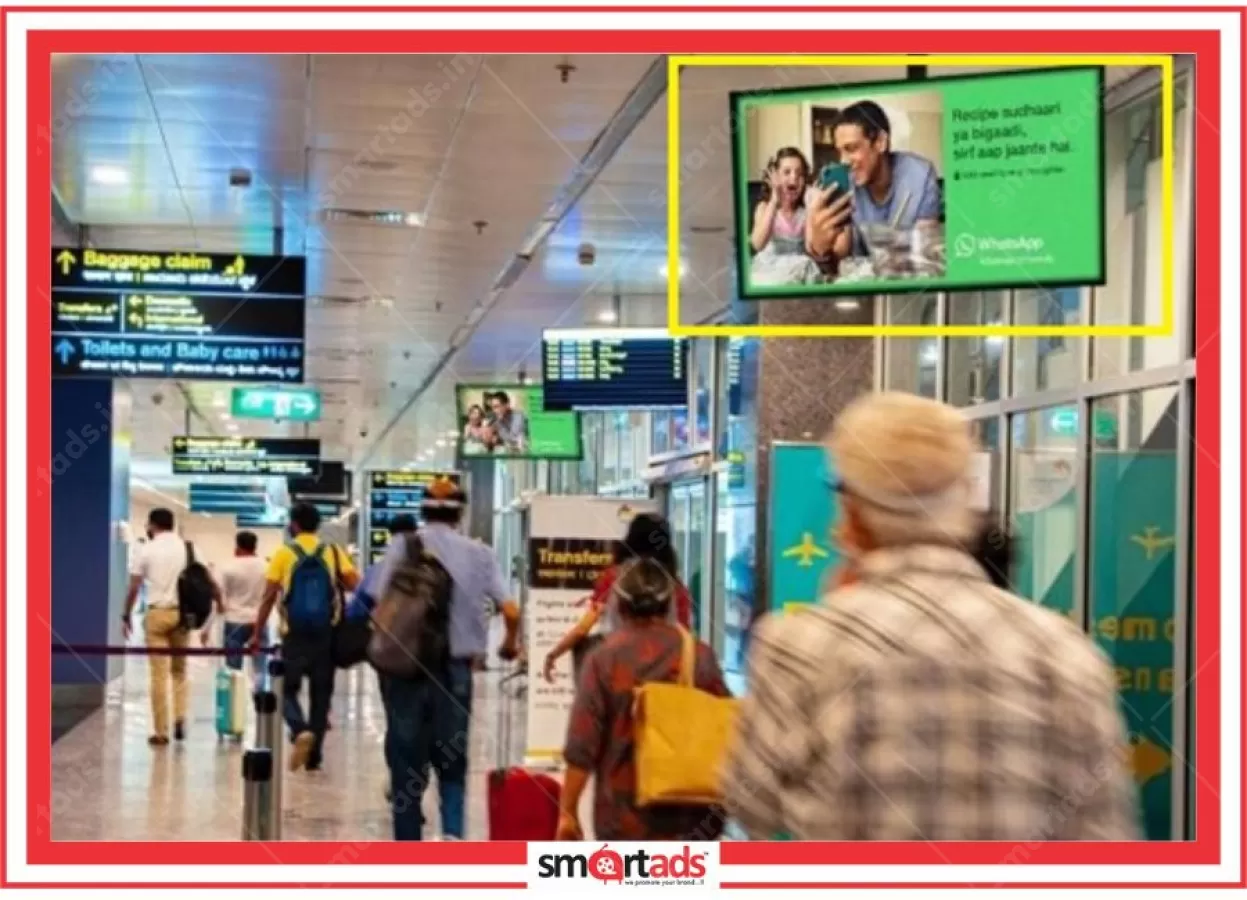
55"
Advance Digital Suspended provide cuttin
Rate per Screen / Month
Domestic Arrival - Suspended Digital Scr
₹262500.00
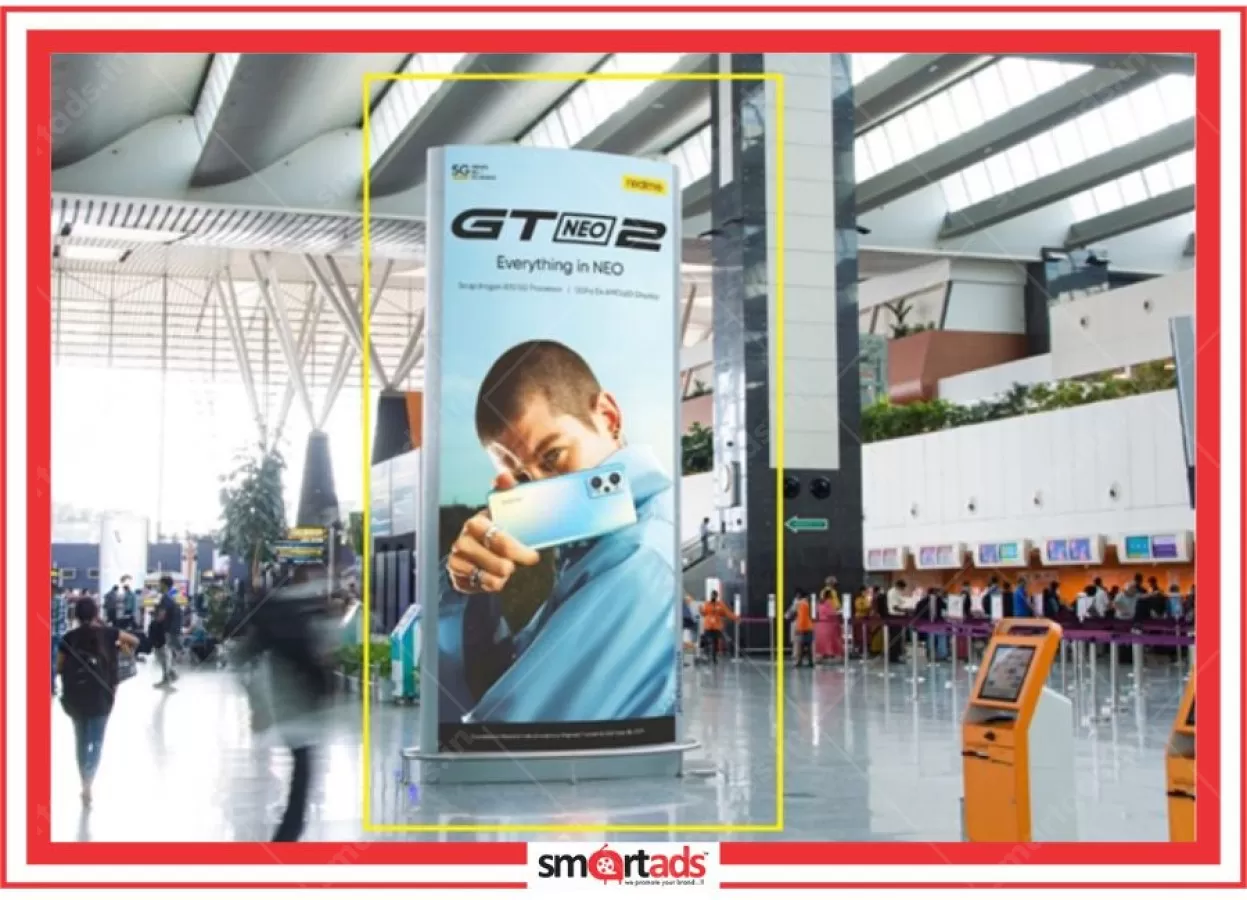
W7 Ft x H17 Ft
Grab passengers’ attention at KIAB and e
Rate per Tower / Month
Common Departure - Totem Unit 1 Area Che
₹2500000.00
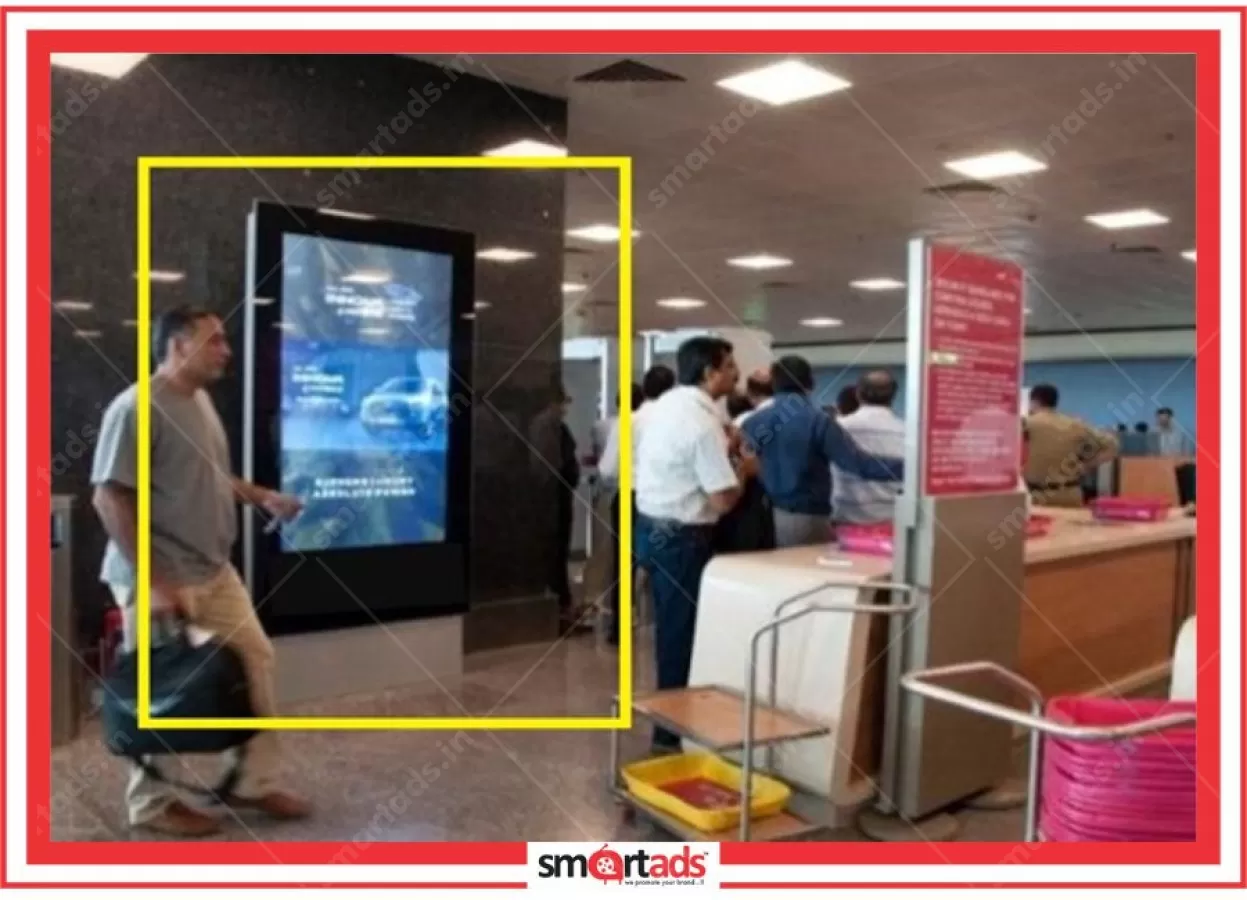
70 Vertical Screens
Display your message by having limitless
Rate per Screen / Month
Domestic Departure - Digital Mupis Unit
₹350000.00

W4 Ft x H6 Ft
Total coverage of affluent passengers ac
Rate per Screen / Month
Common Departure - Greeting Mupis Unit 6
₹285000.00

W4 Ft x H6 Ft
Welcome the arrival passengers with 100%
Rate per Screen / Month
Common Arrival - Common Mupis Unit 2 Are
₹850000.00

W4 Ft X H6 Ft
Total coverage of affluent passengers at
Rate per Screen / Month
Common - Walkway Mupis Unit 8 Area Termi
₹200000.00

W4 Ft x H6 Ft
Total coverage of affluent passengers at
Rate per Screen / Month
Domestic Departure - Boarding Mupis Unit
₹135000.00

W4 Ft x H6 Ft
Total coverage of affluent passengers at
Rate per Screen / Month
International Departure - Boarding Mupis
₹237500.00

W20 Ft x H10 Ft
An effective way to display your message
Rate per Screen / Month
Domestic Departure - LED Screen Unit 1 A
₹2700000.00

W20 Ft x H10 Ft
An effective way to display your messag
Rate per Screen / Month
Common Departure - LED Screen Unit 2 Are
₹1600000.00

W13 Ft x H4 Ft
Light box at key location for delivering
Rate per Box / Month
Domestic departure - Lightbox Unit 1 Are
₹1300000.00
MEDIA REACH

Airports :
Netaji Subhas Chandra Bose International Airport (NSCBI)
MonthlyFootfall :
2000000
MonthlyFlights :
13333
Terminal :
Domestic & International
Location :
Dum Dum, Jessore Rd (NH-12), Kolkata

This comprehensive guide reveals actual pricing data, passenger demographics, and strategic insights for airport advertising at Eastern India's busiest aviation hub, based on real campaign performance data and market intelligence.
The thing is, most brands completely underestimate the advertising potential at Netaji Subhas Chandra Bose International Airport; they see it as just another outdoor media option when it's actually one of the most sophisticated audience targeting opportunities in Eastern India. What we've discovered through our campaigns across 500+ Indian cities is that Kolkata airport advertising delivers something unique — a captive, affluent audience with extended dwell times in an environment where your brand becomes part of their travel experience, which creates deeper recall than traditional billboard advertising.
Our experience managing airport advertising campaigns in Kolkata has shown us that brands often approach this medium with the wrong expectations; they expect immediate conversions like digital advertising when the real value lies in premium brand positioning and long-term recall among high-value demographics. The passenger traffic at this airport — roughly 22 million annually — represents one of the most concentrated gatherings of business travelers, tourists, and affluent consumers in West Bengal, which makes it a gateway not just to Eastern India but to markets in Bangladesh, Bhutan, and the entire Northeast corridor.
Frankly speaking, the advertising landscape at Kolkata airport has evolved dramatically over the past three years; what used to be dominated by static backlit panels has transformed into a sophisticated mix of digital screens, interactive installations, and experiential zones that allow brands to create memorable touchpoints throughout the passenger journey. At SmartAds, we've seen campaigns achieve brand recall rates of 78% among business travelers — numbers that are difficult to replicate through any other single medium in the Kolkata market.
The passenger demographics at Netaji Subhas Chandra Bose International Airport tell a story that most outdoor advertising locations in Kolkata simply cannot match; our analysis of campaign performance data shows that roughly 65% of passengers fall into the SEC A and B categories, with average household incomes exceeding ₹8 lakh annually. This concentration of affluent audiences, combined with the fact that they spend an average of 90 minutes within the terminal during domestic travel and nearly 2 hours for international flights, creates an advertising environment where brand messages have time to resonate rather than compete for split-second attention.
What sets Kolkata airport apart from other premium advertising locations in the city is the mindset of the audience; passengers are in a transitional state, often planning business deals, family trips, or major life decisions, which makes them more receptive to aspirational brand messaging. We've observed this phenomenon across multiple campaigns — a luxury watch brand we worked with saw 34% higher brand consideration scores among airport-exposed audiences compared to their concurrent outdoor campaign in central Kolkata, which demonstrates the psychological advantage of the airport environment.
The geographic advantage cannot be ignored either; as the primary aviation gateway to Eastern India, the airport captures audiences from across West Bengal, Odisha, Jharkhand, and the Seven Sister States, effectively giving brands access to a regional market that would require multiple city-specific campaigns to reach through traditional media. Our retail client campaigns have shown that airport advertising in Kolkata generates awareness across a catchment area extending 300 kilometers from the city, something that even the most strategically placed highway billboards struggle to achieve.
The digital advertising infrastructure at Kolkata airport has undergone significant upgrades, with video walls in the departure area offering brands the opportunity to showcase dynamic content that changes based on time of day, passenger flow, or even flight schedules. These digital screens, which measure roughly 3x2 meters in the premium locations, command rates that work out to approximately ₹8 lakh per month for a 30-second spot played 120 times daily — a figure that initially surprises brands until they calculate the cost per impression against the guaranteed affluent audience.
Terminal advertising options extend far beyond traditional display formats; the baggage claim area features innovative conveyor belt branding opportunities where brands can create immersive experiences as passengers wait for their luggage, which typically involves 15-20 minutes of undivided attention. We've executed campaigns using these spaces for automotive brands, which makes perfect sense given that passengers are often thinking about ground transportation and their next journey, and the results have consistently shown higher engagement rates compared to static airport advertising formats.
The arrival area presents unique opportunities for brands targeting incoming tourists and business visitors; backlit panels positioned along the immigration and customs corridors ensure that every international passenger encounters your brand message during their first moments in Kolkata. One hospitality client saw a 28% increase in direct bookings during their three-month airport campaign, which they could directly attribute to the arrival area advertising since they used unique promotional codes specific to the airport creative execution.
Airport advertising rates in Kolkata operate on a pricing structure that reflects both the premium nature of the medium and the regional market dynamics; digital screen advertising in prime locations typically ranges between ₹6-12 lakh per month depending on the specific placement, duration, and creative requirements. What many brands don't realize is that these rates include production support, installation, and campaign monitoring — services that would add another ₹2-3 lakh if procured separately, which makes the all-inclusive pricing more attractive than it initially appears.
The pricing advantage becomes clear when you compare Kolkata airport rates to similar facilities in Mumbai or Delhi; while a comparable digital placement at Mumbai airport might cost ₹15-20 lakh monthly, Kolkata offers similar passenger quality and dwell time at roughly 40% lower investment. Our automotive clients have leveraged this cost advantage to run longer campaign durations in Kolkata, often extending their presence to 6-8 months instead of the typical 2-3 month bursts they can afford in tier-1 airport markets.
Static advertising options provide entry-level opportunities for brands testing airport media effectiveness; backlit panels in moderate-traffic zones start at around ₹2.5 lakh per month, while premium corridor positions command ₹4-6 lakh monthly depending on passenger footfall and visibility angles. At SmartAds, we often recommend that first-time airport advertisers begin with these static formats to understand audience response patterns before investing in the higher-impact digital solutions, which allows for better budget allocation in subsequent campaigns.
Digital screens positioned in the security check waiting areas have emerged as one of the most effective formats for brand storytelling; passengers typically spend 20-30 minutes in these zones during peak hours, which provides sufficient time for brands to communicate complex messages or showcase product demonstrations. The screens in these areas support full HD video content with audio capabilities during specific hours, allowing brands to create cinema-like experiences that would be impossible through traditional outdoor advertising formats.
Interactive kiosks near the departure gates represent the cutting edge of airport advertising technology; these touchscreen installations allow passengers to engage directly with brand content, browse product catalogs, or even make purchases while waiting for their flights. We've seen FMCG brands use these kiosks to distribute samples and collect consumer data, creating a direct marketing opportunity that extends the campaign impact beyond mere brand awareness into actual consumer acquisition.
The video walls in the central concourse area offer brands the largest canvas for creative expression; these installations, measuring approximately 4x3 meters, support dynamic content that can be programmed to respond to real-time data such as weather conditions, flight delays, or special events in Kolkata. One consumer electronics brand created weather-responsive creative that promoted air conditioners during hot days and heaters during winter months, which resulted in 45% higher brand recall compared to their static creative control group.
The controlled environment of airport advertising eliminates many of the visibility challenges that plague outdoor advertising in Kolkata's busy streets; there are no competing billboards, traffic distractions, or weather-related visibility issues that can diminish campaign effectiveness. Passengers move through the airport at a measured pace, following predictable routes that ensure exposure to strategically placed advertising inventory, which creates a level of guaranteed visibility that street-level OOH advertising cannot match.
The demographic quality at Kolkata airport consistently outperforms other high-traffic locations in the city; while a prominent billboard on EM Bypass might generate impressive reach numbers, the airport delivers a concentrated audience of decision-makers, business owners, and affluent consumers who are more likely to act on premium brand messaging. Our analysis shows that airport-exposed audiences have 3.2 times higher purchasing power compared to general outdoor advertising audiences in Kolkata, which translates directly into better ROI for brands selling high-consideration products or services.
Brand safety represents another significant advantage of airport advertising; the regulated environment ensures that your brand appears alongside other premium advertisers in a context that enhances rather than diminishes brand perception. We've observed that brands advertising at Kolkata airport benefit from an association with travel, aspiration, and success that positively influences consumer perception, something that cannot be guaranteed in the cluttered outdoor advertising landscape of the city's commercial districts.
Campaign timing at Kolkata airport requires understanding the seasonal patterns of passenger traffic; the winter months from November to February see the highest footfall due to tourism season and favorable weather conditions, which makes this period ideal for consumer brands targeting leisure travelers. Business travel peaks during the months of September-November and February-April, coinciding with the corporate calendar and avoiding monsoon disruptions, which creates opportunities for B2B brands and professional services to maximize their investment.
The passenger journey mapping exercise reveals multiple touchpoints where brands can create cumulative impact; starting with exterior approach advertising for arriving passengers, continuing through check-in area displays, security zone engagement, departure gate proximity advertising, and concluding with baggage claim exposure for departing passengers. Our most successful campaigns have utilized 3-4 touchpoints along this journey, creating a narrative that builds brand familiarity and drives message retention far beyond single-exposure outdoor campaigns.
Creative execution for airport advertising requires understanding the unique viewing conditions and passenger mindset; bright, high-contrast visuals work best under terminal lighting conditions, while messaging should acknowledge the travel context rather than ignoring it. At SmartAds, we've found that campaigns incorporating travel-related themes or acknowledging the passenger's journey achieve 40% higher recall rates compared to generic brand messages, which suggests that context-aware creative development is crucial for airport advertising success.
The regional influence of Kolkata airport extends far beyond the city's boundaries; as the primary international gateway for Eastern India, it captures business leaders, government officials, and high-net-worth individuals from across the region who often make purchasing decisions that affect multiple markets. This regional decision-maker concentration means that a single airport campaign can influence business outcomes across West Bengal, Odisha, Jharkhand, and the northeastern states, providing brands with efficiency that multiple city-specific campaigns cannot match.
The cultural significance of Kolkata as India's cultural capital adds an aspirational dimension to airport advertising; brands that advertise at this location benefit from association with the city's intellectual and artistic heritage, which particularly resonates with educated, affluent audiences. We've observed that luxury brands and premium services experience enhanced brand perception when advertised at Kolkata airport compared to purely commercial environments, suggesting that the cultural context amplifies the effectiveness of aspirational messaging.
International passenger exposure provides brands with access to NRI communities and foreign visitors who often serve as brand ambassadors in their home markets; this word-of-mouth amplification effect extends campaign reach beyond the immediate audience to include family and business networks across India and internationally. Our hospitality clients have reported increased inquiries from international markets following airport campaigns, demonstrating the global reach potential of strategic airport advertising placement.
The departure area security check zones consistently deliver the highest passenger dwell time and attention levels; during peak hours, passengers spend 25-40 minutes in these areas with limited distractions, creating an ideal environment for detailed brand storytelling or complex product demonstrations. The captive audience nature of these zones, combined with the stress-free post-security environment, makes passengers more receptive to brand messaging compared to the rushed pre-security areas where time pressure dominates passenger mindset.
Baggage claim areas provide unique advantages for brands targeting arriving passengers; the 15-25 minute wait time for luggage creates a relaxed environment where passengers are planning their next activities, making them receptive to local business advertising, hospitality offers, and ground transportation options. We've successfully executed campaigns for car rental services, hotels, and local attractions in these areas, achieving conversion rates that are 60% higher than similar campaigns in departure areas where passengers are focused on their outbound journey.
The central concourse areas offer maximum footfall exposure as all passengers must pass through these zones multiple times during their airport experience; however, the challenge lies in capturing attention amid the bustle of airport activity, which requires larger format advertising and more impactful creative execution. Premium brands often choose these locations for brand awareness campaigns where impression volume matters more than detailed message communication, while direct-response advertisers typically prefer the higher-engagement zones with longer dwell times.
Q: What are the advertising rates for Kolkata airport?
Airport advertising rates at Netaji Subhas Chandra Bose International Airport vary significantly based on format, location, and campaign duration; digital screens in prime departure area locations typically cost between ₹8-12 lakh per month for standard packages, while static backlit panels in moderate-traffic zones start at approximately ₹2.5 lakh monthly. The pricing structure includes creative production support, installation, and basic campaign monitoring, which represents good value compared to other premium advertising locations in Kolkata where these services would be charged separately. Our experience shows that longer campaign commitments of 6+ months often secure 15-20% discounts on published rates, making extended presence more cost-effective for brands building sustained awareness in the Eastern India market.
Q: Which advertising agencies handle Kolkata airport advertising?
The airport advertising inventory at Kolkata is managed through authorized agencies who maintain direct relationships with the Airport Authority of India and understand the specific compliance requirements for aviation advertising; at SmartAds, we've developed expertise in navigating the approval processes, technical specifications, and installation protocols that ensure campaigns launch on schedule without regulatory delays. The key to successful airport advertising lies not just in media buying but in understanding passenger flow patterns, seasonal variations, and creative requirements that maximize campaign effectiveness within the airport environment. Most agencies can book the space, but few have the campaign management experience to optimize placement timing, creative rotation, and performance monitoring that drives real business results from airport advertising investment.
Q: What types of advertising formats are available at Kolkata airport?
Kolkata airport offers a comprehensive range of advertising formats designed to engage passengers throughout their journey; digital video walls in the departure areas support full-motion graphics and can display multiple advertiser content in rotation, while interactive kiosks near gates allow for direct passenger engagement and data collection. Static options include backlit panels along passenger corridors, baggage claim area displays, and exterior approach signage that captures arriving passengers and airport visitors. Specialized formats like trolley advertising, newspaper stickers distributed at boarding gates, and even tarmac coach branding provide unique touchpoints that extend brand exposure beyond traditional terminal advertising, creating multiple impression opportunities that build cumulative campaign impact.
Q: How many passengers does Kolkata airport handle annually?
Netaji Subhas Chandra Bose International Airport processes approximately 22 million passengers annually, making it the fifth busiest airport in India and the undisputed aviation hub for Eastern India; this passenger volume represents a concentrated audience of business travelers, tourists, and affluent consumers that would be difficult to reach through any other single advertising medium in the region. The passenger demographics skew heavily toward higher income categories, with roughly 65% falling into SEC A and B classifications, while the mix includes both domestic travelers (about 18 million annually) and international passengers (approximately 4 million annually) who often represent different targeting opportunities for brands. Peak traffic periods occur during winter months and festival seasons, creating opportunities for brands to time their campaigns for maximum exposure during high-footfall periods.
Q: What is the minimum duration for airport advertising campaigns in Kolkata?
Most airport advertising formats at Kolkata require minimum campaign commitments of 30 days, though premium digital placements often work best with 90-day minimum durations that allow for creative optimization and audience behavior analysis; our experience suggests that campaigns shorter than 60 days rarely achieve optimal brand recall levels among the transient airport audience. The installation and approval processes typically require 10-15 days lead time, which means brands need to plan campaigns well in advance of desired launch dates, particularly during peak travel seasons when inventory availability becomes limited. Digital formats offer more flexibility for creative changes during the campaign period, while static installations are typically locked in for the full duration, making the initial creative development process crucial for campaign success.
Q: Are there restrictions on airport advertising content in Kolkata?
Airport advertising content must comply with both Airport Authority of India guidelines and general advertising standards, which means avoiding political messaging, religious content, or anything that could be considered controversial in the multicultural airport environment; additionally, creative content cannot include flashing lights, moving parts, or audio elements that might distract pilots or interfere with airport operations. Alcohol and tobacco advertising face specific restrictions, while pharmaceutical and financial services advertising requires additional compliance documentation before approval. The approval process typically takes 7-10 days and involves review by airport authorities, security personnel, and sometimes aviation safety officials, which is why working with experienced agencies who understand these requirements can prevent costly delays and creative revisions.
Q: How effective is airport advertising compared to other media in Kolkata?
Airport advertising consistently delivers higher brand recall and consideration rates compared to traditional outdoor media in Kolkata; our campaign analysis shows that airport-exposed audiences demonstrate 78% aided brand recall compared to 45% for highway billboard exposure and 52% for metro station advertising. The effectiveness stems from the combination of affluent audience demographics, extended dwell time, and the aspirational context of air travel, which creates a receptive environment for premium brand messaging. Cost per quality impression often works out more favorably than initially apparent when you factor in the demographic concentration and engagement levels; while the absolute cost may be higher than street-level OOH, the qualified reach among high-value consumers often delivers better ROI for brands targeting affluent segments.
Q: What are the peak seasons for airport advertising in Kolkata?
Peak passenger traffic at Kolkata airport occurs during the winter months from November through February, coinciding with the tourism season when weather conditions are favorable and festivals drive both leisure and family travel; this period sees passenger volumes increase by 25-30% compared to monsoon months, making it ideal for consumer brands targeting travelers. Business travel peaks during September-November and February-April, avoiding monsoon disruptions while aligning with corporate planning cycles and conference seasons, which creates opportunities for B2B advertisers and professional services. Festival periods, particularly Durga Puja in October and Kali Puja in November, generate significant domestic travel as diaspora Bengali communities return to Kolkata, creating unique targeting opportunities for brands wanting to reach this affluent, culturally connected audience segment.
Q: Can small businesses advertise at Kolkata airport?
Small businesses can access airport advertising through strategic format selection and campaign timing; while premium digital placements may require substantial investment, static backlit panels in moderate-traffic areas start at ₹2.5 lakh monthly, making them accessible for local businesses targeting affluent travelers. Ground transportation services, local restaurants, and hospitality businesses often find airport advertising particularly effective since they're targeting passengers who need these services immediately upon arrival or departure. Shared advertising opportunities, where multiple small businesses split the cost of larger format advertising, can provide access to premium placements at reduced individual investment; at SmartAds, we've facilitated such arrangements for complementary businesses like hotels, restaurants, and local attractions who benefit from cross-promotional exposure.
Q: What creative specifications are required for digital screens at Kolkata airport?
Digital screen specifications at Kolkata airport typically require full HD resolution (1920x1080) content delivered in MP4 format with specific compression settings to ensure optimal playback quality; creative content should be designed with high contrast and bold typography to maintain visibility under varying terminal lighting conditions throughout the day. Video content is generally limited to 30-second durations for shared digital inventory, though dedicated screen bookings can accommodate longer format content, while static digital content requires minimum 72 DPI resolution and CMYK color profiles for consistent reproduction. Audio capabilities exist on select digital installations but are restricted to specific hours and volume levels to avoid disrupting airport operations; brands planning audio-enabled content should confirm availability and restrictions during the booking process to avoid creative revision delays.
The airport advertising landscape in Kolkata represents one of the most sophisticated audience targeting opportunities in Eastern India, combining the demographic advantages of affluent, captive audiences with the geographic reach that extends across the entire region. Our experience managing campaigns at Netaji Subhas Chandra Bose International Airport has consistently demonstrated that brands willing to invest in strategic placement and context-aware creative development achieve results that justify the premium positioning of this medium.
What sets successful airport advertising apart from generic outdoor campaigns is the understanding that passengers are in a unique mindset — transitional, aspirational, and often making significant life or business decisions; brands that acknowledge this context and craft their messaging accordingly see dramatically better engagement and recall rates. The combination of extended dwell times, minimal distractions, and high-quality demographics creates an advertising environment that simply cannot be replicated through traditional street-level outdoor media.
For brands considering airport advertising in Kolkata, the key lies in viewing it not as expensive outdoor media but as premium audience access that delivers concentrated exposure to decision-makers and influencers across Eastern India. The investment may be higher than conventional OOH options, but the audience quality, engagement levels, and regional reach often deliver superior ROI for brands targeting affluent consumers or business decision-makers.
At SmartAds, we've guided hundreds of brands through successful airport advertising campaigns across India's major airports, and our expertise in Kolkata's unique market dynamics ensures that your investment delivers maximum impact. For customised media planning that leverages our deep understanding of passenger patterns, seasonal variations, and creative optimization strategies, connect with our team at SmartAds.in to explore how airport advertising can elevate your brand's presence in Eastern India's most important aviation gateway.
