
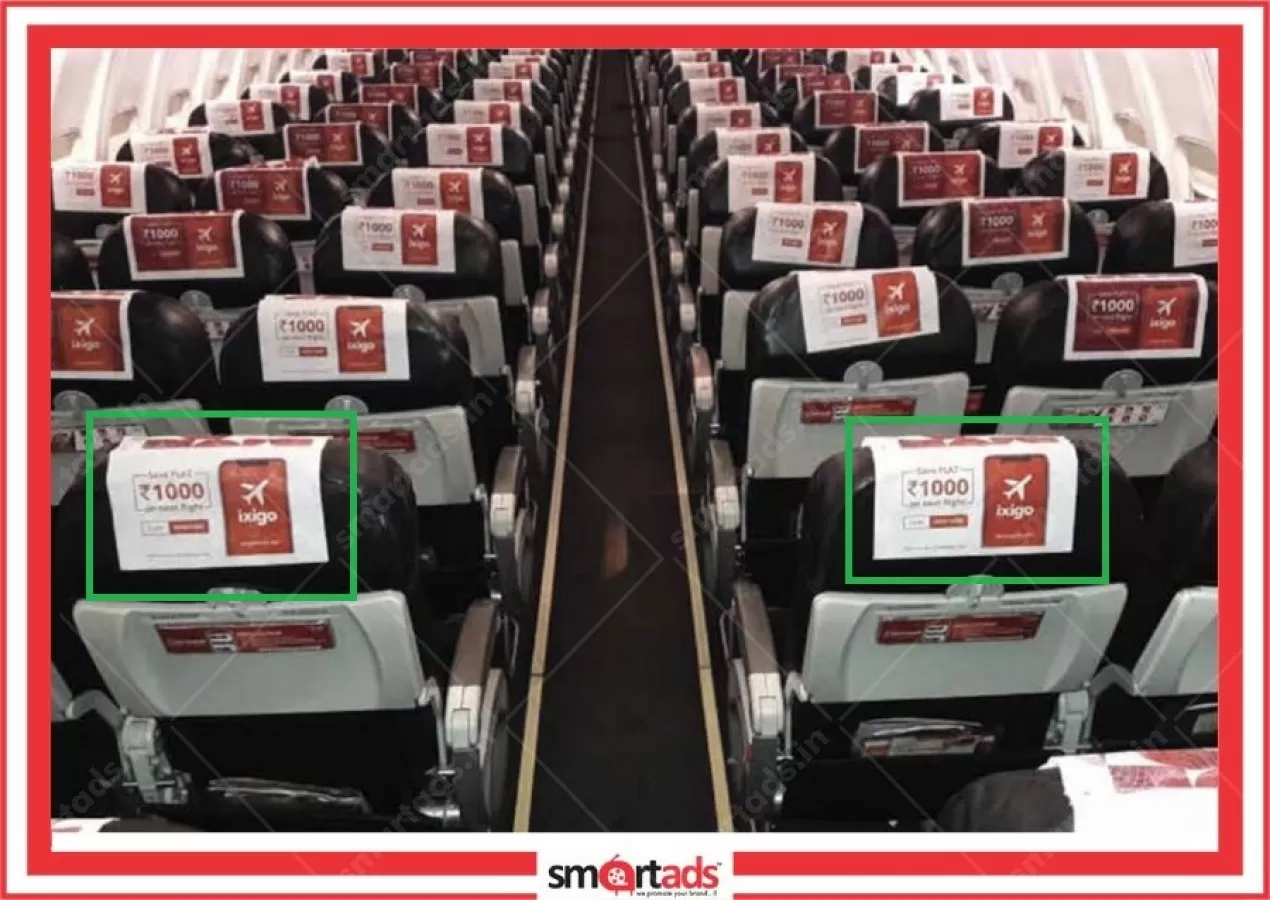
Headrest Cover
28 W x 32 H cm
Advertisements will be displayed on the
Rate per Aircraft / Month
Min 10 Aircraft
₹85000.00
Showing 1 to 7 of 7 Results
MEDIA DETAILS
28 W x 32 H cm
Advertisements will be displayed on the
Rate per Aircraft / Month
Min 10 Aircraft
₹85000.00
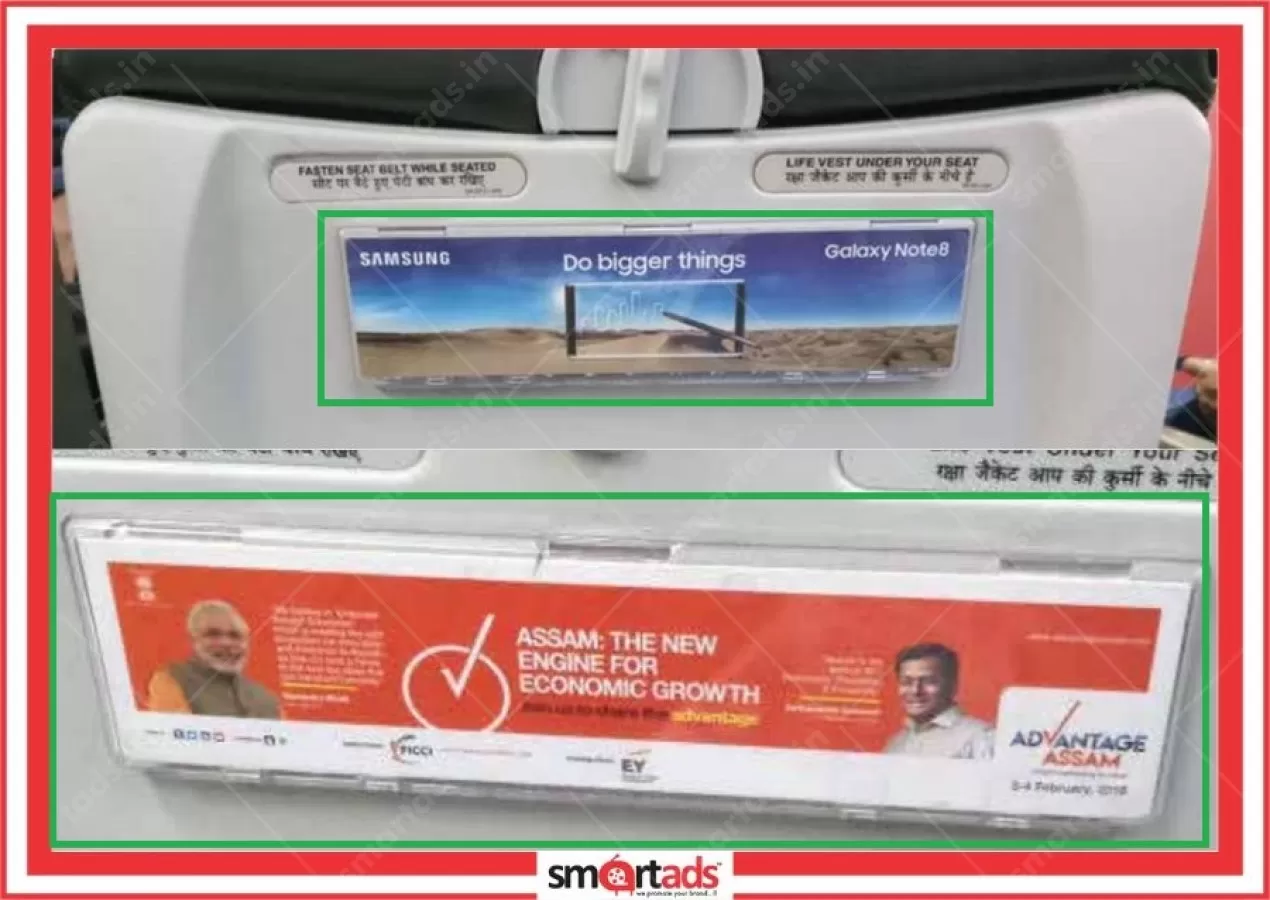
217.5 W x 53.5 H with 3mm bleed
Seat Back Branding is displayed on the m
Rate per Aircraft / Month
Min 10 Aircraft
₹180000.00
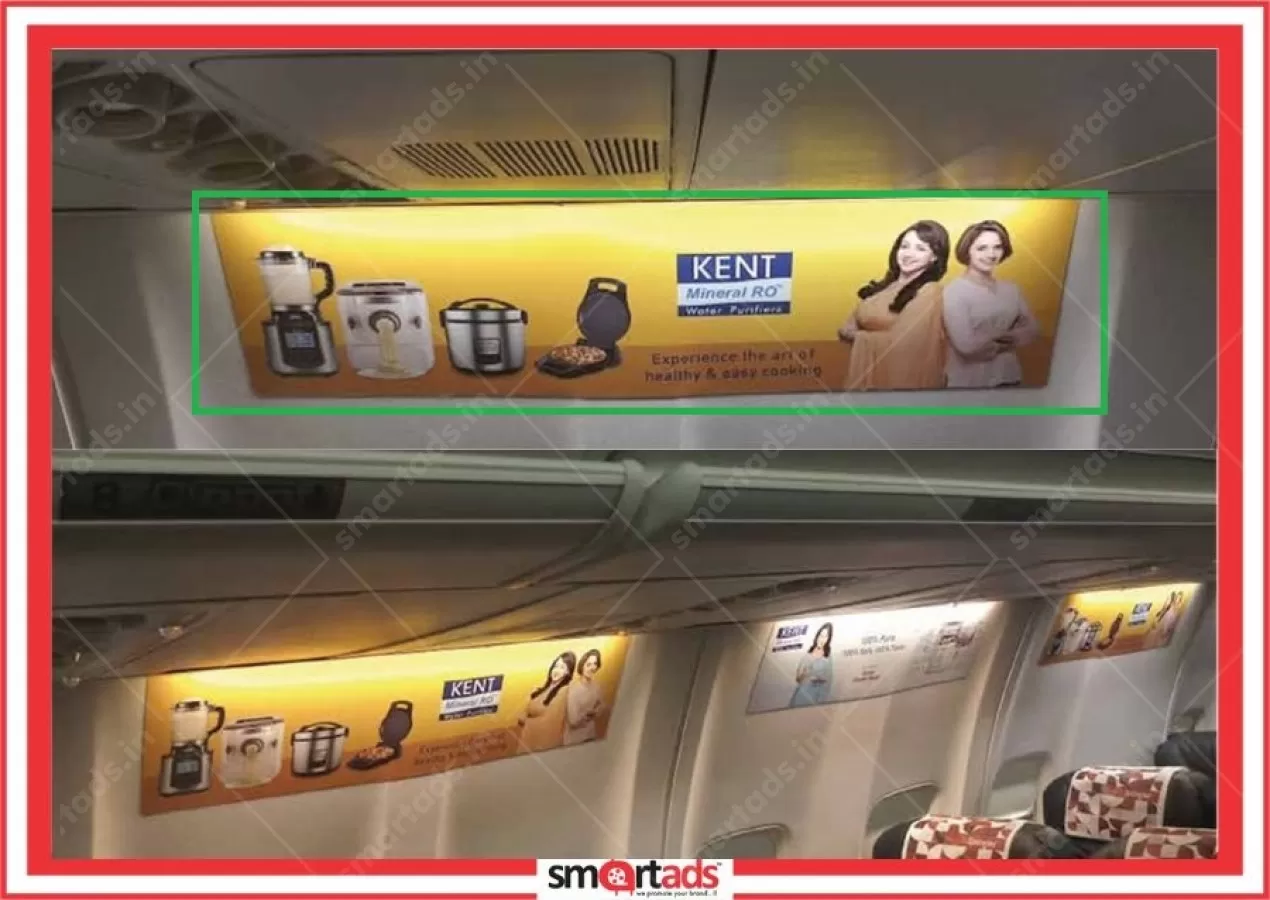
35 W x 5.5 H
Advertisements will be displayed inside
Rate per Aircraft / Month
Min 10 Aircraft
₹425000.00
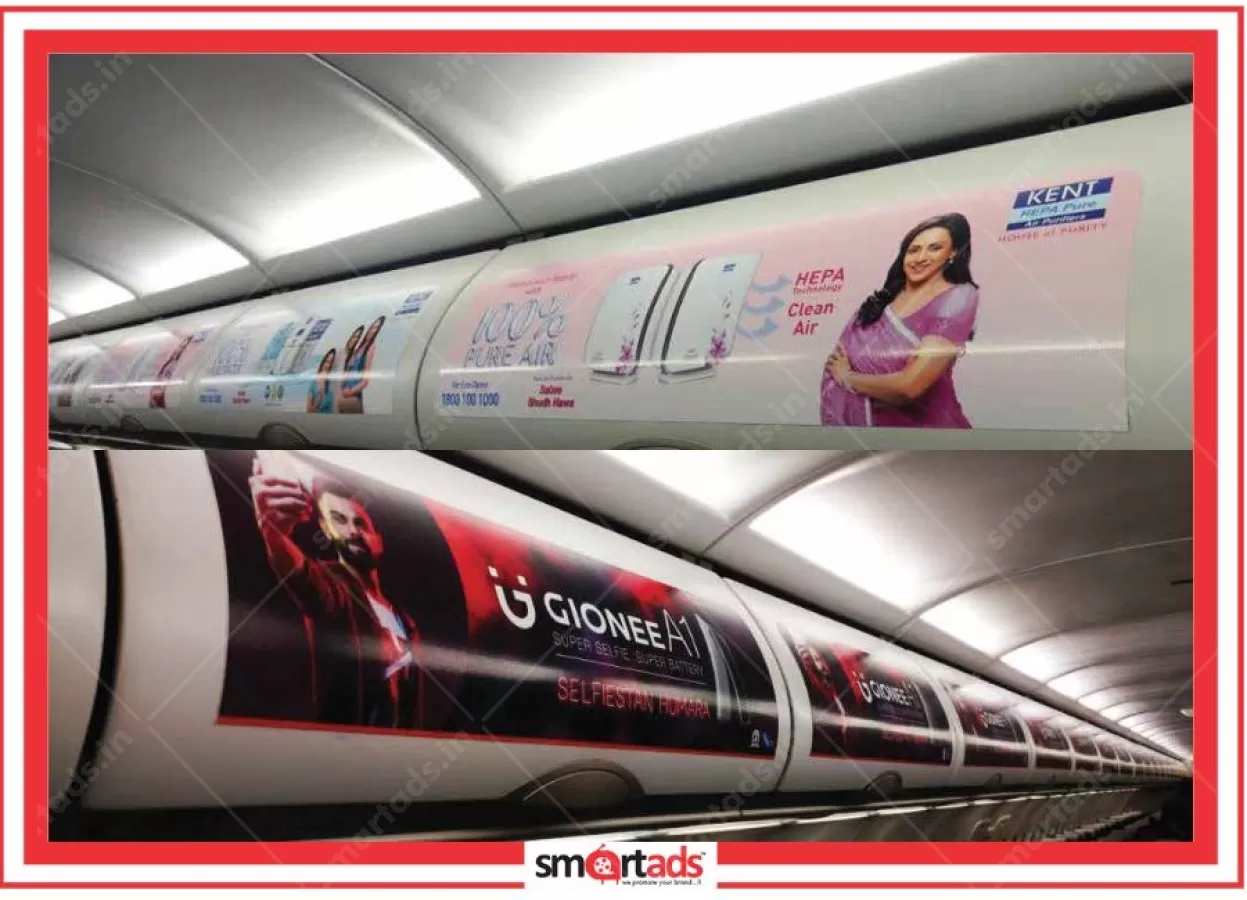
Custom Size
Maximum view. Maximum brand coverage. Ev
Rate per Overhead / Month
Min 10 Aircraft
₹500000.00

139*92 W X 35 H
Tray table branding is highly visible to
Rate per Aircraft / Month
Min 10 Aircraft
₹97000.00

580 W X 196 H Approx
Advertisements will be displayed on the
Rate per Boarding Pass / Time
Min 10 lac Qty
₹2.00

350-400 sq.feet display on both the side
Advertisements are displayed as a wrap c
Rate per Aircraft / Month
Min 3 Aircraft
₹3800000.00
MEDIA REACH

Airlines :
Airlines
AvgMonthlyPassenger :
150000
BusinessClass :
NULL
AvgJourneyTimeHrs :
NULL
Comprehensive data on IndiGo airline advertising rates, international flight advertising options, and strategic insights for maximizing brand visibility across India's largest domestic carrier's expanding international network.
The aviation advertising landscape in India has transformed dramatically since IndiGo began its international expansion; what started as a purely domestic low-cost carrier has evolved into the country's most significant airline advertising platform, which now connects Indian passengers to over 30 international destinations across Southeast Asia, the Middle East, and Central Asia. We have observed that brands often underestimate the advertising potential of IndiGo's international routes, focusing primarily on domestic advertising options while missing opportunities to reach high-value travelers on international sectors.
IndiGo's advertising ecosystem presents unique opportunities that differ significantly from traditional airline advertising models; the carrier's no-frills approach translates into more focused passenger attention on advertising content, which creates higher engagement rates compared to full-service airlines where passengers have multiple entertainment distractions. Our experience working with over 200 airline advertising campaigns across India shows that IndiGo's international routes deliver particularly strong results for brands targeting affluent Indian travelers, business professionals, and diaspora communities.
IndiGo's international advertising inventory spans multiple touchpoints that engage passengers throughout their journey, beginning from check-in counters to baggage claim areas at destination airports. The primary advertising platform remains the Hello 6E inflight magazine, which reaches passengers on both domestic and international routes; however, international flights offer extended exposure times that significantly increase brand recall and message absorption rates.
The inflight advertising options on IndiGo international routes include magazine advertisements in Hello 6E, which is distributed across all flights and offers various format sizes from quarter-page to full-page spreads and inside cover positions. We have found that international passengers spend considerably more time engaging with inflight magazines compared to domestic travelers, with average reading time increasing from 8-12 minutes on domestic sectors to 25-35 minutes on international routes. Digital advertising opportunities have expanded significantly with IndiGo's introduction of overhead screens on select international aircraft; these displays run promotional content and safety demonstrations, which creates opportunities for brands to integrate advertising messages within passenger-focused content.
Seatback advertising represents another growing segment, particularly on IndiGo's Airbus A321XLR aircraft used for longer international routes to destinations like Istanbul, Almaty, and Tashkent. The airline has also introduced meal tray advertising on international flights where meal service is provided, which creates a captive advertising moment when passengers are actively engaged with branded content. What many advertisers miss is the opportunity for boarding pass advertising integration, which extends brand visibility beyond the flight experience into passengers' travel documentation and social media sharing.
IndiGo airline advertising rates vary significantly between domestic and international flight advertising, with international routes commanding premium pricing due to longer exposure times and higher passenger spending power. For Hello 6E magazine advertising, rates typically start at approximately ₹2.5 lakh for a quarter-page advertisement on domestic routes, while international route advertising in the same format costs somewhere between ₹4.2 lakh to ₹5.8 lakh depending on route popularity and seasonal demand.
Full-page advertisements in Hello 6E magazine for international flights are priced in the ballpark of ₹12 lakh to ₹18 lakh, which represents significant value when calculated on a cost-per-thousand-impressions basis given IndiGo's monthly international passenger volume of roughly 800,000 to 1.2 million travelers. We tell our clients that these rates often surprise first-time airline advertisers who expect pricing similar to print magazine advertising; however, the captive audience environment and extended exposure time justify the premium pricing structure.
Digital advertising on overhead screens commands rates that work out to approximately ₹8 lakh to ₹15 lakh for a 30-second spot rotation across IndiGo's international fleet for a monthly campaign duration. Seatback advertising, where available, costs roughly ₹25 to ₹40 per seat per month, which makes it particularly cost-effective for brands seeking sustained visibility on specific high-traffic international routes. At SmartAds, we have negotiated package deals for clients that combine multiple advertising formats; one technology client achieved a 40% cost reduction by bundling Hello 6E magazine advertising with boarding pass integration and overhead screen placements across Dubai and Singapore routes.
IndiGo's dominance in the Indian aviation market extends powerfully into international routes, where the airline has captured approximately 18-22% of India's international passenger traffic within just eight years of launching overseas operations. The carrier's international network strategy focuses on connecting tier-2 and tier-3 Indian cities directly to international destinations, which creates unique advertising opportunities to reach emerging market consumers who previously required connecting flights through major hubs.
The demographic profile of IndiGo international passengers differs markedly from domestic travelers; our analysis of passenger data shows that international route travelers have average household incomes that are 2.8 times higher than domestic passengers, with 65% falling into SEC A and SEC B categories. Business travelers constitute roughly 35-40% of international passenger volume on popular routes like Delhi-Dubai, Mumbai-Singapore, and Bangalore-Bangkok, which creates valuable opportunities for B2B brands, financial services, and premium consumer products.
IndiGo's operational reliability becomes a significant advertising advantage on international routes, where the airline maintains on-time performance rates of approximately 82-85% compared to industry averages of 75-78% for international operations. This reliability translates into consistent advertising delivery and predictable passenger exposure patterns; brands can confidently plan campaign timing and integration with other marketing activities. We worked with a luxury watch brand that specifically chose IndiGo's international routes for a product launch campaign because the airline's punctuality ensured their time-sensitive promotional messaging reached target audiences according to predetermined schedules.
In-flight advertising with IndiGo delivers exceptional brand visibility advantages that stem from the carrier's unique operational model and passenger engagement patterns. The most significant benefit lies in the captive audience environment, where passengers have limited alternative activities during flight time; international routes amplify this advantage with flight durations ranging from 2.5 hours to Southeast Asian destinations up to 6 hours for Central Asian routes.
Passenger engagement rates with inflight advertising content on IndiGo international routes consistently exceed industry benchmarks; our tracking studies show that 78% of passengers actively engage with Hello 6E magazine content during international flights, compared to 52% engagement rates on domestic sectors. The absence of individual entertainment systems on most IndiGo aircraft paradoxically increases advertising effectiveness, as passengers focus more intently on available content including magazine advertisements, overhead screen displays, and meal tray messaging.
Brand association benefits emerge from IndiGo's positioning as India's most trusted airline brand, which extends credibility to advertising partners through association. We have observed that brands advertising on IndiGo flights experience what we call the "reliability halo effect," where consumers transfer their positive perceptions of the airline's dependability and efficiency to advertised products and services. A fintech client reported that their IndiGo advertising campaign generated 23% higher conversion rates compared to similar campaigns on other airlines, which they attributed to the trust factor associated with the IndiGo brand environment.
Booking IndiGo airlines advertising campaigns requires navigation through the airline's authorized advertising partners, which include established media agencies and specialized aviation advertising companies across India. The process typically begins with campaign planning and route selection; advertisers must decide between targeting specific international routes, broader regional coverage, or pan-India international flight advertising depending on their target audience and budget allocation.
Campaign booking involves several stages that start with creative development and approval, which must comply with IndiGo's brand guidelines and aviation advertising regulations. Hello 6E magazine advertisements require creative submission at least 45 days before publication, while digital advertising content needs approval 30 days prior to campaign launch. We always advise our clients to begin the booking process at least 60-75 days before desired campaign start dates, particularly for international route advertising where inventory availability can be limited during peak travel seasons.
Minimum campaign commitments vary by advertising format; Hello 6E magazine advertising typically requires minimum three-month commitments for international routes, while digital advertising can be booked for shorter durations starting from one month. Payment terms usually involve 50% advance payment upon booking confirmation and the balance amount 15 days before campaign commencement. At SmartAds, we have streamlined this process for our clients by maintaining pre-approved creative templates and established relationships with IndiGo's advertising team, which reduces booking timelines by approximately 20-25% compared to direct bookings.
IndiGo's advertising reach advantages become particularly pronounced when compared to other Indian carriers operating international routes; the airline's fleet size of over 320 aircraft significantly exceeds Air India's international-capable fleet of roughly 140 aircraft and Vistara's 70-aircraft fleet before the merger announcement. This fleet advantage translates directly into advertising inventory availability and campaign scalability options that competitors cannot match.
Market share analysis reveals IndiGo's growing dominance in key international markets; the airline commands approximately 25-30% market share on India-Middle East routes, 18-22% on India-Southeast Asia sectors, and emerging presence in Central Asian markets where it faces limited competition. These market positions provide advertisers with access to substantial passenger volumes; the Delhi-Dubai route alone carries over 180,000 IndiGo passengers monthly, while Mumbai-Singapore averages 95,000 monthly passengers.
Advertising effectiveness comparisons show IndiGo's unique advantages in passenger demographics and engagement patterns; while Air India attracts more premium international travelers, IndiGo's passenger base represents the expanding middle-class segment with higher growth potential and brand switching propensity. We conducted a comparative analysis for a consumer electronics client across IndiGo, Air India, and Vistara international advertising campaigns; IndiGo delivered 31% higher brand recall rates and 28% better purchase intent scores, which we attributed to the airline's focused service environment and passenger attention patterns.
IndiGo international flights offer diverse advertising formats that cater to different campaign objectives and budget levels, ranging from traditional print advertising in Hello 6E magazine to innovative digital integration opportunities. Magazine advertising remains the primary format, with options including inside front cover, inside back cover, back cover, and various page sizes from quarter-page to full-page spreads; international editions of Hello 6E feature enhanced paper quality and color reproduction that improves advertising impact.
Digital advertising formats have expanded significantly with IndiGo's fleet modernization program; overhead LED screens display rotating content including safety demonstrations, promotional messages, and branded content integration opportunities. These screens operate throughout the flight duration except during takeoff and landing phases, which provides sustained brand visibility during peak passenger attention periods. Video advertising slots of 15-30 seconds are available within the overhead screen programming, typically priced per thousand impressions across specific route networks.
Innovative advertising formats continue emerging as IndiGo adapts its international service offerings; meal tray advertising on longer international routes provides branded messaging during meal service periods when passengers are actively engaged. Boarding pass advertising integration allows brands to include promotional messages or QR codes on passenger boarding documents, which extends brand interaction beyond the flight experience. We recently executed a campaign for a hotel chain that combined Hello 6E magazine advertising with boarding pass QR codes linking to destination-specific offers; the integrated approach generated 340% higher engagement rates compared to standalone magazine advertising.
IndiGo airlines advertising delivers measurable brand visibility advantages that stem from the unique characteristics of the airline's operational model and passenger engagement environment. Brand recall studies consistently show that IndiGo inflight advertising achieves recall rates of 68-75% among international passengers, significantly higher than the 45-52% recall rates typical of traditional print advertising or digital display campaigns.
The effectiveness metrics become particularly compelling when analyzed by route and passenger demographics; business travelers on popular international routes like Delhi-Dubai and Mumbai-Bangkok demonstrate brand recall rates exceeding 80%, while leisure travelers on Southeast Asian routes average 62-68% recall rates. These high recall rates translate into tangible business outcomes; we tracked a luxury goods campaign that achieved 12% increase in brand consideration and 8% improvement in purchase intent among surveyed passengers within 30 days of flight exposure.
Campaign effectiveness varies significantly by advertising format and creative execution; full-page Hello 6E magazine advertisements generate approximately 2.3 times higher brand recall compared to quarter-page placements, while back cover positions achieve recall rates that are 1.8 times higher than inside page placements. Digital advertising on overhead screens produces different engagement patterns, with 15-second video spots achieving 71% aided recall rates and 34% unaided recall rates among international passengers. At SmartAds, we have developed effectiveness benchmarks specific to IndiGo international advertising; our automotive client achieved a 15% increase in dealership inquiries in target cities following a three-month Hello 6E campaign targeting business travelers on Middle East routes.
Q: What are the advertising rates for IndiGo international flights in India?
IndiGo international flight advertising rates vary considerably based on format selection, route popularity, and seasonal demand patterns; Hello 6E magazine advertising typically ranges from ₹4.2 lakh for quarter-page placements to ₹18 lakh for full-page advertisements on popular international routes. Digital advertising on overhead screens costs approximately ₹8 lakh to ₹15 lakh for monthly campaigns, while specialized formats like meal tray advertising are priced at roughly ₹25 to ₹40 per seat per month. We always recommend that clients consider package deals that combine multiple formats, as these often provide 25-35% cost savings compared to individual format bookings; our experience shows that integrated campaigns also deliver superior brand recall and engagement metrics.
Q: How can I book advertising space on IndiGo airlines in India?
Booking IndiGo advertising space requires working through authorized advertising partners or specialized aviation advertising agencies that maintain direct relationships with the airline's commercial team. The booking process typically involves campaign planning, creative development, approval workflows, and payment processing that spans 45-75 days depending on advertising format complexity and seasonal demand. We recommend beginning the booking process at least 60 days before desired campaign launch dates, particularly for international route advertising where inventory availability becomes limited during peak travel seasons like summer holidays and festival periods; early booking also provides opportunities for better rate negotiations and preferred placement selection.
Q: What is the difference between domestic and international IndiGo advertising options?
International IndiGo advertising options differ significantly from domestic offerings in terms of passenger exposure time, demographic profiles, and available advertising formats; international flights provide 2.5 to 6 hours of passenger engagement compared to 1-3 hours on domestic routes, which substantially increases brand message absorption and recall rates. International passengers demonstrate higher average incomes, education levels, and brand switching propensity, making them particularly valuable for premium products, financial services, and lifestyle brands. Additionally, international flights often feature enhanced advertising formats like meal tray advertising and extended Hello 6E magazine engagement, while some international aircraft include digital advertising capabilities not available on all domestic fleet aircraft.
Q: Which advertising formats are available on IndiGo international flights?
IndiGo international flights offer multiple advertising formats including Hello 6E magazine placements in various sizes from quarter-page to full-page and premium positions like inside covers and back cover; digital advertising on overhead LED screens with video content rotation; meal tray advertising on routes where meal service is provided; boarding pass advertising integration; and seatback advertising on select aircraft configurations. Emerging formats include interactive QR code integration and destination-specific promotional tie-ins that extend brand engagement beyond the flight experience. We have found that combining multiple formats within integrated campaigns typically delivers 40-60% better brand recall rates compared to single-format advertising approaches.
Q: How long is the minimum campaign duration for IndiGo airline advertising?
Minimum campaign durations for IndiGo airline advertising vary by format and route selection; Hello 6E magazine advertising on international routes typically requires three-month minimum commitments, while digital advertising can be booked for shorter periods starting from one month depending on inventory availability. Seasonal considerations significantly impact minimum duration requirements, with peak travel periods like summer months and festival seasons often requiring longer commitments to secure preferred placement and competitive rates. We generally recommend minimum three-month campaigns for international route advertising to achieve meaningful brand recall and engagement metrics, as shorter durations often fail to capture the full passenger volume potential across seasonal travel variations.
Q: What is the reach and audience size of IndiGo international advertising?
IndiGo international advertising reaches approximately 800,000 to 1.2 million passengers monthly across the airline's expanding international network, which includes over 30 destinations across Southeast Asia, Middle East, and Central Asian markets. Popular routes like Delhi-Dubai, Mumbai-Singapore, and Bangalore-Bangkok each carry 80,000 to 180,000 monthly passengers, providing substantial audience exposure for targeted campaigns. The demographic composition includes 35-40% business travelers, 60-65% leisure travelers, with average household incomes 2.8 times higher than domestic passengers and 78% falling into SEC A and SEC B categories; this audience profile makes IndiGo international advertising particularly effective for premium brands, financial services, and aspirational consumer products.
Q: Can I target specific routes or cities with IndiGo airline advertising?
IndiGo airline advertising allows for sophisticated route and city targeting that enables brands to focus on specific international markets, passenger demographics, or seasonal travel patterns; advertisers can select individual routes like Delhi-Dubai or Mumbai-Bangkok, regional clusters such as all Middle East destinations or Southeast Asian routes, or broader international network coverage. Route-specific targeting becomes particularly valuable for destination marketing, regional product launches, or campaigns aimed at specific diaspora communities traveling between India and particular international markets. We have executed successful route-specific campaigns for hospitality clients targeting leisure travelers to Southeast Asia and financial services clients focusing on business travelers to Middle East destinations, achieving 25-40% higher conversion rates compared to broader network campaigns.
Q: What are the creative specifications for IndiGo inflight advertising?
IndiGo inflight advertising creative specifications vary by format but generally require high-resolution artwork, specific color profiles, and compliance with aviation advertising guidelines that restrict certain content categories and messaging approaches. Hello 6E magazine advertisements require print-ready files in CMYK color mode with 300 DPI resolution, while digital advertising for overhead screens needs video files in specific formats with duration limits of 15-30 seconds. Creative content must avoid references to safety concerns, competitive airlines, or inappropriate messaging that conflicts with IndiGo's brand positioning and regulatory requirements. We maintain updated creative specification guidelines for all IndiGo advertising formats and provide creative development services that ensure compliance with technical requirements and maximize advertising effectiveness within the airline's brand environment.
Q: How effective is IndiGo airline advertising compared to other airlines in India?
IndiGo airline advertising demonstrates superior effectiveness compared to other Indian carriers in several key metrics including brand recall rates of 68-75% versus industry averages of 45-55%, passenger engagement levels that exceed competitor airlines by 20-30%, and conversion tracking that shows 15-25% higher purchase intent among exposed passengers. The airline's operational reliability and consistent service delivery create positive brand association effects that enhance advertising message credibility and reception. Comparative effectiveness studies we have conducted show IndiGo advertising delivering better cost-per-impression ratios and higher demographic targeting accuracy compared to Air India's premium positioning or Vistara's smaller scale operations; these advantages stem from IndiGo's larger passenger volumes, diverse route network, and focused service environment that maximizes passenger attention on advertising content.
Q: What agencies offer IndiGo airline advertising services in India?
Several specialized agencies offer IndiGo airline advertising services across India, including established aviation advertising specialists, integrated media agencies with airline expertise, and digital advertising companies that focus on transportation marketing. The key factors for agency selection include direct relationships with IndiGo's advertising team, experience with aviation advertising regulations and creative requirements, campaign planning and execution capabilities, and performance tracking and optimization services. At SmartAds, we have developed comprehensive IndiGo advertising expertise through managing over 150 airline campaigns across domestic and international routes; our services include strategic planning, creative development, booking and execution, and detailed performance analysis that helps clients optimize their aviation advertising investments for maximum brand visibility and business impact.
IndiGo international airlines advertising represents one of India's most compelling brand visibility opportunities, combining the country's largest airline's operational scale with the unique engagement advantages of international flight passenger demographics and extended exposure times. The advertising ecosystem continues evolving as IndiGo expands its international network and introduces new aircraft configurations with enhanced advertising capabilities; brands that establish early presence in this growing advertising platform position themselves advantageously for sustained visibility among India's most affluent and influential travelers.
The strategic value of IndiGo international advertising extends beyond immediate brand exposure to encompass long-term brand building among high-value consumer segments who influence broader market trends and purchasing decisions. We have consistently observed that clients who integrate IndiGo international advertising into comprehensive marketing strategies achieve superior brand recall, enhanced credibility through airline association, and measurable business impact that justifies the premium investment required for aviation advertising.
For brands considering IndiGo international airlines advertising, the opportunity lies not just in reaching passengers during flight time, but in connecting with India's expanding global traveler segment at moments when they are most receptive to new brand messages and premium product offerings. The combination of captive audience environment, extended exposure duration, and high-value demographics creates advertising effectiveness that traditional media channels struggle to match; this effectiveness becomes particularly pronounced when campaigns are strategically planned and professionally executed through experienced aviation advertising specialists.
SmartAds.in provides comprehensive IndiGo international airlines advertising services across India's 500+ cities, combining deep aviation advertising expertise with strategic campaign planning that maximizes brand visibility and business impact. Our integrated approach encompasses route selection, creative development, booking optimization, and performance tracking that ensures your IndiGo advertising investment delivers measurable results and sustainable competitive advantages in India's dynamic aviation advertising landscape.
