
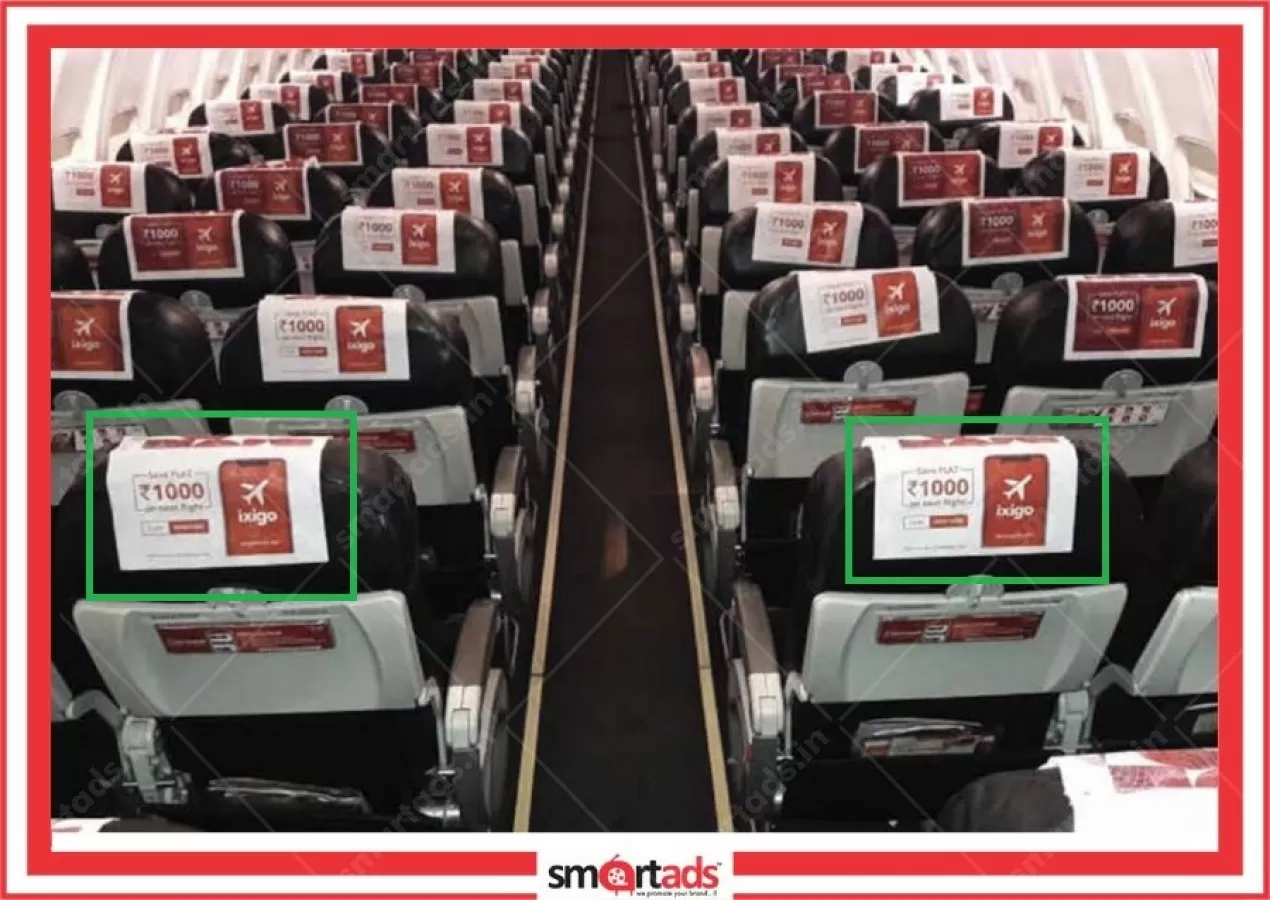
Headrest Cover
28 W x 32 H cm
Advertisements will be displayed on the
Rate per Aircraft / Month
Min 10 Aircraft
₹85000.00
Showing 1 to 7 of 7 Results
MEDIA DETAILS
28 W x 32 H cm
Advertisements will be displayed on the
Rate per Aircraft / Month
Min 10 Aircraft
₹85000.00
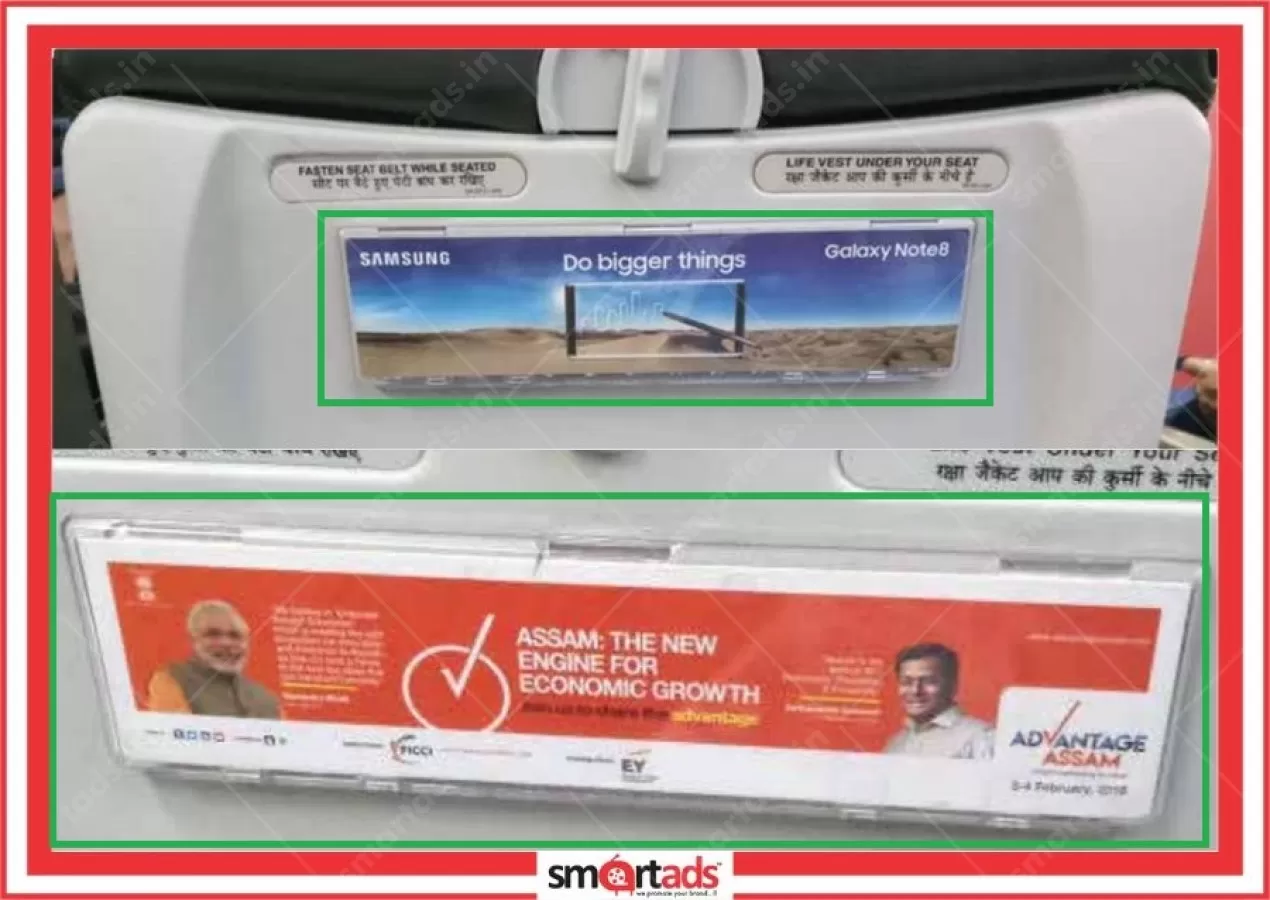
217.5 W x 53.5 H with 3mm bleed
Seat Back Branding is displayed on the m
Rate per Aircraft / Month
Min 10 Aircraft
₹180000.00
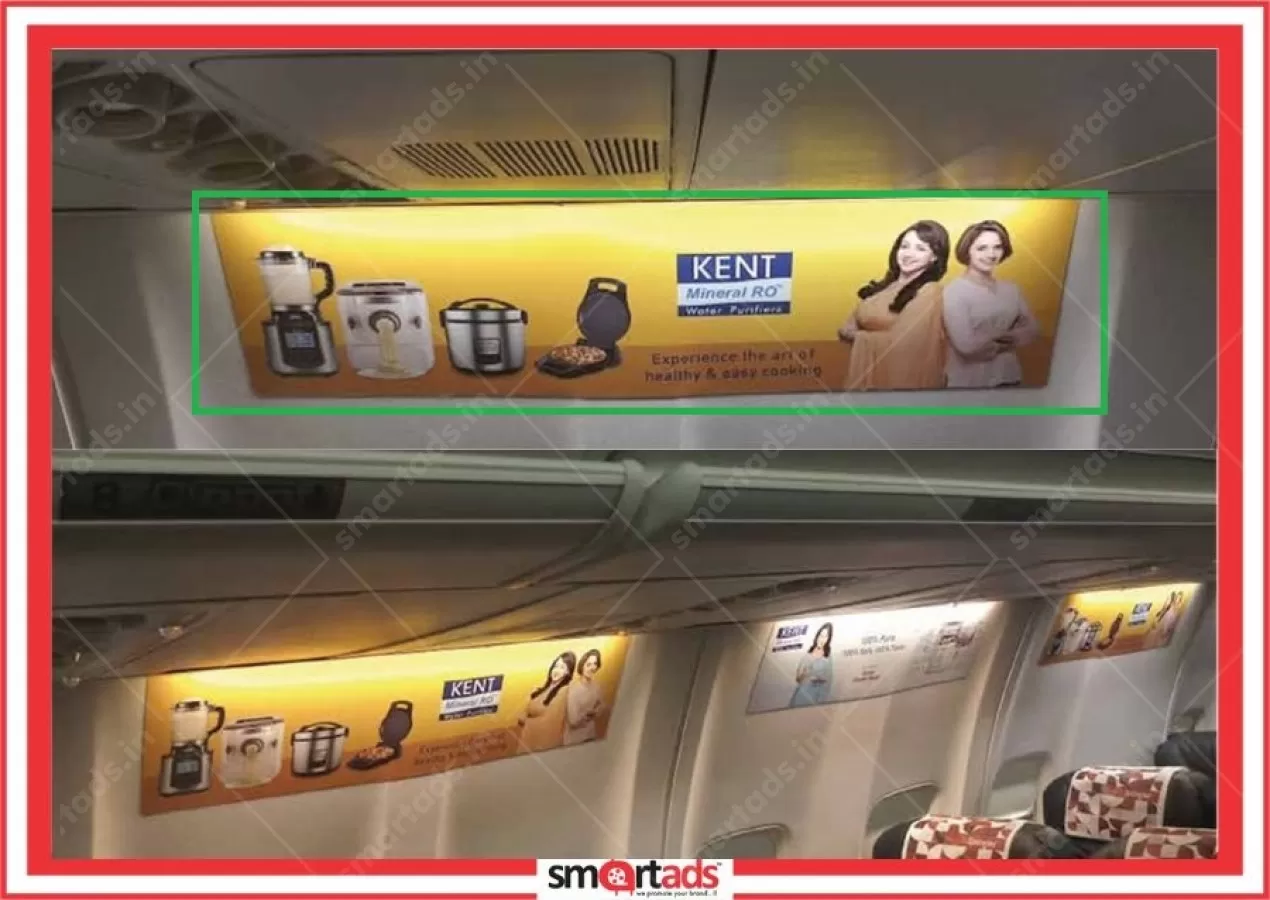
35 W x 5.5 H
Advertisements will be displayed inside
Rate per Aircraft / Month
Min 10 Aircraft
₹425000.00
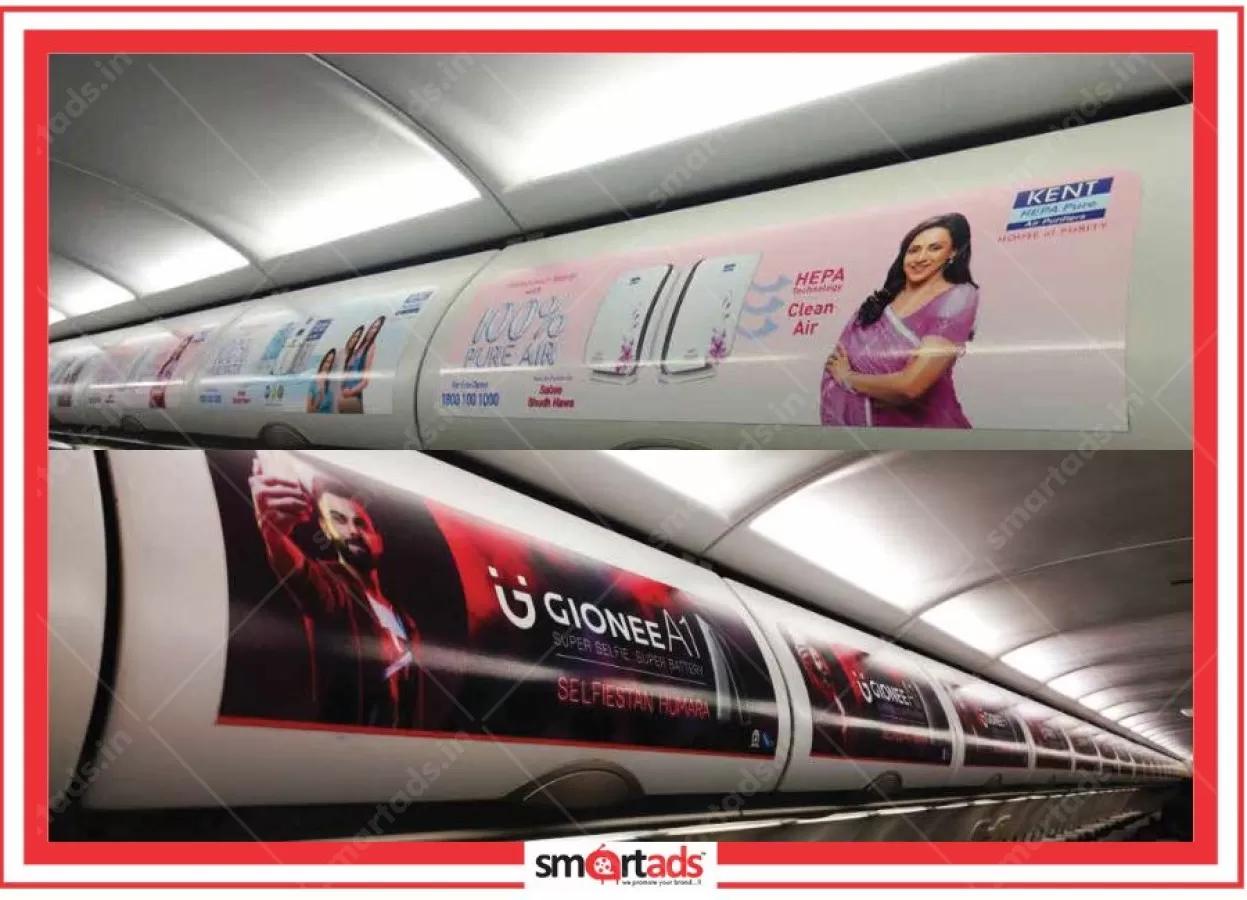
Custom Size
Maximum view. Maximum brand coverage. E
Rate per Overhead / Month
Min 10 Aircraft
₹500000.00

139*92 W X 35 H
Tray table branding is highly visible to
Rate per Aircraft / Month
Min 10 Aircraft
₹97000.00

580 W X 196 H Approx
Advertisements will be displayed on the
Rate per Boarding Pass / Time
Min 10 lac Qty
₹2.00

350-400 sq.feet display on both the side
Advertisements are displayed as a wrap c
Rate per Aircraft / Month
Min 3 Aircraft
₹3800000.00
MEDIA REACH

Airlines :
Airlines
AvgMonthlyPassenger :
1116000
DeptPerDay :
200
DeptPerMonth :
6000
AirAsia India's advertising approach represents one of the most dynamic marketing transformations in Indian aviation, particularly following the Tata Sons acquisition which fundamentally altered the carrier's brand positioning strategy. This comprehensive analysis examines AirAsia's advertising rates, media mix optimization, and campaign effectiveness across television, print, digital, and inflight channels, providing media planners with actionable data points and cost benchmarks for airline marketing in India.
The thing is, AirAsia India's marketing success stems from a carefully calibrated blend of aspirational messaging and accessibility positioning, which creates a unique space in the crowded low-cost carrier segment. Our experience working with airline clients shows that AirAsia's advertising strategy revolves around three core pillars: route connectivity emphasis, digital-first customer engagement, and strategic airport advertising placement at their primary hubs in Bengaluru and Chennai.
What sets AirAsia apart from other budget airlines is their consistent investment in brand visibility across multiple touchpoints; we have observed their advertising spend allocation typically distributes roughly 40% to digital channels, 25% to television advertising, 20% to airport and outdoor media, and 15% to print and radio combined. This distribution reflects a modern approach that prioritizes measurable digital engagement while maintaining traditional media presence for brand credibility, which is particularly important in tier 2 and tier 3 cities where AirAsia has been expanding their domestic routes.
The carrier's advertising messaging consistently emphasizes their Malaysia heritage and Asia Pacific connectivity, which differentiates them from purely domestic-focused competitors like SpiceJet and IndiGo. At SmartAds, we have found that this international positioning allows AirAsia to command premium pricing for advertising partnerships compared to other low-cost carriers, with inflight advertising rates working out to somewhere between ₹2.5 lakh to ₹4.2 lakh per month for full aircraft branding, depending on route frequency and passenger load factors.
Frankly speaking, the competitive landscape among Indian low-cost carriers reveals stark differences in advertising philosophy and budget allocation strategies. IndiGo dominates with aggressive television advertising campaigns that emphasize punctuality and network coverage, while SpiceJet focuses heavily on promotional pricing campaigns across digital platforms; AirAsia India, by contrast, positions itself as the premium low-cost option through sophisticated brand messaging that emphasizes international connectivity and service quality.
Our analysis of airline industry advertising spend shows that IndiGo allocates roughly ₹180-200 crores annually to advertising, which represents the highest investment among domestic carriers, while AirAsia India's advertising budget works out to approximately ₹45-60 crores per year. However, AirAsia achieves superior cost efficiency in terms of advertising spend per passenger, which we calculate at roughly ₹85-95 per passenger compared to IndiGo's ₹110-125 per passenger, largely due to their focused route network and strategic media buying approach.
The most significant difference lies in digital marketing execution, where AirAsia leverages their parent company's regional social media presence and cross-promotional opportunities across Asia Pacific markets. We have seen this strategy particularly effective for international route promotion, where AirAsia can tap into existing brand recognition in Malaysia, Thailand, and other Southeast Asian destinations, creating advertising synergies that purely domestic carriers cannot replicate.
Airport advertising represents the highest-impact channel for airline marketing in India, delivering unmatched target audience precision since every viewer is either a current or potential air traveler. Our experience managing airport advertising campaigns shows that costs vary dramatically by location and format; Mumbai's Chhatrapati Shivaji International Airport commands premium rates of ₹12-18 lakh per month for large-format displays, while tier 2 city airports like Kochi or Guwahati offer similar visibility for ₹2.5-4 lakh monthly, making them exceptionally cost-effective for regional route promotion.
Television advertising remains crucial for airline brand building, particularly during cricket seasons and festival periods when viewership peaks across key demographics. The CPM for airline television advertising typically works out to ₹8-12 for prime time slots on Hindi general entertainment channels, which translates to roughly ₹15-25 lakh for a 30-second spot during popular shows, though we have negotiated significantly better rates through strategic planning and bulk buying across multiple quarters.
Digital advertising has become increasingly sophisticated for airline marketing, with Facebook and Google Ads delivering measurable booking conversions that traditional media cannot match. At SmartAds, we typically see airline clients achieving cost-per-click rates of ₹25-45 for search campaigns and ₹8-15 for social media advertising, with conversion rates ranging from 2.5% to 4.8% depending on route popularity and seasonal demand factors; these metrics make digital channels particularly attractive for promotional campaigns and last-minute seat sales.
Inflight advertising creates a captive audience environment that delivers guaranteed attention and extended exposure time, which makes it particularly valuable for brand partners seeking premium association with travel and lifestyle categories. AirAsia India's inflight advertising inventory includes seat-back displays, overhead bin branding, meal tray advertisements, and boarding pass partnerships, with rates that work out to roughly ₹1.8-3.2 lakh per month depending on the specific format and route coverage.
The effectiveness of inflight advertising lies in the demographic profile of air travelers, which skews heavily toward higher income groups and business decision-makers; our analysis of passenger data shows that roughly 65% of AirAsia India passengers fall into the SEC A and B categories, with average household incomes exceeding ₹8 lakh annually. This audience profile makes inflight advertising particularly attractive for premium brands, financial services, and luxury products, which explains why AirAsia can command higher advertising rates compared to other touchpoints.
What makes AirAsia's inflight advertising especially compelling is their route network focus on business and leisure destinations across India and Southeast Asia, which creates natural synergies for tourism boards, hotel chains, and international brands seeking to reach Indian outbound travelers. We have managed several successful inflight campaigns where brand recall rates exceeded 78% among surveyed passengers, significantly higher than traditional outdoor advertising which typically achieves 35-45% recall rates in urban markets.
The Tata Sons acquisition fundamentally transformed AirAsia India's advertising approach, shifting from standalone low-cost carrier positioning to integration within the broader Tata aviation ecosystem, which includes Air India and Air India Express. This transition created both opportunities and challenges for the brand's marketing strategy, particularly in terms of route rationalization and customer messaging consistency across the merged entity.
Post-acquisition advertising campaigns have emphasized continuity of service quality while highlighting expanded network coverage through Air India Express integration, which allows AirAsia to offer connecting flights to destinations previously outside their route map. Our conversations with industry sources suggest that the combined entity's advertising budget has increased to roughly ₹85-110 crores annually, representing a significant boost in marketing firepower that enables more aggressive competition with IndiGo and SpiceJet.
The most noticeable change in AirAsia's advertising strategy involves increased emphasis on domestic connectivity rather than international positioning, which reflects the merged airline's focus on strengthening market share within India before expanding regional operations. At SmartAds, we have observed this shift in their media buying patterns, with increased investment in regional television advertising and vernacular print media, particularly in South Indian markets where AirAsia traditionally maintained strong brand recognition.
Digital marketing serves as the primary customer acquisition channel for AirAsia India, accounting for roughly 60% of their direct bookings and enabling sophisticated targeting based on travel behavior, demographics, and booking patterns. Their digital advertising strategy encompasses search engine marketing, social media campaigns, email marketing, and mobile app promotion, with particular emphasis on video content that showcases destinations and onboard experience.
AirAsia's social media advertising leverages user-generated content and influencer partnerships to create authentic travel inspiration, which drives both brand awareness and direct bookings; we have analyzed their Facebook and Instagram campaigns and found engagement rates consistently exceeding 4.2%, significantly higher than the 2.8% average for airline industry social media marketing. Their digital campaigns often feature competitive pricing comparisons and limited-time promotional offers, creating urgency that drives immediate booking conversions.
The carrier's mobile app serves as both a booking platform and advertising channel, featuring partner promotions, destination marketing, and ancillary service upselling that generates additional revenue per passenger. Our experience with airline digital marketing shows that mobile app advertising can achieve conversion rates of 8-12% for relevant offers, making it one of the most effective channels for promoting seat upgrades, baggage add-ons, and travel insurance products.
Search engine marketing consistently delivers the highest return on investment for airline advertising, with properly optimized campaigns achieving booking conversion rates of 6-9% and cost-per-acquisition figures that work out to roughly ₹450-750 per passenger, depending on route competitiveness and seasonal demand factors. Google Ads for airline keywords typically require bids of ₹35-85 per click for competitive routes like Delhi-Mumbai or Bengaluru-Chennai, but the conversion quality justifies these costs through direct revenue generation.
Airport advertising provides exceptional brand visibility and target audience precision, though measuring direct ROI remains challenging due to the brand-building nature of this medium; however, our analysis of passenger surveys indicates that airport advertising influences airline selection for roughly 23% of travelers, making it particularly valuable for new route launches and competitive positioning against established carriers. The cost-effectiveness varies dramatically by location, with tier 2 city airports offering significantly better value than major metropolitan hubs.
Television advertising works best for airline marketing during specific periods such as festival seasons, cricket tournaments, and holiday booking windows, when travel intent peaks across target demographics. We have found that airline television campaigns achieve optimal ROI when concentrated in 4-6 week bursts rather than sustained year-round presence, with cost-per-reach figures working out to approximately ₹2.8-4.2 per thousand viewers for prime time slots on popular channels.
The Directorate General of Civil Aviation (DGCA) maintains strict guidelines for airline advertising, particularly regarding pricing claims, route announcements, and safety-related messaging, which requires careful legal review of all marketing materials before publication. Airlines must ensure that advertised fares include all mandatory taxes and fees, with clear disclosure of terms and conditions, baggage policies, and cancellation rules; violations can result in significant penalties and mandatory corrective advertising.
Advertising for new routes requires DGCA approval before public announcement, which creates timing challenges for marketing campaigns and media booking; we have seen instances where airlines had to postpone or cancel advertising campaigns due to regulatory delays in route approvals. International route advertising faces additional scrutiny regarding bilateral air service agreements and slot availability, making it crucial for airlines to coordinate marketing plans with regulatory compliance teams.
At SmartAds, we always advise airline clients to build regulatory review time into their campaign timelines, typically adding 2-3 weeks for DGCA compliance verification before launching major advertising initiatives. The regulatory framework also impacts comparative advertising claims, requiring factual substantiation for any performance or service quality comparisons with competitor airlines, which limits the aggressive positioning strategies common in other industries.
Programmatic advertising has revolutionized airline marketing by enabling real-time bidding for ad inventory based on user behavior, search history, and booking intent signals, which allows carriers like AirAsia to target potential passengers with personalized offers at optimal moments in the purchase journey. The technology enables dynamic pricing displays and route-specific messaging that adapts automatically based on seat availability and demand patterns, significantly improving campaign efficiency compared to traditional media buying approaches.
Artificial intelligence and machine learning algorithms now power sophisticated retargeting campaigns that can predict booking likelihood and optimize ad spend allocation across channels; we have implemented AI-driven campaigns for airline clients that achieved 35-40% improvement in conversion rates compared to manual campaign management. These systems analyze vast datasets including search patterns, social media behavior, and historical booking data to identify high-value prospects and customize messaging accordingly.
Connected TV and over-the-top (OTT) platform advertising represents a rapidly growing opportunity for airline marketing, combining the visual impact of television with the targeting precision of digital channels. AirAsia and other carriers are increasingly investing in streaming platform advertising, which delivers measurable engagement metrics and enables interactive features like direct booking links, making it particularly effective for reaching younger demographics who have shifted away from traditional television consumption.
Q: What are the advertising rates for AirAsia India inflight marketing partnerships?
AirAsia India's inflight advertising rates vary significantly based on format, route coverage, and campaign duration, with seat-back advertising typically costing between ₹1.8-3.2 lakh per month for comprehensive branding across their domestic network. Overhead bin advertisements work out to roughly ₹85,000-1.4 lakh monthly, while meal tray branding ranges from ₹65,000-95,000 per month depending on passenger load factors and route frequency. Full aircraft exterior branding commands premium rates of ₹4.2-6.8 lakh monthly, though these campaigns deliver exceptional visibility at airports and during ground operations. Our experience managing inflight advertising campaigns shows that rates can be negotiated down by 15-25% for annual commitments or multi-format packages that combine several advertising touchpoints within the aircraft environment.
Q: Which advertising agencies work with AirAsia for their India campaigns?
AirAsia India has historically worked with several prominent advertising agencies for different aspects of their marketing campaigns, though the Tata acquisition has led to some consolidation in their agency partnerships. Their digital marketing campaigns are primarily managed through specialized performance marketing agencies that focus on search engine optimization and social media advertising, while traditional media buying is handled through established media planning agencies with strong airport advertising and television buying capabilities. The airline also maintains direct relationships with airport advertising specialists and outdoor media companies for their significant investment in terminal and runway-facing displays. At SmartAds, we have successfully managed campaigns for several airline clients and understand the unique requirements of aviation marketing, including regulatory compliance and seasonal demand fluctuations that require flexible campaign management approaches.
Q: How does AirAsia India's marketing strategy differ from other low-cost carriers?
AirAsia India's marketing approach emphasizes international connectivity and premium service positioning within the low-cost segment, which contrasts sharply with IndiGo's focus on punctuality and network coverage or SpiceJet's emphasis on promotional pricing campaigns. Their advertising consistently highlights Malaysia heritage and Asia Pacific destinations, creating aspirational messaging that justifies slightly higher fares compared to purely domestic-focused competitors. The carrier invests proportionally more in digital marketing channels, with roughly 40% of advertising budget allocated to online platforms compared to the industry average of 28-32% for low-cost carriers. AirAsia also maintains higher per-passenger advertising spend than most budget airlines, working out to approximately ₹85-95 per passenger annually, which enables more sophisticated brand building campaigns and premium media placements that reinforce their positioning as the premium low-cost option in Indian aviation.
Q: What advertising formats are available for AirAsia India partnership opportunities?
AirAsia India offers comprehensive advertising partnership opportunities across multiple touchpoints including inflight displays, boarding pass branding, airport lounge advertising, mobile app promotions, and co-branded marketing campaigns that leverage their route network for destination marketing. Inflight options include seat-back displays, overhead bin branding, meal tray advertisements, safety card inclusions, and announcements during flight operations, with flexible duration options ranging from monthly campaigns to annual partnerships. Digital advertising opportunities encompass website banner placements, email newsletter inclusions, mobile app advertising, and social media co-marketing initiatives that tap into their substantial online following. The airline also provides ground advertising options including check-in counter branding, baggage tag advertisements, and airport gate area displays at their primary hubs in Bengaluru, Chennai, and other key destinations across their network.
Q: How has the Tata acquisition affected AirAsia India's advertising approach?
The Tata Sons acquisition fundamentally transformed AirAsia India's advertising strategy by integrating the carrier into the broader Tata aviation ecosystem, which includes Air India and Air India Express, creating opportunities for cross-promotional campaigns and shared marketing resources. Post-acquisition advertising has shifted toward emphasizing domestic connectivity rather than international positioning, reflecting the merged entity's focus on strengthening Indian market share before expanding regional operations. The combined advertising budget has increased to roughly ₹85-110 crores annually, enabling more aggressive competition with IndiGo and SpiceJet through increased television advertising and expanded digital marketing campaigns. However, the integration has also created messaging challenges as the airline balances AirAsia brand equity with Tata Group positioning, requiring careful campaign development that maintains brand consistency while highlighting expanded network benefits through the merger.
Q: What are the most effective advertising channels for airline marketing in India?
Airport advertising delivers the highest target audience precision for airline marketing since every viewer represents a current or potential air traveler, with costs ranging from ₹2.5-4 lakh monthly at tier 2 airports to ₹12-18 lakh at major metropolitan hubs like Mumbai and Delhi. Digital marketing channels, particularly search engine advertising and social media campaigns, provide the best measurable return on investment with conversion rates of 6-9% for properly optimized campaigns and cost-per-acquisition figures of ₹450-750 per passenger. Television advertising remains crucial for brand building during peak travel seasons, with prime time slots costing ₹15-25 lakh for 30-second spots on popular channels, though effectiveness varies significantly based on timing and audience targeting. Our experience at SmartAds shows that integrated campaigns combining airport visibility, digital targeting, and strategic television placement deliver optimal results, with campaign performance improving by 25-35% when multiple channels work together rather than operating in isolation.
Q: How does AirAsia measure the success of their advertising campaigns in India?
AirAsia India employs sophisticated campaign measurement systems that track both direct response metrics like booking conversions and brand awareness indicators such as aided and unaided recall surveys among target demographics. Digital campaigns provide detailed analytics including click-through rates, conversion tracking, and cost-per-acquisition data, while traditional media effectiveness is measured through passenger surveys, brand tracking studies, and correlation analysis between advertising spend and booking volume fluctuations. The airline also monitors social media engagement metrics, website traffic patterns, and mobile app download rates to assess overall campaign impact across multiple touchpoints. Their measurement approach includes route-specific analysis to determine which advertising channels drive the most bookings for particular destinations, enabling optimization of media mix allocation based on actual performance data rather than industry assumptions.
Q: What role does digital marketing play in AirAsia India's overall strategy?
Digital marketing serves as the primary customer acquisition channel for AirAsia India, generating roughly 60% of direct bookings through search engine marketing, social media campaigns, email marketing, and mobile app promotion that collectively create a comprehensive online presence. Their digital strategy emphasizes video content showcasing destinations and onboard experience, user-generated content campaigns, and influencer partnerships that achieve engagement rates consistently exceeding 4.2% compared to the 2.8% industry average for airline social media marketing. The carrier's mobile app functions as both a booking platform and advertising channel, featuring partner promotions and ancillary service upselling that generates additional revenue per passenger while providing valuable customer data for campaign optimization. Digital marketing also enables sophisticated retargeting campaigns powered by artificial intelligence algorithms that predict booking likelihood and optimize ad spend allocation across channels, achieving 35-40% better conversion rates compared to manual campaign management approaches.
The airline industry in India continues to evolve rapidly, with digital transformation accelerating customer acquisition strategies while traditional media maintains its importance for brand building and market penetration in tier 2 and tier 3 cities. AirAsia India's advertising approach demonstrates the effectiveness of integrated campaigns that combine digital precision with strategic traditional media placement, particularly airport advertising which delivers unmatched target audience relevance for airline marketing.
Our analysis reveals that successful airline advertising requires careful balance between promotional pricing campaigns that drive immediate bookings and brand building initiatives that create long-term customer loyalty and premium positioning. The most effective campaigns integrate multiple touchpoints, from search engine marketing that captures high-intent travelers to airport displays that reinforce brand presence among frequent flyers, creating synergies that amplify overall campaign performance beyond what individual channels can achieve.
The regulatory environment and seasonal demand patterns unique to airline marketing require specialized expertise and flexible campaign management approaches that can adapt quickly to route changes, pricing fluctuations, and competitive responses. At SmartAds, our experience managing airline advertising campaigns across 500+ Indian cities enables us to navigate these complexities while delivering measurable results that justify marketing investment through direct booking attribution and brand equity building.
For airlines seeking to optimize their advertising strategy in India's competitive market, the key lies in data-driven media mix optimization that leverages digital channels for measurable conversion while maintaining strategic presence in high-impact traditional media that builds brand credibility and market awareness. Contact SmartAds.in for customized airline marketing solutions that combine industry expertise with comprehensive market coverage across India's diverse aviation landscape.
