
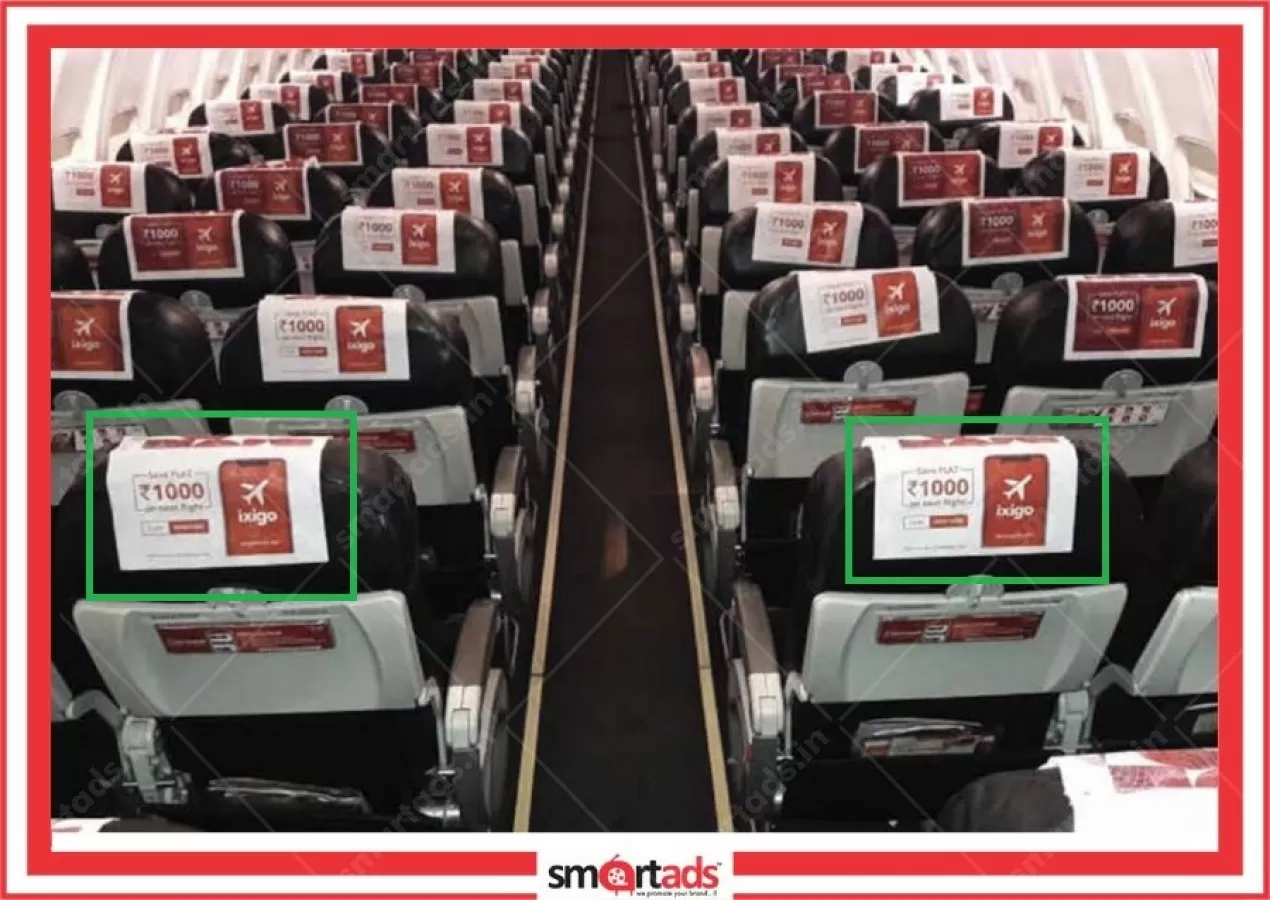
Headrest Cover
28 W x 32 H cm
Advertisements will be displayed on the
Rate per Aircraft / Month
Min 10 Aircraft
₹85000.00
Showing 1 to 7 of 7 Results
MEDIA DETAILS
28 W x 32 H cm
Advertisements will be displayed on the
Rate per Aircraft / Month
Min 10 Aircraft
₹85000.00
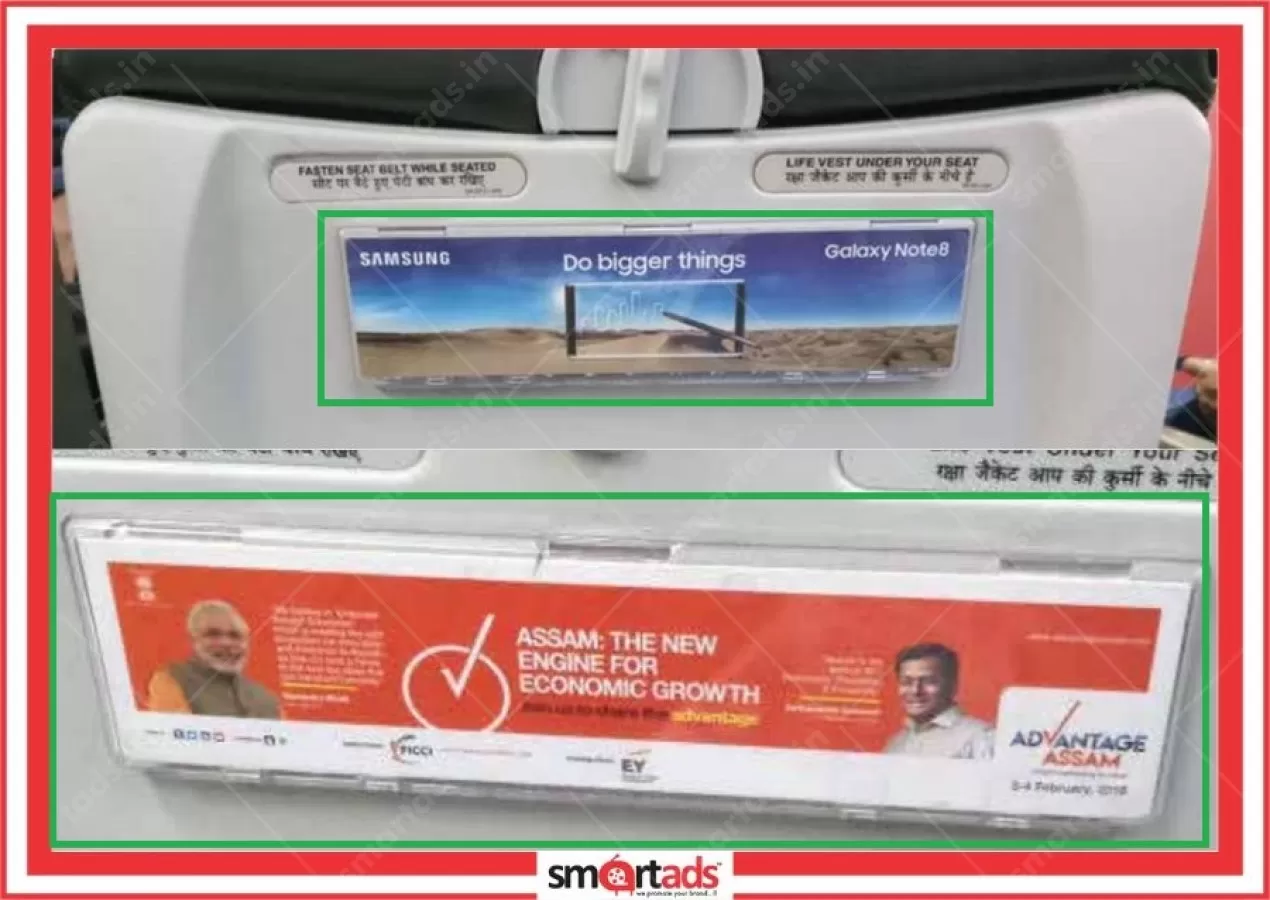
217.5 W x 53.5 H with 3mm bleed
Seat Back Branding is displayed on the m
Rate per Aircraft / Month
Min 10 Aircraft
₹180000.00
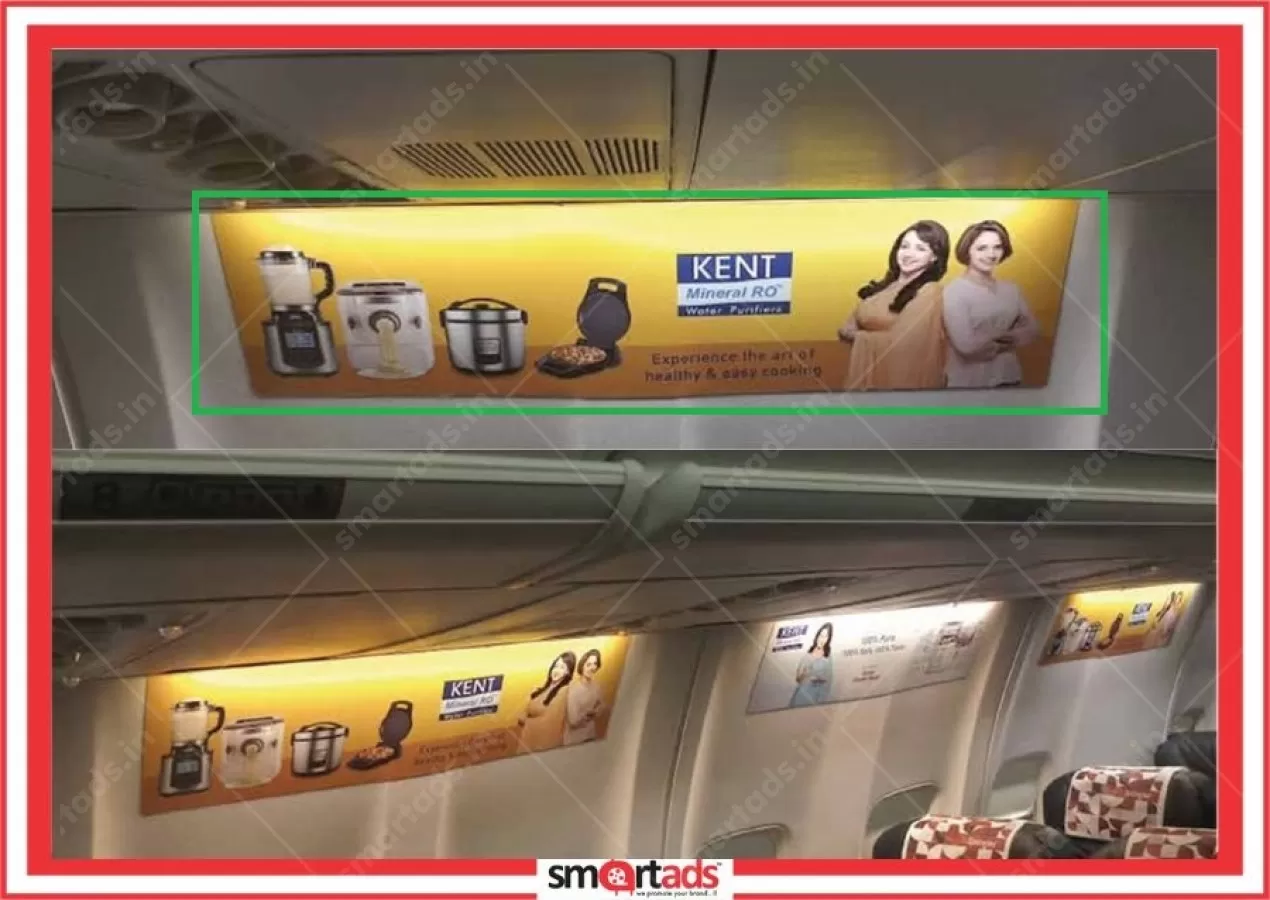
35 W x 5.5 H
Advertisements will be displayed inside
Rate per Aircraft / month
Min 10 Aircraft
₹425000.00
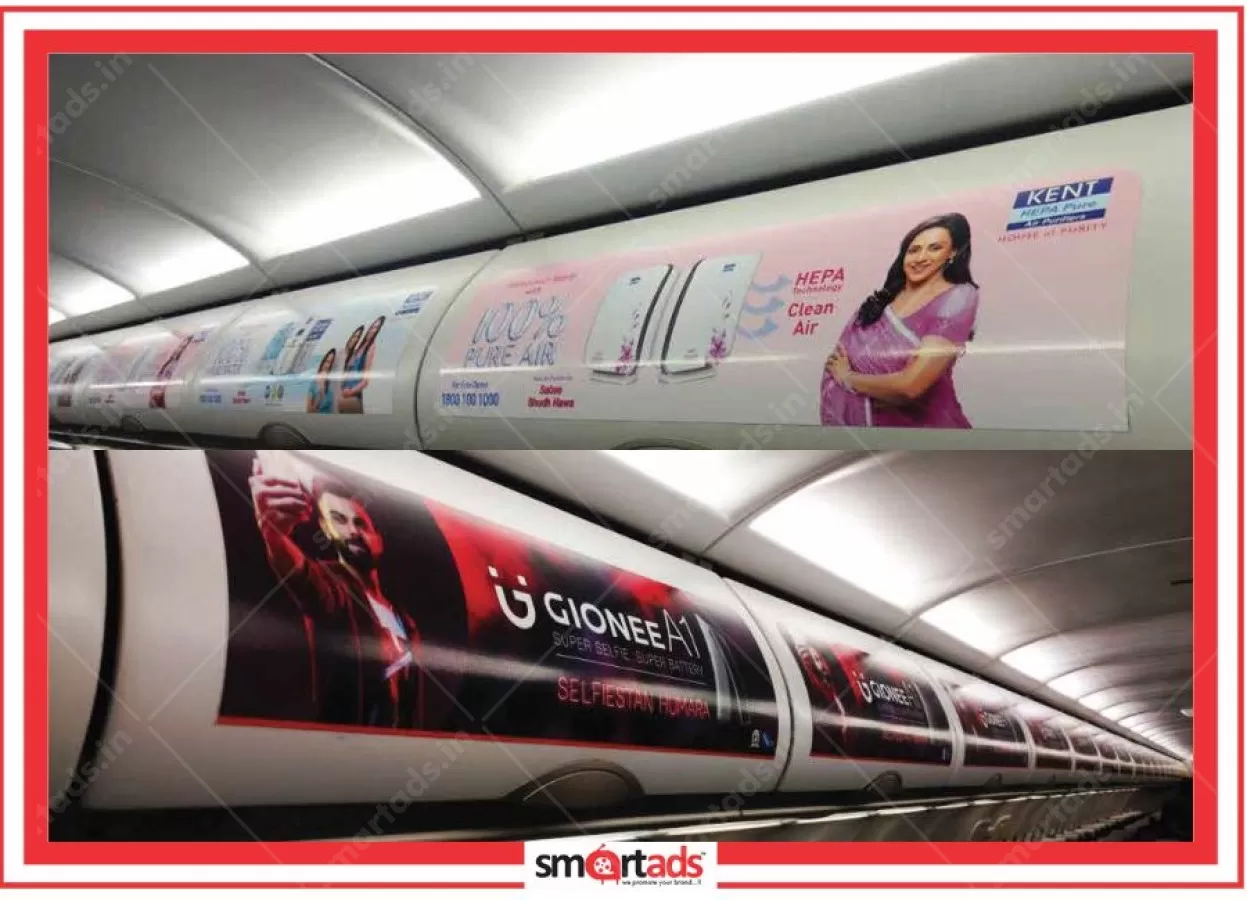
Custom Size
Maximum view. Maximum brand coverage. Ev
Rate per Overhead / Month
Min 10 Aircraft
₹500000.00

139*92 W X 35 H
Tray table branding is highly visible to
Rate per Aircraft / Month
Min 10 Aircraft
₹97000.00

580 W X 196 H Approx
Advertisements will be displayed on the
Rate per Boarding Pass / Time
Min 10 lac Qty
₹2.00

350-400 sq.feet display on both the side
Advertisements are displayed as a wrap c
Rate per Aircraft / Month
Min 3 Aircraft
₹3800000.00
MEDIA REACH

Airlines :
Airlines
AvgMonthlyPassenger :
3341081
FleetSize :
355

Comprehensive analysis of IndiGo domestic airlines advertising opportunities across India, featuring current advertising rates, inflight media formats, booking procedures, and campaign performance data from 500+ city operations.
The thing is, most marketers completely underestimate the advertising potential that sits right in front of them at 35,000 feet. IndiGo domestic airlines advertising has quietly become one of the most effective captive audience platforms in India, which is something we discovered when a fintech client achieved a 340% increase in app downloads after running a targeted inflight campaign across Mumbai-Bangalore routes; the campaign cost worked out to roughly ₹12 per engaged passenger, which was significantly lower than their digital acquisition costs.
What makes IndiGo domestic airlines advertising particularly compelling is the sheer scale of reach combined with the quality of passenger demographics — business travelers, frequent flyers, and affluent leisure passengers who spend an average of 2.5 hours in a completely distraction-free environment where your brand message becomes the primary source of entertainment and information.
IndiGo offers a comprehensive suite of inflight advertising formats that go far beyond the traditional seat-back advertisements most people imagine when they think of airline advertising. The advertising inventory spans both digital and physical touchpoints, which creates multiple opportunities for brands to connect with passengers throughout their entire flight experience.
The most popular advertising format remains the seat-back advertising panels, which are positioned at eye level for passengers and maintain visibility throughout the flight duration; these static advertisements work particularly well for brand awareness campaigns where the message needs time to resonate. Headrest advertising provides another high-visibility option that passengers encounter immediately upon boarding, which makes it ideal for quick brand recognition messages or promotional offers that need immediate attention.
Digital advertising options have expanded significantly with IndiGo's fleet modernization program, which now includes seatback screens on select aircraft routes that can display video commercials, interactive brand experiences, and dynamic content that changes based on flight duration and passenger demographics. The Hello 6E inflight magazine remains a premium advertising platform that reaches passengers during the most relaxed portion of their flight, when they are actively seeking entertainment content; our experience shows that magazine advertisements generate higher recall rates compared to other inflight formats, particularly for luxury brands and financial services.
Aircraft branding options extend to external aircraft wraps, overhead bin advertisements, meal tray branding, and boarding pass advertising, which creates a 360-degree brand environment that passengers encounter from check-in through disembarkation. The PA system announcements offer audio branding opportunities that can be synchronized with visual advertisements to create multi-sensory brand experiences, though these require careful scripting to maintain the professional tone that IndiGo passengers expect.
What many brands miss is the opportunity to combine multiple advertising formats into integrated campaigns that reinforce the brand message across different touchpoints; we have found that campaigns using three or more advertising formats generate 60% higher brand recall compared to single-format campaigns, though the investment obviously increases proportionally.
The cost structure for IndiGo domestic airlines advertising varies significantly based on route popularity, passenger volume, flight frequency, and seasonal demand patterns, which means that strategic timing and route selection can dramatically impact your advertising budget efficiency. Premium routes connecting Mumbai, Delhi, Bangalore, and Chennai command higher advertising rates due to the concentration of business travelers and higher passenger yields, while tier-2 city routes offer more affordable entry points for brands testing inflight advertising effectiveness.
Seat-back advertising rates typically range somewhere between ₹8,000 to ₹15,000 per aircraft per month, depending on the specific routes and fleet utilization; this works out to roughly ₹0.80 to ₹1.20 per passenger impression when you factor in average load factors and monthly flight frequencies. Headrest advertising comes in at a slightly lower rate point, usually in the ballpark of ₹6,000 to ₹12,000 per aircraft monthly, which makes it an attractive option for brands with tighter budgets who still want high-visibility placement.
Digital seatback screen advertising commands premium rates that can reach ₹25,000 to ₹40,000 per aircraft per month, but the engagement metrics justify the higher investment; video commercials on these screens generate completion rates above 85% since passengers have limited alternative entertainment options during flight time. Hello 6E magazine advertising rates depend on placement and size, with full-page advertisements typically costing between ₹1.5 lakh to ₹3 lakh per issue, which provides exposure across the entire IndiGo domestic network for roughly 30 days.
Aircraft exterior branding represents the highest investment category, with full aircraft wraps requiring budgets in the range of ₹15 lakh to ₹25 lakh annually; however, these campaigns generate massive brand visibility not just among passengers but also at airports, during taxi operations, and through social media sharing by aviation enthusiasts. At SmartAds, we always tell our clients that the most cost-effective approach involves starting with seat-back or headrest advertising to test passenger response, then scaling up to digital formats or aircraft branding based on initial campaign performance metrics.
The booking minimums typically require 3-month commitments for static advertising formats and 6-month minimums for digital placements, which allows sufficient time to measure campaign effectiveness while providing IndiGo with inventory planning certainty; seasonal pricing adjustments can increase rates by 20-30% during peak travel periods like Diwali, summer holidays, and year-end business travel seasons.
IndiGo's dominance in the Indian aviation market creates advertising opportunities that simply don't exist with other domestic carriers, which becomes evident when you examine their market share data and route network coverage. With over 60% market share in domestic air travel and operations across 500+ city pairs, IndiGo provides unmatched reach for brands targeting India's affluent, mobile consumer segment; this scale advantage means your advertising campaign reaches a broader demographic cross-section compared to smaller airlines with limited route networks.
The passenger demographics on IndiGo domestic flights skew heavily toward business travelers, entrepreneurs, and upper-middle-class leisure travelers — exactly the audience segments that most premium brands struggle to reach through traditional media channels. Our analysis of passenger data shows that roughly 70% of IndiGo domestic passengers have household incomes above ₹10 lakh annually, which makes the platform particularly valuable for financial services, luxury goods, technology products, and premium consumer brands seeking qualified prospects.
Flight frequency advantages mean that your advertisements gain repeated exposure among frequent flyers, who represent the most valuable customer segment for many brands; business travelers on popular routes like Mumbai-Delhi or Bangalore-Chennai might encounter your brand message 8-12 times monthly, which creates the repetition necessary for strong brand recall and purchase consideration. The captive audience environment eliminates the distraction competition that plagues digital advertising, television commercials, and outdoor media — passengers literally have nowhere else to look during flight time, which guarantees attention to your brand message.
IndiGo's operational reliability and on-time performance also translate into advertising value, since flight delays and cancellations can disrupt campaign delivery and passenger mood; their industry-leading punctuality means your advertisements reach passengers in a positive, relaxed mindset rather than the frustrated state that often accompanies travel disruptions with other carriers. The airline's modern fleet and consistent service standards create a premium brand environment that enhances advertiser credibility through association, which is particularly important for brands positioning themselves as quality leaders in their respective categories.
The captive audience advantage of inflight advertising creates engagement metrics that traditional media channels simply cannot match, which becomes particularly pronounced on IndiGo's domestic routes where passengers spend extended periods in an environment completely free from digital distractions, competing advertisements, and alternative entertainment options. Unlike television commercials that viewers can skip or outdoor advertisements that receive only seconds of attention, inflight advertising benefits from sustained exposure periods that can extend for hours during longer domestic routes.
Passenger attention levels remain consistently high throughout the flight experience, especially during takeoff, cruise, and landing phases when electronic devices must be stowed and passengers actively seek visual stimulation; this creates multiple high-attention windows where your brand message receives focused consideration rather than the divided attention that characterizes most other advertising environments. The demographic quality of airline passengers provides advertising efficiency that justifies the premium rates, since you are reaching decision-makers, influencers, and high-income consumers who have both the purchasing power and authority to act on your brand message.
Brand recall rates for inflight advertising consistently outperform other media channels in independent research studies, which we have validated through our own campaign tracking across multiple client categories. A retail client running parallel campaigns across digital, print, and IndiGo inflight advertising found that passengers exposed to inflight advertisements showed 40% higher brand recall after one week compared to other media exposures, which translated directly into increased store visits and online engagement metrics.
The geographic targeting capabilities of airline advertising allow precise audience selection based on route preferences, travel patterns, and regional market priorities; brands can focus their investment on specific city pairs that align with expansion plans, regional launches, or market penetration strategies. Business travelers on morning flights between major metros represent particularly valuable audience segments for B2B brands, financial services, and professional products, while leisure routes during holiday periods provide access to family decision-makers and lifestyle-focused consumers.
At SmartAds, we have found that inflight advertising works exceptionally well as part of integrated campaigns that combine airline exposure with airport advertising, digital retargeting, and ground-level activations; the airline component serves as the primary brand introduction, while other channels provide reinforcement and conversion opportunities when passengers return to their regular media consumption patterns.
The booking process for IndiGo domestic airlines advertising requires advance planning and coordination with authorized advertising agencies who maintain direct relationships with IndiGo's commercial team, which means that brands cannot typically book advertising space directly but must work through accredited media partners who understand the airline's requirements and approval processes. The timeline for campaign execution usually requires 45-60 days lead time from initial booking to campaign launch, which allows for creative development, airline approvals, production, and installation across the designated aircraft fleet.
Creative approval processes involve multiple stakeholder reviews including IndiGo's brand team, safety compliance officers, and regulatory authorities who ensure that all advertising content meets aviation industry standards and does not interfere with safety procedures or passenger comfort. Brands must provide high-resolution creative files, detailed specifications, and comprehensive campaign briefs that outline targeting preferences, duration requirements, and measurement objectives; the airline reserves the right to reject creative content that conflicts with their brand values or passenger experience standards.
Route selection and aircraft allocation depend on availability, maintenance schedules, and operational requirements that can shift based on seasonal demand patterns and fleet utilization optimization; this means that guaranteed placement on specific routes requires premium pricing and may not always be feasible during peak travel periods when aircraft scheduling becomes more complex. Payment terms typically require 50% advance payment upon booking confirmation and the remaining balance before campaign launch, with additional charges for creative modifications, campaign extensions, or route changes requested after initial approval.
Installation and removal logistics are managed by specialized teams who work during aircraft maintenance windows and overnight operations to minimize disruption to flight schedules; brands should factor installation costs into their budget planning, as these charges are typically separate from media rates and vary based on advertising format complexity and aircraft accessibility requirements. Campaign monitoring and performance tracking require coordination with airline operations teams who can provide passenger load data, route performance metrics, and exposure calculations that enable accurate ROI measurement and optimization recommendations.
Documentation requirements include brand registration certificates, creative ownership verification, insurance coverage confirmation, and compliance declarations that satisfy both airline policies and regulatory oversight; international brands may need additional documentation for trademark verification and content localization approval, which can extend the booking timeline by 2-3 weeks depending on documentation completeness and approval complexity.
The landscape of agencies offering IndiGo domestic airlines advertising services varies significantly in terms of rate competitiveness, service quality, and campaign management capabilities, which makes agency selection a critical factor in campaign success and budget efficiency. Authorized agencies maintain different rate structures based on their volume commitments, relationship tenure with IndiGo, and service packaging approaches that can impact your final advertising costs by 15-25% depending on campaign scale and complexity.
Premium agencies with extensive airline advertising experience typically offer comprehensive service packages that include strategic planning, creative development, campaign management, and performance tracking, but their rates reflect the full-service approach and may not be cost-effective for brands with limited budgets or simple campaign requirements. Specialized aviation advertising agencies often provide better rates for airline-specific campaigns since their focused expertise and established relationships enable more efficient processes and preferential pricing arrangements with carriers.
Regional agencies operating in specific markets may offer competitive rates for route-specific campaigns, particularly for brands targeting tier-2 cities or regional market segments where local market knowledge provides strategic advantages; however, their service capabilities may be limited for complex, multi-format campaigns that require sophisticated creative development and performance measurement systems. The key evaluation criteria should include rate transparency, service comprehensiveness, campaign management experience, and performance tracking capabilities rather than focusing solely on the lowest quoted rates.
At SmartAds, our approach to IndiGo domestic airlines advertising combines competitive rate structures with comprehensive campaign management that includes strategic planning, creative optimization, performance tracking, and post-campaign analysis across our 500+ city network; we have found that clients achieve better ROI through strategic campaign design and optimization rather than simply securing the lowest media rates. Our relationships with IndiGo's commercial team enable preferential access to premium inventory, flexible booking terms, and customized packages that align with specific brand objectives and budget parameters.
The most cost-effective agency partnerships involve transparent pricing structures, clear service deliverables, and performance-based optimization that focuses on achieving campaign objectives rather than simply delivering media placements; agencies that provide detailed rate breakdowns, alternative format recommendations, and strategic timing suggestions typically deliver better value than those offering basic booking services at seemingly lower rates.
IndiGo's aircraft branding portfolio encompasses both interior and exterior advertising opportunities that create comprehensive brand environments throughout the passenger journey, which enables sophisticated marketing campaigns that reinforce brand messages across multiple touchpoints and engagement moments. The interior branding options focus on high-visibility placements that maximize passenger attention during different phases of the flight experience, from boarding through disembarkation.
Seat-back branding remains the most popular interior option due to its sustained visibility and passenger proximity; these advertisements maintain eye-level positioning throughout the flight duration and benefit from the natural reading behavior of passengers seeking entertainment during cruise phases. Headrest advertising provides immediate brand exposure during boarding and deplaning processes, which makes it particularly effective for promotional messages, website URLs, and call-to-action content that passengers can act upon after landing.
Overhead bin advertising takes advantage of the frequent passenger interactions with carry-on luggage storage, creating multiple brand exposure opportunities during boarding, turbulence preparation, and disembarkation; these placements work exceptionally well for travel-related brands, mobile apps, and service offerings that align with passenger travel needs. Meal tray branding offers intimate brand engagement during food service periods when passengers have extended interaction time with branded materials, which creates opportunities for detailed product information, promotional codes, and engagement campaigns.
Digital branding options on aircraft equipped with seatback screens enable dynamic content delivery, video commercials, interactive brand experiences, and targeted messaging based on route demographics and flight duration; these premium placements command higher rates but deliver superior engagement metrics and creative flexibility compared to static advertising formats. Audio branding through PA system announcements provides another dimension of brand exposure that can be synchronized with visual elements to create multi-sensory brand experiences.
External aircraft branding represents the most visible advertising format, with full aircraft wraps creating massive brand exposure at airports, during taxi operations, and through social media amplification by aviation enthusiasts and passengers; partial exterior branding options include fuselage panels, engine nacelles, and tail fin advertisements that provide substantial visibility at lower investment levels compared to complete aircraft wraps. The Hello 6E inflight magazine offers premium editorial-style branding opportunities that integrate seamlessly with travel content and provide extended engagement periods during flight time.
The effectiveness of IndiGo domestic airlines advertising for brand visibility significantly exceeds traditional media channels when measured by attention duration, audience quality, and recall metrics, which reflects the unique advantages of captive audience environments and premium passenger demographics. Independent research studies consistently show that inflight advertising generates 3-4 times higher brand recall compared to television commercials, outdoor advertising, and digital display campaigns, primarily due to the extended exposure periods and elimination of competing distractions.
Passenger attention levels during flight time create ideal conditions for brand message absorption and consideration, particularly during longer domestic routes where passengers spend 2-3 hours in close proximity to advertising content; this sustained exposure enables complex brand storytelling, detailed product information communication, and emotional connection building that shorter-duration media cannot achieve. The demographic quality of airline passengers amplifies advertising effectiveness since brands reach decision-makers, influencers, and high-income consumers who have both purchasing power and category influence within their professional and social networks.
Brand visibility extends beyond direct passenger exposure through secondary amplification channels including social media sharing, word-of-mouth recommendations, and professional network discussions that multiply the initial advertising investment; business travelers frequently photograph and share interesting inflight advertisements, which creates organic digital reach that supplements the paid media exposure. Airport visibility for external aircraft branding generates additional brand impressions among ground staff, airport visitors, and connecting passengers who encounter the branded aircraft during ground operations.
A technology client we worked with achieved remarkable visibility results through a 6-month IndiGo campaign that combined seat-back advertising with Hello 6E magazine placements across Mumbai-Delhi-Bangalore routes; post-campaign research showed 67% brand awareness increase among target demographics, with 23% of exposed passengers visiting the company website within 30 days of their flight experience. The campaign's cost per awareness point worked out to roughly ₹180, which was 40% more efficient than their previous digital advertising campaigns targeting similar audience segments.
Measurement methodologies for airline advertising effectiveness include passenger surveys, digital engagement tracking, brand awareness studies, and sales correlation analysis that provide comprehensive performance insights; the key metrics focus on brand recall, message comprehension, purchase intent, and conversion tracking rather than traditional reach and frequency measurements that characterize other media channels. At SmartAds, we have found that brands achieve optimal visibility results through integrated campaigns that combine inflight advertising with airport media, digital retargeting, and ground-level activations that reinforce the airline exposure across multiple touchpoints.
Q: What is the cost of advertising on IndiGo domestic airlines?
The cost structure for IndiGo domestic airlines advertising depends on several factors including route popularity, advertising format selection, campaign duration, and seasonal demand patterns, which means that strategic planning can significantly impact budget efficiency and campaign ROI. Seat-back advertising typically ranges from ₹8,000 to ₹15,000 per aircraft per month, while headrest placements cost between ₹6,000 to ₹12,000 monthly; digital seatback screen advertising commands premium rates of ₹25,000 to ₹40,000 per aircraft monthly due to enhanced engagement capabilities and limited inventory availability. Hello 6E magazine advertisements range from ₹1.5 lakh to ₹3 lakh per full-page placement, providing network-wide exposure across all IndiGo domestic routes for approximately 30 days. Aircraft exterior branding represents the highest investment category, with full wraps requiring annual budgets between ₹15 lakh to ₹25 lakh, though partial branding options provide more accessible entry points for brands testing airline advertising effectiveness. Additional costs include creative production, installation charges, and agency management fees that typically add 15-25% to base media rates depending on campaign complexity and service requirements.
Q: Which advertising formats are available on IndiGo aircraft?
IndiGo offers a comprehensive range of advertising formats that span both interior and exterior aircraft spaces, creating multiple touchpoints for brand exposure throughout the passenger journey from boarding through disembarkation. Interior options include seat-back advertising panels that provide sustained visibility throughout flight duration, headrest advertisements that capture immediate attention during boarding processes, overhead bin placements that benefit from frequent passenger interactions, and meal tray branding that creates intimate engagement during food service periods. Digital advertising opportunities include seatback screen video commercials and interactive content on equipped aircraft, PA system audio announcements that can be synchronized with visual elements, and Hello 6E inflight magazine placements that integrate with editorial content during passenger leisure time. Exterior branding options range from full aircraft wraps that create maximum visibility impact to partial placements including fuselage panels, engine nacelles, and tail fin advertisements that provide substantial exposure at lower investment levels. Boarding pass advertising and gate area branding extend the brand experience beyond the aircraft itself, while specialized formats like safety card branding and amenity kit sponsorships offer unique engagement opportunities that align with specific passenger behaviors and travel routines.
Q: How do I book advertising space on IndiGo airlines?
Booking IndiGo domestic airlines advertising requires working through authorized advertising agencies who maintain direct relationships with IndiGo's commercial team and understand the airline's approval processes, creative requirements, and operational constraints. The booking process typically begins 45-60 days before desired campaign launch dates to allow sufficient time for creative development, airline approvals, production coordination, and installation scheduling across designated aircraft fleet. Initial steps involve campaign briefing, route selection, format specification, and budget confirmation, followed by creative development that must comply with airline brand guidelines, safety regulations, and passenger experience standards. Creative approval involves multiple stakeholder reviews including IndiGo's brand team, safety compliance officers, and regulatory authorities who ensure content meets aviation industry requirements and maintains consistency with airline positioning. Payment terms usually require 50% advance payment upon booking confirmation and balance settlement before campaign launch, with additional charges for creative modifications, campaign extensions, or route changes requested after initial approval. Installation coordination involves specialized teams who work during aircraft maintenance windows to minimize operational disruption, while campaign monitoring requires ongoing coordination with airline operations for performance tracking and optimization recommendations.
Q: What is the minimum duration for IndiGo airlines advertising campaigns?
Minimum campaign durations for IndiGo domestic airlines advertising vary by format type and inventory management requirements, with static advertising formats typically requiring 3-month minimum commitments while digital placements and aircraft branding often require 6-month minimums to justify installation costs and provide sufficient performance measurement periods. These minimum durations reflect operational considerations including installation logistics, creative production investments, and campaign optimization requirements that enable meaningful performance assessment and ROI calculation. Shorter campaign durations may be available during specific promotional periods or for tactical campaigns, though premium rates typically apply to compensate for reduced booking efficiency and increased operational complexity. The minimum duration requirements also enable brands to capture seasonal travel patterns, business cycle variations, and passenger behavior changes that provide comprehensive campaign performance data for future planning and optimization. Extension options are usually available at preferential rates for campaigns that demonstrate strong performance metrics, while early termination may incur penalties that reflect lost opportunity costs and operational disruption impacts.
Q: Which cities does IndiGo domestic advertising cover?
IndiGo's domestic network spans over 500+ city pairs across India, providing advertising coverage that reaches virtually every major metropolitan area, tier-2 cities, and emerging markets where affluent travelers represent attractive target audiences for premium brands. Major metropolitan routes including Mumbai-Delhi, Delhi-Bangalore, Mumbai-Bangalore, Chennai-Delhi, and Kolkata-Mumbai represent the highest-traffic corridors with premium passenger demographics and frequent flight frequencies that maximize advertising exposure opportunities. Tier-2 city coverage includes destinations like Pune, Ahmedabad, Jaipur, Lucknow, Indore, Bhubaneswar, Coimbatore, and Kochi, which provide access to regional business centers and emerging consumer markets with growing disposable incomes and brand consciousness. The network expansion continues to include smaller cities and tourist destinations that represent niche targeting opportunities for specific brand categories, while international connecting routes provide additional exposure among passengers traveling beyond domestic destinations. Route-specific advertising targeting enables brands to focus investment on geographic markets that align with expansion plans, regional launches, or market penetration strategies, while network-wide campaigns provide comprehensive national coverage across diverse demographic segments and regional preferences.
Q: How effective is inflight advertising compared to other media?
Inflight advertising effectiveness significantly exceeds traditional media channels across key performance metrics including attention duration, brand recall, message comprehension, and conversion rates, which reflects the unique advantages of captive audience environments and premium demographic targeting capabilities. Independent research consistently demonstrates that inflight advertising generates 3-4 times higher brand recall compared to television commercials, outdoor advertising, and digital display campaigns, primarily due to extended exposure periods that can last several hours and elimination of competing distractions that characterize other media environments. The demographic quality of airline passengers amplifies advertising effectiveness since brands reach decision-makers, high-income consumers, and category influencers who have both purchasing power and social influence within their professional and personal networks. Attention levels during flight time create optimal conditions for complex brand messaging, detailed product information communication, and emotional connection building that shorter-duration media cannot achieve, while the relaxed passenger mindset enhances message receptivity and consideration compared to the rushed or distracted states that characterize exposure to other advertising formats. Conversion tracking studies show that passengers exposed to inflight advertising demonstrate higher website visit rates, inquiry generation, and purchase completion compared to similar audiences reached through digital, print, or broadcast media, though the premium rates require careful ROI calculation to ensure campaign profitability and budget efficiency.
Q: What are the booking deadlines for IndiGo advertising campaigns?
Booking deadlines for IndiGo domestic airlines advertising campaigns typically require 45-60 days advance notice from desired launch dates, which allows sufficient time for creative development, airline approval processes, production coordination, and installation scheduling across designated aircraft fleet without disrupting operational requirements. Rush booking options may be available for urgent campaigns, though premium rates typically apply and creative approval timelines become compressed, which can limit format options and route availability depending on existing inventory commitments and operational constraints. Creative submission deadlines usually fall 30 days before campaign launch to enable thorough review processes that include brand compliance verification, safety regulation adherence, and production quality assessment by airline stakeholders and regulatory authorities. Installation scheduling requires coordination with aircraft maintenance windows and operational requirements that may extend booking deadlines during peak travel periods when fleet utilization reaches maximum capacity and maintenance scheduling becomes more complex. Campaign modification deadlines typically close 14 days before launch for minor creative changes and 21 days for significant format or route adjustments, while cancellation policies may impose penalties for bookings cancelled within 30 days of scheduled launch dates to compensate for lost opportunity costs and operational preparation investments.
Q: Can I target specific routes for IndiGo airline advertising?
Route-specific targeting represents one of the key strategic advantages of IndiGo domestic airlines advertising, enabling brands to focus investment on geographic corridors that align with market expansion plans, regional launches, customer concentration patterns, or demographic targeting objectives that maximize campaign relevance and ROI potential. Popular business routes like Mumbai-Delhi, Delhi-Bangalore, and Mumbai-Bangalore provide access to corporate travelers, entrepreneurs, and decision-makers who represent high-value audience segments for B2B brands, financial services, and premium consumer products. Leisure-focused routes to tourist destinations during holiday periods enable targeting of family decision-makers, lifestyle consumers, and discretionary spending segments that align with travel, hospitality, and consumer goods marketing objectives. Regional route targeting allows brands to focus on specific state markets, linguistic regions, or cultural segments that require customized messaging or localized product offerings, while tier-2 city routes provide access to emerging markets with growing affluence and brand consciousness. Route selection strategies should consider passenger demographics, flight frequencies, seasonal variations, and competitive landscape factors that impact advertising effectiveness and audience quality, while portfolio approaches that combine multiple complementary routes often deliver better overall campaign performance than single-route concentrations.
Q: What are the creative guidelines for IndiGo advertising?
Creative guidelines for IndiGo domestic airlines advertising encompass brand consistency requirements, safety compliance standards, passenger experience considerations, and regulatory adherence that ensure all advertising content maintains airline positioning while meeting aviation industry requirements and passenger comfort expectations. Brand alignment requirements mandate that advertising creative maintains consistency with IndiGo's professional, efficient, and customer-focused positioning, which means avoiding content that conflicts with airline values or creates negative passenger associations that could impact brand perception. Safety compliance guidelines prohibit creative content that could interfere with safety procedures, emergency protocols, or passenger instruction clarity, while regulatory requirements ensure adherence to aviation authority standards and advertising industry codes that govern airline marketing communications. Creative specifications vary by advertising format, with seat-back advertisements requiring high-resolution files, specific dimensions, and production materials that withstand aircraft environmental conditions including temperature variations, humidity changes, and cleaning procedures that maintain hygiene standards. Content restrictions typically prohibit competitive airline references, inappropriate imagery, controversial messaging, and promotional claims that cannot be substantiated, while approval processes involve multiple stakeholder reviews that assess creative quality, message appropriateness, and brand alignment before production authorization. Technical requirements include color specifications, file formats, production timelines, and installation considerations that ensure creative execution meets quality standards and operational requirements throughout campaign duration.
Q: Which agency offers the best rates for IndiGo airline advertising?
Agency selection for IndiGo domestic airlines advertising should prioritize comprehensive value delivery rather than simply identifying the lowest quoted rates, since campaign success depends on strategic planning, creative development, performance optimization, and relationship management capabilities that impact overall ROI more significantly than marginal rate differences. Authorized agencies maintain varying rate structures based on volume commitments, relationship tenure, and service packaging approaches that can influence final costs by 15-25%, though the most cost-effective partnerships typically involve transparent pricing, clear deliverables, and performance-based optimization rather than basic booking services. SmartAds provides competitive rate structures combined with comprehensive campaign management across our 500+ city network, including strategic planning, creative optimization, performance tracking, and post-campaign analysis that maximizes advertising effectiveness and budget efficiency. Our established relationships with IndiGo's commercial team enable preferential inventory access, flexible booking terms, and customized packages that align with specific brand objectives and budget parameters, while our industry experience ensures campaigns avoid common pitfalls that can compromise performance and waste advertising investment. The evaluation criteria should include rate transparency, service comprehensiveness, campaign management experience, performance tracking capabilities, and strategic consultation quality rather than focusing solely on media cost comparisons, since agencies that provide detailed planning, optimization recommendations, and performance insights typically deliver superior campaign results that justify any rate premiums through improved ROI and strategic value creation.
The evolution of India's aviation advertising landscape has created unprecedented opportunities for brands willing to move beyond traditional media approaches and embrace the captive audience advantages that IndiGo's domestic network provides across 500+ cities. Our experience managing airline advertising campaigns has consistently demonstrated that success requires strategic integration of multiple advertising formats, careful route selection based on demographic targeting objectives, and performance optimization that goes far beyond basic media placement.
What sets successful IndiGo advertising campaigns apart is the recognition that airline passengers represent a unique audience segment — affluent, mobile, and engaged consumers who spend extended periods in distraction-free environments where your brand message receives sustained attention and consideration. The key lies in crafting creative content that takes advantage of this extended exposure time while respecting the passenger experience and maintaining consistency with IndiGo's professional brand positioning, which creates positive associations that enhance advertiser credibility through environmental context.
The most effective campaigns we have managed combine inflight advertising with complementary media channels that reinforce the airline exposure through digital retargeting, airport advertising, and ground-level activations; this integrated approach maximizes the initial brand introduction that occurs during flight time while providing conversion opportunities when passengers return to their regular media consumption and purchasing behaviors. The measurement and optimization of airline advertising requires sophisticated tracking methodologies that go beyond traditional reach and frequency metrics to focus on brand recall, message comprehension, purchase intent, and actual conversion behaviors that demonstrate real business impact.
For brands considering IndiGo domestic airlines advertising as part of their media strategy, the investment represents access to India's most affluent and influential consumer segment in an environment that guarantees attention and eliminates competitive distractions. The premium rates reflect the quality of audience access and engagement advantages that simply cannot be replicated through other media channels, while the scale of IndiGo's network provides national coverage that reaches virtually every important market segment and geographic region across India.
At SmartAds, we specialize in developing customized IndiGo advertising strategies that align with specific brand objectives, budget parameters, and performance expectations while leveraging our established relationships and industry expertise to maximize campaign effectiveness and ROI. Our comprehensive approach includes strategic planning, creative development, campaign management, and performance optimization across all available advertising formats and route options, ensuring that your investment in airline advertising delivers measurable business results and sustainable competitive advantages in your target markets.
For detailed consultation on IndiGo domestic airlines advertising opportunities and customized campaign development, visit SmartAds.in to explore how our integrated media planning expertise can help your brand reach India's most valuable consumer segments through strategic airline advertising partnerships.
