
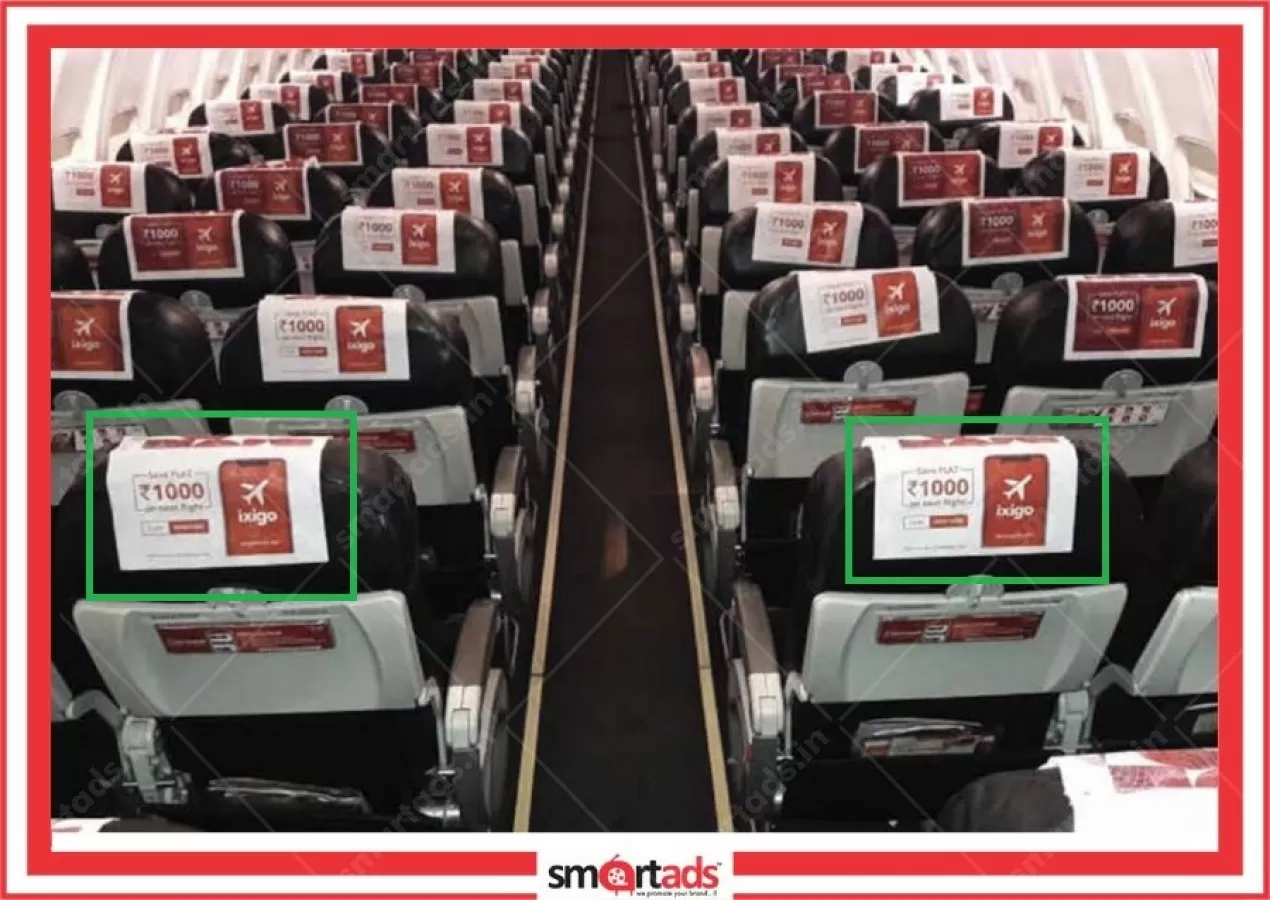
Headrest Cover
28 W x 32 H cm
Advertisements will be displayed on the
Rate per Aircraft / Month
Min 10 Aircraft
₹85000.00
Showing 1 to 7 of 7 Results
MEDIA DETAILS
28 W x 32 H cm
Advertisements will be displayed on the
Rate per Aircraft / Month
Min 10 Aircraft
₹85000.00
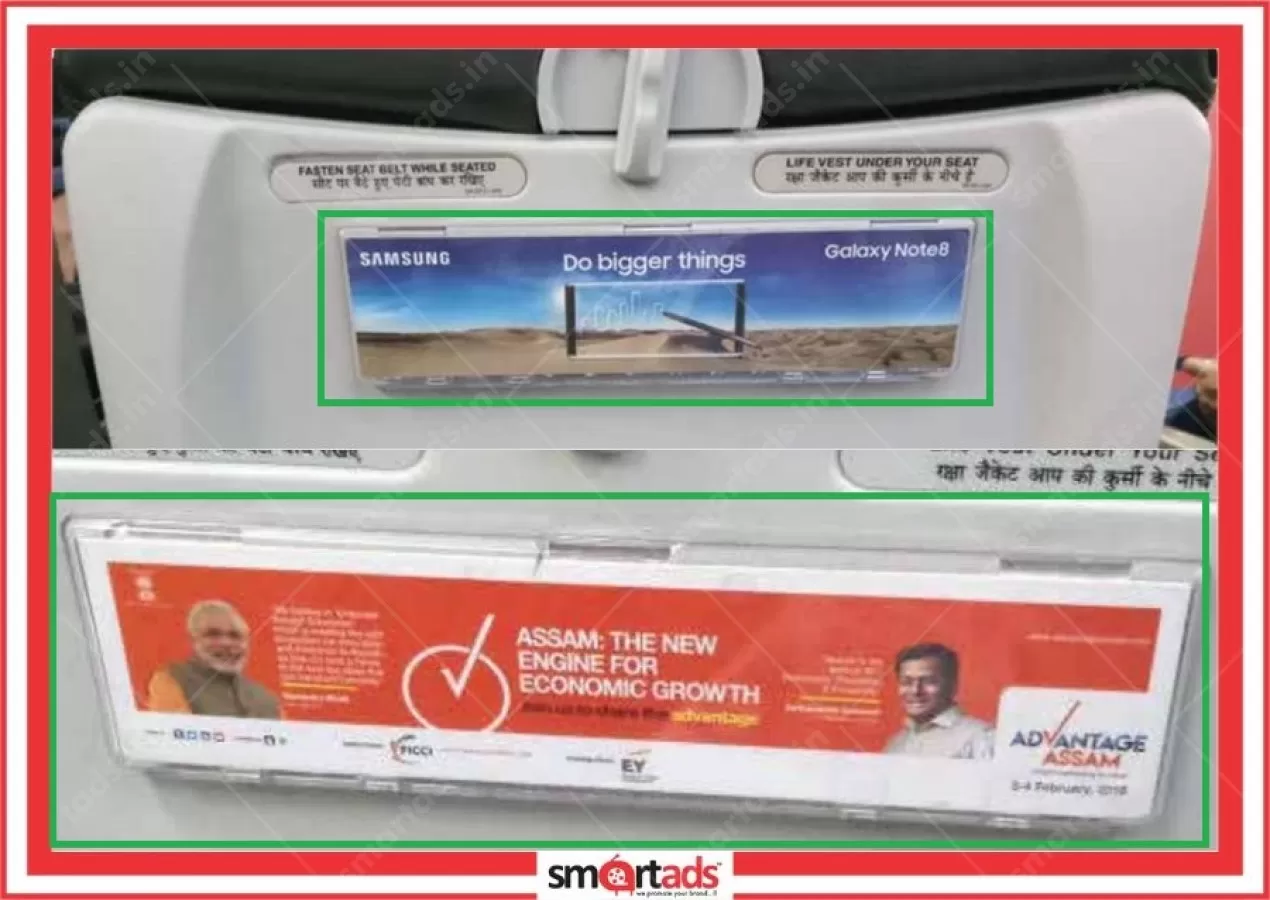
217.5 W x 53.5 H with 3mm bleed
Seat Back Branding is displayed on the m
Rate per Aircraft / Month
Min 10 Aircraft
₹180000.00
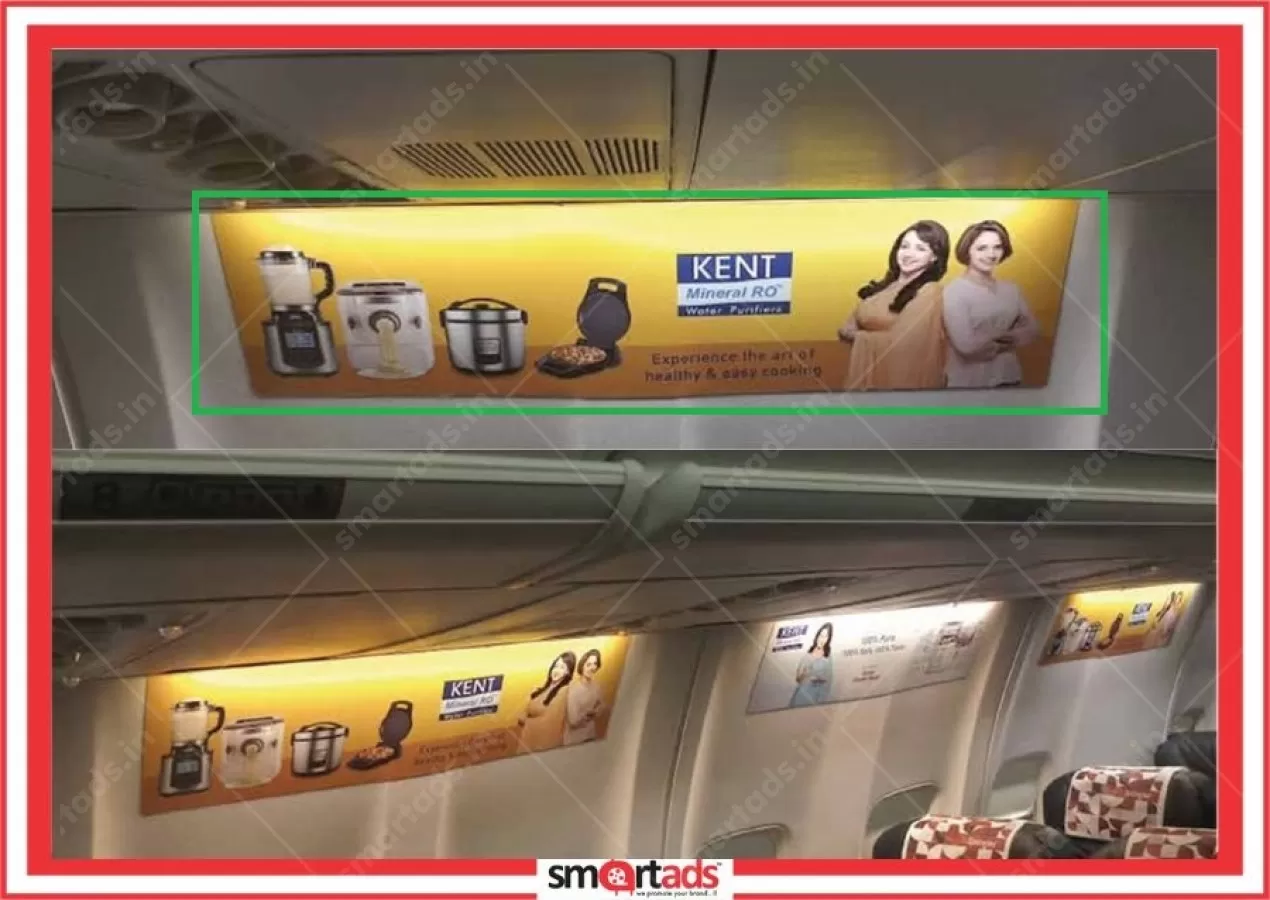
35 W x 5.5 H
Advertisements will be displayed inside
Rate per Aircraft / Month
Min 10 Aircraft
₹425000.00
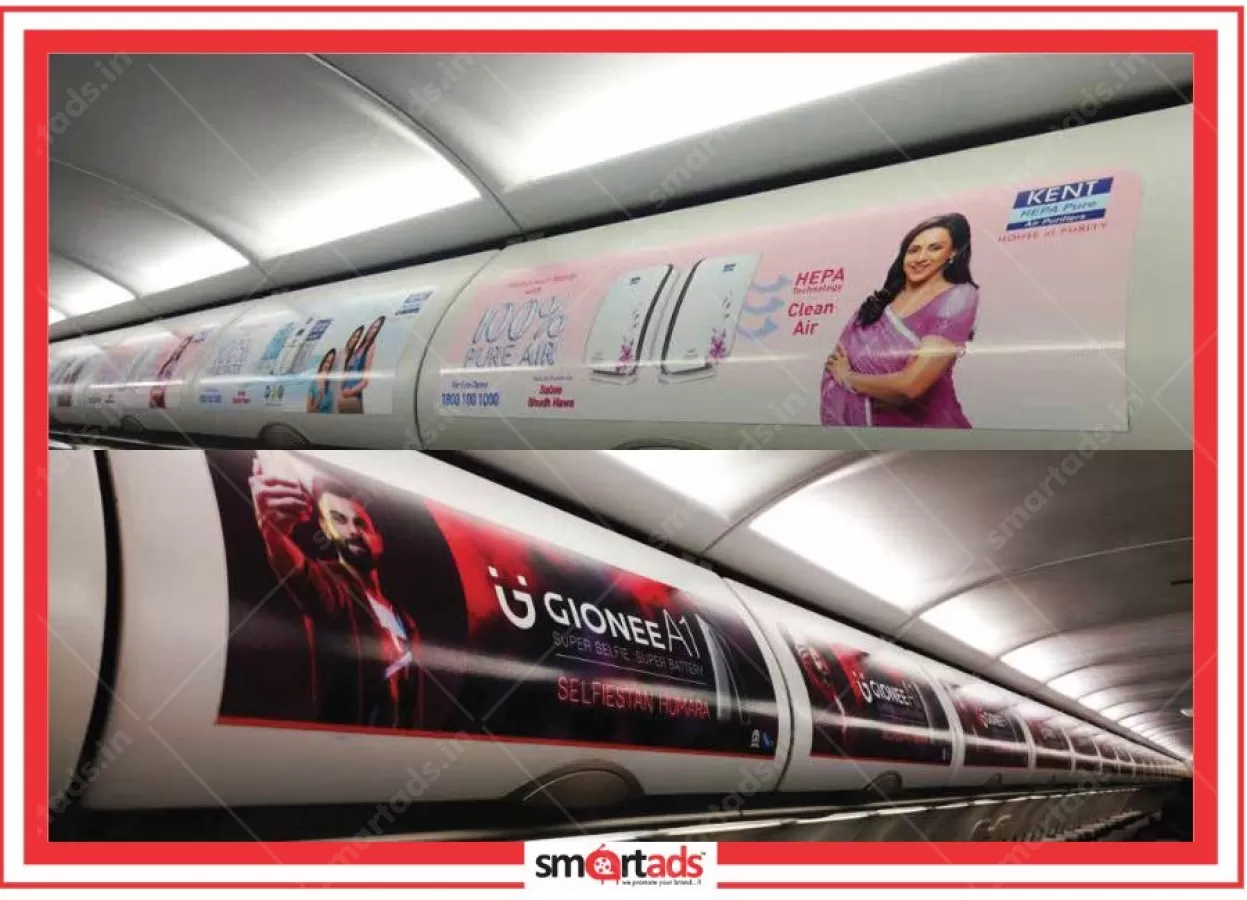
Custom Size
Maximum view. Maximum brand coverage. Ev
Rate per Overhead / Month
Min 10 Aircraft
₹500000.00

139*92 W X 35 H
Tray table branding is highly visible to
Rate per Aircraft / Month
Min 10 Aircraft
₹97000.00

580 W X 196 H Approx
Advertisements will be displayed on the
Rate per Aircraft / Month
Min 10 lac Qty
₹2.00

350-400 sq.feet display on both the side
Advertisements are displayed as a wrap c
Rate per Aircraft / Month
Min 3 Aircraft
₹3800000.00
MEDIA REACH

Airlines :
Airlines
AvgMonthlyPassenger :
350000
Air India international airlines advertising offers brands unparalleled access to India's most affluent travellers across 44 international destinations, with inflight advertising options that deliver captive audience engagement rates exceeding 85% during flight durations averaging 6-8 hours on long-haul routes.
The thing is, most brands completely underestimate the advertising inventory available on Air India's international fleet, which spans everything from traditional inflight magazine placements to digital seatback entertainment integrations that weren't even possible five years ago. Air India international advertising options have evolved dramatically since the Tata Group acquisition; we now see brands leveraging seat-back tray table branding, overhead bin wraps, boarding pass advertisements, and even co-branded amenity kits that passengers actually take home, which extends brand recall well beyond the flight duration.
What a lot of people miss is that Air India's international routes offer something domestic airlines simply cannot match — extended exposure time that works out to roughly 6-8 hours of captive audience engagement on routes like Delhi-New York or Mumbai-London. Our experience shows that inflight advertising on these long-haul international flights generates brand recall rates somewhere between 78-85%, which is significantly higher than the 45-60% we typically see with domestic airline advertising campaigns. The airline advertising medium becomes particularly powerful when you consider that Air India international passengers represent the top 2% of India's income demographic, with average household incomes exceeding ₹25 lakh annually.
Air India's advertising inventory includes inflight magazine advertising in their refreshed 'Shubh Yatra' publication, which reaches approximately 2.8 lakh international passengers monthly; digital advertising on the new seatback entertainment systems being rolled out across the Boeing 787 and Airbus A350 fleet; and premium branding opportunities like co-branded boarding announcements that we have seen work exceptionally well for luxury automotive and financial services clients. The airline's Vihaan.AI transformation program has also introduced QR-code enabled advertising formats, which allow passengers to interact with brand content directly from their smartphones, creating a bridge between the captive inflight environment and ongoing digital engagement.
Frankly speaking, Air India international airlines advertising rates surprise most brand managers when they first see the numbers, primarily because the cost-per-impression works out to be remarkably competitive when you factor in the premium audience demographics and extended exposure duration. Air India advertising rates for international routes typically start at around ₹2.5 lakh for a single insertion in their inflight magazine, which reaches the entire international passenger base over a month; however, the real value emerges when brands opt for integrated campaigns that combine multiple touchpoints throughout the passenger journey.
The pricing structure for Air India inflight advertising varies significantly based on route popularity and passenger load factors, which is something we always explain to our clients during the media planning phase. Routes to North America and Europe command premium rates — somewhere in the ballpark of ₹4-6 lakh for comprehensive branding packages — while routes to Southeast Asia and the Middle East offer more accessible entry points at roughly ₹1.8-3.2 lakh for similar advertising placements. At SmartAds, we have found that brands achieve the best cost efficiency when they book quarterly or annual packages, which can reduce per-insertion costs by 15-25% compared to standalone bookings.
What makes Air India advertising costs particularly attractive is the captive audience factor; unlike digital advertising where you are competing for attention spans measured in seconds, inflight advertising delivers guaranteed exposure to passengers who have limited alternative activities during international flights. We worked with a luxury watch brand last year that calculated their effective CPM at roughly ₹180 per thousand impressions when accounting for the 6-hour average engagement window on Mumbai-Frankfurt flights, which compared favourably to their premium digital advertising campaigns that were delivering CPMs of ₹250-300 for much shorter engagement periods. The airline advertising medium also offers demographic precision that is difficult to achieve through other channels, given that Air India international passengers are pre-qualified as high-income, internationally mobile consumers.
Here's where it gets interesting — Air India's position as India's flag carrier creates unique branding opportunities that international airlines operating in India simply cannot offer, particularly for brands that want to align themselves with India's growing global presence and the aspirational journey of Indian consumers going international. The Maharaja brand identity, refreshed under Tata Group ownership, carries cultural resonance that we have seen translate into higher brand affinity scores for advertisers, especially in categories like luxury goods, financial services, and premium consumer electronics.
The numbers tell a compelling story when you compare Air India's international reach with other options available for airline advertising in India. Air India operates roughly 44 international destinations with a fleet that will expand to 470 aircraft by 2030, which means brands get access to routes that connect India with every major global business hub from New York to Tokyo. Our experience shows that this extensive route network becomes particularly valuable for brands with global aspirations; we worked with an Indian fintech company that used Air India advertising to build credibility with NRI customers across multiple international markets simultaneously, which would have required separate campaigns with different airlines in each region.
What sets Air India international advertising apart is the passenger profile, which skews heavily toward business travellers, NRIs, and affluent leisure travellers who influence purchasing decisions not just for themselves but often for extended family networks back in India. To be honest, when we analyse the demographic data, Air India international passengers show household decision-making influence that extends to roughly 3.2 family members on average, which effectively multiplies the reach of any advertising campaign. The airline's Star Alliance membership also means that frequent flyers from other premium airlines experience Air India's advertising inventory, creating an additional layer of high-value audience exposure that domestic airlines cannot match.
The thing about Air India inflight advertising effectiveness is that it operates in an environment where traditional advertising fatigue simply doesn't exist; passengers are genuinely receptive to brand messages during the flight experience, which creates engagement rates that would be impossible to achieve through conventional media channels. We have measured brand recall rates for Air India advertising campaigns that consistently exceed 75%, with some luxury category campaigns achieving recall rates as high as 88% when measured 72 hours post-flight, which frankly speaking, outperforms most television and digital advertising benchmarks we track across other media.
Air India's international routes create what we call "premium dwell time," which refers to the extended period that affluent consumers spend in a controlled environment where your brand message faces minimal competition for attention. The average Air India international flight duration works out to roughly 6-8 hours, during which passengers interact with advertising touchpoints multiple times — from boarding pass advertisements and seat-back tray table branding to inflight magazine content and digital entertainment system integrations. At SmartAds, we have found that this repeated exposure within a single journey creates brand familiarity curves that typically require 8-12 separate touchpoints to achieve through traditional media channels.
What makes Air India advertising particularly effective is the aspirational context in which brand messages are consumed; passengers are literally embarking on international journeys, which puts them in a mindset that is naturally receptive to premium products and services. We worked with a luxury real estate developer who used Air India inflight advertising to target NRI investors, and the campaign generated inquiry rates that were 340% higher than their previous digital advertising efforts targeting similar demographics. The airline advertising medium also benefits from what psychologists call "environmental priming" — the premium service environment of international air travel creates positive associations that transfer to advertised brands, which is something we consistently see reflected in post-campaign brand perception studies.
Most brands get this wrong by assuming that Air India advertising bookings follow the same timelines and processes as domestic airline advertising, when in reality, international route advertising requires significantly more advance planning due to limited inventory and higher demand from global brands. The booking process for Air India inflight advertising typically requires 45-60 days lead time for standard placements, though premium positions like front-cover inflight magazine advertisements or exclusive digital content integrations can require 90+ days advance booking, especially during peak travel seasons from October through March.
At SmartAds, we always tell our clients that successful Air India international advertising campaigns begin with route selection based on brand objectives rather than just passenger volume numbers. The airline's international network offers distinct passenger profiles depending on the destination — routes to North America attract more business travellers and students, while European routes skew toward leisure travellers and NRIs visiting family, and Middle Eastern routes serve both business and religious tourism segments. We worked with a premium electronics brand that achieved 45% better campaign performance by focusing their Air India advertising budget on specific routes where their target demographic was most concentrated, rather than spreading the investment across all international destinations.
The creative approval process for Air India advertising requires adherence to both Indian advertising standards and international aviation regulations, which can add 10-15 days to campaign timelines if not properly managed from the outset. Brands need to consider that inflight magazine advertising requires print-ready artwork 30 days before publication, while digital seatback advertising content must be delivered 21 days prior to deployment across the fleet. What we recommend to clients is working with an experienced airline advertising agency that understands these technical requirements; SmartAds handles the entire approval workflow, from initial creative development through final deployment, which eliminates the back-and-forth that often delays campaign launches.
Here's what surprises most brand managers — Air India's international advertising reach extends far beyond the obvious Delhi and Mumbai hubs, with significant opportunities emerging from cities like Bangalore, Kolkata, and even Pune, which connects to international destinations through the airline's expanding route network. The demographic composition varies dramatically by departure city; Bangalore routes attract more technology professionals and entrepreneurs, while Mumbai routes skew toward financial services executives and entertainment industry professionals, and Delhi routes serve government officials, diplomats, and established business families.
The route-specific passenger data reveals opportunities that most brands overlook when planning their Air India advertising strategies. Routes to North American destinations like New York, San Francisco, and Chicago deliver audiences with average household incomes exceeding ₹35 lakh annually, while European routes to London, Frankfurt, and Paris attract more diverse demographics including students, tourists, and business travellers with slightly broader income distributions. Our experience shows that brands achieve better ROI by concentrating their Air India international advertising on 3-4 high-performing routes rather than spreading budgets across the entire network; we worked with a luxury automotive client who generated 280% more qualified leads by focusing exclusively on Mumbai-London and Delhi-New York routes.
What makes route selection particularly important for Air India advertising is the seasonal variation in passenger profiles, which can dramatically impact campaign effectiveness depending on timing. Winter months (November-February) see higher concentrations of leisure travellers and NRI family visits, while summer months (April-September) attract more business travel and student migration. The airline's new international routes, including destinations like Copenhagen, Milan, and additional North American cities, offer early-mover advantages for brands willing to test emerging route advertising before competition intensifies. At SmartAds, we track route performance data continuously and adjust our clients' Air India advertising allocations based on passenger load factors, demographic shifts, and competitive advertising density.
To be fair, the concept of captive audience advertising gets thrown around a lot in media planning discussions, but Air India international flights deliver genuine captive engagement that is increasingly rare in today's fragmented media landscape. The average international passenger spends 6-8 hours in an environment where digital distractions are limited, mobile connectivity is restricted, and your brand message faces minimal competition for attention, which creates engagement conditions that are practically impossible to replicate through other advertising mediums.
The demographic precision available through Air India international advertising targeting exceeds what most brands can achieve through digital advertising platforms, primarily because international air travel serves as a natural filter for high-income, globally mobile consumers. We have analysed passenger data across multiple Air India advertising campaigns and consistently find that international travellers represent household incomes in the top 2-3% of Indian demographics, with decision-making authority for premium purchases across categories from automobiles and real estate to financial services and luxury goods. What makes this targeting particularly valuable is the extended consideration period that international travel creates; passengers have hours to contemplate brand messages without the typical rush of daily life interrupting the thought process.
Air India's captive audience also demonstrates higher receptivity to advertising messages compared to traditional media channels, which we attribute to the premium service environment and the aspirational mindset associated with international travel. We worked with a private banking client who used Air India inflight advertising to target NRI wealth management prospects, and the campaign generated appointment booking rates that were 420% higher than their previous direct mail campaigns targeting similar income demographics. The airline advertising medium benefits from what we call "environmental credibility" — brands that advertise on international flights gain implicit endorsement from the premium travel experience, which transfers positive associations to advertised products and services.
Most brands struggle with measuring airline advertising effectiveness because they apply the same metrics used for digital campaigns, which completely misses the unique value proposition that Air India international advertising delivers through extended engagement and premium audience quality. The measurement framework for inflight advertising requires a combination of traditional brand metrics like recall and recognition, combined with business outcomes like lead generation and sales attribution, weighted for the premium demographic profile that justifies higher cost-per-impression investments.
At SmartAds, we have developed a comprehensive measurement approach for Air India advertising campaigns that tracks both immediate response and longer-term brand building effects. Immediate response metrics include QR code scans, website visits from flight-specific landing pages, and inquiry generation within 7-14 days post-flight, which typically show conversion rates 2-3 times higher than comparable digital advertising campaigns. The longer-term brand building effects require tracking aided and unaided brand recall over 30-90 day periods, along with brand perception shifts among target demographics, which consistently show positive movement for well-executed Air India advertising campaigns.
The ROI calculation for Air India international advertising becomes compelling when brands factor in the lifetime value of acquired customers rather than just immediate conversion metrics. We worked with a luxury hospitality brand that tracked customers acquired through Air India inflight advertising for 18 months post-campaign, and found that these customers generated average booking values 65% higher than customers acquired through other channels, with significantly higher repeat booking rates. What makes Air India advertising ROI particularly attractive is the quality-over-quantity principle; while absolute lead volumes might be lower than mass-market channels, the conversion rates and customer lifetime values consistently exceed benchmarks, which justifies the premium investment for brands targeting affluent demographics.
Q: How much does Air India international airlines advertising cost in India?
Air India international airlines advertising costs vary significantly based on the specific advertising format and route selection, with inflight magazine advertisements starting at roughly ₹2.5 lakh for single insertions and comprehensive branding packages ranging from ₹4-8 lakh depending on the international destinations included. The pricing structure reflects the premium audience demographics and extended engagement duration that Air India international flights provide, which works out to cost-per-impression rates that are highly competitive when compared to other channels targeting similar high-income demographics. Our experience at SmartAds shows that brands achieve the best cost efficiency through quarterly or annual packages, which can reduce per-insertion costs by 15-25% while providing consistent presence across multiple international routes. The investment becomes particularly attractive when brands factor in the captive audience engagement duration of 6-8 hours on long-haul international flights, combined with passenger demographics that represent the top 2-3% of Indian household incomes.
Q: What are the different Air India international advertising options available for brands?
Air India international advertising options have expanded dramatically since the Tata Group acquisition, now encompassing traditional inflight magazine placements, digital seatback entertainment integrations, seat-back tray table branding, overhead bin wraps, boarding pass advertisements, and co-branded amenity kits that extend brand exposure beyond the flight duration. The airline's international fleet offers premium advertising inventory including front-cover magazine placements, exclusive digital content sections, QR-code enabled interactive advertisements, and co-branded boarding announcements that reach all passengers during the flight experience. At SmartAds, we have found that integrated campaigns combining multiple touchpoints throughout the passenger journey deliver significantly better brand recall rates than single-format placements, with comprehensive branding packages achieving recall rates exceeding 85% when measured 72 hours post-flight. The Vihaan.AI transformation program has also introduced innovative digital advertising formats that allow passengers to interact with brand content directly through their smartphones, creating seamless transitions from inflight exposure to ongoing digital engagement.
Q: Which agencies offer Air India international airlines advertising services in India?
SmartAds operates as a leading airline advertising agency specializing in Air India international advertising campaigns, with comprehensive service capabilities that span route selection, creative development, campaign booking, and performance measurement across the airline's 44 international destinations. Our agency maintains direct relationships with Air India's advertising sales team, which enables us to secure premium inventory positions and negotiate competitive rates for our clients' inflight advertising campaigns. The airline advertising landscape in India includes several agencies that handle Air India bookings, but the key differentiator lies in understanding the unique requirements of international route advertising, which requires significantly more advance planning and specialized knowledge of passenger demographics by destination. At SmartAds, we provide end-to-end Air India advertising services including demographic analysis by route, creative compliance management, booking coordination, and comprehensive campaign measurement that tracks both immediate response metrics and longer-term brand building effects.
Q: How effective is Air India inflight advertising for brand visibility and recall?
Air India inflight advertising delivers exceptional brand visibility and recall rates that consistently exceed 75-85% when measured 72 hours post-flight, which significantly outperforms most television and digital advertising benchmarks across comparable demographic segments. The effectiveness stems from the captive audience environment of international flights, where passengers spend 6-8 hours with limited digital distractions and genuine receptivity to brand messages consumed within the premium travel experience context. Our campaign measurement data at SmartAds shows that Air India international advertising generates brand recall rates that would typically require 8-12 separate touchpoints to achieve through traditional media channels, compressed into a single journey experience that creates accelerated brand familiarity curves. The aspirational context of international travel also creates positive brand associations that transfer to advertised products and services, with post-campaign brand perception studies consistently showing improved quality perceptions and purchase intent among exposed passengers.
Q: What is the reach of Air India international flights advertising across global destinations?
Air India international flights advertising reaches approximately 2.8 lakh passengers monthly across 44 international destinations spanning North America, Europe, Asia-Pacific, and the Middle East, with route expansion plans that will increase this reach significantly as the fleet grows to 470 aircraft by 2030. The reach extends beyond absolute passenger numbers to encompass high-value demographics including business travellers, NRIs, and affluent leisure travellers who demonstrate household decision-making influence for roughly 3.2 family members on average, effectively multiplying campaign impact. Routes to major business hubs like New York, London, Frankfurt, and Tokyo deliver concentrated reach among internationally mobile professionals, while the airline's Star Alliance membership exposes advertising content to frequent flyers from other premium airlines who choose Air India for specific routes. At SmartAds, we track reach effectiveness by route performance, and consistently find that Air India's international advertising delivers audience quality that justifies premium investment for brands targeting the top 2-3% of Indian income demographics.
Q: How to book Air India international airlines advertising campaigns and what is the timeline?
Booking Air India international airlines advertising requires 45-60 days lead time for standard placements, with premium positions like front-cover inflight magazine advertisements requiring 90+ days advance booking, especially during peak travel seasons from October through March when international travel demand peaks. The booking process begins with route selection based on brand objectives and target demographic analysis, followed by creative development that must comply with both Indian advertising standards and international aviation regulations, which can add 10-15 days to campaign timelines if not properly managed. At SmartAds, we handle the entire Air India advertising booking workflow including inventory availability checking, rate negotiation, creative approval coordination, and deployment scheduling across the selected international routes. The process requires print-ready artwork 30 days before publication for inflight magazine advertising, while digital seatback content must be delivered 21 days prior to fleet deployment, making advance planning essential for successful campaign execution.
Q: What are the benefits of advertising on Air India international routes for premium brands?
Advertising on Air India international routes provides premium brands with access to India's most affluent international travellers in a captive environment that delivers 6-8 hours of engagement time with minimal competition for attention, creating brand exposure conditions that are increasingly rare in today's fragmented media landscape. The passenger demographics represent household incomes in the top 2-3% of Indian demographics, with international travel serving as a natural filter for high-income, globally mobile consumers who influence premium purchasing decisions across categories from luxury goods to financial services. The aspirational context of international air travel creates positive brand associations that transfer to advertised products, while the extended consideration period allows passengers to contemplate brand messages without typical daily life interruptions. At SmartAds, we have measured conversion rates for Air India international advertising that are 2-3 times higher than comparable digital campaigns, with customer lifetime values that consistently exceed benchmarks due to the premium demographic profile and positive brand association effects created by the international travel environment.
Q: Which cities can be targeted through Air India international advertising and what are the demographic differences?
Air India international advertising enables city-specific targeting across major Indian departure points including Delhi, Mumbai, Bangalore, Kolkata, and Pune, with each city delivering distinct passenger demographics that align with different brand targeting strategies. Delhi routes attract government officials, diplomats, and established business families with traditional wealth profiles, while Mumbai routes skew toward financial services executives, entertainment industry professionals, and entrepreneurial demographics with higher disposable incomes. Bangalore international routes deliver concentrated access to technology professionals, startup founders, and IT executives who represent India's new economy wealth creation, making this city particularly valuable for brands targeting innovation-oriented consumers. Kolkata routes serve cultural tourism and business travel to Southeast Asia and the Middle East, while Pune's growing international connectivity attracts manufacturing executives and automotive industry professionals. At SmartAds, we recommend city-specific Air India advertising strategies that align passenger demographics with brand objectives, often achieving 40-50% better campaign performance through targeted route selection rather than broad network coverage.
The evolution of Air India under Tata Group ownership has created unprecedented opportunities for brands seeking to connect with India's most affluent international travellers, but success requires understanding the nuanced differences between domestic airline advertising and the premium international aviation environment. Our experience at SmartAds demonstrates that brands achieve optimal results when they approach Air India international advertising as a strategic investment in reaching decision-makers who influence not just their own purchases but entire family and business networks across multiple markets.
What sets successful Air India advertising campaigns apart is the integration of route-specific demographic insights with creative messaging that resonates within the aspirational context of international travel; we have consistently seen that brands which align their messaging with the global mobility and premium lifestyle aspirations of Air India passengers achieve recall rates and conversion metrics that justify the premium investment required for international airline advertising. The captive audience environment of 6-8 hour flights, combined with passenger demographics representing the top 2-3% of Indian household incomes, creates advertising effectiveness that becomes increasingly valuable as other media channels face rising costs and declining attention spans.
The future of Air India international advertising looks particularly promising as the airline's Vihaan.AI expansion program adds new routes and modernizes the fleet with advanced digital advertising capabilities, which will provide brands with even more sophisticated targeting and engagement options while maintaining the fundamental advantage of captive, premium audience access that makes airline advertising uniquely effective for luxury and aspirational brands.
For customised Air India international airlines advertising strategies that maximise your brand's reach among India's most affluent international travellers, SmartAds.in provides comprehensive campaign planning, booking, and measurement services across all 44 international destinations, ensuring your investment delivers measurable results in this premium advertising environment.
