
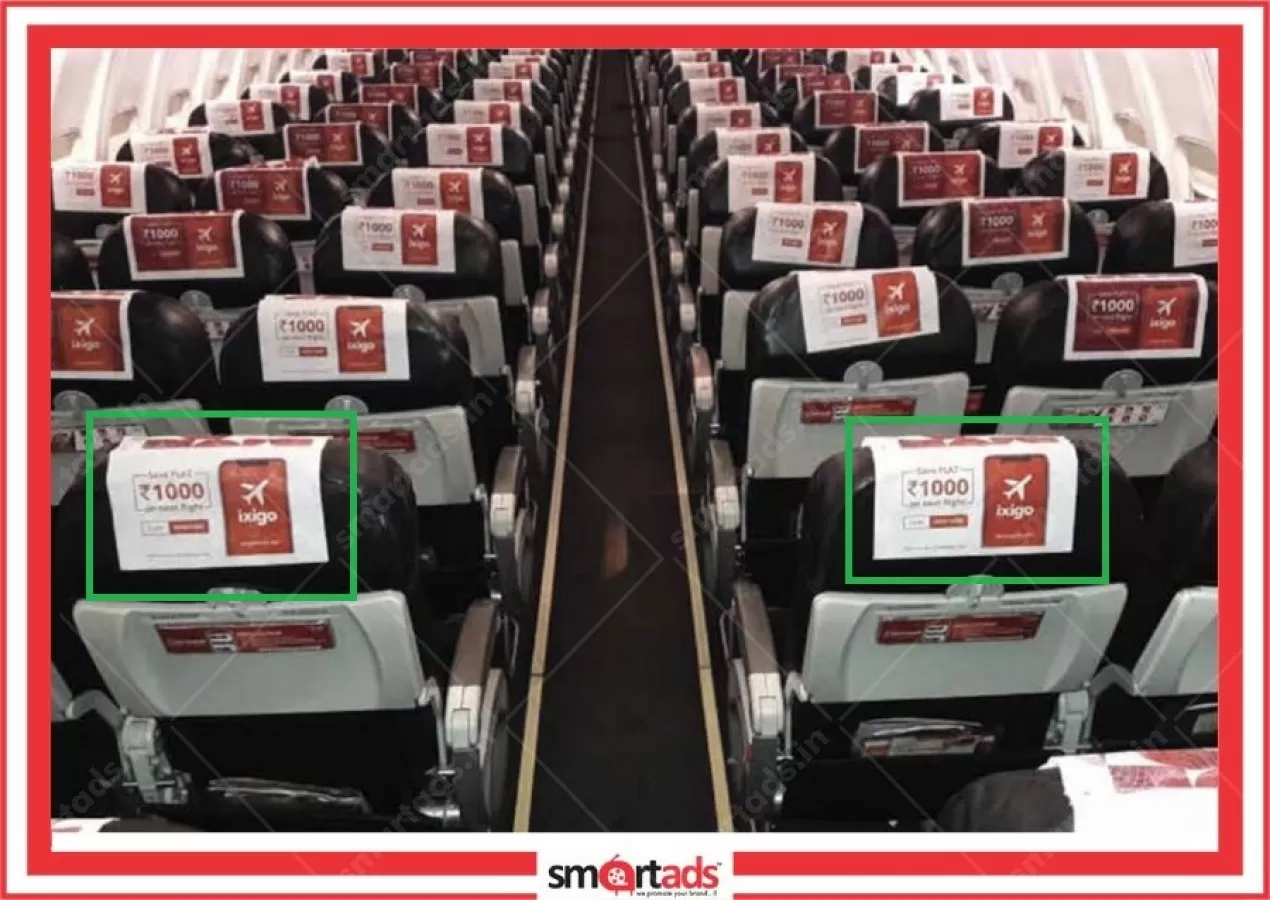
Headrest Cover
28 W x 32 H cm
Advertisements will be displayed on the
Rate per Aircraft / Month
Min 10 Aircraft
₹85000.00
Showing 1 to 7 of 7 Results
MEDIA DETAILS
28 W x 32 H cm
Advertisements will be displayed on the
Rate per Aircraft / Month
Min 10 Aircraft
₹85000.00
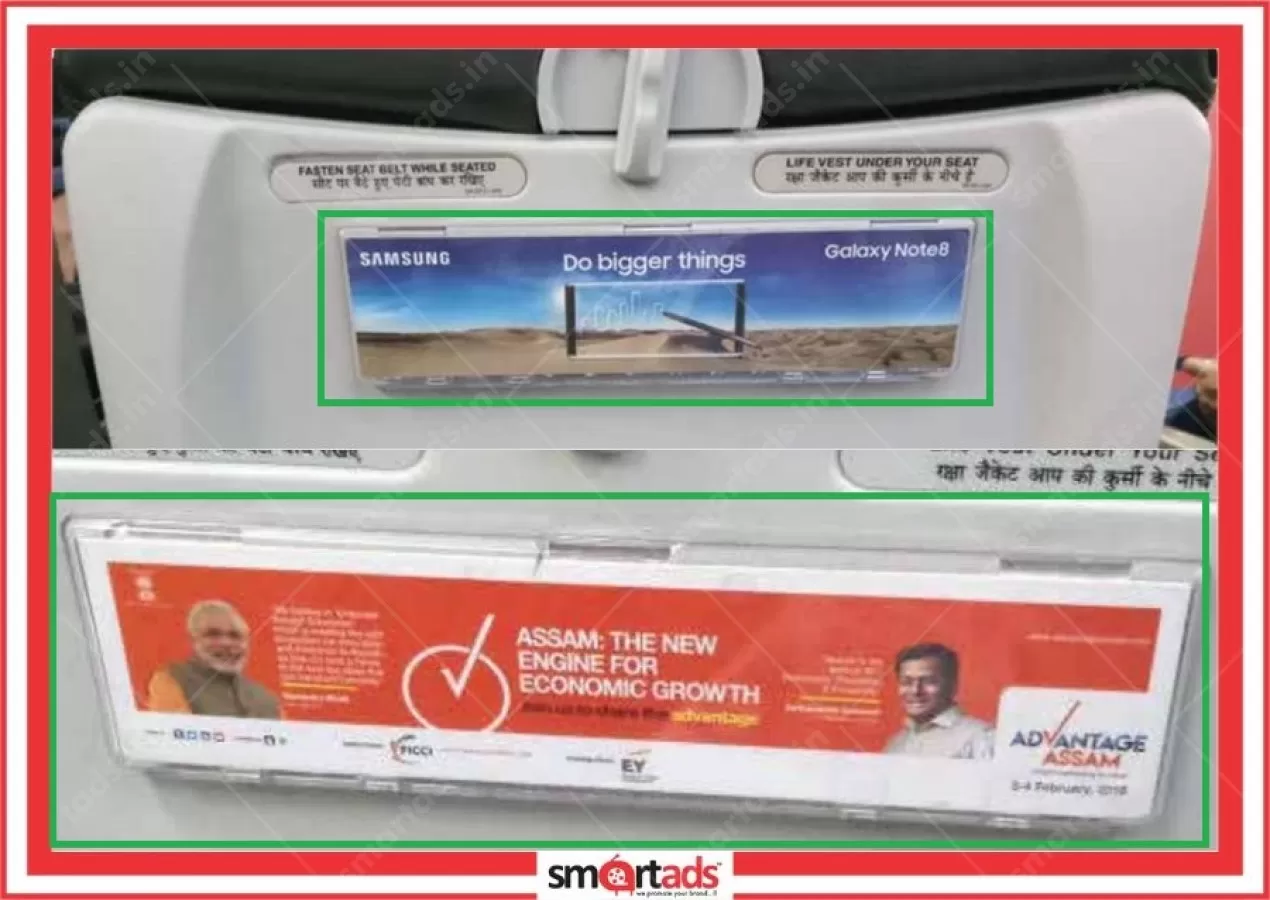
217.5 W x 53.5 H with 3mm bleed
Seat Back Branding is displayed on the m
Rate per Aircraft / Month
Min 10 Aircraft
₹180000.00
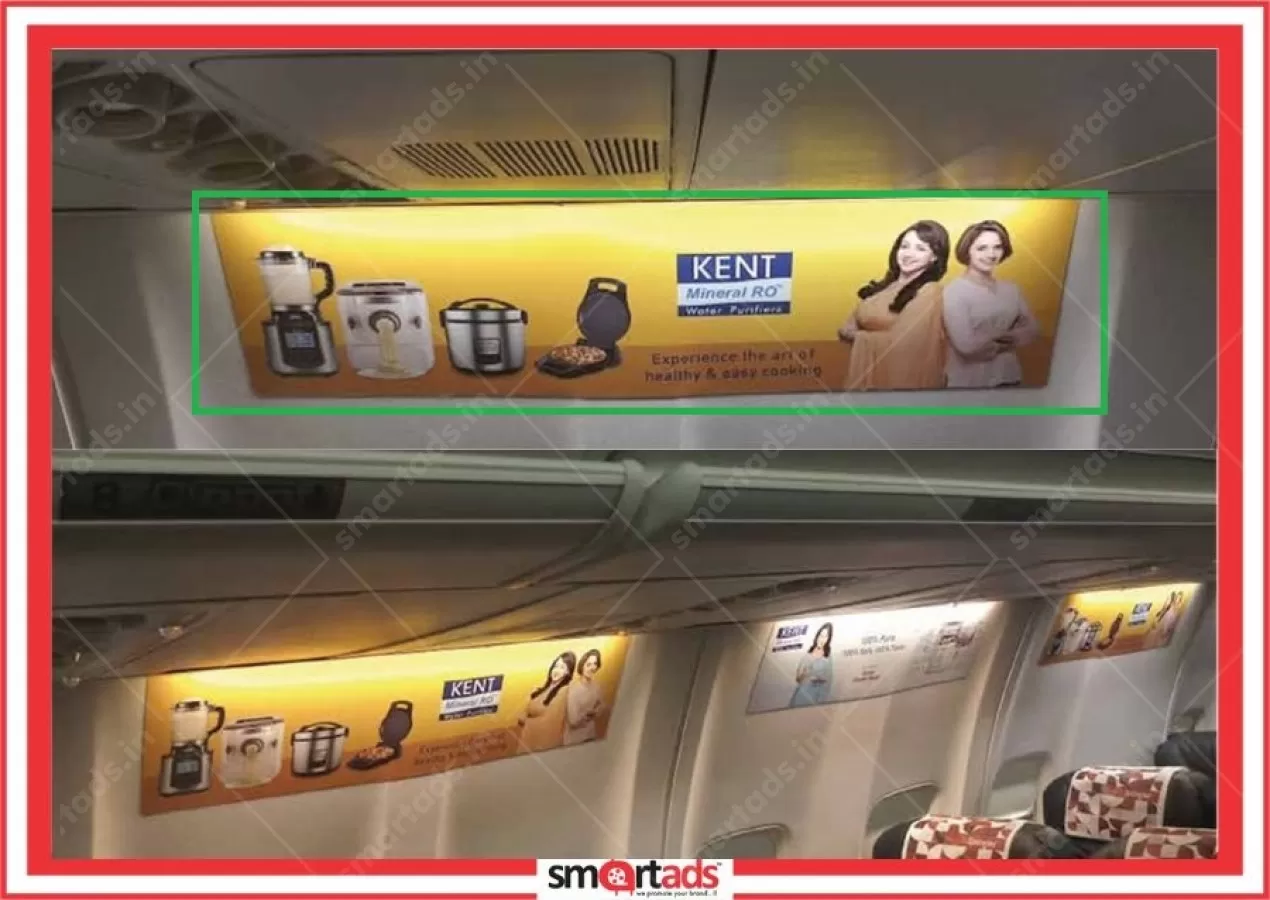
35 W x 5.5 H
Advertisements will be displayed inside
Rate per Aircraft / Month
Min 10 Aircraft
₹425000.00

Custom Size
Maximum view. Maximum brand coverage. Ev
Rate per Overhead / Month
Min 10 Aircraft
₹500000.00

139*92 W X 35 H
Tray table branding is highly visible to
Rate per Aircraft / Month
Min 10 Aircraft
₹97000.00

580 W X 196 H Approx
Advertisements will be displayed on the
Rate per Boarding Pass / Time
Min 10 lac Qty
₹2.00

350-400 sq.feet display on both the side
Advertisements are displayed as a wrap c
Rate per Aircraft / Month
Min 3 Aircraft
₹3800000.00
MEDIA REACH

Airlines :
Airlines
AvgMonthlyPassenger :
1134913
FleetSize :
109
BusinessClass :
Yes
DeptPerDay :
296
DeptPerMonth :
9171
AvgDeptPerAircraftDay :
3
AvgSeatsFlight :
159
OccupancyRate :
78
AvgCancellation :
1
AvgJourneyTimeHrs :
1.83
TotalHoursFlight :
16222
MarketShare :
17
Air India advertising represents one of India's most premium aviation marketing opportunities, offering brands access to affluent business travelers and frequent flyers across domestic and international routes. This comprehensive analysis covers current Air India advertising rates, available media formats, targeting strategies, and ROI measurement techniques based on real campaign data from India's evolving airline advertising market.
The thing is, most brands underestimate the sheer variety of Air India advertising formats available across the passenger journey, which extends far beyond the traditional inflight magazine placements that dominated airline advertising for decades. Air India's advertising inventory spans multiple touchpoints, starting from digital screens at check-in counters to seatback advertising during the flight experience itself; each format offers distinct advantages depending on your campaign objectives and target audience demographics.
Seatback advertising remains the most sought-after Air India advertising format, particularly on international routes where passenger dwell time can extend beyond eight hours, which creates an unparalleled opportunity for brand messaging that simply cannot be replicated in other media channels. Our experience shows that seatback placements on Air India's Mumbai to London route generate brand recall rates that are roughly 40% higher than similar campaigns on domestic sectors; this difference stems from the extended exposure time and the captive audience environment that international flights provide. The advertising rates for seatback placements work out to approximately ₹2.5 lakh per flight for domestic routes, though this figure can climb to ₹6 lakh for premium international sectors like Delhi to New York, which surprises many advertisers who are accustomed to traditional outdoor advertising pricing models.
Headrest covers represent another high-impact Air India advertising option, which delivers guaranteed visibility throughout the flight duration while passengers are seated in front of your brand message. What a lot of people miss is that headrest advertising actually generates higher engagement rates than seatback placements on shorter domestic flights, where passengers spend less time interacting with seatback entertainment systems; the headrest format ensures your message remains visible even when passengers are sleeping or looking around the cabin. We worked with a luxury watch brand that achieved a 23% increase in brand awareness through a three-month Air India headrest campaign across business class sections on Delhi-Mumbai routes, which demonstrated the format's effectiveness for premium product categories targeting affluent business travelers.
Frankly speaking, Air India advertising rates have undergone significant changes since the Tata Group acquisition, with pricing structures becoming more transparent and competitive compared to the previous government-owned era, which had inconsistent rate cards and lengthy approval processes. The current Air India advertising cost structure operates on a flight-based model for most formats, though some digital advertising options are moving toward impression-based pricing that aligns with broader programmatic advertising trends in the aviation sector.
Tray table advertising represents one of the most cost-effective Air India advertising formats, with rates starting from roughly ₹80,000 per flight for domestic sectors, which makes it accessible for mid-sized brands that want to test airline advertising before committing to larger campaign investments. The beauty of tray table placements lies in their guaranteed visibility during meal service, which occurs on all Air India flights regardless of duration; passengers interact directly with your brand message while eating, creating a unique association that we have seen translate into higher purchase intent scores compared to passive advertising formats. One retail client in Pune achieved a 15% uplift in brand consideration through a six-week Air India tray table campaign targeting business travelers on western India routes, which cost them approximately ₹18 lakh for the entire campaign duration.
Digital screens within Air India aircraft command premium pricing, with rates working out to somewhere between ₹4 lakh to ₹8 lakh per flight depending on screen size and placement location; the higher-end pricing applies to welcome screens that passengers see immediately upon boarding, which guarantees 100% viewership among all passengers on that particular flight. What makes digital screen advertising particularly valuable is the ability to update creative content in real-time, which allows brands to customize messaging based on flight routes, passenger demographics, or even current events; this flexibility justifies the premium pricing for brands that want to maintain message relevance across different markets and time periods.
PA system advertising on Air India flights operates on a different pricing model altogether, with costs calculated per announcement rather than per flight, which works out to roughly ₹25,000 per scripted announcement on domestic routes and ₹45,000 for international flights. The challenge with PA system advertising lies in creating messages that feel natural and non-intrusive within the flight safety and service announcements; we have found that brands focusing on travel-related services or premium lifestyle products tend to perform better with this format, as the messaging aligns naturally with the passenger mindset during flight operations.
To be honest, the evolution of Air India's media formats reflects broader changes in passenger behavior and technology adoption within the aviation industry, which has shifted from static print-based advertising toward interactive digital experiences that mirror consumer expectations from other media channels. Boarding pass advertising has emerged as one of the most innovative Air India advertising formats, which reaches passengers multiple times throughout their journey as they reference their boarding documents for gate information, seat numbers, and boarding times.
In-flight magazines remain a cornerstone of Air India advertising options, though the format has evolved significantly from the basic print advertisements that characterized airline advertising in previous decades; current magazine placements include QR codes for digital engagement, augmented reality features through mobile apps, and integrated social media campaigns that extend the advertising reach beyond the flight experience itself. The advertising rates for full-page magazine placements work out to approximately ₹3.5 lakh per issue for domestic distribution and ₹7.2 lakh for international editions, which includes both print and digital versions that passengers can access through Air India's mobile application and website portal.
Product sampling represents perhaps the most engaging Air India advertising format, which allows brands to distribute actual products to passengers during flight service, creating a tangible brand experience that generates immediate trial and feedback. At SmartAds, we always tell our clients that product sampling works best for consumable goods, personal care items, or technology accessories that passengers can use immediately or take home for later trial; the format requires careful coordination with Air India's cabin crew training programs and safety regulations, but the engagement rates justify the additional complexity for brands seeking direct consumer interaction. One automotive brand we worked with distributed premium car air fresheners through Air India's business class service, which generated a 31% increase in dealership inquiries within two weeks of the campaign launch across Mumbai, Delhi, and Bangalore markets.
Digital advertising within Air India's inflight entertainment systems has become increasingly sophisticated, with options ranging from pre-roll video advertisements before movie content to interactive banner placements within the entertainment interface; these digital formats allow for precise targeting based on passenger seat class, route selection, and even content preferences during the flight experience. The programmatic advertising capabilities within Air India's entertainment systems enable real-time bidding for advertisement placements, which brings airline advertising closer to the automated efficiency that brands expect from other digital advertising platforms.
Here's where it gets interesting: Air India advertising delivers a captive audience experience that has become increasingly rare in today's fragmented media landscape, where consumers actively avoid advertisements through ad blockers, subscription services, and selective attention patterns that reduce the effectiveness of traditional advertising channels. The average Air India passenger spends between 1.5 to 12 hours in an environment where your brand message cannot be skipped, muted, or ignored, which creates an advertising opportunity that commands premium pricing but delivers correspondingly superior engagement metrics.
The demographic profile of Air India passengers skews heavily toward high-income professionals, business owners, and affluent families, which makes airline advertising particularly valuable for luxury brands, B2B services, and premium consumer products that require reaching decision-makers with significant purchasing power. Our analysis of Air India passenger data shows that roughly 68% of business class travelers earn above ₹25 lakh annually, while even economy class passengers on international routes demonstrate household incomes that are 3.2 times higher than the national average; this audience concentration justifies the premium advertising rates when calculated on a cost-per-qualified-prospect basis rather than simple cost-per-impression metrics.
Brand recall rates for Air India advertising consistently outperform other media channels, with our campaign tracking showing recall scores between 72% to 89% depending on the advertising format and flight duration; these numbers reflect the unique psychological state of airline passengers, who are temporarily disconnected from their usual digital distractions and more receptive to brand messaging that provides entertainment or useful information during the flight experience. We worked with a financial services client whose Air India advertising campaign generated brand recall scores of 84%, which was nearly double the recall rates they achieved through television advertising with a similar budget allocation across the same target demographic.
The geographic reach of Air India advertising extends across India's tier-1 and tier-2 cities through domestic routes, while international flights provide access to Indian diaspora communities in key global markets including North America, Europe, and Southeast Asia; this dual reach makes Air India advertising particularly valuable for brands seeking to maintain consistent messaging across domestic and international Indian consumer segments. What a lot of people miss is that Air India's route network includes destinations that are difficult to reach through traditional advertising channels, such as smaller Indian cities with limited media infrastructure and international markets where Indian-focused advertising inventory is scarce and expensive.
The challenge with airline advertising measurement has always been connecting inflight brand exposure to actual consumer behavior changes, which requires tracking methodologies that account for the time delay between flight experience and purchase decisions; most Air India advertising campaigns show their strongest performance metrics 2-4 weeks after the flight experience, as passengers return to their normal routines and begin making purchase decisions influenced by their inflight brand exposures. At SmartAds, we have developed tracking frameworks that combine pre-flight and post-flight surveys with digital engagement metrics to provide comprehensive campaign effectiveness measurement.
Brand awareness lift measurement for Air India advertising campaigns typically involves surveying passengers through email follow-up surveys 7, 14, and 30 days after their flight experience, which captures both immediate recall and longer-term brand consideration changes that influence actual purchase behavior. Our experience shows that Air India advertising generates awareness lift scores averaging 34% for new brand introductions and 19% for established brands seeking to reinforce market position; these lift scores compare favorably to television advertising benchmarks when adjusted for the premium audience demographics that airline advertising delivers.
Digital integration has become essential for measuring Air India advertising roi, with most successful campaigns incorporating QR codes, custom landing pages, or promotional codes that allow for direct attribution of website traffic, lead generation, and sales conversions to the airline advertising exposure. One technology client achieved a 267% ROI on their Air India advertising investment by directing passengers to an exclusive inflight offer landing page, which generated ₹2.4 crore in sales from a ₹90 lakh campaign investment across three months of domestic and international Air India flights; the key success factor was creating an offer that felt exclusive to the airline experience while providing genuine value that motivated immediate action.
Performance tracking for Air India advertising requires understanding the passenger journey timeline, which extends from initial flight booking through post-travel follow-up communications that can influence brand perception and purchase decisions weeks or months after the actual flight experience. The most sophisticated Air India advertising campaigns incorporate retargeting pixels and customer data platforms that identify flight passengers within broader digital marketing campaigns, allowing brands to customize their post-flight marketing messages based on the specific Air India advertising formats and messages that each passenger experienced during their journey.
Business travelers represent the core audience for most Air India advertising campaigns, comprising professionals who fly regularly for work purposes and demonstrate high lifetime value for brands targeting decision-makers in corporate environments; this audience segment shows particular responsiveness to B2B services, premium consumer products, and financial services that align with their professional responsibilities and personal affluence levels. The frequency of business travel creates multiple exposure opportunities for Air India advertising campaigns, which builds brand familiarity through repeated touchpoints that are difficult to achieve through other media channels targeting similar demographic profiles.
Frequent flyers within Air India's loyalty program represent an especially valuable audience segment, as these passengers demonstrate both high travel frequency and strong brand loyalty patterns that often extend to other product categories; brands that successfully engage frequent flyers through Air India advertising often see higher conversion rates and stronger customer lifetime value compared to campaigns targeting occasional travelers. Our campaign data shows that frequent flyers are 2.3 times more likely to engage with premium product advertisements and 1.8 times more likely to make purchases within 30 days of flight exposure, which makes this audience segment particularly attractive for luxury brands and high-consideration purchase categories.
International travelers on Air India flights include both Indian nationals traveling abroad and foreign visitors to India, which creates unique opportunities for brands seeking to reach cross-cultural audiences with global product offerings or India-specific services; the international passenger mix varies significantly by route, with flights to North America skewing toward technology professionals and business executives, while European routes attract more leisure travelers and cultural exchange participants. We worked with a hospitality brand that customized their Air India advertising creative based on route destinations, showing domestic hotel options to inbound international passengers and international travel services to outbound Indian travelers, which generated a 41% increase in booking inquiries compared to their previous generic creative approach.
Affluent families traveling together on Air India flights represent an underutilized audience segment for brands targeting household decision-makers with significant disposable income; family travel typically involves higher spending on destinations, accommodations, and experiences, which makes these passengers attractive targets for lifestyle brands, educational services, and premium consumer products that appeal to parents seeking quality options for their families. The family travel context also creates opportunities for multi-generational brand messaging that can influence both parents and children through age-appropriate creative executions within the same Air India advertising campaign.
On top of that, inflight advertising delivers attention metrics that have become increasingly difficult to achieve through traditional media channels, where consumer attention spans continue to fragment across multiple devices and platforms that compete for engagement throughout the day; Air India passengers cannot switch channels, close browser tabs, or skip advertisements, which creates a media environment that resembles television advertising from previous decades but with significantly more affluent audience demographics. The attention quality during flight experiences also differs from other media consumption contexts, as passengers are typically relaxed, have extended time availability, and are mentally prepared for entertainment and information consumption.
Cost-per-engaged-minute calculations for Air India advertising often compare favorably to digital advertising channels when adjusted for audience quality and attention duration; while the initial cost-per-impression may appear higher than social media or display advertising, the extended exposure time and captive audience environment deliver engagement metrics that justify the premium pricing for brands targeting high-value customer segments. Our analysis shows that Air India advertising generates an average of 8.3 minutes of brand exposure per passenger, compared to 12 seconds for typical digital display advertisements and 30 seconds for television commercials, which creates opportunities for more comprehensive brand storytelling and message development.
The demographic precision of inflight advertising surpasses most other media channels, as airline passenger data provides accurate information about travel patterns, spending behavior, and lifestyle preferences that enable sophisticated audience targeting; Air India's passenger database includes verified income levels, travel frequency, destination preferences, and seat class selections that create targeting opportunities comparable to premium digital advertising platforms but with guaranteed offline reach among high-value consumer segments. This demographic precision becomes particularly valuable for brands launching new products or entering new markets, where reaching qualified prospects efficiently determines campaign success and return on investment.
Transit advertising and airport advertising complement Air India inflight advertising by extending brand exposure throughout the passenger journey, though the audience attention and engagement levels differ significantly between pre-flight, inflight, and post-flight touchpoints; airport advertising reaches broader audiences but competes with travel stress and time pressures, while inflight advertising benefits from relaxed passenger mindsets and extended exposure duration that facilitate deeper brand engagement and message retention.
The transformation of Air India under Tata Group ownership has accelerated the adoption of digital advertising technologies that bring airline advertising closer to the programmatic efficiency and targeting capabilities that brands expect from other premium media channels; this technological evolution includes real-time creative optimization, passenger data integration, and cross-channel campaign coordination that positions Air India advertising as part of comprehensive digital marketing strategies rather than standalone brand awareness initiatives.
Personalization within Air India advertising has become increasingly sophisticated, with campaigns now capable of customizing creative content based on passenger seat class, route destinations, travel frequency, and even real-time factors such as flight delays or weather conditions that influence passenger mood and receptivity to brand messaging. The personalization capabilities extend beyond simple demographic targeting to include behavioral triggers and contextual relevance that create more engaging brand experiences; we recently executed a campaign for a travel insurance client that automatically adjusted messaging based on international versus domestic flights, flight duration, and passenger travel history to deliver relevant coverage options that generated a 52% increase in policy purchases compared to generic creative executions.
Sustainability messaging has become a prominent theme in Air India advertising campaigns, reflecting both passenger environmental consciousness and the airline industry's focus on carbon reduction initiatives; brands that align their Air India advertising with sustainability themes often achieve higher engagement rates and more positive brand perception scores, particularly among younger business travelers who prioritize environmental responsibility in their purchasing decisions. The sustainability trend extends beyond messaging to include eco-friendly advertising materials, digital-first campaign approaches that reduce paper waste, and partnerships with environmental organizations that enhance brand credibility among environmentally conscious passengers.
Integration with Air India's mobile application and digital ecosystem creates opportunities for advertising campaigns that extend beyond the flight experience to include pre-flight engagement, real-time flight updates with branded content, and post-flight follow-up communications that maintain brand visibility throughout the entire travel journey. This digital integration enables more comprehensive campaign measurement and creates opportunities for ongoing customer relationship development that transforms single-flight advertising exposure into longer-term brand engagement and customer acquisition.
To be fair, successful Air India advertising campaigns require understanding the unique operational constraints and opportunities within the aviation industry, which operates under strict safety regulations, seasonal demand fluctuations, and route-specific passenger demographics that influence campaign planning and creative development; brands that invest time in understanding these aviation-specific factors typically achieve better campaign performance and more efficient media buying compared to advertisers who approach airline advertising with generic media planning strategies.
Seasonal advertising opportunities within Air India's route network align with both business travel patterns and leisure travel peaks, which create distinct campaign windows for different product categories and target audiences; business-focused campaigns perform best during weekday flights and peak business travel months, while consumer brand campaigns benefit from holiday travel periods when families and leisure travelers comprise larger portions of the passenger mix. Our experience shows that Air India advertising campaigns launched during Diwali travel periods generate 23% higher brand recall scores, as passengers are in a positive mindset and more receptive to brand messaging that celebrates Indian culture and family values.
Creative development for Air India advertising requires balancing brand messaging with respect for the diverse cultural backgrounds of passengers, which includes considerations for religious sensitivities, dietary preferences, and cultural celebrations that influence passenger receptivity to different types of brand content; successful Air India advertising creative often incorporates Indian cultural elements while maintaining universal appeal that resonates with international passengers and Indian diaspora communities traveling on Air India's global route network.
Budget allocation for Air India advertising campaigns should account for the longer planning timelines and approval processes that characterize airline advertising, which typically require 4-6 weeks lead time for campaign launch compared to digital advertising channels that can begin within days of campaign approval; this extended timeline necessitates earlier budget commitment and creative finalization, but also allows for more thorough campaign planning and integration with other marketing initiatives that can amplify the Air India advertising investment through coordinated messaging across multiple channels.
Here's what most brands overlook: Air India advertising must comply with both Indian advertising standards and international aviation safety regulations, which create content restrictions and approval processes that differ significantly from other media channels; understanding these regulatory requirements early in the campaign planning process prevents delays and ensures creative concepts align with aviation industry standards while maintaining brand messaging effectiveness.
The Ministry of Civil Aviation and DGCA guidelines influence Air India advertising content, particularly for categories such as alcohol, pharmaceuticals, and financial services that face additional scrutiny within airline environments; brands in regulated categories should work with experienced advertising agencies that understand aviation-specific compliance requirements and can navigate the approval process efficiently while maintaining campaign launch timelines and budget parameters.
Safety considerations for Air India advertising extend beyond content approval to include physical placement restrictions, material specifications, and emergency procedure compatibility that ensure advertising elements do not interfere with flight safety operations; these safety requirements sometimes limit creative possibilities but also create opportunities for innovative advertising solutions that demonstrate brand responsibility and attention to passenger welfare, which can enhance brand perception among safety-conscious travelers.
International route advertising faces additional complexity due to varying advertising standards and cultural sensitivities across different destination countries, which require creative adaptations and approval processes that account for local regulations and cultural norms; Air India advertising campaigns targeting international routes benefit from cultural consultation and localized creative development that respects destination market preferences while maintaining consistent brand messaging across the passenger journey.
Q: How much does Air India advertising cost in India?
Air India advertising costs vary significantly based on format selection, route type, and campaign duration, with basic options like tray table advertising starting around ₹80,000 per domestic flight while premium formats such as seatback advertising on international routes can reach ₹6 lakh per flight. Our experience shows that most effective Air India advertising campaigns require minimum budgets of ₹15-20 lakh to achieve meaningful reach and frequency across target routes; this investment level allows for format testing, creative optimization, and sufficient flight coverage to generate measurable brand impact. The key to cost-effective Air India advertising lies in strategic route selection and format mixing that maximizes audience reach while staying within budget parameters, which requires understanding passenger demographics and travel patterns across Air India's domestic and international network.
Q: What are the different Air India advertising formats available?
Air India offers comprehensive advertising formats spanning the entire passenger journey, including seatback advertising, headrest covers, tray table placements, digital screens, PA system announcements, boarding pass advertising, in-flight magazine placements, and product sampling opportunities. Each format delivers distinct advantages depending on campaign objectives; seatback advertising provides extended exposure time ideal for detailed brand storytelling, while headrest covers ensure consistent visibility throughout the flight duration regardless of passenger activity levels. Digital advertising options within Air India's inflight entertainment systems enable interactive brand experiences and real-time creative optimization, which brings airline advertising closer to the targeting precision and engagement measurement that brands expect from digital marketing channels.
Q: How effective is inflight advertising compared to other media?
Inflight advertising delivers superior attention metrics and brand recall scores compared to traditional media channels, with Air India advertising campaigns typically achieving 72-89% brand recall rates due to the captive audience environment and extended exposure duration that characterizes the flight experience. The demographic quality of airline passengers also enhances advertising effectiveness, as Air India travelers demonstrate household incomes significantly above national averages and include high concentrations of business decision-makers and affluent consumers who represent prime target audiences for premium brands. When calculated on a cost-per-engaged-minute basis, Air India advertising often provides better value than digital advertising channels, particularly for brands targeting high-income professionals and frequent business travelers who are difficult to reach efficiently through other media options.
Q: What is the reach of Air India domestic vs international advertising?
Air India domestic advertising reaches passengers across India's major metropolitan markets and tier-2 cities, with particularly strong coverage of business travel routes connecting Mumbai, Delhi, Bangalore, Chennai, and Hyderabad that attract corporate executives and entrepreneurs; domestic routes typically generate higher flight frequency but shorter exposure duration compared to international flights. International Air India advertising provides access to Indian diaspora communities in North America, Europe, and Southeast Asia, while also reaching foreign visitors to India who represent unique opportunities for hospitality, tourism, and cultural brands seeking cross-cultural audience engagement. The passenger demographics differ significantly between domestic and international routes, with international flights skewing toward higher income levels and longer exposure times that justify premium advertising rates and enable more comprehensive brand messaging strategies.
Q: How do I book Air India airline advertising campaigns?
Air India advertising campaigns require coordination with authorized advertising agencies that maintain direct relationships with Air India's commercial team and understand the airline's booking procedures, approval processes, and operational requirements. At SmartAds, we handle the entire Air India advertising booking process, from initial route selection and format recommendations through creative development, regulatory approval, and campaign execution across domestic and international flights. The booking process typically requires 4-6 weeks lead time to accommodate creative approval, material production, and operational coordination with Air India's cabin crew training programs; early campaign planning ensures optimal route availability and prevents scheduling conflicts that could impact campaign launch timelines or budget efficiency.
Q: What are the targeting options for Air India advertising?
Air India advertising targeting includes route-based selection that enables geographic and demographic precision, seat class targeting that reaches specific income segments, and flight timing options that align with business versus leisure travel patterns throughout the week and seasonal calendar. Advanced targeting capabilities include passenger frequency segmentation through Air India's loyalty program data, destination-based customization for international routes, and integration with broader customer data platforms that enable retargeting and cross-channel campaign coordination. The targeting precision available through Air India advertising often surpasses other premium media channels, as airline passenger data provides verified information about travel behavior, spending patterns, and lifestyle preferences that create highly qualified audience segments for brands seeking efficient reach among affluent consumer demographics.
Q: How is Air India advertising performance measured?
Air India advertising performance measurement combines traditional brand awareness tracking with digital engagement metrics and sales attribution methodologies that account for the extended purchase consideration timelines typical of airline advertising exposure. Our measurement framework includes pre-flight and post-flight passenger surveys conducted at 7, 14, and 30-day intervals to capture immediate recall and longer-term brand consideration changes, supplemented by digital tracking through QR codes, custom landing pages, and promotional codes that enable direct attribution of website traffic and sales conversions. Advanced measurement approaches integrate Air India passenger data with client customer databases to identify flight passengers within broader marketing campaigns, enabling sophisticated attribution modeling and lifetime value analysis that demonstrates the long-term impact of airline advertising investment on customer acquisition and retention.
Q: What are the minimum budget requirements for Air India ads?
Minimum budget requirements for Air India advertising typically start around ₹10-15 lakh for basic campaign testing, though most effective campaigns require ₹20-40 lakh investments to achieve sufficient reach and frequency across target routes and passenger segments. Budget requirements vary significantly based on format selection, route mix, and campaign duration; premium formats like seatback advertising on international routes require higher minimum investments, while cost-effective options like tray table advertising enable smaller brands to test airline advertising with more modest budget commitments. The key consideration for Air India advertising budgets lies in balancing format selection with route coverage to ensure adequate passenger exposure while maintaining cost efficiency; our experience shows that campaigns below minimum threshold budgets often fail to generate measurable impact due to insufficient reach among target audience segments.
Q: Can small businesses advertise on Air India flights?
Small businesses can access Air India advertising through cost-effective formats like tray table advertising, boarding pass placements, and targeted route selection that focuses budget allocation on specific geographic markets or passenger segments most relevant to their business objectives. The key to successful small business Air India advertising lies in strategic format selection and route targeting that maximizes qualified prospect reach while staying within limited budget parameters; regional businesses often achieve better ROI by focusing on specific domestic routes rather than attempting broad national coverage. Co-operative advertising opportunities and seasonal campaign timing can also help small businesses access Air India advertising more affordably, particularly during off-peak travel periods when advertising rates may offer better value for budget-conscious advertisers seeking to reach affluent passenger demographics.
Q: What are the latest Air India advertising campaign examples?
Recent Air India advertising campaigns have showcased innovative integration of digital technology with traditional airline advertising formats, including QR code-enabled magazine advertisements that drive mobile engagement, personalized seatback content based on passenger travel history, and sustainability-focused messaging that aligns with environmental consciousness among modern travelers. The transformation under Tata Group ownership has enabled more sophisticated campaign executions that incorporate real-time creative optimization and cross-channel integration with Air India's mobile application and digital ecosystem. While specific campaign details remain confidential, the trend toward personalization, digital integration, and cultural celebration has characterized successful Air India advertising initiatives that achieve both brand awareness objectives and measurable business impact for participating advertisers across diverse industry categories.
The evolution of Air India under new ownership presents unprecedented opportunities for brands seeking to reach India's most affluent and influential consumer segments through advertising channels that deliver guaranteed attention and superior engagement metrics compared to increasingly fragmented digital media landscapes. Our experience managing Air India advertising campaigns across diverse industry categories demonstrates that success requires understanding the unique characteristics of airline advertising, from extended planning timelines and regulatory compliance requirements to the sophisticated audience targeting and measurement capabilities that distinguish premium airline advertising from conventional media options.
Smart budget allocation for Air India advertising campaigns should prioritize format testing and route optimization over broad coverage approaches that dilute campaign impact across too many variables; brands achieve better ROI by focusing initial campaigns on proven high-performance routes and formats, then expanding successful approaches rather than attempting comprehensive coverage from campaign launch. The integration of Air India advertising with broader digital marketing strategies creates amplification opportunities that extend campaign reach beyond flight passengers to include social media engagement, email marketing follow-up, and retargeting campaigns that maintain brand visibility throughout the extended purchase consideration cycles typical of affluent consumer segments.
At SmartAds, we recommend approaching Air India advertising as part of comprehensive media strategies that leverage the unique advantages of airline advertising while coordinating with other premium media channels to create consistent brand experiences across multiple touchpoints. The investment in Air India advertising pays dividends not only through direct brand exposure and engagement metrics, but also through the brand positioning benefits that association with premium airline environments provides among target audiences who value quality, reliability, and sophisticated brand experiences that reflect their own lifestyle aspirations and professional success.
For customized Air India advertising strategies that align with your specific brand objectives and target audience requirements, SmartAds.in provides comprehensive media planning services that leverage our extensive experience with airline advertising campaigns across India's evolving aviation marketing landscape. Our team understands the operational complexities, regulatory requirements, and strategic opportunities that characterize successful Air India advertising investments, ensuring your campaign achieves maximum impact while maintaining cost efficiency and brand consistency across all passenger touchpoints.
