
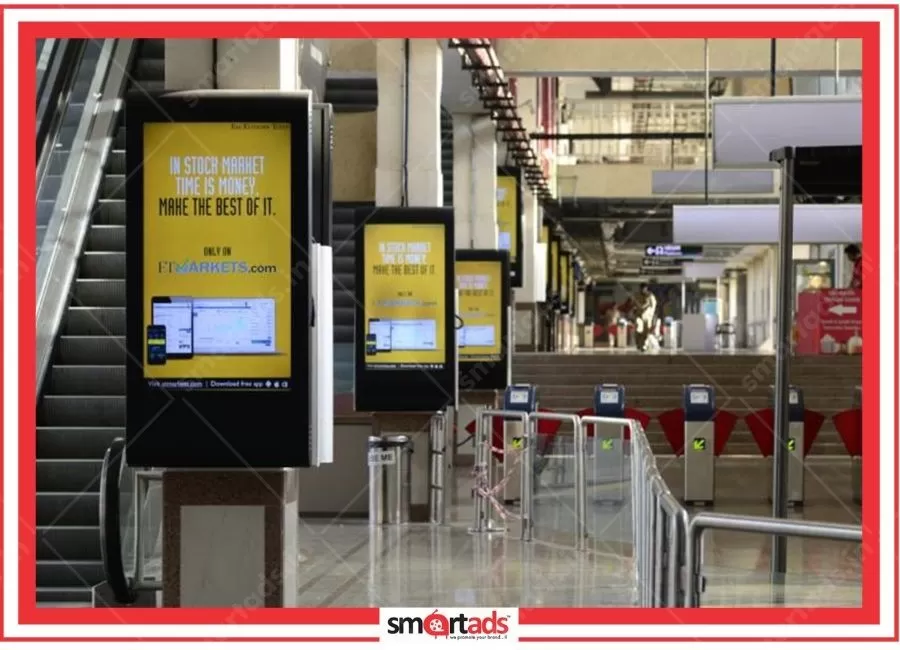
Entry Exit Panel
8 ft x 4 ft
Bright and vibrant multicolored letterin
Rate per Panel / Month
Min Requirement is 3 Panel.
₹48000.00
Showing 1 to 4 of 4 Results
MEDIA DETAILS
8 ft x 4 ft
Bright and vibrant multicolored letterin
Rate per Panel / Month
Min Requirement is 3 Panel.
₹48000.00
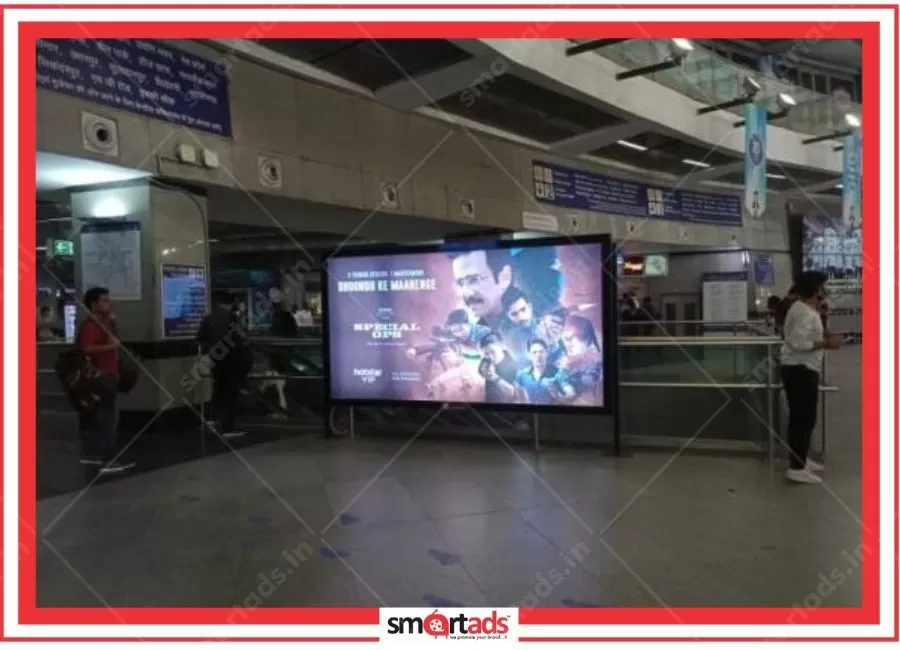
10 ft x 5 ft
A new wide wall system designed to accom
Rate per Panel / Month
Min Requirement is 3 Panel.
₹50000.00
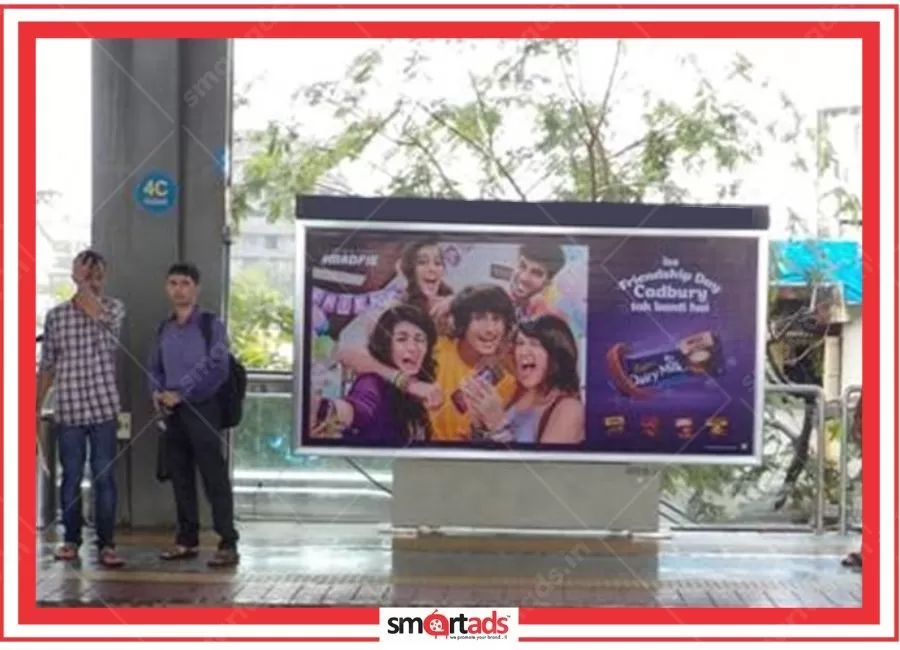
8 ft x 4 ft
A raised flooring or other horizontal su
Rate per Panel / Month
Min Requirement is 3 Panel.
₹35000.00
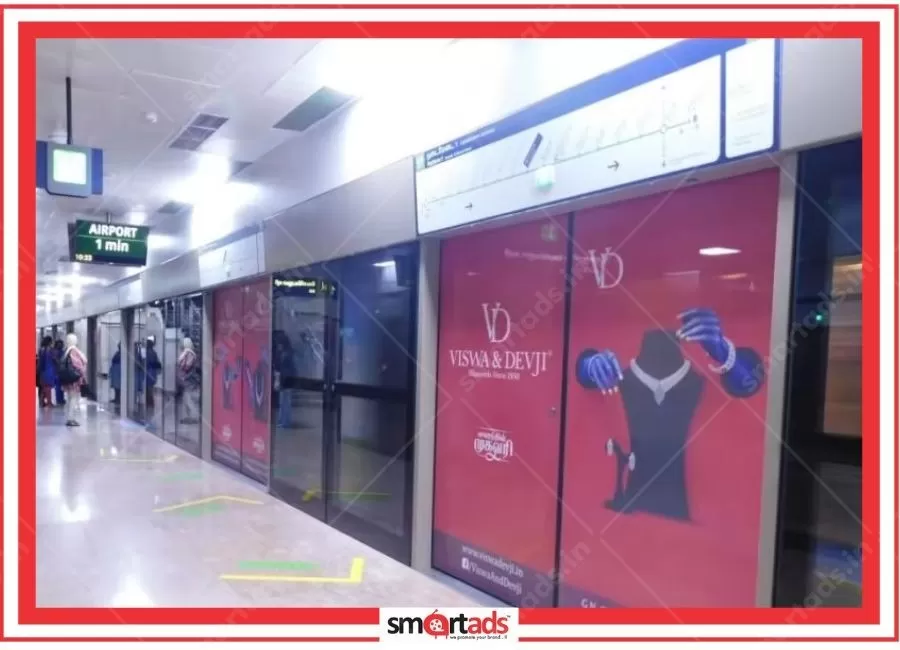
7 ft x 4 ft
Also known as platform edge doors (PEDs)
Rate per Plateform / Month
Min Requirement is 1 Stations.
₹1200000.00
MEDIA REACH

MinimumQty :
10
EstimateReachPeople :
15 Million
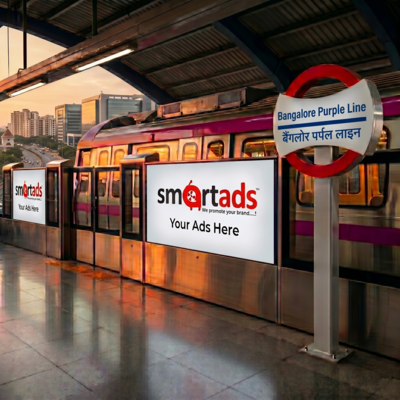
Somewhere between Whitefield and Challaghatta, roughly six lakh passengers move through Namma Metro's Purple Line every single day — and most of them are exactly the kind of urban, working professional that brands spend enormous sums trying to reach through digital campaigns. What surprises most brand managers we speak to is not the scale of that number; it is the dwell time, the captive attention, and the CPM that works out to a fraction of what they are currently paying for Instagram impressions.
Metro station advertising in Bangalore has moved well past the novelty phase. The Purple Line, stretching across 43 km and 37 stations from Whitefield (Kadugodi) to Challaghatta, now functions as one of the most consistent, high-frequency touchpoints available to any brand targeting Bangalore's working population — and yet a surprising number of media plans we review still treat it as an afterthought.
The Purple Line is not just a transit corridor; it is, frankly speaking, a cross-section of Bangalore's economic engine. The line runs through some of the city's densest commercial and residential zones — Whitefield, which houses ITPL and the broader IT corridor; KR Puram, which connects east Bangalore's rapidly expanding residential belt; Indiranagar, which is arguably the city's most brand-conscious retail neighbourhood; MG Road, which remains the symbolic heart of commercial Bangalore; and Majestic, which functions as the city's largest transit interchange. When you place a brand on the Purple Line, you are not advertising to a random cross-section of the city — you are advertising to a self-selected group of daily commuters who have chosen a structured, time-tabled mode of transport, which means they are present, they are predictable, and they are reachable.
What a lot of people miss is the compounding effect of transit advertising. A passenger commuting from Whitefield to MG Road does not see your ad once; they see it every morning and every evening, five days a week, for as long as your campaign runs. This effective frequency in transit environments is something that outdoor billboard advertising in Bangalore simply cannot replicate — a billboard on Outer Ring Road gets a glance at 60 kmph; a backlit board inside Indiranagar metro station gets thirty seconds of focused attention from someone standing still. At SmartAds, we always tell our clients that the quality of attention on metro station advertising in Bangalore is structurally different from any other OOH format, and the campaign data we have accumulated over the years consistently backs that up.
The non-fare revenue model that BMRCL operates under also works in advertisers' favour. BMRCL advertising inventory is managed through authorised concessionaires, which means the formats are standardised, the placements are maintained professionally, and the creative approval process — while structured — is transparent. Brands do not have to worry about their assets being obscured by competing clutter the way they might on a busy street-level hoarding. The controlled environment of a metro station is, in our experience, one of the most underrated advantages of this medium.
The range of purple line metro advertising formats is considerably wider than most brand managers realise when they first approach us. Platform signage advertising is the most familiar entry point — these are the backlit board metro panels installed along platform walls and on pillars, which face commuters waiting for trains and offer sustained visibility during dwell periods that can run anywhere from two to eight minutes depending on the station and time of day. Pillar branding metro formats are particularly effective at high-footfall interchange stations like Majestic and Byappanahalli, where the structural columns of the concourse level provide large-format canvas space that is genuinely hard to miss.
Beyond the platform level, concourse advertising covers the ticketing and entry zones of each station — this is where escalator panel advertising, kiosk advertising metro units, and metro station standee placements come into play. The concourse zone is strategically important because it captures passengers at the moment of entry and exit, which are the two points of highest attentional availability in the commute journey. Interior branding metro options include overhead panels inside train coaches, door-adjacent panels, and grab-rail branding, all of which deliver messaging directly inside the passenger experience rather than alongside it. Smart card branding, which involves co-branding on the AFC (Automatic Fare Collection) smart cards issued to regular commuters, is one of the more underutilised formats in our toolkit — it places a brand literally in the hands of daily commuters, which is a level of physical proximity that no digital format can claim.
The most ambitious format available is the exterior train wrap, sometimes called train wrap advertising, which covers the full exterior body of a metro coach with a brand's creative. An exterior train wrap on the Purple Line effectively turns the train itself into a moving billboard that travels the entire 43 km Whitefield to Challaghatta corridor multiple times a day, generating impressions at every station, every level crossing, and every elevated stretch where the train is visible from street level. BMRCL has recently opened up coach advertising under a new tender structure, which means exterior ads on coaches are now available to brands for the first time — a development that we at SmartAds have been tracking closely and actively booking on behalf of clients. Full-station domination packages, which bundle platform signage, concourse advertising, pillar branding, and entry-point standees at a single station, represent the premium end of the format spectrum and are discussed in detail later in this piece.
Metro advertising rates in Bangalore are, to be honest, more accessible than most brands expect — particularly when you calculate the cost against verified ridership numbers rather than estimated impressions. A standard backlit board metro panel at a mid-tier Purple Line station runs somewhere in the ballpark of ₹25,000 to ₹45,000 per month depending on the station tier and the size of the unit, which is a number that tends to surprise clients who are used to paying upwards of ₹80,000 for a comparable-format hoarding in the same neighbourhood. The CPM transit advertising figure for a well-placed platform panel at a station like Indiranagar or MG Road works out to roughly ₹8 to ₹12 per thousand impressions — and that is a number that holds up very well against both OOH advertising in Bangalore and mid-tier digital placements.
Metro advertising cost in Bangalore scales predictably with format and station tier. Pillar branding at a high-footfall station like Majestic metro station advertising inventory commands a premium — rates here are in the range of ₹60,000 to ₹90,000 per month for a full pillar wrap, which reflects the sheer volume of daily commuters passing through what is effectively Bangalore's busiest transit node. Escalator panel advertising tends to be priced in the ₹20,000 to ₹35,000 range per panel per month, while metro station standee placements — which are among the most accessible entry points for smaller budgets — can be booked for as low as ₹8,000 to ₹15,000 per month at select stations. Interior branding metro coach panels are typically sold in sets across multiple coaches, with a per-coach monthly rate working out to somewhere between ₹30,000 and ₹55,000 depending on panel position and the number of coaches in the package.
Full-station domination on the Purple Line — which involves taking over all advertising inventory at a single station for a defined campaign period — is priced in the range of ₹3 lakh to ₹8 lakh per month depending on the station, the formats included, and the campaign duration. Whitefield (Kadugodi) metro station advertising and MG Road metro station advertising tend to command the upper end of that range given their audience profiles and footfall volumes; stations in the western stretch of the line, such as Kengeri metro advertising inventory, are priced more accessibly and can be an excellent choice for brands targeting west Bangalore's growing residential consumer base. Train wrap advertising for a full exterior coach wrap is priced separately and typically involves a minimum commitment of three months, with monthly costs working out to roughly ₹1.5 lakh to ₹3 lakh per coach depending on the wrap area and production costs.
Not all 37 stations on the Purple Line are equal from an advertising standpoint, and treating them as interchangeable is one of the most common mistakes we see in media plans that come to us for review. The top-tier stations — those with the highest daily footfall and the strongest audience quality for most brand categories — are Majestic (Nadaprabhu Kempegowda Station), MG Road, Indiranagar, Byappanahalli, and Whitefield (Kadugodi). Majestic metro station advertising is in a category of its own because it serves as the interchange between the Purple Line and the Green Line, which means it captures not just Purple Line commuters but the full cross-section of Namma Metro's daily ridership; footfall at Majestic is estimated at well over 80,000 passengers per day, making it the single highest-impact advertising location in the entire Namma Metro network.
MG Road metro station advertising occupies a unique position because the station serves both the commercial and leisure audience — office workers, shoppers, diners, and tourists all pass through, which gives brands a broader demographic reach than most other Purple Line stations. Indiranagar metro station advertising is particularly valued by lifestyle, F&B, fashion, and fintech brands because the station's catchment area is one of Bangalore's most affluent and brand-responsive neighbourhoods; our experience shows that recall scores for campaigns running at Indiranagar tend to run noticeably higher than the network average. Byappanahalli metro station advertising serves as an important east Bangalore interchange, drawing a mix of IT professionals from the Whitefield corridor and working-class commuters from the KR Puram belt, which makes it a strong choice for mass-market consumer brands.
The second tier of Purple Line stations — including Trinity, Halasuru, Old Airport Road, Domlur, Marathahalli, and KR Puram metro advertising locations — delivers solid footfall numbers in the range of 15,000 to 35,000 passengers per day, and these stations often represent the best value-for-money proposition on the line. The third tier, covering stations in the western extension toward Kengeri metro advertising zones and the newer eastern stations toward Whitefield, are growing rapidly in ridership as Phase 2 Namma Metro ridership matures — which means brands that book these stations now are getting in ahead of the footfall curve. At SmartAds, we routinely recommend a tiered station strategy to clients: anchor the campaign at one or two Tier 1 stations for brand awareness, then spread the remaining budget across Tier 2 stations for frequency and reach.
The audience profile of the Purple Line is, in our view, one of the strongest arguments for this medium that is rarely made explicitly enough. The line runs directly through Bangalore's primary IT corridor — from Whitefield and ITPL in the east through Indiranagar, MG Road, and onward to Rajajinagar and Kengeri in the west — which means the core daily commuter base is heavily weighted toward working professionals, particularly those in the IT hub audience Bangalore is famous for. Industry estimates, corroborated by BMRCL's own ridership surveys, suggest that somewhere between 60% and 70% of Purple Line daily commuters are in the 22–40 age bracket, which aligns almost perfectly with the young urban consumers demographic that most consumer brands, fintech companies, and lifestyle categories are actively targeting.
What makes this audience particularly valuable for advertisers is the income profile. The IT sector salaries that dominate the Whitefield-to-Indiranagar commuter belt place a significant portion of Purple Line daily commuters in the SEC A and SEC B categories — these are individuals with disposable income, digital fluency, and active purchase intent across categories ranging from financial products and automobiles to real estate and premium FMCG. Daily commuters in Bangalore who use Namma Metro are also, by definition, urban, educated, and smartphone-active, which creates a powerful opportunity for brands to integrate their metro branding in Bangalore with digital remarketing campaigns — serving the same audience a targeted social or search ad after they have already seen the brand's physical creative at the station. This kind of multi-channel reinforcement is something we actively build into campaign strategies at SmartAds, and the brand recall improvement we have observed in campaigns that combine metro station advertising with geo-tagged digital retargeting is, frankly, significant.
The metro ridership in Bangalore has grown consistently since the Phase 2 Namma Metro expansion added new stations and extended the Purple Line's reach. The 6 lakh daily ridership figure for Namma Metro as a whole — with the Purple Line accounting for the majority share — represents a captive audience advertising opportunity that is not subject to the scroll fatigue, ad blocking, or algorithmic unpredictability that increasingly affects digital media performance. To be fair, no single medium solves every problem; but for brand awareness and effective frequency among working professionals in Bangalore, we have yet to find a more efficient channel.
The booking process for metro station advertising in Bangalore runs through BMRCL's authorised advertising concessionaires — which means brands cannot approach BMRCL directly for ad placements but instead work through approved media partners who hold the rights to sell and manage advertising inventory across the Namma Metro network. The first step is identifying your campaign objectives, target stations, preferred formats, and budget range; this brief then goes to the concessionaire or an advertising agency in Bangalore with metro media expertise, which handles the inventory check, rate negotiation, and booking confirmation on your behalf.
Creative approval is a step that catches many first-time metro advertisers off guard. BMRCL has specific guidelines governing the content, language, and format of all advertising materials displayed on the Namma Metro network, and these guidelines include a Kannada creative guideline that requires a minimum of 60% of the creative content to be in Kannada — this is a compliance requirement that is strictly enforced and which has caused campaigns to be delayed when brands submit creatives that do not meet the language ratio. Our team at SmartAds always briefs clients on this requirement at the very start of the creative development process, because retrofitting Kannada content into a finished design is both time-consuming and expensive. Beyond the language requirement, BMRCL advertising guidelines prohibit certain content categories including political advertising, content deemed offensive or culturally insensitive, and advertising for products that are not permitted in public spaces under Karnataka government regulations.
The timeline from booking confirmation to campaign launch is typically somewhere between two and four weeks, depending on the format — standard platform signage and concourse advertising can move faster, while train wrap advertising and full-station domination packages require additional lead time for production, installation, and BMRCL inspection. Media planning in Bangalore for metro campaigns should ideally begin six to eight weeks before the intended launch date to allow adequate time for creative approvals, production, and logistics. Geo-tagged campaign monitoring is now available through most authorised concessionaires, which allows brands to receive photographic proof of installation and periodic compliance reports throughout the campaign duration.
This is a question we get asked regularly, and the honest answer is that the right choice depends almost entirely on the geographic and demographic profile of the audience you are trying to reach. The Purple Line runs east-west, connecting the IT and tech-heavy eastern suburbs with the commercial and residential western zones; the Green Line runs north-south, connecting the northern industrial and residential belt through the city centre toward the southern tech corridors around Bannerghatta Road and Silk Institute. If your brand's primary target is the IT professional, the fintech user, the e-commerce shopper, or the premium lifestyle consumer — the Purple Line is, in our experience, the stronger choice.
The Green Line, to be fair, has its own compelling case for certain brand categories. The northern stretch toward Madavara passes through Peenya, which is one of Bangalore's largest industrial zones, and the southern stretch toward Silk Institute captures the Jayanagar and JP Nagar residential audience, which skews slightly older and more family-oriented than the Purple Line's tech-corridor demographic. Brands in categories like consumer durables, two-wheelers, education, and healthcare tend to find the Green Line's audience mix more aligned with their targeting parameters. That said, the Majestic interchange — which sits at the intersection of both lines — is the one location where both lines converge, and a campaign anchored at Majestic effectively reaches the full spectrum of Namma Metro's daily ridership regardless of which line you are primarily buying.
For brands with budgets that allow for multi-line coverage, the combination of Purple Line metro advertising at Tier 1 eastern stations and Green Line coverage at select southern stations creates a genuinely city-wide metro presence. The metro campaign ROI on a combined-line strategy, when we have run the numbers for clients, tends to be stronger than doubling down on a single line — primarily because the audience duplication between the two lines is lower than most people assume, which means you are genuinely extending reach rather than simply adding frequency. Non-traditional advertising in Bangalore that spans both metro lines, combined with a geo-targeted digital layer, is the kind of below the line advertising strategy that consistently outperforms single-channel approaches in our campaign data.
BMRCL advertising regulations are more structured than most transit systems in India, which is actually a good thing for brands — it means the environment is controlled, competitive clutter is managed, and your creative is displayed in conditions that reflect well on the brand. The headline requirement that every advertiser must understand before beginning creative development is the 60% Kannada language rule, which mandates that the majority of text content in any advertisement displayed on the Namma Metro network must be in the Kannada script. This requirement applies to all formats — from platform signage and pillar branding to interior branding metro panels and exterior train wraps.
Beyond the language requirement, BMRCL's content guidelines prohibit advertising that is political in nature, that promotes tobacco, alcohol, or products banned under applicable law, or that contains imagery deemed inappropriate for a public transit environment. Advertising for financial products must carry the standard regulatory disclaimers as mandated by SEBI or RBI guidelines, and healthcare advertising must comply with the Drugs and Magic Remedies Act. Creatives are submitted to BMRCL through the authorised concessionaire, who conducts an initial compliance review before forwarding to BMRCL for final approval; the approval turnaround is typically five to seven working days for standard formats and up to ten working days for non-standard or large-format installations.
The non-fare revenue model under which BMRCL manages its advertising inventory means that advertising concession rights are periodically re-tendered, which can occasionally affect inventory availability and pricing during transition periods. Brands planning long-term campaigns — particularly those considering full-station domination or train wrap advertising commitments of six months or more — should be aware of concessionaire tenure timelines and build appropriate flexibility into their booking agreements. This is the kind of structural knowledge that makes a material difference in campaign execution, and it is one of the reasons we recommend working with an advertising agency in Bangalore that has established relationships with BMRCL's authorised concessionaires rather than attempting to navigate the process independently.
The comparison between metro station advertising and outdoor advertising in Bangalore is one that comes up in almost every media planning conversation we have, and the answer is more nuanced than a simple "metro is better" or "billboards are better" conclusion. OOH advertising in Bangalore — particularly large-format hoardings on arterial roads like Outer Ring Road, Hosur Road, and Bellary Road — offers massive visual scale and broad geographic reach; a well-placed billboard on ORR can generate impressions in the millions over a month. The limitation is attention quality: a driver or passenger in a vehicle moving at 40 to 60 kmph has, at best, two to three seconds of exposure to a billboard, which is enough for brand awareness but rarely sufficient for message delivery.
Metro station advertising in Bangalore operates on an entirely different attentional model. Dwell time advertising — the strategic use of the time passengers spend waiting on platforms, riding escalators, or queuing at ticket counters — gives brands anywhere from fifteen seconds to several minutes of uninterrupted exposure per commuter per visit. A backlit board metro panel at Indiranagar station is not competing with traffic, pedestrians, or other visual stimuli; it is the most prominent visual element in a controlled, well-lit, relatively quiet environment. Brand recall metro studies, which have been conducted in transit environments across multiple Indian cities, consistently show recall rates for metro station advertising running 30% to 50% higher than comparable OOH formats — a finding that aligns with what we have observed in post-campaign surveys run for our own clients.
The practical booking differences are also worth noting. Outdoor advertising in Bangalore is subject to BBMP regulations, periodic hoarding audits, and the risk of structural compliance issues that can result in forced removals; metro station advertising operates within BMRCL's controlled infrastructure, which means installations are protected, maintained, and not subject to municipal hoarding policy changes. Transit advertising in Bangalore through the metro network also offers a degree of audience targeting precision that street-level OOH cannot — by selecting specific Purple Line stations, you are effectively geo-targeting specific neighbourhoods and commuter corridors rather than simply buying reach along a road that serves a mixed audience. For brands where audience quality matters more than raw impression volume, metro branding in Bangalore consistently delivers a stronger return on the media investment.
Full-station domination is, in our experience, one of the most impactful things a brand can do in the BTL advertising Bangalore space — and also one of the most misunderstood. The concept is straightforward: a brand takes over every advertising surface at a single metro station for a defined period, creating an immersive brand environment that passengers cannot avoid engaging with. Concourse advertising panels, platform signage, pillar branding metro installations, escalator panel advertising, floor graphics, entry gate branding, and metro station standee placements all carry the same brand creative, which creates a 360-degree brand experience that is qualitatively different from seeing a single panel in a multi-brand advertising environment.
The strategic case for full-station domination is strongest when a brand has a specific geographic or demographic objective tied to a particular station's catchment area. A real estate developer launching a project in Whitefield, for example, would find a full-station domination campaign at Whitefield (Kadugodi) metro station advertising inventory far more effective than spreading the same budget across ten individual panels at ten different stations — the concentrated impact, the brand awareness metro campaign effect, and the conversation-generating novelty of a completely branded station environment deliver a qualitatively different result. We ran a full-station domination campaign for a fintech brand at Indiranagar metro station over a six-week period, and the app download data they shared with us showed a 34% spike in organic installs from the Indiranagar-Koramangala catchment during the campaign period, which is a metric that is difficult to attribute to any other concurrent activity.
Single-format metro advertising, on the other hand, is the right choice for brands working with tighter budgets, testing the medium for the first time, or running awareness campaigns across a broad geographic spread rather than a concentrated area. A well-placed backlit board metro panel at MG Road metro station advertising location, for instance, can deliver meaningful brand visibility for a monthly investment that is accessible even for a startup or an SME — and the minimum booking requirement for individual format placements is typically as low as one month, which removes the commitment barrier for first-time advertisers. The key is matching the format choice to the campaign objective: full-station domination for launch impact and geographic concentration; single-format placements for sustained awareness and efficient reach across the Purple Line corridor.
One campaign that we are particularly proud of involved a mid-sized edtech brand that was looking to drive course registrations among working professionals in the 25–35 age bracket in east Bangalore. The brief came to us with a modest budget — roughly ₹4.5 lakh for a two-month campaign — and a clear geographic focus on the IT corridor between Whitefield and Indiranagar. We structured the campaign around interior branding metro coach panels on four Purple Line coaches, supplemented by platform signage advertising at KR Puram metro advertising locations and Byappanahalli metro station advertising panels. The interior coach panels carried a QR code that linked directly to the course registration page; over the two-month campaign period, the brand recorded over 1,200 QR code scans attributable to the metro placements, which translated into a cost-per-lead figure that was roughly 40% lower than what their concurrent Google Search campaign was delivering for the same audience.
A second case worth sharing involved a premium skincare brand that was launching a new product line and wanted to build brand awareness among Bangalore's urban, high-income female demographic. The campaign was anchored at Indiranagar metro station advertising inventory — specifically a full concourse advertising takeover for four weeks — combined with smart card branding on a batch of 50,000 AFC cards distributed at Indiranagar and Trinity stations. The smart card branding element was particularly effective because it created a physical brand touchpoint that commuters carried in their wallets for months after the campaign officially ended; the brand's post-campaign awareness survey in the Indiranagar-Koramangala catchment showed an 18-point lift in unaided brand awareness among the target demographic, which was the strongest recall improvement the brand had recorded from any single-market BTL advertising campaign.
The third case is more recent and speaks directly to the value of the new exterior train wrap format. An automobile brand launching a new hatchback model wanted to generate buzz across Bangalore ahead of the official dealership launch. We booked a full exterior train wrap on two Purple Line coaches for a six-week period — the coaches ran the full Whitefield to Challaghatta corridor multiple times daily, generating street-level visibility at every elevated section and station along the 43 km route. The brand's dealership inquiry data for the campaign period showed a 28% increase in walk-ins from east Bangalore catchment areas compared to the same period in the previous year, and the campaign generated significant organic social media documentation from commuters who photographed and shared the wrapped trains — a form of earned media that extended the campaign's reach well beyond the metro network itself.
Q: What types of advertising formats are available at Bangalore Purple Line metro stations?
The range of formats available for metro station advertising in Bangalore is broader than most advertisers initially expect. At the platform level, you have backlit board metro panels and platform signage advertising units that face waiting commuters; on the concourse level, there are escalator panel advertising units, pillar branding metro installations, kiosk advertising metro structures, and metro station standee placements. Inside the train coaches, interior branding metro options include overhead panels, door-adjacent panels, and grab-rail branding. For maximum impact, exterior train wrap advertising covers the full outer body of a metro coach and travels the entire Purple Line corridor. Smart card branding on AFC fare cards is a unique format that places the brand physically in commuters' hands. Full-station domination packages bundle multiple formats at a single station for an immersive brand environment.
Q: How much does metro station advertising on the Bangalore Purple Line cost per month?
Metro advertising rates in Bangalore vary by format, station tier, and campaign duration. Individual backlit board metro panels at mid-tier Purple Line stations are priced somewhere in the range of ₹25,000 to ₹45,000 per month; pillar branding at high-footfall stations like Majestic can run ₹60,000 to ₹90,000 per month. Escalator panel advertising is typically in the ₹20,000 to ₹35,000 range, while metro station standees — the most accessible entry point — can be booked from as low as ₹8,000 to ₹15,000 per month. Full-station domination packages range from roughly ₹3 lakh to ₹8 lakh per month depending on the station. Train wrap advertising for an exterior coach wrap runs approximately ₹1.5 lakh to ₹3 lakh per coach per month including production.
Q: Which Purple Line metro stations have the highest footfall for advertising?
The highest-footfall stations on the Purple Line for advertising purposes are Majestic (Nadaprabhu Kempegowda Station), MG Road, Indiranagar, Byappanahalli, and Whitefield (Kadugodi). Majestic is the network's busiest station by a significant margin, functioning as the interchange between the Purple and Green Lines with estimated daily footfall exceeding 80,000 passengers. MG Road metro station advertising captures a commercially diverse audience, while Indiranagar metro station advertising is particularly valued for its affluent, brand-responsive catchment. Second-tier stations including Trinity, Halasuru, Old Airport Road, and KR Puram metro advertising locations deliver strong value-for-money propositions with daily footfall in the 15,000 to 35,000 range.
Q: How many passengers travel on the Bangalore Metro Purple Line daily?
Namma Metro's total daily ridership across both lines is in the region of 6 lakh daily ridership, with the Purple Line accounting for the majority share given its longer corridor and the density of commercial and IT activity along its route. The 43 km Whitefield to Challaghatta corridor, spanning 37 stations, is the backbone of Bangalore's metro network and carries a disproportionate share of the city's working professional commuter traffic. Ridership has grown consistently following the Phase 2 Namma Metro expansion, and projections based on BMRCL's own data suggest continued growth as the network extends further.
Q: What is the process to book an advertising campaign on the Namma Metro Purple Line?
Booking proceeds through BMRCL's authorised advertising concessionaires rather than directly through BMRCL. The practical steps involve briefing your preferred advertising agency in Bangalore with metro expertise on your campaign objectives, target stations, formats, and budget; the agency then checks inventory availability, negotiates rates, and manages the booking with the concessionaire. Creative materials must be submitted for BMRCL approval, which typically takes five to seven working days. The full timeline from brief to campaign launch is generally two to four weeks for standard formats and up to six weeks for complex installations like train wrap advertising or full-station domination.
Q: Are there BMRCL guidelines or restrictions for creative content on Purple Line metro ads?
Yes, and the most critical one is the Kannada creative guideline requiring that at least 60% of text content in any advertisement be in the Kannada script — this applies to all formats and is strictly enforced. Beyond the language requirement, BMRCL prohibits political advertising, promotion of tobacco and alcohol, and content that violates applicable public decency standards. Financial product advertising must carry regulatory disclaimers; healthcare advertising must comply with relevant drug and medical advertising laws. Creatives are reviewed by the concessionaire and then by BMRCL before approval is granted.
Q: What is the minimum booking requirement for metro station advertising on the Purple Line?
The minimum booking period for most standard formats — platform signage, metro station standees, escalator panels — is one calendar month, which makes metro station advertising accessible even for brands with limited budgets or those testing the medium for the first time. Train wrap advertising and full-station domination packages typically require a minimum commitment of three months given the production investment involved. Some concessionaires offer two-week trial bookings for standee formats at select stations, which can be a useful way for SMEs and startups to experience the medium before committing to a longer campaign.
Q: How does Purple Line metro advertising compare to outdoor billboard advertising in Bangalore?
The fundamental difference is attention quality versus reach scale. OOH advertising in Bangalore through street-level hoardings delivers broad reach and high impression volumes, but at two to three seconds of exposure per vehicle pass. Metro station advertising in Bangalore delivers significantly longer dwell time — fifteen seconds to several minutes per commuter visit — in a controlled, low-clutter environment; brand recall metro research consistently shows recall rates running 30% to 50% higher for metro formats compared to comparable OOH placements. The CPM transit advertising figure for metro placements also tends to be competitive with or better than premium OOH sites when calculated against verified ridership data rather than estimated traffic counts.
Q: Can I run a full-station takeover campaign at a specific Purple Line station?
Yes — full-station domination is available at all major Purple Line stations and is one of the most impactful formats in the non-traditional advertising Bangalore toolkit. A full-station domination campaign covers all advertising surfaces at the chosen station including platform signage, concourse advertising, pillar branding, escalator panels, entry gate branding, and standee positions. Pricing ranges from roughly ₹3 lakh to ₹8 lakh per month depending on the station, with Majestic metro station advertising and MG Road metro station advertising inventory commanding premium rates. Minimum booking for full-station domination is typically one month, with discounts available for three-month and six-month commitments.
Q: What audience demographics does the Bangalore Purple Line metro cater to for advertising?
The Purple Line's core audience is working professionals aged 22 to 40, heavily weighted toward the IT and tech sector given the line's east-west corridor through Whitefield, ITPL, and the broader IT hub audience Bangalore is known for. Income profiles skew toward SEC A and SEC B, with a significant share of daily commuters in the ₹6 lakh to ₹20 lakh annual income range. The audience is urban, digitally fluent, and active across e-commerce, fintech, lifestyle, and consumer categories. Young urban consumers dominate the ridership mix, making the Purple Line particularly well-suited for brands in technology, financial services, real estate, FMCG premium, and lifestyle categories.
Q: Is train exterior wrapping available on the Purple Line, and what is the ad space size?
Exterior train wrap advertising is now available on the Purple Line following BMRCL's new
