
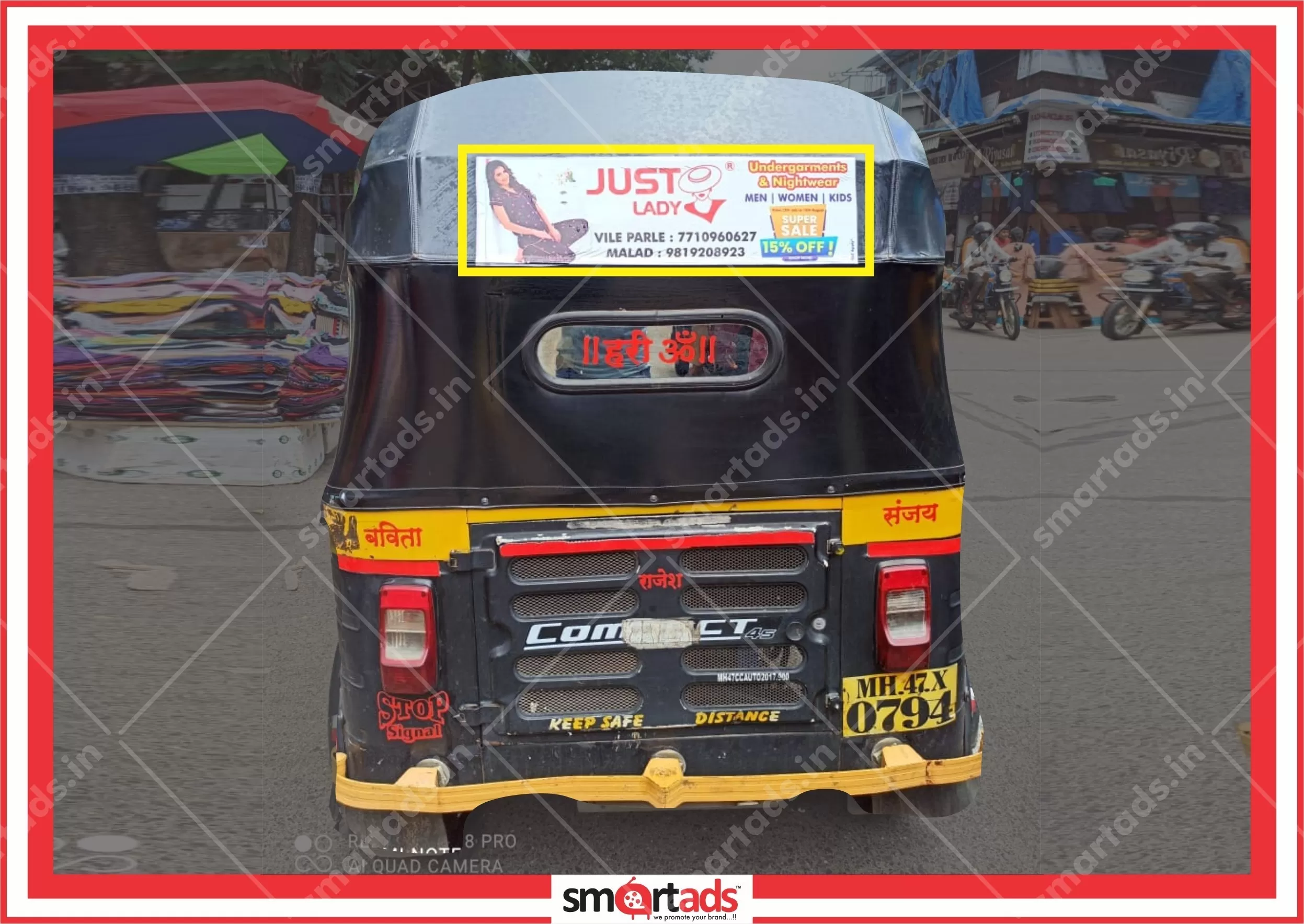
Back Sticker Small
24 In X 7 In
Back sticker will be displayed on the re
Rate per Sticker / Time
Standard Radium Material will be used fo
₹140.00
Showing 1 to 8 of 8 Results
MEDIA DETAILS
24 In X 7 In
Back sticker will be displayed on the re
Rate per Sticker / Time
Standard Radium Material will be used fo
₹140.00
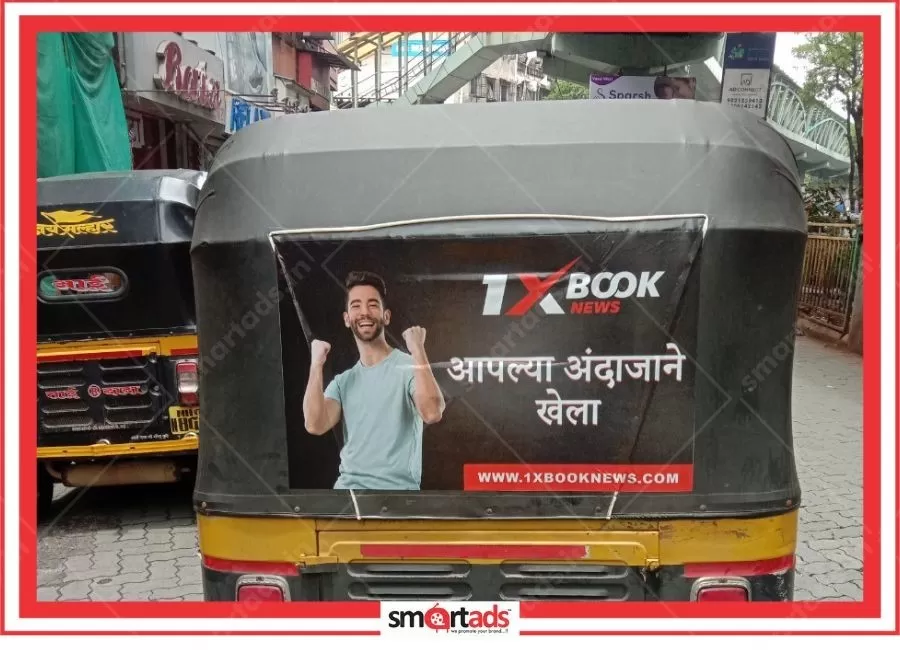
30 In X 18 In
Back sticker will be displayed on the re
Rate per Sticker / Time
Standard Vinyl Material will be used for
₹280.00
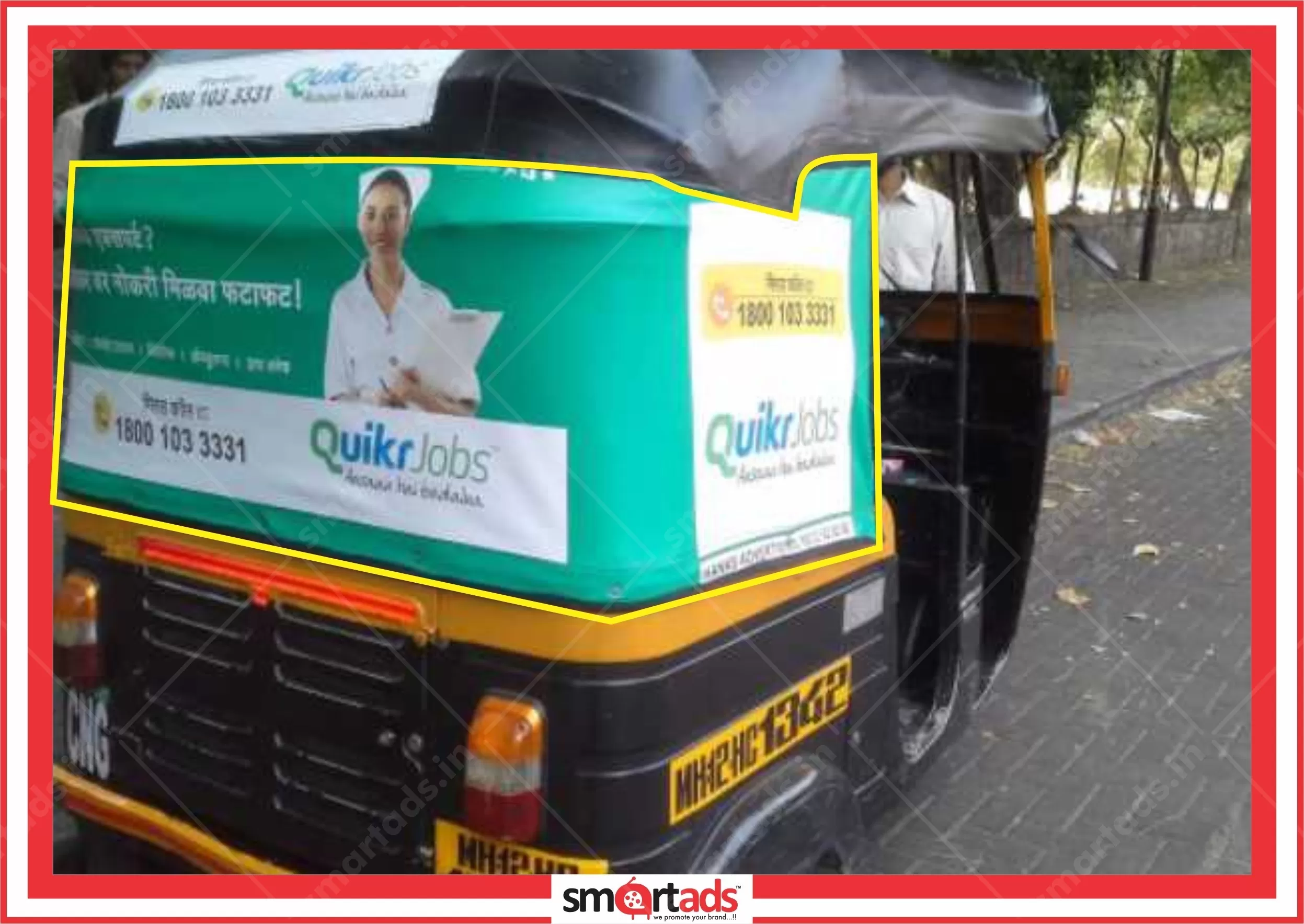
BackSide - 40 In(W)X 17 In(H) - TopPanel
Auto hood or soft top of the vehicle i.e
Rate per Hood / Time
Standard Rexin Material will be used for
₹700.00
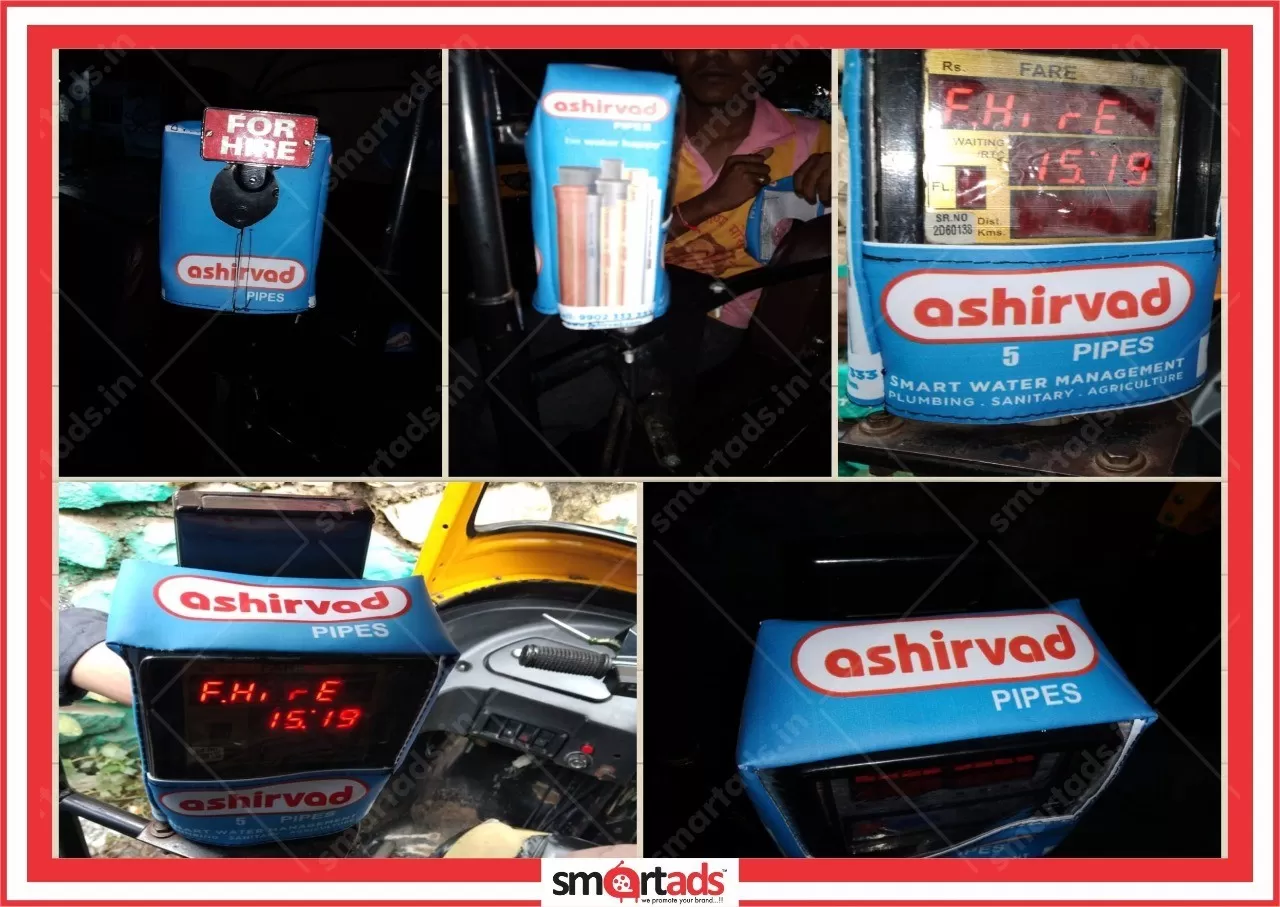
(6 In X 3 In) X 7 In
On the meter of the Auto Rickshaw the ad
Rate per Cover / Time
Standard Rexin Material will be used for
₹90.00

12 In X 5 In
Driver’s Seat Back, behind the seat of t
Rate per Sticker / Time
Standard Vinyl Material will be used for
₹90.00

44 w x 40 h
Protection Shield is made of plastic whi
Rate per Shield / Time
Standard Rexin Material will be used for
₹130.00

2 Ft(W) x 4 Ft(H)
Rain Cover is made of Rexine fabric in w
Rate per Rain Cover / Time
Standard Flex Material will be used for
₹450.00

(20 In X 17 In) X 2 Qty
Left Right Panel i.e. the both sides of
Rate per Sticker / Time
Standard Vinyl Material will be used for
₹180.00
MEDIA REACH

MinimumQty :
200
EstimateReachPeople :
200000

Here's what most brands miss. If you're planning auto rickshaw in Panaji, you're working in a tier-3 market where local concentration drives recall — and that changes how you should plan scale. Campaigns here scale from 200 units to reach approximately 200,000 people per activation, calibrated for distributed tier-3 neighbourhood footfall patterns.
For Panaji, auto rickshaw typically deploys across arterial junctions, weekly markets, and community gathering points, with localised creative tuned to Goa audience preferences. BTL puts your brand in the consumer's physical space at the point of decision, creating a tangible connection that screen-based advertising simply can't replicate.
Want to know what most planners get wrong? Reach in Panaji compounds when 200-unit activations are clustered within priority demand zones — not in theory, in practice — a pattern that fits tier-3 markets where local concentration drives recall. Local clusters that repeat often in the right zones.
If you're planning Auto Rickshaw advertising in Panaji, start by matching the medium to real audience attention. BTL puts your brand in the consumer's physical space at the point of decision, creating a tangible connection that screen-based advertising simply can't replicate. Keep the message simple and run long enough to build frequency, because repetition is where recall compounds. In Panaji, Goa, auto rickshaw campaigns scale from 200 units to reach approximately 200,000 people per activation, calibrated for distributed tier-3 neighbourhood footfall patterns. Use Minimum Qty. (200) and Reach (200000) to keep the plan practical, with emphasis on offline visibility connected with digital capture.
Auto Rickshaw advertising in Panaji uses BTL placements to keep a brand visible in moments that fit audience behavior. Unlike channels that are easy to skip, this medium works through contextual presence and repeated exposure. A good definition includes where it appears (housing society gate branding, milk booth panels, tea stall counter displays, tailor shop flex boards, and local gym wall branding), how it's planned (micro-market footfall mapping, venue owner negotiation and renewal terms, creative specification per venue type, pilot-then-scale rollout strategy, and daily QA photo documentation), and what execution requires. For Panaji, auto rickshaw typically deploys across arterial junctions, weekly markets, and community gathering points, with localised creative tuned to Goa audience preferences. When those parts are aligned upfront, campaigns feel intentional, look consistent, and build stronger recall over time.
Cost for Auto Rickshaw advertising in Panaji varies mainly by placement quality, audience density, seasonality, and campaign duration. The strongest cost control comes from planning levers such as micro-market footfall mapping, venue owner negotiation and renewal terms, creative specification per venue type, pilot-then-scale rollout strategy, and daily QA photo documentation. A smart mix of premium and value placements can protect both visibility and budget without over-spending on any single touchpoint. Budget planning for Panaji starts with the 200-unit minimum deployment, with cost-per-impression efficiency improving as you scale. Plan for production, approvals, and timelines early so you don't pay for last-minute fixes or rush charges.
There are three reasons brands keep returning to Auto Rickshaw advertising in Panaji. First, it delivers frequency that compounds into genuine recall, not just impressions that vanish. Second, the planning controls let you match placements to your audience, budget, and timeline without the unpredictability of auction-based media. Third, it builds local credibility: consistent presence in Panaji signals commitment to the market. For the best results, plan around offline visibility connected with digital capture.
Ready to plan Auto Rickshaw advertising in Panaji? Share your goal, budget range, preferred dates, and priority zones. we'll recommend the right format mix from available BTL touchpoints, apply smart planning levers to protect your budget, and build a practical schedule that avoids wasted spend. If performance matters, we'll set tracking upfront so every impression is measurable. The final recommendation will stay focused on offline visibility connected with digital capture. Get a customized media plan and pricing from SmartAds.
For Panaji, Goa, the levers that move outcomes are: micro-market footfall mapping, venue owner negotiation and renewal terms, creative specification per venue type, pilot-then-scale rollout strategy, and daily QA photo documentation.
lead volume and quality scoring, same-day versus delayed conversions, cost per acquisition, location-level performance ranking, and ROI analysis
Specifications
Minimum Qty.: 200
Reach: 200000
Creative requirements for Panaji: Design for the real environment: your branding competes with shop signage, street clutter, and weather. Bold, simple, high-contrast designs win.
