

Banner
Display
Banner advertising is shown in a rectang
Rate per Click / Month
Choose a geographic location that meets
₹80.00
Showing 1 to 3 of 3 Results
MEDIA DETAILS
Display
Banner advertising is shown in a rectang
Rate per Click / Month
Choose a geographic location that meets
₹80.00
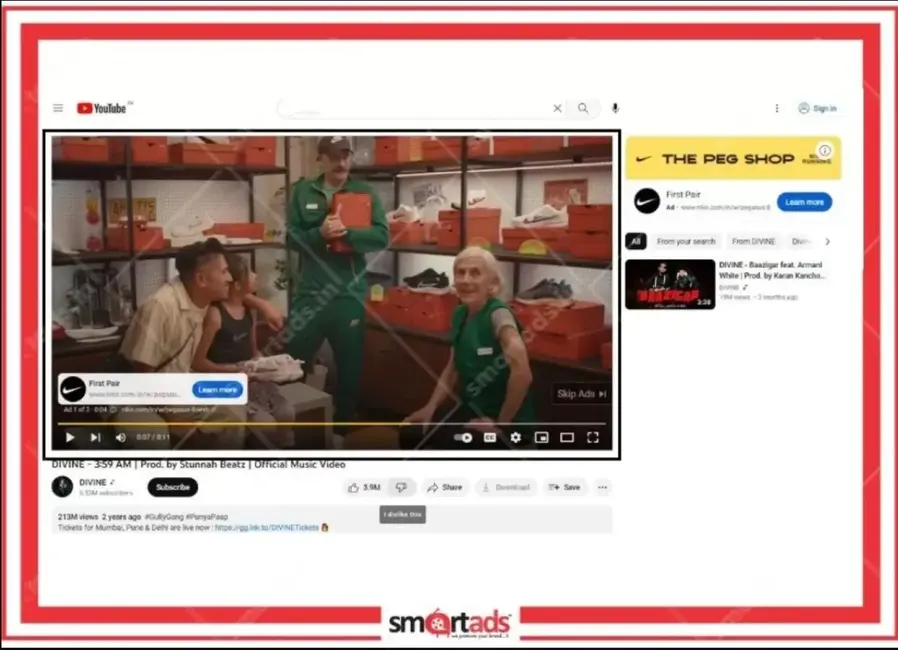
MP4/MKV
A video ad that includes a 0-20 second
Rate per Impressions / Month
Choose a geographic location that meets
₹120.00
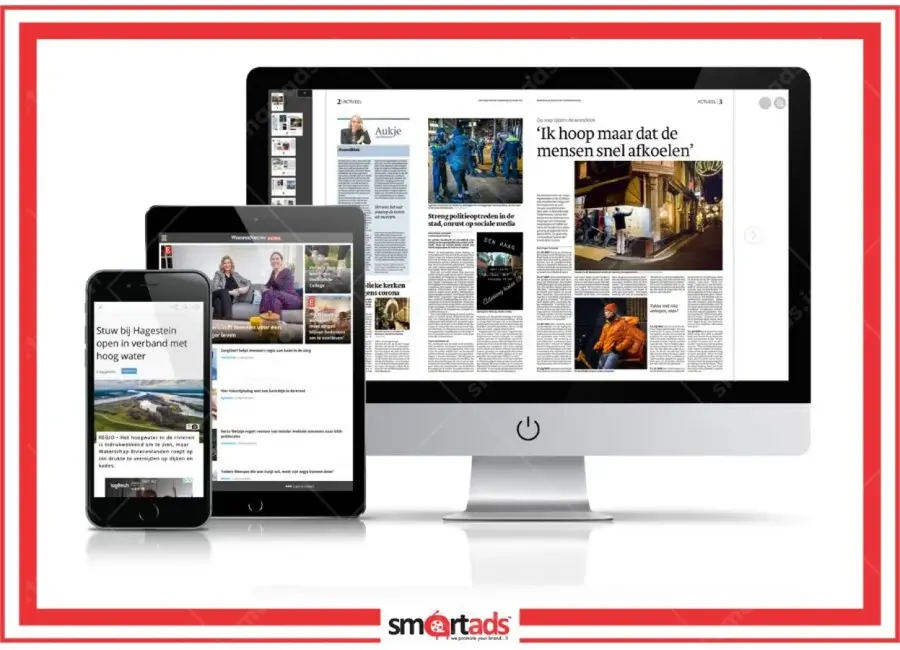
Min 500 words with video/Link
Min 300 to Max 1000 words in article inc
Rate per Article / Time
Choose a geographic location that meets
₹80000.00
MEDIA REACH

Language :
Kannada
MonthlyImpression :
2 Mn
Category :
News And Marketing
Medium :
Website
Duration :
10 Sec
PricingUnit :
CPM /CPC
Vijayavani is Karnataka’s largest Kannada daily, with certified circulation of over 540,000 copies and editions covering most of the state. For marketers targeting local audiences, advertising in Vijayavani – whether print or its digital ePaper – can deliver massive, engaged reach. In this guide, we explain why Vijayavani newspaper advertising still works, what ad formats and sizes it offers, how to book ads online, and what data/trends support print media in India. We’ll cover key steps in the ad booking process, detail display vs classified ads, and share insights on pricing and ROI. Whether you plan a Kannada newspaper campaign or a Vijayavani ePaper placement, you’ll find tips and data-driven insights to maximize your investment.
Advertising in Vijayavani is worth reading about because it blends local credibility with scale. In India’s second-largest newspaper market, regional papers hold ~20% of ad spend (vs only 4% globally). Vijayavani’s broad readership (millions daily) makes it a powerful platform for branding and direct response. Even as a skeptic, consider this: print ad space in India grew ~3% in early 2025, and one study found newspaper ads drive 1.5× more purchase intent than digital. In short, a well-planned Vijayavani newspaper or ePaper advertisement can cut through the clutter with high attention and trust. We’ll show you the booking process, ad categories (display, classified, etc.), rates and costs, and realistic outcomes for your campaign in Vijayavani.
Vijayavani is a Kannada-language newspaper launched in 2012 by the VRL Group (founder Vijay Sankeshwar). In just a few years, it expanded from three editions to a statewide presence. Today it publishes editions in cities like Bangalore, Hubli, Mysore, Mangalore, Belagavi, Gulbarga, Vijayapura, Shivamogga, and more. Vijayavani bills itself as an all-color daily with editions reaching 28 of Karnataka’s 30 districts. The latest Audit Bureau of Circulations (ABC) data confirms Vijayavani is “the largest circulated newspaper in Karnataka,” with a daily circulation of about 542,000 copies. This broad circulation translates into a diverse readership spanning urban centers and rural markets across the state.
For advertisers, that means targeted reach. You can select specific city editions or cover multiple regions. For example, a Bangalore edition display ad reaches Bangalore’s audience, while Mysore or Hubli editions cover those markets. The newspaper covers everything from politics and business to entertainment and local news, so its readers represent a cross-section of consumers and decision-makers. In terms of demographics, Vijayavani readers are literate Kannada speakers who often trust their local print source. In fact, media analysts note that “readers trust what is printed much more than what appears on social media feeds”. By advertising in Vijayavani, you tap into that trust: your brand’s message gains credibility simply by appearing alongside the paper’s established content.
Moreover, Indian studies show regional print is very sticky. An audience study explains that Indians spend significant time with newspapers daily. One media analysis found “readers usually have a dwell time of 20–30 minutes when going through a paper, and will see the advertisements a number of times as they turn the pages”. In other words, a Vijayavani newspaper ad gets noticed in a relatively distraction-free setting (over breakfast, for example), so your ad is likely to be seen and even re-seen. Even better, regional campaign costs can be more efficient: local newspaper ads are often cheaper than equivalent digital or metro newspaper slots, yet they still generate real outcomes (store visits, phone inquiries, direct sales) that some online ads miss.
In summary, Vijayavani gives you scale + trust. Its extensive circulation (half a million+) makes it a mass medium for Kannada audiences, but on a local level, you target cities or districts. And as a “traditional and trusted newspaper”, it boosts your brand’s credibility. Savvy marketers, therefore, consider Vijayavani a go-to platform when they need broad visibility in Karnataka or want to add a layer of trust to their media mix. The rest of this article will dig into how to leverage that — from ad formats and content to booking and pricing.
You might wonder: “Why Vijayavani and not just run digital ads?” The key is that Vijayavani combines reach with engagement. As one media review notes, “Vijayavani is one of India’s most trusted newspapers, delivering credible news to millions of readers”. Advertising in such a reputable publication means your ads inherit some of that credibility. Research confirms print readers perceive traditional newspapers as reliable sources. For example, a Harvard Business Review piece points out that readers give newspaper ads greater credibility than random online ads. In practical terms, a display advertisement placed in Vijayavani can reinforce your brand image simply because it appears in a well-known daily.
There’s also the matter of attention and recall. Unlike fleeting banner ads, a Vijayavani print or ePaper ad stays in front of readers. One study from Hindustan Times Media showed newspaper readers typically spend 20–30 minutes with a paper, revisiting ads as they go through sections. That repeated exposure means your message has multiple chances to sink in. Put differently, each Vijayavani ad combines one-time reach with cumulative frequency — an effect many digital formats struggle to match. Marketing experts often say frequency compounds recall, and newspapers naturally deliver frequency through prolonged engagement.
Geotargeting is another advantage. Vijayavani offers city-specific editions (Bengaluru, Mysuru, etc.), so you can tailor your campaigns geographically. If you only need Bangalore attention, just book the Bangalore edition; for statewide visibility, combine editions. This flexibility means you’re not paying for “wasted” reach outside your market. In fact, Vijayavani’s editorial team even promotes this: one platform notes you can target “people who are very challenging to reach through other newspapers,” tapping into Vijayavani’s broad Kannada readership. So advertising here lets you finely align your budget to your audience.
Finally, consider cost-effectiveness. Compared to national English dailies, local Kannada newspapers can be much more affordable. Our research (and industry data) shows that local newspaper rates are generally lower while still yielding measurable results (calls, visits). Plus, agencies often bundle multiple editions for a bulk discount. For example, some booking platforms offer “multicity discounted packages” if you book in several Vijayavani cities at once. This means your effective cost per impression can beat many digital channels, especially for localized campaigns.
In short, Vijayavani advertising offers high value: wide but targeted reach, trust/credibility, and competitive rates. It’s especially compelling for brands that want a tangible, memorable impact – from local stores to national companies looking to cement a South Indian footprint. In the sections ahead, we’ll break down exactly what ad options are available and how to make them work for you.
Vijayavani supports a full range of newspaper ad formats to meet different marketing needs. Broadly, these fall into two categories:
In addition to the standard display and classified formats, Vijayavani offers innovative/specialty ads for high-impact campaigns. These include “Jacket Ads” (which wrap the entire front or back cover with your creative), “Gatefolds” (fold-out extensions), bookmarks, ear panels, and skybus banner ads across the top of pages. Such formats are premium (and pricey), but they are eye-catching and memorable. They’re often used by big brands for launches or by publishers for special issues. For most advertisers, the focus will be on display and classified ads as the core options.
It’s worth noting that newspaper advertisements in Vijayavani can also be booked for different genres of content. For example, business and recruitment companies can use display ads to highlight services, while individuals might use classified ads for personal notices. Vijayavani even has sections for “Appointment/Tender” ads (used by governments and institutions for job vacancies or public bids) and “Public Notice/Legal” ads (for legal announcements, financial notices, etc.). These are more specialized and usually follow strict formats, but they highlight the versatility of Vijayavani’s ad categories.
No matter which category you choose, the class of ad influences pricing. Display ads (full-color, large size) are charged by the square centimeter, while classified text ads are charged by lines/words. We’ll cover pricing next, but keep in mind: categorized formats allow you to optimize your budget. A smart campaign might combine a few well-placed display ads with ongoing classified ads for a sustained presence.
Thanks to modern platforms, booking a Vijayavani newspaper ad is largely an online process today. Authorized booking services (like SmartAds or ReleaseMyAd) let you handle everything from the comfort of your desk. In general, the steps are:
For Vijayavanie, paper advertising, the process is similar but slightly different. The ePaper (digital replica) is also monetized through ad placements. Some online portals specifically offer ePaper ad slots where you can choose to display banners or content links. As noted in an industry guide, Vijayavani’s ePaper rates are available via an online media options tab. They can be booked on a CPM/CPC basis or fixed price. Advertising on the ePaper often uses programmatic or search/social channels to drive traffic, but you still book it through a unified portal. The benefit is that your ad will appear in the digital edition that thousands of readers flip through on tablets or computers. Booking an ePaper ad also allows advanced targeting (by device or geography) and real-time metrics (impressions, click-through rates, etc.), which traditional print cannot.
In summary, online booking makes placing a Vijayavani ad straightforward. You simply select the newspaper (Vijayavani), pick your category (Display, Classified Text, or Classified Display), set the size and editions, and pay online. Remember to allow for deadlines: display ads typically need to be booked at least 2–3 days before publication, while simple classifieds may have a 1-day cutoff. If you have any doubts, the portal’s FAQ or helpdesk can guide you. By the end of the process, your ad will be scheduled, and you’re ready to “publish your ad” in one of Karnataka’s leading newspapers.
Vijayavani’s ad rates vary widely by city edition, ad format, size, and placement. To illustrate, consider a snapshot of city-level pricing (display ads): a Bangalore edition ad might cost about ₹120 per square centimeter, whereas a Mangalore edition could be around ₹31 per sq.cm. Hubli, Mysore, and other cities fall somewhere in between (for example, Hubli ~?125/sq.cm, Mysore ~?40/sq.cm). These differences reflect circulation and demand in each market. In general, larger metros command higher rates per size unit, while smaller towns are more affordable.
Beyond geography, key factors affecting cost include:
To sum up pricing in Vijayavani: city and size are the biggest drivers. As one source summarizes, “The popularity, circulation, and readership of the newspaper play a major role in determining ad cost,” alongside format and placement. For practical planning, check the online rate card (many booking portals have a “platform to check ad rates” feature) to tailor your ad size to your budget. And remember that official rate hikes (like the recent 26% bump for govt ads) may not directly affect private bookings, but they indicate the value newspapers place on ad real estate. Ultimately, with Vijayavani’s broad readership and high trust, advertisers often find the ROI justifies the cost.
Getting eyeballs on your ad is only half the battle — you also need the right message. An effective Vijayavani advertisement uses crisp, relevant content tailored to Kannada readers. Newspaper ads benefit from concise headlines and clear calls to action. For example, media experts advise: use “strong headlines, clear offers, and localized CTAs such as store addresses or QR codes” in your ad. This means your ad copy should lead with the main benefit (in bold Kannada text), and end with what you want the reader to do (visit, call, log on). For instance, a local restaurant might say: “Now Open! (taste) is our specialty. Visit our Brindavan Road outlet – Call 080-XXXX-XXXX.”
Visual layout also matters. In display ads, imagery and color grab attention. Use high-resolution images relevant to your product or service (food pictures for a restaurant, school logo for education, etc.). Make sure the text is large enough to read easily in print. Use plenty of white space; clutter can bury your message. If you’re advertising a sale or event, highlight it with a colorful banner or box – classified display ads allow small logos or icons, which can make even a text ad pop. Some agencies even use tiny “tick” icons or color backgrounds (online enhancements) to make classifieds stand out.
Language is key. While Vijayavani is Kannada, you can use bilingual or English if your audience expects it, but lean on Kannada for authenticity. Use local idioms or references if they fit the campaign (only if you’re sure of their meaning!). Also, remember to proofread carefully – language errors can be more noticeable in print. If in doubt, get a Kannada copyeditor to refine the text. A well-written ad in the native language will resonate far better than one that feels foreign.
Finally, include clear contact information. For business ads, always provide a phone number, email, or website. If appropriate, add a simple QR code – readers can scan it to learn more (bridging print to digital). Keep the layout clean: for example, one HT Media guide says newspapers are often “revisited by multiple family members,” so use that space wisely. An uncluttered ad with one core message will be read by more people than a busy one.
In short, focus on clarity and relevance. Highlight the most compelling offer or message in your Vijayavani ad. Use visuals and formatting to draw the eye, and end with a direct call-to-action. If you do all this and then “book your ad” on schedule, you’ll set the stage for a campaign that cuts through and delivers.
Despite digital’s rise, data shows that newspaper advertising remains very much alive in India. To begin with, India’s newspaper market is enormous: a recent analysis found over 110 million copies sold daily nationwide (as of IRS 2020). That makes India the second-largest newspaper market globally. Even more telling, print media in India accounts for about 20% of total advertising spend, far above the ~4% global average. In other words, Indian brands still allocate a significant chunk of their budget to print channels like Vijayavani.
Recent years have seen the government and industry both bolster print. The Indian government approved a 26% hike in official print ad rates for dailies (to roughly ₹60/sq.cm) in late 2025. This policy change was specifically to strengthen the print ecosystem, acknowledging that newspapers need sustainable ad revenues. Meanwhile, industry reports (covering Jan–Sep 2025) indicate that print ad space actually grew ~3% year-on-year. New categories like education and telecom have been increasing their print ad share too, and advertisers of all sizes (over 1 lakh brands in 2025) continue to use newspapers for reach and recall.
Academia also backs the effectiveness of print advertising. One study cited by the Indian Readership Survey notes that a newspaper ad’s influence is enduring. For example, data shows that print ads yield strong recall: Statista found 61% of Indian readers remember print ads better than digital ones. Another research effort reported that print ads are 1.5× more effective at driving purchase intent than digital ads. This implies that even if fewer people engage online, the people who see the newspaper ad are likelier to act. In practical terms, a Vijayavani display ad or classified ad can have a strong impact on consumer behavior, especially for local shopping or services.
In short, print is not going away soon in India. Newspapers offer a combination of mass reach and trusted content that digital struggles to match. Marketers increasingly view print as part of an integrated strategy: a Vijayavani ad can spark awareness and trust, which can then be followed up by online efforts (e.g., users scanning a code from the paper to visit your website). As one HT Media expert puts it, print and digital should “enhance” each other rather than compete. For your campaign in Vijayavani, this means you can confidently tap into the newspaper channel knowing that it’s data-backed and growing alongside India’s overall advertising ecosystem.
Running a Vijayavani ad is just the first step. To ensure it works for you, plan your campaign as you would any media buy. Start by defining your goals: are you building brand awareness, generating store visits, hiring staff, or clearing inventory? Next, consider the three critical questions every advertiser should ask: Where is my target audience paying attention? How can I ensure they see my message repeatedly? And how will I measure success?. In Vijayavani’s case, “where” is in the paper (print or ePaper) and “repeated exposure” comes from frequency (running the ad multiple days or across several sections). “Measurement” can include tracking calls, foot traffic, or web visits that occur during the campaign.
Technically, you should set up tracking from day one. For example, use a unique phone number in the ad or a dedicated landing page URL so you can attribute responses to that Vijayavani ad. Digital campaigns in tandem can use pixels or UTMs to capture online actions from newspaper readers. The earlier marketers establish these metrics, the more they can optimize future flights. Anecdotally, industry experts note that campaigns improve over successive flights: brands often see more inquiries or sales by the second or third run as recall builds. This is the “compound” effect – one print ad primes the market, two help you break through, and so on.
After your ads run, compare the results against your objectives. If you booked a display ad to boost a sale, look at the store's performance on that date. If it were a classified, track how many responses (calls, emails) the ad generated. Adjust your approach as needed: maybe try a different headline, or shift to a different section, or increase frequency. Continuous testing and measurement are the same principles you’d use for digital ads, just applied to print media. As a rule of thumb, pay attention to cost-per-response rather than just ad cost. Newspaper ads often have high initial reach, so even at a higher cost, they can end up being efficient if responses are strong.
Finally, learn from each flight. Did a certain creative pull in more leads? Did a particular edition get a better pickup? Use those insights for your next booking. Over time, you’ll refine your advertising content and ad placement strategy for Vijayavani. When done right, the print analytics can be surprisingly robust. In sum, treat Vijayavani ads as accountable campaigns: define KPIs, set up tracking, and optimize continuously. These steps—along with the credibility and reach you gain—will make your Vijayavani advertising highly persuasive and data-driven.
By following these guidelines, you can book and run effective advertisements in Vijayavani. The combination of targetable local reach, credible content environment, and data-driven planning makes Vijayavani advertising a powerful channel for brands and agencies in Karnataka.
Q: How can I book a Vijayavani newspaper ad online?
A: You can book Vijayavani ads through authorized online portals. Simply select Vijayavani as your newspaper, choose the city edition(s) and ad type (display or classified), then enter your ad content and preferred dates. Payment is done digitally. Services like ReleaseMyAd or SmartAds advertise a “seamless online ad booking” experience for Vijayavani. Within minutes you can finalize and pay for your ad, then receive confirmation of publication.
Q: What’s the difference between display and classified ads in Vijayavani?
A: Display ads are large, color ads placed on prominent newspaper pages (front page, back page, etc.). They include images and design elements, making them highly visible for branding and promotions. Classified ads are smaller and text-based; they appear in specific sections like Jobs, Matrimonial, Real Estate, etc. You can run classified text ads (just text) or classified display ads (with a small logo/image). Classified text ads are charged per line/word, while classified display and regular display ads are charged by area (sq.cm).
Q: What factors affect Vijayavani ad costs?
A: Key factors are edition/circulation, ad type, size, color, and placement. Larger circulations (e.g., Bangalore edition) charge more per cm than smaller cities. Display ads (especially color) are pricier than classified ads. Bigger sizes cost more (full-page >> half-page >> quarter-page), and premium placements (front page, Sunday edition) carry surcharges. For example, rate cards list front-page color ads at ₹5–8 lakhs, whereas small classified ads might be only a few thousand rupees. Finally, booking multiple editions or insertions can yield discounts.
Q: Are newspaper ads still effective in India today?
A: Yes. Studies show Indian consumers continue to engage with print media. Newspapers remain a trusted source – one report found 62% of people trust print versus 44% for online. Moreover, print advertising in India still has a strong share: roughly 20% of all ad spend. In early 2025, print ad volume even grew by about 3%. Additionally, research indicates newspaper ads tend to drive higher purchase intent (1.5× that of digital ads). In practical terms, a Vijayavani ad can deliver attention and credibility that digital banners often don’t.
Q: What should I keep in mind before running a Vijayavani ad?
A: Plan your campaign objectives and trackable outcomes (calls, store visits, website traffic). Design the ad content for clarity (bold headlines, local language, strong CTA). Be aware of print deadlines: typically, you book 1–3 days before the run date. Also, ensure your ad complies with Vijayavani’s editorial policies (they review all ads). Choose the right mix of display vs classified based on your goal (branding vs specific response). Finally, measure and follow up: use a unique phone number or landing page so you know exactly how the Vijayavani ad performed.
