
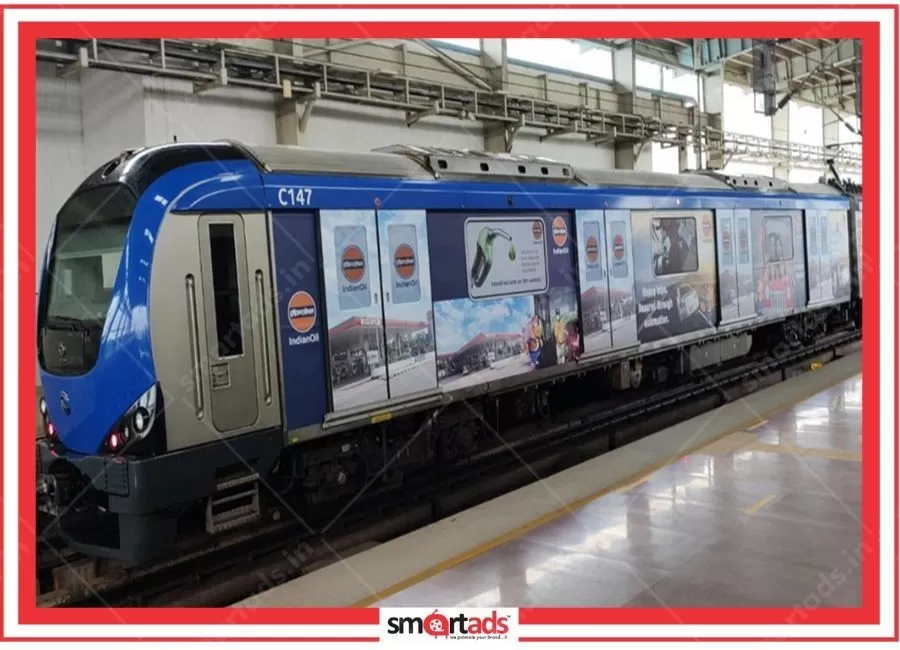
Exterior Metro Wrap
Custom
The advertisement spans the whole train,
Rate per Metro Display Cost / 1 Month
Route : Tirusulam To WIMCO Nagar
₹1000000.00
Showing 1 to 5 of 5 Results
MEDIA DETAILS
Custom
The advertisement spans the whole train,
Rate per Metro Display Cost / 1 Month
Route : Tirusulam To WIMCO Nagar
₹1000000.00
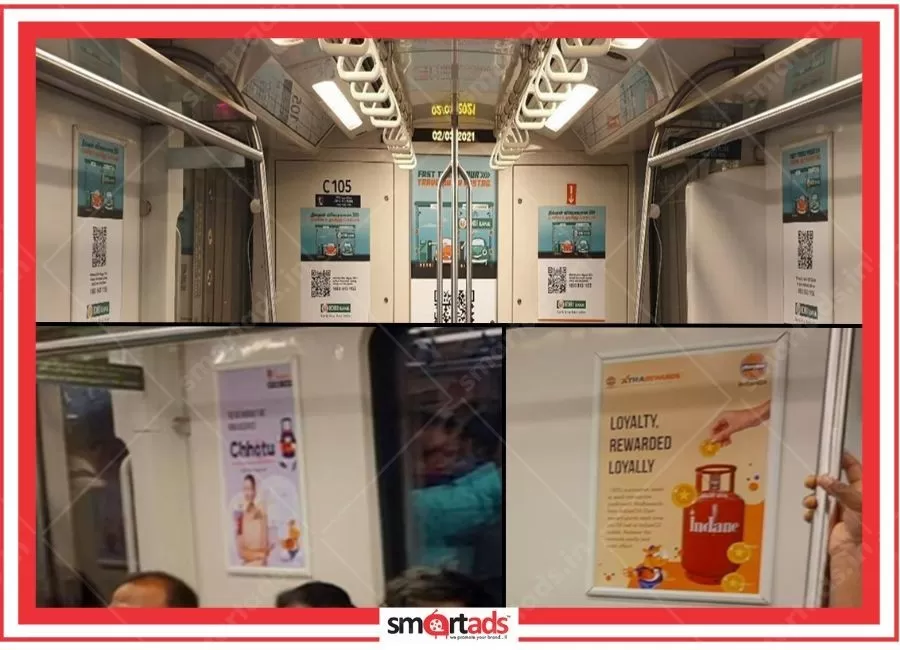
Custom
On the inside of the metro train the adv
Rate per Metro Display Cost / 1 Month
Route : Tirusulam To WIMCO Nagar
₹500000.00
20 Sec Audio
A jingle is a song or a phrase, and the
Rate per Metro Jingle Cost / 1 Month
Route :Tirusulam to WIMCO Nagar
₹400000.00

10 Sec Video
Digital screen on the metro station will
Rate per Metro Digital Display Cost / 1
Route :Tirusulam to WIMCO Nagar
₹600000.00

1 Metro Train
On the outside of the metro train the ad
Rate per Metro Display Cost / 1 Month
Route :Tirusulam to WIMCO Nagar
₹1500000.00
MEDIA REACH

MinimumQty :
1
EstimateReachPeople :
150000000
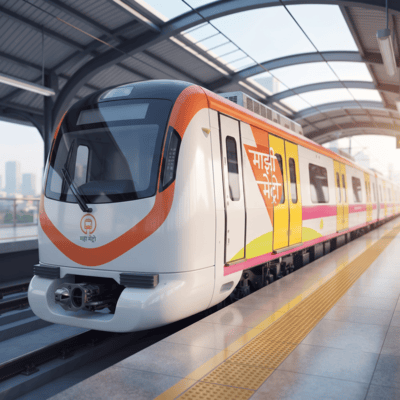
Nagpur's metro ridership crossed the two-lakh daily commuter mark faster than most urban planners expected, which tells you something important about how quickly this city has adopted rail transit as a primary mode of movement. For brands that have been relying on roadside hoardings and newspaper inserts to reach Nagpur's urban middle class, that number represents a captive audience which no billboard on the Wardha Road flyover can replicate. What we find, again and again, is that metro train advertising in Nagpur is still underpriced relative to the quality of the audience it delivers — and that window will not stay open much longer as Phase 2 expansion draws closer.
Most brands approach metro train advertising in Nagpur the same way they approach a bus shelter campaign — they think of it as a static placement that people glance at while waiting. That framing, frankly speaking, misses the entire point. Metro train branding in Nagpur works on a fundamentally different psychological principle: the commuter is enclosed in a moving environment, without the option to scroll past your creative or change the channel, which means the exposure is involuntary in the best possible sense for an advertiser.
The mechanics are straightforward, even if the execution requires coordination with the right parties. Maha-Metro — formally the Maharashtra Metro Rail Corporation Limited, also referred to as NMRCL — operates the Nagpur Metro network, and the exclusive advertising rights for train branding have been granted to Podhigai Ads, which is the entity through which any interior train branding, exterior train branding, or full train wrap campaign must be routed. Agencies like SmartAds work with Podhigai Ads on behalf of clients to plan, negotiate, execute, and monitor campaigns across the network. The advertiser does not deal with the operator directly; the process runs through authorised media partners who understand the inventory, the creative specifications, and the booking cycles.
What makes metro rail advertising in Nagpur genuinely different from most BTL advertising formats is the combination of dwell time and repeated exposure. A daily commuter on the Orange Line who boards at Automotive Square and exits at Sitabuldi interchange station spends somewhere between eighteen and twenty-two minutes inside a branded coach; over a thirty-day campaign, that same person sees your creative roughly forty to fifty times. Brand recall figures from transit media studies — including data referenced in the FICCI-EY Media Report — consistently show that repeated exposure commuters generate recall scores that outperform equivalent-spend outdoor hoardings by a significant margin, which is a finding that surprises most clients when we first share it across the planning table.
The Orange Line nagpur metro runs along the North-South corridor, stretching from Automotive Square in the south to Khapri metro station near the airport, covering approximately 19.65 kilometres across its operational stretch. The Aqua Line nagpur metro runs East-West, from Prajapati Nagar metro in the east to Lokmanya Nagar metro in the west, covering roughly 18.55 kilometres. Together, they form the 38 km metro network nagpur that now serves 36 metro stations nagpur across the city — and the point where both lines intersect, Sitabuldi interchange station, is the single most valuable advertising node in the entire Nagpur Metro system.
The audience profiles on the two lines differ in ways that matter for media planning. The Orange Line carries a heavier mix of IT professionals, airport-bound travellers, and residents of the newer southern corridors near MIHAN — the Multi-modal International Cargo Hub and Airport at Nagpur — which makes it particularly well-suited for real estate advertising metro campaigns, fintech advertising metro placements, and premium consumer brand activations. The Aqua Line, by contrast, passes through older, denser commercial and residential zones, which means its daily commuters nagpur skew toward government employees, retail shoppers, and college students; this makes it a strong fit for edtech advertising metro campaigns, BFSI metro advertising, and mass-market consumer goods.
At SmartAds, we always tell our clients that the choice between lines should be driven by audience fit, not by cost alone. A healthcare brand we worked with initially wanted to run only on the Orange Line because of the perceived premium audience; after reviewing the commuter density data and the catchment zones of the Aqua Line stations near Nagpur's medical district, we recommended a split allocation — sixty percent Orange Line, forty percent Aqua Line — which ended up delivering a broader physician and patient audience than a single-line buy would have achieved. The lesson is that Nagpur metro advertising works best when the route selection is treated as a targeting decision, not an afterthought.
Interior train branding is the format we recommend most often for campaigns where brand recall is the primary objective, and the reason is simple: when a passenger sits or stands inside a branded coach for fifteen to twenty minutes, the creative has time to work. The interior formats available on Nagpur Metro trains include seat back panels, which are placed on the reverse face of every passenger seat and sit directly in the sightline of the person seated behind; grab handle advertising, which wraps the overhead handles that standing passengers hold throughout their journey; door panel branding, which occupies the internal face of coach entry and exit doors; and window strip advertising, which runs along the upper edge of windows in a continuous horizontal band. Each of these formats has different creative dimensions and different dwell-time characteristics, which is why a well-planned interior campaign typically combines two or three of them rather than relying on a single placement.
Digital screens metro placements are also available at select stations and inside certain coaches, which allows brands to run dynamic creative — video loops, time-sensitive offers, or contextual messaging tied to the day of the week or time of day. We have found that digital screens work particularly well for OTT platform metro advertising campaigns, where a fifteen-second trailer clip generates significantly higher engagement than a static panel. The creative specifications for digital screens are different from vinyl formats; the resolution requirement is typically 1920x1080 pixels at a minimum, and content must be submitted in MP4 format with a file size cap that varies by operator guidelines, so it is worth confirming these details at the briefing stage.
Exterior train branding transforms the outside of the coach into what is effectively a moving billboard — and a moving billboard that travels through the heart of Nagpur at ground level, visible to pedestrians, motorists, and people at platform edges across all 36 metro stations nagpur. The partial exterior wrap covers specific panels on the coach body, while the full train wrap — also called full train branding — covers the entire exterior surface of one or more coaches in a single, uninterrupted creative execution. A vinyl wrap metro train done well is genuinely spectacular; we have seen full train branding campaigns for real estate developers in Nagpur stop people on station platforms simply because the scale of the creative was unlike anything they had seen on a transit vehicle before.
Train wrap advertising carries a higher production cost than interior formats because the vinyl material used must withstand weather, cleaning cycles, and the mechanical stress of a moving rail vehicle; the material specification is typically cast vinyl rather than calendered vinyl, which affects both the price and the longevity of the execution. Coach branding — which refers to a partial exterior wrap covering one or two panels per coach rather than the full surface — is a more accessible entry point for brands that want exterior visibility without the full train wrap investment. What a lot of people miss is that coach branding on a six-coach train still generates enormous visual impact at platform level, particularly at high-footfall stations like Sitabuldi interchange station, Khapri metro station, and the commercial hubs along the Aqua Line.
Nagpur metro train advertising rates are not published in a standard rate card the way newspaper or radio rates are, which is one of the reasons so many brands either overpay or give up on the format entirely without realising what they are missing. The nagpur metro train advertising cost varies significantly depending on the format, the number of coaches, the duration of the campaign, and whether the booking is for a single line or the full network. What we can share, based on our current campaign experience, is that interior train branding for a single coach — covering seat back panels and grab handle advertising across one coach — works out to somewhere in the ballpark of ₹80,000 to ₹1.2 lakh per month, which is a number that surprises most first-time advertisers when they compare it to what they are paying for a single outdoor hoarding on the Wardha Road.
A full train wrap on a six-coach Nagpur Metro train — the full train branding option that covers the complete exterior — is a considerably larger investment, sitting roughly in the range of ₹8 lakh to ₹15 lakh per month depending on the line, the specific train assigned, and the production costs for the vinyl material itself. Partial exterior coach branding, which covers two to three panels per coach, typically falls somewhere between ₹2.5 lakh and ₹5 lakh per month for a full train; this is the format that delivers the best cost-per-impression ratio for most mid-sized brand budgets, in our experience. Smart card advertising — which we will cover in more detail shortly — is priced separately and is generally accessible even for smaller campaign budgets, with rates working out to somewhere in the range of ₹50 to ₹80 per thousand cards issued, depending on the campaign volume.
The nagpur metro train advertising rates we have quoted above are indicative benchmarks for 2025 planning purposes; actual rates are subject to negotiation, seasonal demand, and the specific inventory available at the time of booking. What we tell our clients at SmartAds is that the cost-per-thousand-impressions (CPM) for interior train branding — when calculated against the 200,000 daily ridership nagpur metro figure across both lines — works out to roughly ₹12 to ₹18, which compares very favourably against the ₹25 to ₹40 CPM that most digital display campaigns in Tier-2 city markets are delivering right now. The ROI metro advertising case becomes even stronger when you factor in the quality of the audience and the dwell time metro ads generate, which no display impression can replicate.
The honest answer is that most brands underestimate BTL advertising nagpur because they are still measuring it with the wrong metrics. The instinct is to compare metro rail advertising nagpur against digital channels on a pure CPM basis and conclude that digital is cheaper; what that comparison ignores is the difference between a half-second scroll-past impression and a twenty-minute enclosed environment where the commuter has nothing to look at except your creative. Transit media research — including studies referenced in the Dentsu e4m Report on out-of-home advertising — consistently shows that captive audience environments generate brand recall scores two to three times higher than equivalent-spend roadside formats.
Nagpur is also a market that is frequently underestimated by national brands, which creates an opportunity for brands that move early. As the geographic centre of India — Zero Mile Nagpur is literally the point from which distances across the country were historically measured — the city functions as a distribution and consumption hub for central India, with a consumer market that the GroupM TYNY Report has flagged as one of the fastest-growing urban markets outside the top six metros. The daily commuters nagpur metro carries are disproportionately urban, employed, and digitally active; a FICCI-EY Media Report analysis of metro commuter demographics in Tier-2 Indian cities suggests that metro users index significantly higher on income and education than the general urban population of the same city, which means the audience quality for nagpur metro advertising is genuinely premium.
One automotive brand we worked with ran a full train wrap campaign on the Orange Line nagpur metro for a new SUV launch, timed to coincide with the festive season. The campaign ran for forty-five days across two trains, supported by digital retargeting on social platforms that used the metro corridor as a geographic targeting parameter. The brand reported a thirty-eight percent increase in test drive bookings from Nagpur-based enquiries during the campaign period compared to the same period in the previous year — a result which, to be fair, cannot be attributed entirely to the metro campaign, but which the brand's marketing team felt was materially driven by the metro train branding nagpur execution given the absence of any other significant Nagpur-specific media activity during that window.
Real estate advertising metro is probably the single biggest category on Nagpur Metro right now, and it makes complete sense when you map the Orange Line nagpur metro route against the growth corridors of the city. Developers launching projects near MIHAN, Khapri, and the southern residential zones have found that commuters on the Orange Line are exactly the buyer profile they are targeting — working professionals with household incomes above ₹8 lakh per year who are actively considering property purchases. We have executed several real estate campaigns on the Nagpur Metro, and the consistent finding is that the combination of exterior train branding and interior train branding creates a surround-sound effect that drives significantly higher site visit rates than standalone hoarding campaigns.
BFSI metro advertising — covering banks, insurance companies, mutual fund distributors, and fintech platforms — is the second-largest category, which reflects the demographic profile of the commuter base. Fintech advertising metro campaigns have been particularly active on both lines, with brands targeting the young professional segment that is most likely to adopt digital payment and investment products. Edtech advertising metro placements have grown sharply since 2022, driven by coaching institutes targeting students commuting to colleges in the central Nagpur catchment area of the Aqua Line. OTT platform metro advertising has also emerged as a significant category, with streaming platforms using full train branding and digital screens metro placements to drive app downloads and subscription conversions during new content release cycles.
Healthcare brand metro ads, automotive launches, FMCG campaigns during festive periods, and government public awareness campaigns round out the major categories. To be honest, the format is suitable for almost any brand that is trying to reach an urban, educated, economically active audience in Nagpur — the question is less about industry fit and more about whether the creative is designed to work in a transit environment, which requires a different approach than a newspaper or television ad. At SmartAds, we have worked with clients across all of these categories, and the ones who get the best results are invariably the ones who brief their creative teams specifically for the metro environment rather than repurposing existing assets.
Metro station advertising nagpur covers a different inventory set from train branding — it includes platform advertising nagpur placements such as platform screen door panels, concourse wall panels, ticket counter surrounds, entry gate branding, and pillar wraps. These formats are managed separately from the train branding inventory, which means a brand can run a station-only campaign without train branding, or combine both for a fully immersive metro presence. Platform advertising nagpur is particularly valuable at high-interchange stations like Sitabuldi interchange station, where commuters from both the Orange Line nagpur metro and the Aqua Line nagpur metro converge, creating a footfall concentration that no single-line train placement can match.
Metro pillar advertising nagpur — the wrapping of structural pillars along elevated sections of the metro corridor — is a format that operates at the intersection of transit media and out-of-home advertising. Metro pillar branding in Nagpur is visible not just to commuters inside the station but also to pedestrians and motorists on the roads below the elevated track, which effectively doubles the audience for a single placement. The OOH advertising nagpur value of pillar branding is often underestimated because it is classified as a metro format, but in terms of visual impact on the street, it functions more like a large-format outdoor hoarding than a transit media placement.
Smart card advertising is one of the most underutilised formats in the Nagpur Metro advertising ecosystem, and frankly speaking, we are puzzled by how few agencies mention it. The Nagpur Metro smart card — issued to regular commuters as a stored-value travel card — carries advertising on its reverse face, which is handled and looked at by the cardholder multiple times per journey and multiple times per week. The brand recall potential of a physical object that a commuter carries in their wallet and uses daily is, in our experience, significantly higher than most digital touchpoints; the card is a persistent reminder that cannot be scrolled past or blocked by an ad filter.
Smart card advertising campaigns are typically structured around card issuance cycles, with brands sponsoring a batch of newly issued cards that carry their creative on the reverse. The minimum order is usually a few thousand cards, which makes this format accessible even for hyperlocal advertising campaigns targeting specific station catchment areas. A retail client in Nagpur's Sitabuldi commercial district used smart card advertising in combination with interior train branding to drive footfall to a new store opening; the smart card carried a QR code linking to a promotional offer, which allowed the client to track card-to-conversion rates directly — a level of measurability that most non-traditional advertising nagpur formats do not offer.
No competitor page we have reviewed actually walks through the booking process in any useful detail, which is a gap we want to address directly. The process begins with a brief — specifically, a media brief that covers the campaign objective (awareness, consideration, or conversion), the target audience profile, the preferred metro line or station set, the campaign duration, and the budget range. This brief is shared with the authorised media partner, which in the case of Nagpur Metro train branding is an agency working with Podhigai Ads; the partner then comes back with an availability check, since certain formats — particularly full train wrap and coach branding on premium trains — can be booked out weeks in advance during festive periods.
Once the format and duration are confirmed, the next step is creative development and approval. This is where a lot of campaigns lose time unnecessarily; the creative must be submitted in the correct specifications for each format, which vary between interior formats (seat back panels, grab handle advertising, door panel branding, window strip advertising) and exterior formats (vinyl wrap metro train, coach branding panels). The Maha-Metro / NMRCL approval process requires that all creative be reviewed for content compliance before production begins — political content, competitive comparative claims, and certain product categories face additional scrutiny. Our experience at SmartAds is that having the creative approved before the production brief is issued saves an average of five to seven working days in the campaign timeline, which matters a great deal when you are trying to go live before a product launch or a festive window.
Production, installation, and campaign monitoring follow the approval stage. Vinyl installation on exterior coaches is typically done during scheduled maintenance windows, which means the installation date is not always fully flexible; interior formats are generally faster to install. Campaign monitoring involves periodic photographic verification of the installed creative, which the media partner provides as part of the execution report. At the end of the campaign, a post-campaign report covering installation dates, verification photographs, and any estimated impression data is shared with the client — and this report forms the basis for the ROI conversation, which we will address in the next section.
ROI metro advertising measurement is an area where the industry is still catching up to the expectations that digital marketing has created, and we think it is important to be honest about what can and cannot be measured in transit media. The most reliable primary metric is brand recall, which can be measured through post-campaign surveys administered to commuters on the relevant lines; a well-designed recall study conducted four to six weeks after campaign end will give you a statistically reliable read on aided and unaided awareness among the commuter population. We have run several such studies for clients, and the brand recall figures from interior train branding campaigns on the Nagpur Metro have consistently come in above forty percent for aided recall, which is a strong result by any transit media benchmark.
Secondary metrics depend on the campaign objective and the channels being used alongside the metro placement. For campaigns that combine metro train branding nagpur with digital retargeting — using the metro corridor as a geographic parameter for social and programmatic campaigns — the digital data provides a useful proxy for metro-driven awareness lift; you can compare click-through rates and conversion rates from the Nagpur Metro catchment zone against control zones in the same city, which gives you a directional read on the metro campaign's contribution. For campaigns with a direct response element — a QR code on a seat back panel, a promotional smart card, or a dedicated phone number on a door panel branding execution — the conversion tracking is more direct, though it requires the creative to include a trackable response mechanism from the outset.
Dwell time metro ads generate is itself a measurable input into ROI calculations; using the average journey time per line (roughly twenty minutes on the Orange Line nagpur metro and seventeen minutes on the Aqua Line nagpur metro) and the daily ridership figures, you can calculate the total audience-minutes of exposure your campaign generates per day, which provides a reach-and-frequency input that is comparable to GRP calculations in television planning. What we tell our clients is that the ROI case for metro rail advertising nagpur is strongest when it is built on a combination of brand recall data, digital attribution, and audience-minutes modelling — no single metric tells the full story, but together they make a compelling case.
Nagpur metro phase 2 expansion is, in our view, the single most important forward-looking consideration for any brand that is building a long-term presence in the central India consumer market. The Phase 2 network adds approximately 43.8 kilometres of new track and 32 new stations to the existing system, which will more than double the geographic coverage of the metro and connect several high-growth residential and commercial corridors that are currently underserved by the network. When Phase 2 is operational, the combined nagpur metro advertising inventory will expand dramatically — more trains, more stations, more platform advertising nagpur opportunities, and a significantly larger daily commuter base.
The strategic implication for advertisers is that brands which establish their presence on the Nagpur Metro now — during Phase 1 — will have a significant advantage when Phase 2 opens, both in terms of audience familiarity and in terms of securing preferred inventory before demand spikes. We have seen this pattern play out in other Tier-2 city metro markets; brands that were early movers on transit media in cities like Kochi and Jaipur found that their CPM costs rose sharply once ridership scaled, while the brands that had been consistently present had already built the brand recall that made them the default choice in their categories. Nagpur metro phase 2 expansion also includes a Phase 3 Sitabuldi-Koradi corridor, which will extend the network further into the northern industrial and residential zones of the city.
For media planners thinking about the next three to five years, the Nagpur Metro advertising opportunity is best understood not as a single campaign decision but as a long-term brand-building platform. The city's growth trajectory — driven by MIHAN, the infrastructure investments associated with political attention from figures like Union Minister Nitin Gadkari and Maharashtra Chief Minister Devendra Fadnavis, and its position as a logistics and commercial hub at the geographic centre of India — makes it one of the most compelling tier-2 city advertising india markets for brands with national ambitions. The 38 km metro network nagpur of today will look very different in 2027, and the brands that are present throughout that transition will be the ones that own the urban audience marketing story in central India.
This is a question we get asked in almost every media planning conversation about Nagpur, and the honest answer is that it is not an either-or decision — but if you are asking which format delivers more per rupee spent on a pure brand recall basis, the data consistently favours metro train advertising in nagpur. A standard 40x20 foot hoarding on the Wardha Road or the Amravati Road costs somewhere in the ballpark of ₹60,000 to ₹1.5 lakh per month depending on location and illumination; the audience for that hoarding is vehicular traffic moving at speed, with an average exposure time measured in seconds. Interior train branding on a single coach costs a comparable amount per month but delivers a captive audience with a dwell time of fifteen to twenty minutes per exposure — a difference in audience quality that no CPM calculation fully captures.
The case for outdoor hoardings is not without merit; OOH advertising nagpur reaches a broader, less self-selected audience than metro commuters, which matters for mass-market brands that need to build awareness across all income segments. Out-of-home advertising also offers creative scale — a large-format hoarding in a prime location is a statement that metro formats cannot replicate in terms of sheer visual dominance of a streetscape. What we recommend to most clients is a media mix that uses outdoor hoardings for broad awareness reach and metro train branding nagpur for depth of engagement with the urban, employed, digitally active audience segment; the two formats are complementary rather than competitive, and the combined effect on brand recall is typically stronger than either format alone.
A fintech client we worked with in Nagpur ran a split test across two campaign phases — the first phase used outdoor hoardings only, the second added interior train branding on both the Orange Line nagpur metro and the Aqua Line nagpur metro. Post-campaign recall surveys showed that aided brand recall among metro commuters in the second phase was nearly double that of the first phase, despite the metro budget representing only thirty percent of the total media spend in that phase. The lesson, which we have seen replicated across multiple campaigns, is that the efficiency of nagpur metro advertising in driving brand recall per rupee spent is genuinely difficult to match with any other format in the city.
Q: How much does metro train advertising in Nagpur cost?
Nagpur metro train advertising cost varies considerably by format and duration. Interior train branding — covering seat back panels, grab handle advertising, and door panel branding across a single coach — typically works out to somewhere between ₹80,000 and ₹1.2 lakh per month, which makes it accessible for mid-sized brand budgets. Full train branding, which wraps the complete exterior of a six-coach train in vinyl, sits in the range of ₹8 lakh to ₹15 lakh per month including production costs. Partial coach branding falls between these two points, roughly in the ₹2.5 lakh to ₹5 lakh per month range for a full train. Smart card advertising is priced separately, typically in the range of ₹50 to ₹80 per thousand cards. These are indicative 2025 benchmarks; actual nagpur metro train advertising rates are subject to availability, campaign duration, and negotiation through an authorised nagpur metro advertising agency.
Q: What ad formats are available on Nagpur Metro trains?
The formats available on Nagpur Metro trains span both interior and exterior placements. Interior train branding options include seat back panels, grab handle advertising, door panel branding, and window strip advertising — all of which place the brand directly in the commuter's sightline during the journey. Exterior formats include partial coach branding panels and the full train wrap, which covers the entire outer surface of one or more coaches in a single creative execution. Digital screens metro placements are available at select stations and in certain coaches for dynamic content. Beyond the trains themselves, metro station advertising nagpur covers platform advertising nagpur panels, concourse branding, pillar wraps, and entry gate surrounds. Smart card advertising is a separate format involving branded reverse-face printing on commuter travel cards.
Q: What is the difference between interior branding and exterior train wrap on Nagpur Metro?
Interior train branding places creative inside the coach, where it is seen exclusively by passengers during their journey; it offers high dwell time and repeated exposure commuters generate over a campaign period, making it the stronger format for brand recall objectives. Exterior train branding — whether partial coach branding or a full train wrap — places the creative on the outside of the coach, where it is visible to commuters on platforms, pedestrians near elevated sections, and motorists at level crossings; it functions more like a moving billboard and is better suited for mass awareness objectives. The production requirements also differ: interior formats use standard print materials, while a vinyl wrap metro train requires cast vinyl that can withstand weather and cleaning cycles, which increases the production cost. Most well-planned campaigns use both formats in combination, since they reach different audience moments — the exterior builds awareness at the platform, and the interior deepens engagement during the journey.
Q: Which metro line in Nagpur is better for advertising — Orange Line or Aqua Line?
Neither line is universally better; the right choice depends on your target audience. The Orange Line nagpur metro connects the airport corridor near Khapri metro station and MIHAN to the city centre, carrying a higher proportion of IT professionals, airport travellers, and residents of the newer southern growth corridors — which makes it well-suited for premium consumer brands, real estate advertising metro campaigns, and fintech advertising metro placements. The Aqua Line nagpur metro passes through older, denser commercial and residential zones, with a commuter mix that includes government employees, retail shoppers, and students — making it a better fit for edtech advertising metro campaigns, BFSI metro advertising, and mass-market consumer goods. The highest-value single location on the entire network is Sitabuldi interchange station, where both lines converge; a station-level placement here reaches the combined audience of both lines.
Q: Who holds the exclusive advertising rights for Nagpur Metro trains?
Podhigai Ads holds the exclusive advertising rights for train branding on the Nagpur Metro — specifically for interior and exterior coach branding across both the Orange Line nagpur metro and the Aqua Line nagpur metro. This means that any agency or brand wishing to execute metro train branding nagpur must work through Podhigai Ads or an authorised partner. Station-level advertising rights may be managed separately by Maha-Metro / NMRCL directly. Understanding this structure is important for media planners because it affects the booking process, the rate negotiation, and the creative approval timeline.
Q: How many passengers travel on the Nagpur Metro daily?
The Nagpur Metro crossed the 200,000 daily ridership nagpur metro mark across both lines, which represents a significant captive audience for transit advertising. Ridership is distributed unevenly across the day, with peak-hour commuters — typically between 8 to 10 AM and 5 to 8 PM — representing the highest-value audience for most brand categories, since these are predominantly employed adults travelling to and from workplaces. Off-peak ridership skews toward students, shoppers, and leisure travellers, which is a different but equally valuable audience for certain campaign objectives.
Q: How do I book metro train advertising in Nagpur?
The booking process involves five stages: briefing an authorised nagpur metro advertising agency with your campaign objectives, audience profile, preferred format, and budget; receiving an availability and rate proposal; submitting creative for Maha-Metro content approval; proceeding to production and installation; and receiving a post-campaign verification report. The entire process from brief to live campaign typically takes three to four weeks for interior formats and four to six weeks for exterior vinyl formats, which require additional production and installation time. Working with an experienced agency like SmartAds significantly reduces the risk of delays at the approval and production stages.
Q: How long should my metro advertising campaign run for best brand recall?
Our experience across multiple transit media campaigns is that a minimum of thirty days is required to generate meaningful brand recall among regular commuters, since the recall effect builds through repeated exposure commuters accumulate over time. Forty-five to sixty days is the sweet spot for most brand awareness objectives, as it captures multiple full commuter cycles and allows the creative to reach both regular and occasional users of the network. For campaigns tied to a specific event — a product launch, a festive promotion, or a new store opening — a shorter burst of twenty-one to thirty days can be effective if the creative carries a clear time-bound call to action. Campaigns running beyond ninety days benefit from creative rotation to prevent wear-out among daily commuters.
Q: Is metro train advertising in Nagpur suitable for small and medium businesses?
It depends on the format and the campaign objective. Full train wrap and multi-coach exterior branding are generally better suited to larger brand budgets, but interior train branding — particularly seat back panels or grab handle advertising on a single coach — is accessible at a price point that many small and medium businesses can accommodate. Smart card advertising is the most accessible entry point, with campaigns possible at relatively modest budgets. Hyperlocal advertising campaigns targeting specific station catchment areas — a restaurant near a metro station, a retail store in the Sitabuldi commercial zone, or a coaching institute near a student-heavy station — can generate strong ROI from relatively modest metro investments, particularly when combined with a QR code or promotional offer that drives a trackable response.
Q: What industries benefit the most from advertising on Nagpur Metro trains?
Real estate advertising metro, BFSI metro advertising, fintech advertising metro, edtech advertising metro, and OTT platform metro advertising are the five categories that have shown the strongest results on Nagpur Metro, based on our campaign experience and the broader transit media literature. Automotive brands — particularly for new launches targeting the urban professional segment — have also performed very well on the Orange Line nagpur metro. Healthcare brand metro ads, FMCG brands during festive periods, and government public awareness campaigns round out the major categories. The common thread is that all of these categories are targeting an urban, educated, economically active audience, which is exactly the profile of the daily commuters nagpur metro carries.
Q: How does Nagpur Metro train advertising compare to outdoor billboard advertising?
Metro train advertising in nagpur delivers significantly higher dwell time per exposure than outdoor hoardings, which translates to stronger brand recall among the audience it reaches; the trade-off is that it reaches a smaller, self-selected audience rather than the broad vehicular traffic that a roadside hoarding captures. On a cost-per-thousand-impressions basis, metro train branding nagpur is competitive with outdoor hoardings in prime locations, and it outperforms them significantly on cost-per-recalled-impression. The two formats work best in combination: outdoor hoardings for broad reach, metro for depth of engagement with the urban professional segment.
Q: Will Phase 2 of Nagpur Metro offer new advertising opportunities?
Nagpur metro phase 2 expansion
