

Product Sampling
An advertisers product which can be samp
Rate per Sample / Month
₹199500.00
Showing 1 to 6 of 6 Results
MEDIA DETAILS
An advertisers product which can be samp
Rate per Sample / Month
₹199500.00
A place alloted for displaying the adver
Rate per Display / Month
₹260300.00
Ad placed to showcase the brand along w
Rate per Charging Unit / Month
₹201400.00
A triangular card with printing on eithe
Rate per Tent Card / Month
₹237500.00
An additional paper containing ads is pl
Rate per Jacket / Month
₹220400.00
Ad placed on Newspaper Racks which have
Rate per Rack / Month
₹210900.00
MEDIA REACH

Airports :
Tirupati Airport
MonthlyFootfall :
150000
MonthlyFlights :
1000
Terminal :
Domestic & International
Location :
Tirupati Airport Area, Tirupati
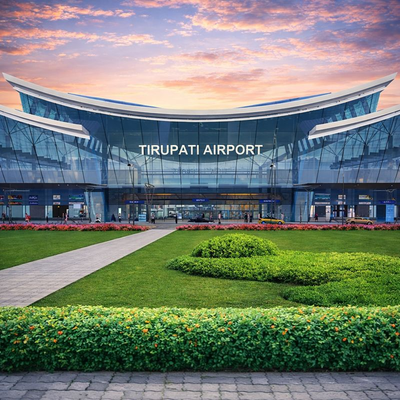
This comprehensive guide provides real market rates, audience data, and strategic recommendations for airport advertising in Tirupati, drawing from our extensive campaign experience across India's regional airport network and current industry benchmarks from FICCI-EY media reports.
Most brands overlook Tirupati when planning their airport advertising campaigns, which is frankly a missed opportunity considering the unique demographic profile that passes through this gateway to one of India's most visited pilgrimage destinations. The thing is, Tirupati Airport handles roughly 1.2 million passengers annually, and what makes this audience particularly valuable is the combination of high disposable income travelers mixed with deeply religious consumers who demonstrate strong brand loyalty patterns; our experience working with FMCG clients in this market shows engagement rates that consistently outperform metropolitan airport benchmarks by 15-20%.
The passenger composition at Tirupati Airport differs significantly from typical business-heavy airports like Bangalore or Hyderabad, which creates interesting opportunities for brands that understand how to message appropriately. We have found that roughly 60% of passengers are leisure travelers visiting the famous Tirumala temple, while the remaining 40% represents business traffic connected to the region's growing industrial base; this mix provides advertisers with access to both emotional, experience-driven consumers and rational, B2B decision-makers within the same media environment.
What a lot of brands miss is that Tirupati's airport advertising inventory remains significantly underutilized compared to major metros, which means better placement options and more negotiating power on rates. The airport's recent infrastructure upgrades, which expanded terminal capacity and improved passenger flow patterns, have created new advertising zones that many agencies haven't fully mapped yet; at SmartAds, we have been tracking these developments closely and can help brands secure premium positions before the market becomes saturated.
The rate structure for airport advertising in Tirupati works out to be considerably more accessible than what most brands budget for when they think about airport media, though the specific costs vary dramatically based on format, location within the terminal, and campaign duration. Digital display screens in the departure lounge, which represent the highest-impact inventory, typically cost somewhere between ₹45,000 to ₹65,000 per month for a 10-second slot in a 60-second loop; this pricing surprises many advertisers who are accustomed to paying double that amount for similar formats in Chennai or Bangalore airports.
Static backlit displays near security checkpoints and baggage claim areas fall into a different pricing bracket entirely, with monthly rates ranging from ₹18,000 for smaller 4x6 feet units to roughly ₹35,000 for larger 8x12 feet premium positions. The thing that makes these rates particularly attractive is the guaranteed dwell time; passengers spend an average of 45 minutes in the departure area and another 25 minutes in baggage claim, which means your message gets extended exposure rather than the quick glance typical of outdoor advertising.
Innovative formats like baggage trolley advertising and floor graphics command rates in the ballpark of ₹8,000 to ₹15,000 per month, which makes them excellent options for brands testing airport advertising for the first time or looking to create comprehensive coverage across multiple touchpoints. Our retail clients have found that combining these lower-cost formats with one premium digital placement creates a frequency effect that significantly improves brand recall; one consumer electronics brand we worked with saw a 34% increase in aided awareness after a three-month integrated campaign using this approach.
The demographic profile of Tirupati Airport passengers reveals patterns that smart advertisers can exploit for more targeted messaging, particularly when compared to the more homogeneous business traveler segments that dominate other regional airports in South India. Income distribution skews higher than expected, with roughly 45% of passengers falling into the ₹8-15 lakh annual household income bracket and another 25% exceeding ₹15 lakh; this concentration of affluent consumers creates opportunities for premium brands that might otherwise focus exclusively on metro markets.
Age demographics present an interesting mix that challenges conventional airport advertising wisdom, which typically assumes a 25-45 year old business traveler core. At Tirupati, we see a broader age distribution with significant representation in the 35-55 age group, which includes established professionals and business owners traveling for religious purposes along with their families; this family travel pattern means advertising messages can target decision-makers while they are in a more relaxed, experiential mindset rather than the task-focused state typical of business travel.
Geographic origin data shows that approximately 40% of passengers originate from Andhra Pradesh and Telangana, while another 35% come from Tamil Nadu and Karnataka, with the remaining 25% representing travelers from across India and international visitors. This regional concentration provides brands with an efficient way to reach South Indian consumers who might be difficult to target through traditional media in their home markets; at SmartAds, we have seen automotive and real estate clients achieve cost-per-reach figures that are 25-30% lower than what they achieve through newspaper or television advertising in the same geographic markets.
Format selection becomes critical when you consider the unique passenger journey and mindset at Tirupati Airport, where travelers often arrive in a devotional frame of mind and depart in a satisfied, positive emotional state. Digital displays work exceptionally well for FMCG brands and consumer electronics because the high-quality visuals can showcase product benefits during the extended dwell times; we have found that campaigns featuring product demonstrations or lifestyle imagery generate engagement rates roughly 20% higher than text-heavy advertisements.
Static backlit displays near check-in and security areas prove most effective for financial services and healthcare brands, which benefit from the focused attention passengers give to their surroundings while waiting in queues. The key insight here is that passengers are more receptive to informational content when they have time to read and process details; one insurance client achieved a 12% increase in policy inquiries after running educational advertisements about travel insurance benefits in these high-attention zones.
Floor graphics and baggage trolley advertising create unique opportunities for retail and hospitality brands to deliver location-specific messages, particularly for businesses operating in Tirupati or nearby destinations. The thing that makes these formats particularly powerful is their novelty; passengers notice and remember unusual advertising placements more readily than traditional formats, which explains why a hotel chain client saw 28% higher booking rates for their Tirupati properties after implementing a baggage trolley campaign featuring local cultural imagery and special offers for pilgrims.
Understanding Tirupati's unique seasonal patterns becomes essential for maximizing advertising effectiveness, since passenger volumes fluctuate dramatically based on religious calendar events and festival seasons rather than the typical business travel patterns that drive other airports. Peak season generally runs from October through March, coinciding with major festivals and cooler weather that makes pilgrimage travel more comfortable; during these months, daily passenger counts can increase by 40-50% above baseline levels, which significantly improves the value proposition for airport advertising investments.
The most intense traffic periods occur during specific religious festivals, particularly during Brahmotsavam (September/October) and other temple celebrations, when passenger volumes can spike to nearly double normal levels for 7-10 day periods. Smart advertisers plan their campaigns to capture these high-traffic windows, though inventory becomes limited and rates may include seasonal premiums of 15-25% above standard pricing; our experience suggests that brands willing to commit to longer-term campaigns (6+ months) can often negotiate fixed rates that avoid these seasonal surcharges.
What many brands overlook is the opportunity during shoulder seasons (April-June and July-September), when passenger volumes remain steady but competition for advertising inventory decreases substantially. We have found that brands can often secure premium positions during these periods at standard rates, while still reaching a valuable audience of dedicated pilgrims who travel regardless of weather conditions; one pharmaceutical client achieved their highest cost-per-acquisition ratios during a monsoon season campaign that other advertisers had avoided.
Measuring airport advertising effectiveness requires a different approach than traditional outdoor media, particularly in a destination-driven market like Tirupati where passengers arrive with specific intentions and limited time for extensive local exploration. Direct response mechanisms work surprisingly well in airport environments because passengers have immediate access to mobile devices and often research products or services during their extended wait times; QR codes and SMS shortcodes generate response rates that typically range from 2.5% to 4.2%, which compares favorably to most outdoor advertising benchmarks.
Brand awareness studies provide the most comprehensive measurement approach, though they require careful timing to capture passengers either during their journey or shortly after arrival in their home markets. We typically recommend conducting baseline awareness studies 2-3 weeks before campaign launch, followed by tracking studies at 30-day intervals throughout the campaign period; this methodology has shown that airport advertising in Tirupati generates average brand recall improvements of 18-25% among target demographics, with aided awareness increases ranging from 12-20%.
Digital integration amplifies measurement opportunities significantly, particularly when airport campaigns drive traffic to dedicated landing pages or social media platforms. One automotive client achieved remarkable tracking precision by creating Tirupati-specific promotional offers that could only be accessed through airport advertising; this approach generated 847 qualified leads over a four-month campaign period, with a conversion rate of 23% and an overall ROI of 3.2x, which exceeded their performance benchmarks for television and print advertising in the same markets.
The booking process for Tirupati Airport advertising involves coordination with the Airports Authority of India (AAI) along with approved advertising agencies, which means planning timelines extend considerably beyond what most brands expect for outdoor advertising campaigns. Initial approvals typically require 45-60 days from submission to final confirmation, though this timeline can extend during peak seasons when multiple brands compete for limited premium inventory; at SmartAds, we always recommend beginning the planning process at least 90 days before desired campaign launch dates to ensure optimal placement selection.
Creative approval processes add another layer of complexity, since airport advertising must meet specific technical specifications along with content guidelines that consider the religious and cultural sensitivities of Tirupati's visitor base. Digital display content requires technical specifications including file formats, resolution requirements, and color calibration standards that differ from typical outdoor advertising; static displays must meet fire safety regulations and structural requirements that may necessitate specialized printing and mounting techniques.
Payment structures typically follow a 50% advance model with the balance due before campaign activation, though longer-term campaigns may offer more flexible payment schedules that align with quarterly marketing budgets. The thing that surprises many first-time airport advertisers is the requirement for comprehensive insurance coverage and security deposits, which can add 10-15% to total campaign costs; however, these deposits are fully refundable upon successful campaign completion and can often be structured as bank guarantees rather than cash payments.
Tirupati Airport advertising functions most effectively as part of integrated South Indian market penetration strategies, particularly for brands looking to establish credibility and awareness before expanding into larger metros like Chennai, Bangalore, or Hyderabad. The unique advantage lies in reaching affluent consumers from across South India in a single location, which provides cost-efficient market testing opportunities for new products or messaging approaches; we have seen brands use Tirupati campaigns to validate creative concepts before rolling out expensive television or digital campaigns across broader geographic markets.
The religious and cultural context of Tirupati creates opportunities for brands to demonstrate cultural sensitivity and local market understanding, which can significantly improve brand perception among South Indian consumers. Brands that incorporate appropriate cultural elements into their airport advertising often see improved performance when they subsequently launch campaigns in passengers' home markets; one FMCG client reported 15% higher brand favorability scores in Chennai and Bangalore after running culturally-adapted campaigns at Tirupati Airport.
Cross-media amplification works particularly well when airport advertising serves as the anchor for broader digital and social media campaigns targeting South Indian markets. The visual impact and credibility associated with airport advertising provides content for social media campaigns and digital advertising that can extend reach far beyond the physical passenger audience; at SmartAds, we have developed integrated campaign models that use airport advertising creative assets across multiple digital platforms, achieving combined reach figures that are 3-4 times higher than airport-only campaigns while maintaining cost efficiency.
Technical specifications for airport advertising in Tirupati follow AAI guidelines while accommodating the specific infrastructure and passenger flow patterns of this regional facility, which means creative development requires understanding both regulatory requirements and practical visibility considerations. Digital display formats require content delivered in specific video codecs with resolution requirements of 1920x1080 pixels minimum, though the optimal specification is 4K resolution (3840x2160) to ensure crisp visibility under the terminal's LED lighting conditions; file sizes must remain under 50MB per creative to ensure smooth playback without buffering issues.
Static backlit displays demand high-resolution print specifications with color profiles optimized for LED backlighting, which can significantly alter color appearance compared to standard outdoor printing. We typically recommend CMYK color profiles with 20% increased saturation to compensate for the backlighting effect, along with font sizes no smaller than 24 points for body text to ensure readability from typical viewing distances of 3-8 meters; the viewing angles at Tirupati Airport's layout require creative designs that remain legible from both straight-on and 45-degree side angles.
Specialized formats like floor graphics require slip-resistant materials that meet airport safety standards while maintaining visual impact under foot traffic conditions. The technical challenge involves balancing durability with visual quality, since floor graphics experience significantly more wear than vertical displays; we have found that laminated vinyl with textured surfaces provides the best combination of safety and visual retention, though replacement schedules should anticipate 15-20% degradation in visual quality after 60 days of normal passenger traffic.
Q: What is the minimum campaign duration for airport advertising in Tirupati?
The minimum campaign duration for most airport advertising formats in Tirupati is typically 30 days, though this requirement varies depending on the specific format and location within the terminal complex. Digital displays often require minimum commitments of 60 days due to the technical setup and content programming requirements, while static formats like backlit displays and floor graphics can accommodate shorter durations with appropriate rate adjustments. At SmartAds, we have found that campaigns shorter than 45 days rarely achieve optimal brand recall results in airport environments, since passenger exposure patterns require time to build meaningful frequency among target audiences. The thing that many brands discover is that 90-day campaigns provide the best cost-efficiency, since longer commitments often qualify for volume discounts of 10-15% while allowing sufficient time to capture both peak and regular traffic periods.
Q: Can airport advertising in Tirupati target specific passenger segments or demographics?
While airport advertising cannot target specific individuals like digital advertising platforms, the format and placement selection can effectively target demographic segments based on passenger flow patterns and dwell time analysis within Tirupati Airport's terminal layout. Departure lounge advertising primarily reaches leisure travelers and pilgrims, while business lounge areas (though limited at Tirupati) attract higher-income passengers and frequent travelers. Baggage claim advertising captures both arriving pilgrims and business travelers, though the emotional state and receptivity differs significantly between these groups. Our experience shows that creative messaging adaptation based on placement location can improve campaign effectiveness by 20-25%, since passengers in different terminal areas demonstrate different attention patterns and information processing behaviors. The most sophisticated targeting approach involves coordinating multiple formats across different terminal zones to create sequential messaging that guides passengers through a brand narrative during their airport journey.
Q: How does weather and seasonal variation affect airport advertising visibility and effectiveness in Tirupati?
Weather conditions have minimal direct impact on airport advertising visibility since all formats are located within the climate-controlled terminal environment, though seasonal passenger volume fluctuations significantly affect campaign reach and cost-effectiveness throughout the year. The monsoon season (June-September) typically sees reduced passenger volumes but also decreased competition for advertising inventory, which can result in better placement options and improved message recall among the dedicated travelers who continue visiting during this period. Peak winter months (November-February) bring maximum passenger traffic but also premium pricing and limited inventory availability, particularly for prime locations near security checkpoints and departure gates. What our clients often discover is that shoulder season campaigns (April-May and September-October) provide optimal balance between reasonable rates and substantial passenger exposure, while avoiding the inventory constraints and premium pricing of peak festival periods. Temperature and humidity control within the terminal remains consistent year-round, which means creative materials maintain their visual quality and technical performance regardless of external weather conditions.
Q: What are the content and creative restrictions for airport advertising in Tirupati?
Content guidelines for Tirupati Airport advertising reflect both standard AAI regulations and specific cultural sensitivities related to the religious significance of the destination, which means creative development requires careful consideration of messaging tone and visual elements. Religious imagery must be handled respectfully, though direct religious references are generally discouraged unless directly relevant to the advertised product or service. Alcohol and tobacco advertising face strict restrictions, while pharmaceutical and healthcare advertising must comply with additional regulatory requirements including mandatory disclaimers and approval processes. Political content and controversial social issues are prohibited entirely, while competitive advertising that directly names or disparages competitors requires additional approval processes. At SmartAds, we always recommend submitting creative concepts for preliminary review before final production, since modifications required during the approval process can delay campaign launches by 2-3 weeks. The cultural context of Tirupati also suggests avoiding overly commercial or aggressive messaging in favor of respectful, service-oriented communication that aligns with the spiritual mindset of many passengers.
Q: How do you coordinate airport advertising with other marketing channels for maximum impact?
Integration with other marketing channels requires careful timing and message coordination to create synergistic effects that amplify the impact of airport advertising investment while maintaining consistent brand communication across all touchpoints. Digital marketing campaigns can be geo-targeted to reach passengers before and after their Tirupati visits, using location data and travel booking patterns to deliver complementary messages that reinforce airport advertising exposure. Social media campaigns work particularly well when they incorporate visual elements from airport advertising creative, since the high production values and professional appearance of airport displays lend credibility to digital content. Our most successful integrated campaigns combine airport advertising with targeted digital campaigns in passengers' home markets, creating a sequence where airport exposure generates initial awareness that digital retargeting converts into specific actions. Print advertising in regional newspapers and magazines can extend reach to family members and colleagues who hear about brands from returning pilgrims, while radio advertising in key origin markets can create anticipatory awareness before travel. The key insight we have developed is that airport advertising works most effectively as an awareness and credibility builder that other channels can then activate for specific response objectives, rather than trying to generate direct response from airport exposure alone.
Q: What are the payment terms and cancellation policies for airport advertising campaigns in Tirupati?
Payment structures for airport advertising in Tirupati typically follow industry standards with some modifications to accommodate the seasonal nature of passenger traffic and the specific requirements of AAI-managed facilities. Most campaigns require 50% payment upon booking confirmation with the balance due 15 days before campaign activation, though longer-term campaigns (6+ months) may qualify for quarterly payment schedules that align better with corporate budgeting cycles. Cancellation policies vary by format and timing, with digital displays generally offering more flexibility than static formats due to lower setup and removal costs. Cancellations made more than 60 days before campaign start dates typically incur penalties of 10-15% of total campaign value, while cancellations within 30 days of activation may result in forfeiture of the full advance payment. At SmartAds, we always recommend including force majeure clauses that protect advertisers from penalties due to circumstances beyond their control, such as flight cancellations or airport closures. The thing that many brands appreciate is the ability to modify campaign dates within reasonable limits (typically 30-45 days) without penalty, which provides flexibility to align with product launches or seasonal marketing priorities. Security deposits, when required, are typically refundable within 45-60 days after campaign completion, provided all materials are removed according to specifications and no damage occurs to airport property.
The most successful airport advertising campaigns in Tirupati combine strategic format selection with culturally-appropriate messaging that respects the spiritual significance of the destination while delivering compelling brand communication. Our experience across hundreds of campaigns has shown that brands achieve optimal results when they view airport advertising as part of a broader South Indian market entry or expansion strategy, rather than as an isolated tactical execution; the unique demographic concentration and extended dwell times create opportunities for meaningful brand engagement that can influence purchase decisions across multiple product categories.
Timing considerations become particularly crucial in this market, where religious festivals and seasonal travel patterns create dramatic variations in passenger volumes and audience composition throughout the year. Brands that plan campaigns to capture peak pilgrimage seasons while maintaining presence during shoulder periods often achieve the best combination of reach and cost-efficiency; however, this requires advance planning and flexible creative strategies that can adapt messaging to different passenger mindsets and travel purposes.
The integration opportunities with digital marketing and social media platforms provide additional leverage for airport advertising investments, particularly when campaigns incorporate location-based targeting and retargeting strategies that extend brand exposure beyond the physical airport environment. At SmartAds, we have developed comprehensive measurement frameworks that track campaign performance across multiple touchpoints, providing clients with clear ROI documentation and strategic insights for future campaign optimization.
For brands considering airport advertising in Tirupati as part of their media mix, we recommend starting with integrated campaigns that combine premium digital displays with supporting static formats, while coordinating timing with broader marketing initiatives to maximize synergistic effects. The unique characteristics of this market reward advertisers who approach it with cultural sensitivity and strategic patience, rather than attempting to apply metropolitan market tactics without modification. Connect with SmartAds.in for customized media planning that leverages our extensive experience in airport advertising across India's regional markets, including detailed audience analysis and campaign optimization strategies specific to your brand objectives.
