
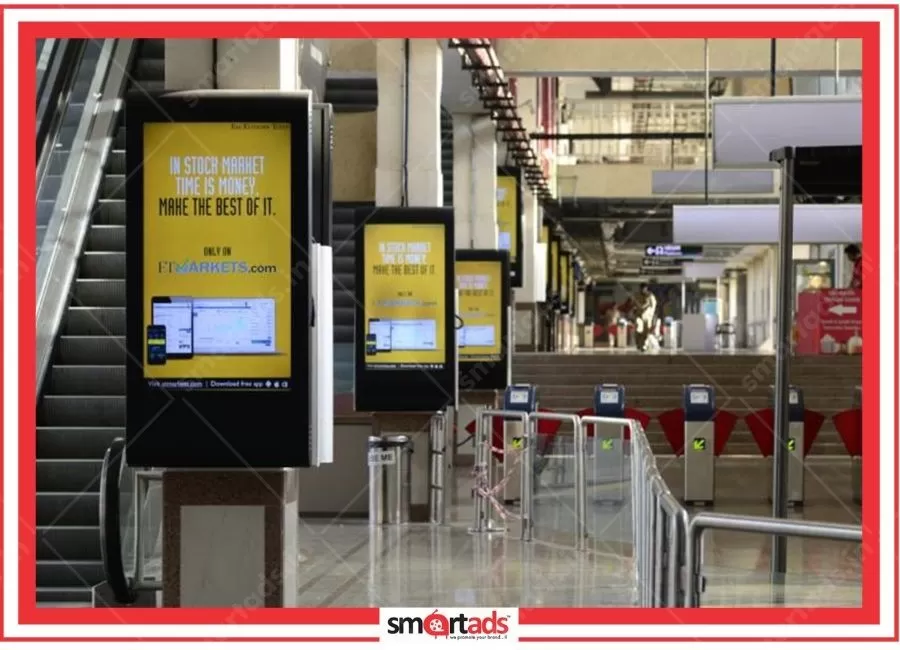
Entry Exit Panel
8 ft x 4 ft
Bright and vibrant multicolored letterin
Rate per Panel / Month
Min Requirement is 3 Panel.
₹48000.00
Showing 1 to 4 of 4 Results
MEDIA DETAILS
8 ft x 4 ft
Bright and vibrant multicolored letterin
Rate per Panel / Month
Min Requirement is 3 Panel.
₹48000.00
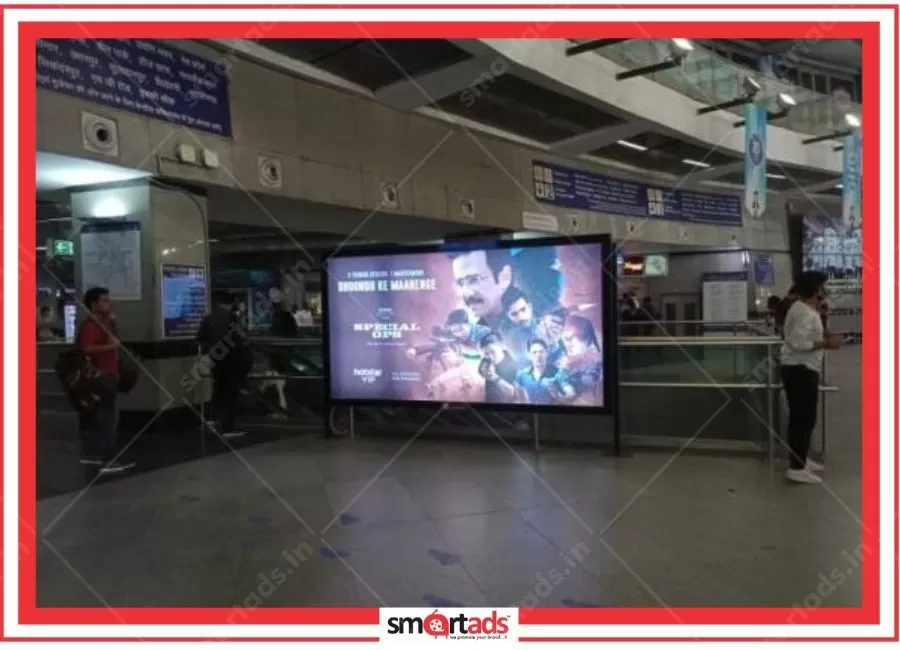
10 ft x 5 ft
A new wide wall system designed to accom
Rate per Panel / Month
Min Requirement is 3 Panel.
₹50000.00
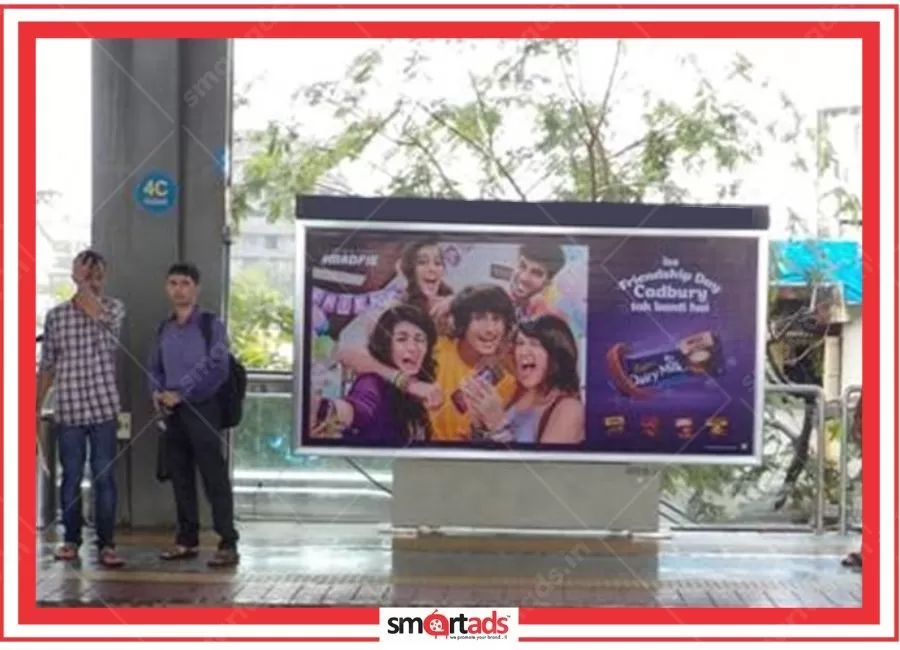
8 ft x 4 ft
A raised flooring or other horizontal su
Rate per Panel / Month
Min Requirement is 3 Panel.
₹35000.00
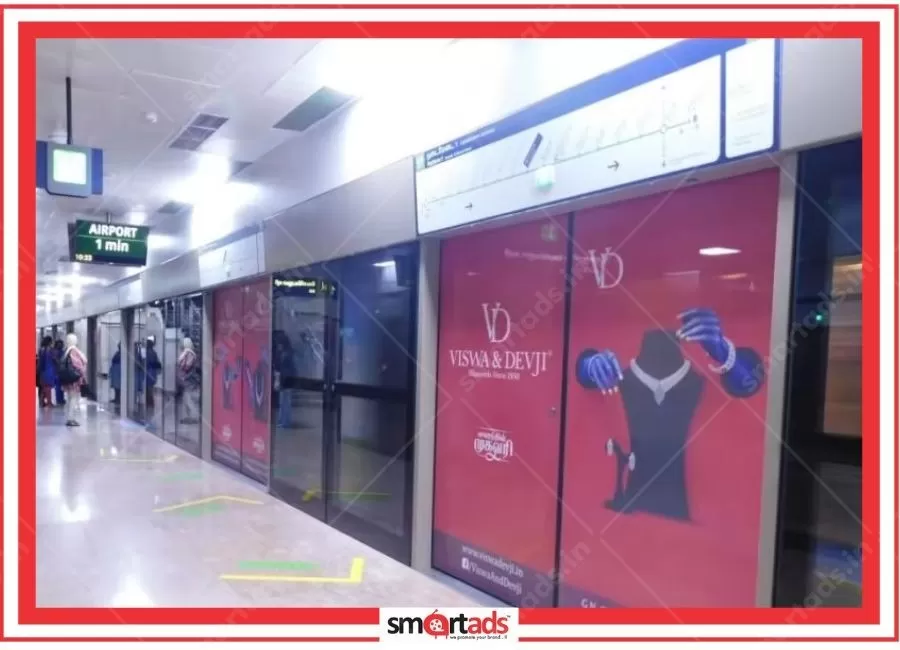
7 ft x 4 ft
Also known as platform edge doors (PEDs)
Rate per Plateform / Month
Min Requirement is 1 Stations.
₹1200000.00
MEDIA REACH

MinimumQty :
10
EstimateReachPeople :
15 Million
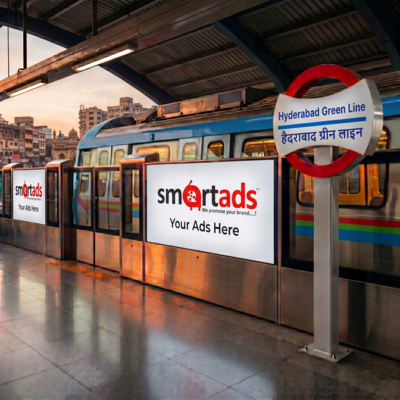
Most advertisers who approach us about Hyderabad Metro are surprised to learn that the Green Line, which connects Secunderabad's busiest transit hubs to the historic commercial heart of Old City, consistently delivers some of the highest dwell-time numbers of any transit corridor in South India. The commuter profile here is genuinely distinct — a layered mix of daily office-goers, college students, hospital visitors, and old-city shoppers — which makes metro station advertising in Hyderabad Green Line a category that rewards strategic thinking far more than it rewards simple media buying.
The Green Line, formally designated as Corridor II of the Hyderabad Metro Rail network operated under L&T Metro Rail Hyderabad Ltd (LTMRHL) in partnership with the Government of Telangana, runs from JBS Parade Ground in Secunderabad down through the dense commercial and residential fabric of central Hyderabad, terminating at MG Bus Station (MGBS). This corridor, which spans roughly 15 kilometres and serves nine active stations, is arguably the most commercially interesting of the three metro lines because it threads through zones that are simultaneously transit-critical, commercially dense, and historically significant.
Metro station advertising in Hyderabad Green Line refers to the full spectrum of brand communication formats placed within and around these stations — from large-format static panels on concourse walls and platform pillars to digital OOH screens near fare gates, from full train wrap advertising on Hyundai Rotem rolling stock to subtler in-train branding on coach interiors. What distinguishes this from a billboard on the Ring Road or a hoarding near HITEC City is the captive audience dynamic; a commuter waiting on the platform at Gandhi Hospital metro station or riding between Narayanguda and Sultan Bazaar cannot scroll past your ad, cannot change the channel, and is — for a measurable window of time — genuinely present in the same physical space as your message.
At SmartAds, we always tell our clients that the real value of BTL advertising in a metro environment is not just impressions — it is effective frequency. When the same commuter passes your pillar advertising at Secunderabad West metro station every morning for thirty days, something different happens in their memory than what happens when they see a digital banner for three seconds. That principle is what makes green line metro advertising worth understanding properly before you book.
Frankly speaking, the footfall hierarchy on the Green Line is not what most brand managers assume when they first look at a route map. JBS Parade Ground is the undisputed anchor — as an interchange station connecting the Green Line to the Blue Line (Corridor III), it handles a volume of daily commuters that is meaningfully higher than any other station on this corridor, with hyderabad metro footfall estimates for JBS regularly cited in the ballpark of 40,000 to 55,000 passengers per day when both lines are counted together. That interchange status is the critical variable; advertisers who place brands at JBS are reaching not just Green Line riders but a significant slice of the Blue Line audience as well, which is an audience multiplication effect that most media plans do not fully account for.
MGBS — MG Bus Station — sits at the other end of the line and deserves equal attention, because it functions as a genuine multimodal hub where metro commuters connect to TSRTC buses serving destinations across Telangana and beyond. The audience at MGBS tends to skew slightly older and more working-class than at JBS, which makes it particularly valuable for brands in FMCG, financial services, and regional language media. Gandhi Hospital metro station, which sits adjacent to one of Hyderabad's largest public hospitals, generates a very specific footfall profile — patients, attendants, medical staff, and pharmaceutical representatives — that healthcare brands and insurance companies have found remarkably targetable.
What a lot of people miss is that mid-corridor stations like RTC Cross Roads metro and Musheerabad, while individually generating lower footfall than the terminal stations, are surrounded by dense residential catchments and small business clusters that make them ideal for hyper-local targeting campaigns. A bank branch opening, a new pharmacy chain, or a regional coaching institute would find the audience at these stations more commercially relevant than the sheer volume at JBS.
The format inventory on the Green Line is considerably richer than most advertisers realise, and the choice of format should be driven by campaign objective rather than budget alone. Static panel advertising — the large-format backlit or vinyl panels placed on concourse walls, platform walls, and entry-exit zones — remains the workhorse of metro station branding because it offers continuous, uninterrupted brand exposure across every operating hour, which typically runs from around 6 AM to 10 PM. These panels range from single-face units of roughly 4 feet by 6 feet near ticket counters to massive full-wall wraps in concourse areas that can span 20 feet or more.
Digital OOH metro formats, specifically the DOOH screens and LED screen metro advertising units installed at high-traffic points near fare gates and on platforms, have grown significantly on the Green Line over the past two years; these screens allow time-of-day scheduling, which means a coffee brand can run its message during the morning rush and a food delivery app can dominate the evening commute window. Pillar advertising at Hyderabad Metro is particularly interesting because the structural pillars on elevated platforms create natural visual anchors — commuters waiting for trains tend to orient themselves around these pillars, which means dwell-time exposure on a pillar panel can be substantially higher than on a flat wall panel of equivalent size. Escalator branding, which wraps the side panels of escalator shafts with sequential creative, works exceptionally well for storytelling formats and product launches where you want to build a narrative across multiple visual frames.
Beyond in-station formats, train wrap advertising and in-train branding on the Green Line's rolling stock offer a mobile extension of the campaign that carries the message across the entire corridor multiple times per day. A metro coach wrap on a Green Line train is seen not just by passengers inside the coach but by platform crowds at every station the train passes through; we have seen this format generate significant earned attention in social media when the creative is visually striking, which effectively extends the paid media investment into organic reach territory. Ticket counter advertising, concourse advertising near entry-exit zones, and station naming rights or title sponsorship round out the format options for brands with larger budgets and longer campaign horizons.
Metro advertising rates on the Green Line are structured around format type, station tier, and campaign duration — and the honest answer is that pricing is more negotiable than most vendors will tell you upfront. For a standard static panel at a mid-tier station like Chikkadpally or Narayanguda, monthly rates typically work out to somewhere between ₹25,000 and ₹60,000 per panel depending on size and placement, which is a number that surprises most clients when they realise it includes 30 days of continuous exposure to a captive audience. Premium stations like JBS Parade Ground and MGBS command significantly higher rates — a large-format concourse panel at JBS can be in the ballpark of ₹1.5 lakh to ₹3 lakh per month — but the cost-per-thousand (CPM) calculation often works out favourably when you account for the actual daily commuter volume passing through.
Digital OOH metro and LED screen metro advertising on the Green Line is typically sold on a per-spot, per-day basis or in weekly packages; a 10-second spot on a DOOH screen at a high-footfall station might cost roughly ₹800 to ₹1,500 per day, which sounds modest until you calculate the number of impressions across a 30-day campaign and compare that CPM to what you would pay for equivalent reach through digital display advertising. Train wrap advertising — which is the most premium format on the corridor — is generally quoted as a full-coach or full-train package, with metro coach wrap rates on the Green Line typically ranging somewhere between ₹4 lakh and ₹8 lakh per month for a full exterior wrap, depending on the number of coaches and the duration commitment.
At SmartAds, our experience shows that the most cost-efficient campaigns on the Green Line are those that combine a high-footfall anchor placement (JBS or MGBS) with two or three mid-corridor station panels, creating a corridor-wide presence that a commuter encounters at multiple touchpoints during a single journey. One retail client we worked with in Secunderabad achieved a metro advertising campaign that reached an estimated 8 lakh unique commuters over 45 days by doing exactly this — blending a JBS concourse panel with platform advertising at Sultan Bazaar and a DOOH screen at MGBS — at a total campaign cost that was well under what a single prime-time television spot on a regional channel would have cost them.
The Green Line's audience profile is genuinely one of its most underappreciated selling points, and it is markedly different from what you find on the Blue Line (which skews heavily toward IT sector professionals travelling between Miyapur and Ameerpet). The Corridor II commuter base is more socioeconomically diverse, more linguistically varied — with a significant proportion of Telugu and Urdu-speaking daily commuters — and more geographically rooted in the older, denser parts of the city. Daily commuters on the Hyderabad Metro Green Line include a substantial student population from colleges in the Narayanguda and Chikkadpally catchments, hospital staff and patients accessing Gandhi Hospital and the surrounding medical cluster, traders and shoppers moving between Secunderabad's commercial areas and the wholesale markets near MGBS, and government employees whose offices are concentrated along this corridor.
From a demographic standpoint, the Green Line skews toward the 18-to-45 age bracket, with household incomes that span from lower-middle to upper-middle class — a range that makes it particularly attractive for brands in banking and microfinance, regional retail chains, educational institutions, healthcare services, and consumer durables. The interchange dynamics at JBS also pull in a segment of the Blue Line's more affluent IT-sector audience, particularly during morning and evening peak hours, which means a JBS placement effectively bridges two very different audience segments within a single location.
What we tell our clients is that the Green Line is not a single audience — it is a corridor of distinct micro-audiences, each anchored to a station and its surrounding catchment. Advertising at Gandhi Hospital metro station for a pharmaceutical brand, or at Narayanguda for a coaching institute, or at Sultan Bazaar for a jewellery brand targeting the wedding season shopper — these are all hyper-local targeting decisions that the Green Line's geography makes possible in a way that a city-wide OOH campaign simply cannot replicate.
This is the question we get asked most often by brand managers who are new to transit advertising in Hyderabad, and the honest answer is that it depends entirely on what your brand is trying to achieve and who your customer is. The Red Line (Corridor I), which runs from Miyapur through Ameerpet to LB Nagar, carries the highest aggregate daily ridership of the three corridors and is therefore the default choice for brands seeking maximum reach across the widest possible audience; its CPM transit advertising efficiency is strong, but the audience is broad and less segmentable. The Blue Line (Corridor III), connecting Nagole to Raidurg via HITEC City and Jubilee Hills, is the natural home for brands targeting the tech-sector professional — fintech, edtech, premium consumer electronics, and luxury lifestyle brands find their core audience concentrated along this corridor.
The Green Line occupies a genuinely different strategic position; it is the connector between Secunderabad's commercial and transit infrastructure and the historic, densely populated Old City, which means its audience is more rooted in traditional commerce, healthcare, education, and government services. For brands in these sectors, metro station advertising in Hyderabad Green Line delivers a more targeted, less wasteful reach than the Red Line's broader sweep. To be fair, the Green Line's lower absolute ridership compared to the Red Line does mean that pure-reach campaigns are better served elsewhere — but for brands where audience quality and contextual relevance matter more than raw numbers, the Green Line consistently outperforms on ROI metrics.
On top of that, the interchange station advertising advantage at JBS — where Green and Blue Lines meet — creates a unique opportunity for brands to reach both the Old City commercial audience and the HITEC City professional audience within a single station placement, which is a media planning insight that we have used to significant effect for clients in banking, insurance, and consumer electronics. A multi-line bundling strategy that combines Green Line stations with select Blue Line stations can deliver a genuinely cross-city reach profile at a fraction of the cost of a traditional OOH advertising Hyderabad campaign of equivalent coverage.
The nine active stations on the Green Line each have a distinct commercial character, and understanding that character is what separates a well-planned metro advertising campaign from a generic media buy. JBS Parade Ground, as the northern terminus and interchange with the Blue Line, is the most strategically valuable station on the corridor — brands here benefit from the highest hyderabad metro footfall on the line, interchange audience multiplication, and proximity to Secunderabad's dense retail and hospitality cluster; it is the right choice for brands seeking maximum visibility and willing to pay a premium for it. Secunderabad West metro station, which sits just one stop south, serves a slightly calmer but still commercially significant catchment, with good access to residential neighbourhoods and smaller retail strips that make it effective for neighbourhood-scale brands.
Moving south, Parade Ground and Gandhi Hospital metro station mark the transition into the city's healthcare and educational belt. Gandhi Hospital station, which is positioned adjacent to one of Telangana's largest public hospitals, generates a very specific and commercially underexplored audience — pharmaceutical companies, diagnostic chains, health insurance brands, and medical device companies have found this station's captive audience remarkably receptive to health-related messaging, and we have seen brand recall scores from campaigns at this station that significantly outperform the same creative placed at a general-audience station. Musheerabad and RTC Cross Roads metro stations serve dense residential and small-business catchments; they are the right choice for brands in financial services, regional retail, and educational institutions targeting first-generation urban consumers.
Chikkadpally metro and Narayanguda metro stations sit in the heart of a zone that is simultaneously residential, educational, and culturally active — with several degree colleges, coaching institutes, and local retail markets within walking distance; education brands, affordable fashion retailers, and food and beverage brands consistently find strong performance at these stations. Sultan Bazaar metro station, which is one of the most commercially interesting stops on the entire corridor, sits adjacent to one of Hyderabad's oldest wholesale and retail markets, making it ideal for jewellery brands, textile retailers, and financial services targeting the trading community. Finally, MG Bus Station (MGBS) at the southern terminus is the multimodal gateway to the rest of Telangana, where the audience is broad, working-class, and highly mobile — FMCG brands, regional media, and government services campaigns tend to perform particularly well here.
The booking process for metro station advertising in Hyderabad Green Line runs through LTMRHL's authorised advertising concessionaires, which manage the commercial media inventory across the network on behalf of L&T Metro Rail Hyderabad Ltd and HMRL. Working directly with an authorised metro ad agency in Hyderabad — rather than attempting to approach the concessionaire independently — is strongly advisable, because the inventory allocation process involves negotiation across multiple format categories and station tiers simultaneously, and an experienced agency can secure better placements and more favourable rates than a first-time direct buyer. At SmartAds, we handle the full booking cycle on behalf of our clients, from site selection and creative specification to HMRL approval and installation coordination.
The creative approval process under HMRL guidelines is a step that catches many advertisers off guard because it is more rigorous than what they are used to with traditional OOH advertising. Artwork must be submitted in the specified format — typically high-resolution files at print-ready specifications with bleed allowances — and must comply with HMRL's content guidelines, which prohibit political messaging, content deemed offensive to religious or cultural sensibilities, and certain product categories. Lead times from artwork submission to installation approval typically run somewhere between 10 and 21 days depending on the format and station, which means campaigns need to be planned well in advance of the intended launch date; we have seen clients lose their preferred station slots because they underestimated the approval timeline, which is an avoidable problem with proper planning.
Campaign duration on the Green Line is typically sold in monthly blocks, with a minimum booking period that generally works out to 30 days for static formats and shorter windows for DOOH screen slots. Seasonal pricing fluctuations are real — metro advertising rates tend to rise during festival seasons (Diwali, Eid, Ugadi) and during the pre-election period, when political advertising competes for inventory — and locking in rates for a 3-month or 6-month campaign well before peak season can result in meaningful savings relative to spot-booking at peak rates.
Station naming rights, or title sponsorship, is the most premium and most misunderstood format in the metro advertising inventory — and it is one that we think far more mid-sized brands should be seriously considering, because the entry cost is lower than most assume and the brand equity impact is disproportionately large. Under the HMRL framework, a brand can sponsor a station by having its name incorporated into the station's official signage, announcements, and communication — so a station might be referred to as "[Brand Name] Sultan Bazaar Metro Station" across all platforms, including the PA system announcements that commuters hear every time a train arrives. This is not a format you can buy for a week; station naming rights on the Hyderabad Metro are typically structured as annual or multi-year agreements, with metro station naming sponsorship Hyderabad rates that vary significantly by station tier and corridor.
The brand recall impact of title sponsorship is, frankly, in a different category from any other metro advertising format. When a commuter hears your brand name announced over the PA system 20 times a day, every day, for a year, the memory encoding is qualitatively different from what happens with a visual panel — it is auditory, it is repetitive, and it is delivered in a context of genuine attention. One education brand we worked with secured the naming rights to a mid-corridor Green Line station for a 12-month period; by the end of the campaign, unaided brand recall in the station's catchment area had increased by a margin that the client described as the most significant single-year brand awareness movement they had seen in a decade of advertising in Hyderabad.
Title sponsorship metro packages on the Green Line also typically include a bundle of complementary in-station advertising formats — concourse panels, platform panels, and sometimes DOOH screen time — which effectively reduces the per-impression cost of the overall package when you calculate it across the full inventory included in the agreement.
The distinction between BTL advertising in a metro environment and traditional OOH advertising Hyderabad — hoardings, gantries, unipoles on highways and arterial roads — is more fundamental than most media plans acknowledge, and getting this wrong leads to misallocated budgets. A roadside hoarding on the Outer Ring Road or a gantry near Mehdipatnam is seen by a moving audience — drivers and passengers in vehicles travelling at 40 to 80 kilometres per hour — which means the effective exposure window is measured in seconds and the creative must communicate a single, simple message almost instantaneously. Metro station branding, by contrast, operates in a dwell-time environment; a commuter waiting on a platform for an average of 4 to 8 minutes, or riding a train for 15 to 20 minutes, is physically present with your message for a duration that allows for more complex communication, more detailed information, and stronger emotional engagement.
Non-traditional advertising in metro environments also benefits from a contextual authority that roadside OOH cannot replicate. The metro station is an organised, curated, relatively premium environment — commuters associate it with modernity, efficiency, and a certain aspirational quality — which means brands placed within it benefit from a halo effect that is measurably different from what you get on a cluttered roadside hoarding cluster. The IGBC Green MRTS Certification held by the Hyderabad Metro also gives brands an implicit sustainability association, which is increasingly relevant for brands that want to communicate environmental responsibility.
To be honest, the CPM comparison between metro advertising and traditional OOH in Hyderabad often surprises clients who assume that metro is more expensive. When you account for the actual dwell time, the captive audience nature of the exposure, and the higher average income profile of metro commuters relative to general road traffic, the effective CPM of transit advertising in Hyderabad often works out to be competitive with or lower than premium roadside OOH — particularly when you factor in the creative impact of formats like train wrap advertising and escalator branding, which have no direct equivalent in traditional outdoor.
This is a question we hear often, and the short answer — which deserves a longer explanation — is yes, absolutely, but the strategy needs to be calibrated correctly. Metro advertising for startups in Hyderabad is genuinely viable when the campaign is scoped around a single station or a small cluster of stations rather than a full-corridor buy; a neighbourhood restaurant, a local coaching institute, or a new retail store can achieve meaningful hyper-local targeting by placing a static panel or a ticket counter advertisement at the one or two stations closest to their location, at a monthly investment that is well within the range of a modest marketing budget. The mistake that small businesses make is assuming that metro advertising requires a network-scale commitment — it does not, and a single well-placed panel at a high-footfall station like Sultan Bazaar or Narayanguda can deliver genuine commercial results for a local brand.
What we tell early-stage brands and startups is that the metro environment offers something that digital advertising cannot easily replicate — physical presence in the commuter's daily routine. A startup that places its brand at a specific station becomes, in the minds of the regular commuters at that station, part of the fabric of their daily experience; that familiarity builds trust over time in a way that a social media ad, which is forgotten within seconds of scrolling past, simply does not. One fintech startup we worked with in Hyderabad ran a 60-day campaign across three Green Line stations — Narayanguda, Chikkadpally, and RTC Cross Roads — with a total investment that was in the ballpark of ₹4 lakh; by the end of the campaign, app download data showed a measurable spike in downloads from postcodes within 2 kilometres of each station, which gave the client a clear and attributable return on the media investment.
The practical consideration for small businesses is the minimum booking duration and the creative production cost; a 30-day minimum on static formats is standard, and the artwork production for a print-ready metro panel needs to meet HMRL's specifications, which typically means working with a professional designer rather than adapting a social media graphic. At SmartAds, we help smaller clients navigate both the booking process and the creative requirements, because we have found that the barrier for small businesses is often not the media cost but the unfamiliarity with the process.
The planned extension of the Green Line toward Falaknuma, which would carry the corridor deeper into South Hyderabad's historic and densely populated neighbourhoods, represents one of the most significant upcoming opportunities in metro advertising in Hyderabad — and it is one that forward-thinking brands should be tracking now rather than waiting for the extension to open. The Falaknuma catchment is commercially underserved by organised advertising infrastructure at present; it is home to a large, predominantly working and lower-middle-class population with strong consumption patterns in categories like FMCG, financial services, telecom, and regional retail, which are exactly the categories that benefit most from high-frequency, captive-audience advertising.
Green line Falaknuma extension advertising inventory, when it becomes available, is likely to be priced at introductory rates that are significantly lower than the established stations on the current corridor — a pattern that has been observed at newly opened stations on other metro lines across India, where early adopters lock in placements at below-market rates that appreciate substantially once footfall builds. We advise clients who are thinking about long-term brand presence in South Hyderabad to begin conversations about the Falaknuma extension now, because the brands that establish early presence at new stations tend to benefit from a first-mover association that is difficult to dislodge once a station's advertising inventory is fully subscribed.
Transit-oriented development advertising is a broader trend that is reshaping how brands think about metro corridors — the commercial and residential development that clusters around metro stations creates a sustained, growing audience that is not just passing through but actually living and working in the station's catchment. The Falaknuma extension, when operational, will accelerate this dynamic in South Hyderabad in a way that creates genuine long-term value for brands willing to invest early.
ROI measurement from metro advertising campaigns is an area where the industry has historically been weaker than it should be, and frankly, some of the metrics that vendors offer — raw footfall numbers, for instance — are necessary but not sufficient for a serious ROI conversation. At SmartAds, our approach to measuring return from metro station advertising in Hyderabad Green Line campaigns combines several methodologies: pre- and post-campaign brand recall surveys conducted in the station catchment area, geo-tagged digital response tracking (QR codes on panels, location-based mobile ad retargeting to commuters identified as metro users), and sales data correlation for clients with retail or service locations near the advertised stations.
Brand recall from metro advertising, when measured rigorously, tends to be significantly higher than from equivalent OOH formats — a pattern that is consistent with research from transit advertising studies conducted in comparable markets, and which aligns with what we have observed in our own campaign measurement work in Hyderabad. The effective frequency principle is central to this: a commuter who passes the same panel at the same station five days a week for four weeks has been exposed to that message roughly 20 times, which is a frequency level that produces strong unaided recall in most product categories. The GroupM TYNY Report and the FICCI-EY Media Report have both noted the growing sophistication of OOH measurement methodologies in India, including the adoption of movement data and mobile location analytics to verify actual audience delivery against planned impressions.
One automotive brand we worked with on a Green Line campaign — a regional dealership that was launching a new model — combined platform advertising at JBS and MGBS with a metro coach wrap on two Green Line trains, and tracked footfall to their showroom using a unique QR code on the metro panels that offered a test drive incentive. Over a 45-day campaign period, the QR code generated over 1,200 scans, of which roughly 340 converted to showroom visits and 28 resulted in vehicle purchases; when the client calculated the revenue from those 28 sales against the total campaign cost, the ROI multiple was one that made the metro campaign the most efficient media investment in their annual plan by a considerable margin.
Q: What is metro station advertising on the Hyderabad Green Line?
Metro station advertising on the Hyderabad Green Line refers to the placement of brand communication across the physical and digital advertising inventory within and around the nine active stations of Corridor II, which runs from JBS Parade Ground in Secunderabad to MG Bus Station (MGBS) in the heart of Old City Hyderabad. This includes static panel advertising on concourse and platform walls, digital OOH screens near fare gates, pillar advertising, escalator branding, ticket counter advertising, train wrap advertising on the corridor's rolling stock, in-train branding on coach interiors, and premium formats like station naming rights. The Green Line is operated under L&T Metro Rail Hyderabad Ltd (LTMRHL) in collaboration with HMRL and the Government of Telangana, and all advertising on the network is managed through authorised concessionaires who operate under HMRL's commercial and content guidelines.
Q: Which stations on the Hyderabad Metro Green Line are best for advertising?
JBS Parade Ground and MGBS are the two highest-footfall stations on the Green Line and represent the strongest choices for brands seeking maximum reach; JBS in particular benefits from its interchange status with the Blue Line, which multiplies the effective audience beyond just Green Line commuters. Gandhi Hospital metro station is the most strategically valuable station for healthcare, pharmaceutical, and insurance brands because of its specific audience composition. Sultan Bazaar metro station is ideal for retail, jewellery, and financial services brands targeting the trading community, while Narayanguda and Chikkadpally are the right choices for education brands and youth-oriented consumer categories. The best station for any given campaign is ultimately a function of where the brand's target audience is concentrated, which is why a station-by-station audience analysis should precede any booking decision.
Q: What advertising formats are available at Hyderabad Metro Green Line stations?
The format inventory on the Green Line includes static backlit panels in various sizes across concourse, platform, and entry-exit zones; DOOH screens and LED screen metro advertising units at high-traffic points; pillar advertising on platform pillars; escalator branding on escalator shaft panels; ticket counter advertising near fare collection areas; concourse advertising in the main passenger circulation areas; train wrap advertising on the exterior of Green Line coaches; in-train branding on coach interiors including overhead panels and door panels; and station naming rights or title sponsorship, which incorporates the brand name into official station signage and PA announcements. Each format has different audience engagement dynamics, creative specifications, and pricing structures, and the most effective campaigns typically combine two or three complementary formats rather than relying on a single placement.
Q: How much does metro station advertising on the Hyderabad Green Line cost?
Metro advertising rates on the Green Line vary by format, station tier, and campaign duration. Static panels at mid-tier stations like Chikkadpally or Musheerabad typically work out to somewhere between ₹25,000 and ₹60,000 per panel per month, while premium placements at JBS or MGBS can range from ₹1.5 lakh to ₹3 lakh per month for large-format concourse panels. DOOH screen advertising is typically priced per spot per day, with rates roughly in the range of ₹800 to ₹1,500 per day at high-footfall stations. Train wrap advertising on Green Line coaches is generally in the ballpark of ₹4 lakh to ₹8 lakh per month for a full exterior wrap. Station naming rights are structured as annual or multi-year agreements with rates that vary significantly by station; these are best discussed directly with an authorised metro ad agency in Hyderabad. Multi-format, multi-station packages typically attract negotiated rates that are more favourable than individual format bookings.
Q: Who is the authorised agency for advertising on the Hyderabad Metro Green Line?
Advertising on the Hyderabad Metro network, including the Green Line, is managed through concessionaires authorised by L&T Metro Rail Hyderabad Ltd (LTMRHL) and HMRL. Working through an authorised metro advertising agency in Hyderabad — one with established relationships with the concessionaires and experience navigating the HMRL approval process — is strongly recommended, because direct approaches to the concessionaire by advertisers without agency representation often result in less favourable inventory allocation and longer approval timelines. SmartAds works as an authorised media buying partner for metro advertising campaigns across the Hyderabad network, managing the full process from site selection and rate negotiation to artwork approval and campaign monitoring.
Q: What is the daily ridership and audience reach of the Hyderabad Metro Green Line?
The Green Line's daily ridership, which has been growing steadily since the network's expansion, is estimated to be in the range of 1.5 lakh to 2.5 lakh passenger journeys per day across the corridor, with higher numbers during weekdays and peak festival periods. When interchange passengers at JBS — who are also counted in Blue Line ridership — are factored in, the effective audience reachable through Green Line station advertising is meaningfully larger than the corridor-specific ridership figure alone. Hyderabad metro footfall across the entire network has been reported in various industry analyses as approaching 4 to 5 lakh daily journeys on strong days, with the Green Line accounting for a significant share of that total. These figures, which are drawn from LTMRHL operational data and cited in analyses by industry bodies, should be verified with current data at the time of campaign planning, as ridership continues to grow as the network matures.
Q: What is station naming rights or title sponsorship on the Hyderabad Metro?
Station naming rights, or title sponsorship, is the premium format through which a brand's name is incorporated into the official name of a metro station — appearing on all physical signage within and outside the station, in all official communications, and in the PA system announcements made at the station and on trains approaching it. This is an annual or multi-year commitment, and it is the highest-impact brand recall format available in the metro advertising inventory because it creates an auditory and visual brand association that is repeated dozens of times daily to every commuter who uses the station. On the Green Line, metro station naming sponsorship in Hyderabad is available at select stations subject to HMRL approval, and the rates and terms are negotiated directly through the authorised concessionaire. The format is particularly effective for brands that want to establish a dominant, long-term presence in a specific geographic catchment.
Q: How long does a metro station advertising campaign on the Green Line typically run?
The minimum booking period for static formats on the Green Line is typically 30 days, though most experienced media planners recommend a minimum of 60 to 90 days for campaigns where brand awareness building is the primary objective, because the effective frequency required to drive meaningful recall accumulates over time rather than in a single month. DOOH screen advertising can be booked for shorter windows — weekly or even daily in some cases — which makes it suitable for
