
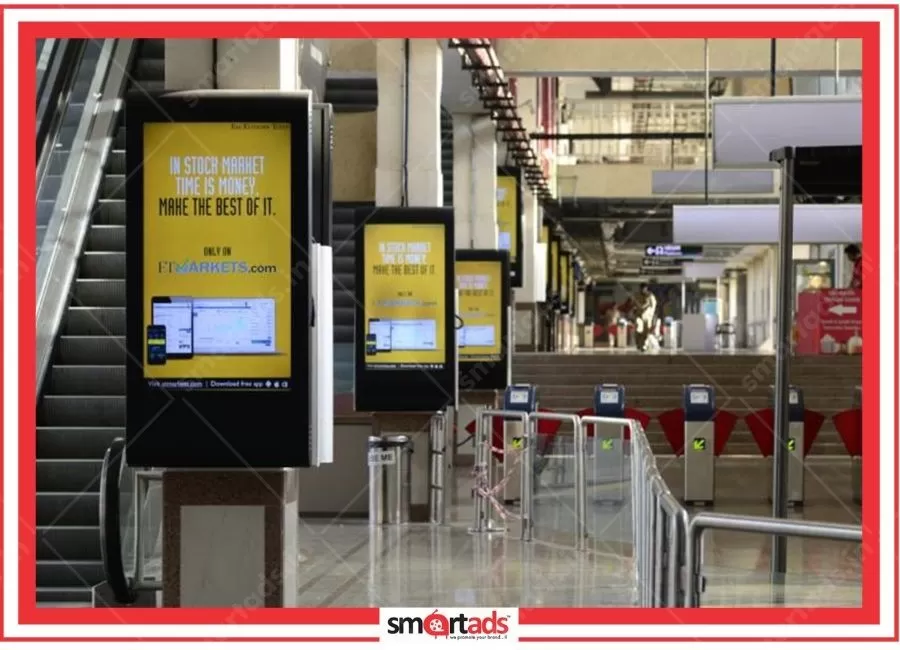
Entry Exit Panel
8 ft x 4 ft
Bright and vibrant multicolored letterin
Rate per Panel / Month
Min Requirement is 3 Panel.
₹48000.00
Showing 1 to 4 of 4 Results
MEDIA DETAILS
8 ft x 4 ft
Bright and vibrant multicolored letterin
Rate per Panel / Month
Min Requirement is 3 Panel.
₹48000.00
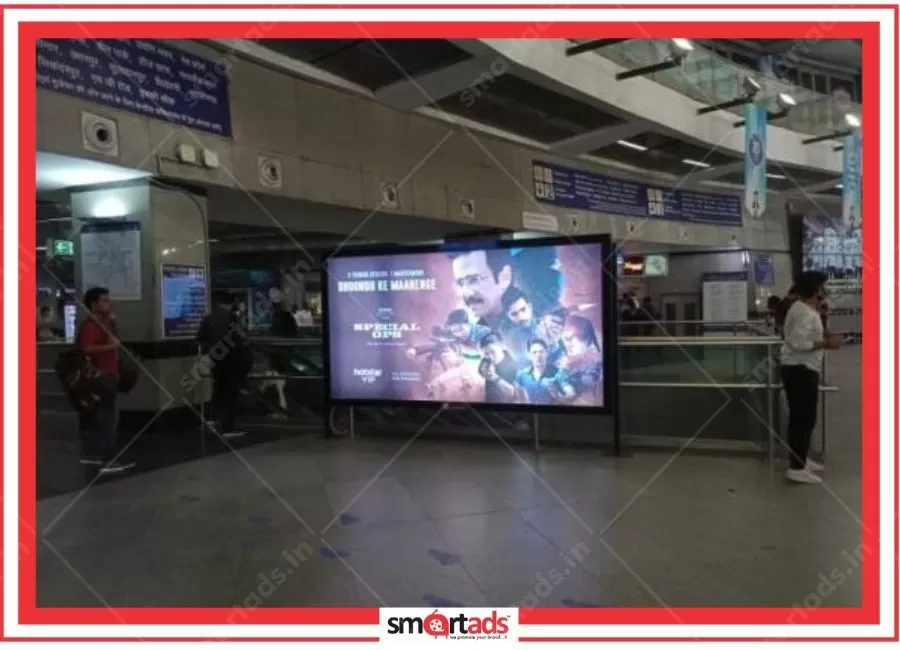
10 ft x 5 ft
A new wide wall system designed to accom
Rate per Panel / Month
Min Requirement is 3 Panel.
₹50000.00
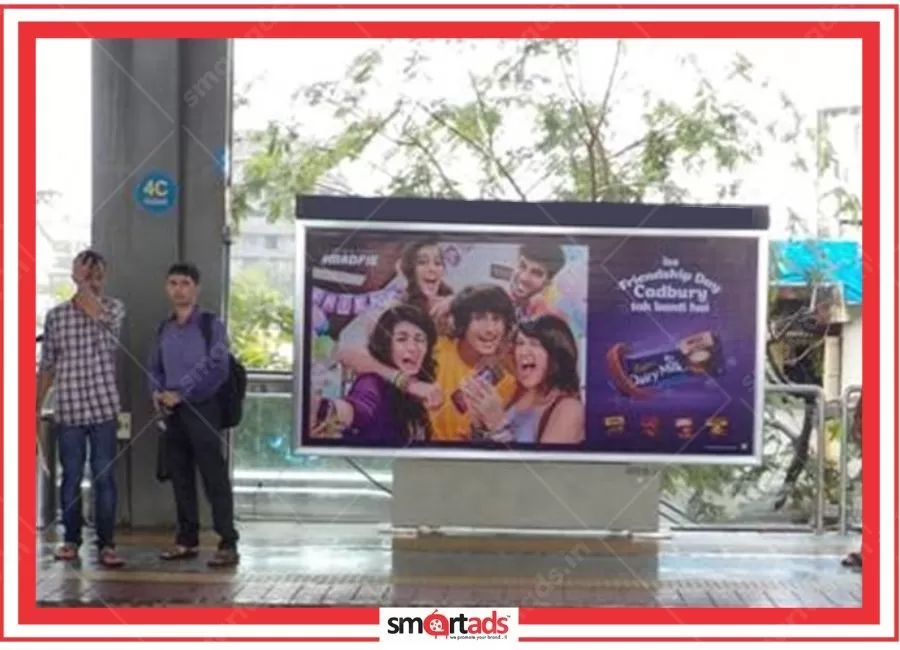
8 ft x 4 ft
A raised flooring or other horizontal su
Rate per Panel / Month
Min Requirement is 3 Panel.
₹35000.00
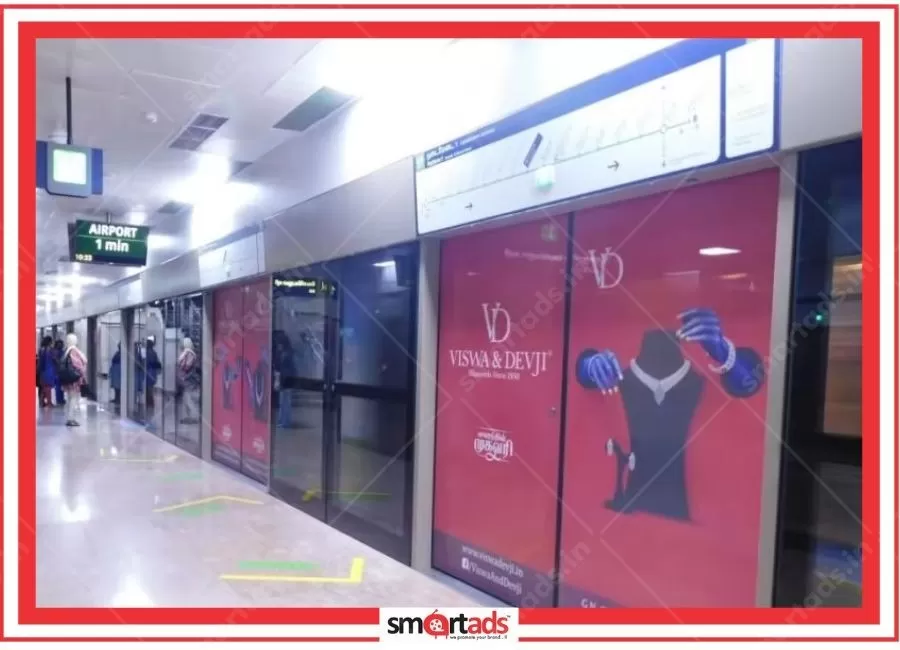
7 ft x 4 ft
Also known as platform edge doors (PEDs)
Rate per Plateform / Month
Min Requirement is 1 Stations.
₹1200000.00
MEDIA REACH

MinimumQty :
10
EstimateReachPeople :
15 Million
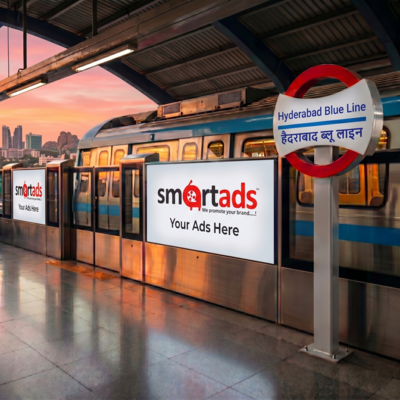
The Hyderabad Metro Blue Line quietly carries somewhere in the ballpark of 1.5 to 2 lakh passengers every single day across its 29-kilometre stretch from Nagole to Raidurg — and yet most brand managers we speak to have never seriously mapped their media spend against this corridor. That is a genuinely puzzling gap, especially when you consider that the Blue Line cuts straight through the Hyderabad IT corridor, passing HITEC City, Madhapur, and Jubilee Hills on its way west, which means the audience profile on this route is arguably the most commercially valuable captive audience in all of Telangana. At SmartAds, we have run campaigns across transit media in dozens of Indian cities, and the Blue Line consistently surprises clients who assumed metro advertising was either too expensive or too niche for their category.
Most people picture a single poster when they think of metro station advertising, which is a significant underestimation of what the format actually involves. Metro station advertising on the Hyderabad Blue Line encompasses every brand touchpoint inside and around a station — from the massive backlit board advertising panels on concourse walls to digital screen advertising units on platforms, from escalator branding wraps to pillar advertising at Hyderabad Metro stations, from in-train advertising panels inside Hyundai Rotem coaches to full coach wrap advertising on the exterior of trains. The format is operated under the commercial rights framework of L&T Metro Rail Hyderabad Limited (LTMRHL), which manages the advertising inventory across the entire network in partnership with Keolis Hyderabad, the metro's operational partner.
What makes this genuinely different from a roadside hoarding is the concept of captive audience advertising. When a commuter is standing on a platform at Ameerpet Metro Station waiting for a train, or riding an escalator at HITEC City Metro Station, they have nowhere else to look; the dwell time is measured in minutes, not seconds, which is the fundamental reason why brand recall scores from metro advertising consistently outperform outdoor hoardings in post-campaign studies. The FICCI-EY Media & Entertainment Report has repeatedly flagged transit advertising as one of the fastest-growing segments within out-of-home media in India, and the Blue Line's demographic profile makes that growth story even more compelling for brands targeting urban professionals.
At SmartAds, we always tell our clients that metro station advertising is not simply an outdoor buy — it is a contextual media placement. The environment signals aspiration, modernity, and urban mobility, which means your brand borrows some of that equity just by being present in the space. That contextual transfer is something that a roadside hoarding on the same street simply cannot replicate.
Frankly speaking, not all 23 stations on the Blue Line are created equal when it comes to advertising value, and treating them as interchangeable is one of the most common mistakes we see in media plans. HITEC City Metro Station is, by a significant margin, the highest-footfall station on the entire Blue Line — it serves as the primary entry and exit point for the Hyderabad IT hub, which means daily ridership at this single station runs into tens of thousands of working professionals, many of whom are repeat commuters making the same journey five days a week. That repetition is not a drawback; it is the mechanism through which effective frequency builds, and brand recall compounds over a campaign period.
Ameerpet Metro Station is the second critical node, and it carries a different kind of value — it is the interchange point between the Blue Line and the Red Line, which means it attracts commuters from both corridors and functions as a genuine transit hub within the network. Raidurg Metro Station, the western terminus, has seen footfall grow substantially as residential and commercial development in the western suburbs of Hyderabad has accelerated; brands targeting the real estate, automobile, and premium consumer goods categories have found Raidurg particularly productive. On the eastern end, Nagole Metro Station and Uppal Metro Station serve a denser residential and industrial catchment, which makes them interesting for FMCG, healthcare, and education advertisers who need reach across a broader socioeconomic spectrum.
Madhapur Metro Station and Jubilee Hills Check Post Metro Station sit in the middle of the corridor's premium zone, serving some of the most affluent neighbourhoods in Hyderabad — Banjara Hills, Jubilee Hills, and Gachibowli are all within comfortable reach of these stations. Begumpet Metro Station and Stadium Metro Station serve older, more mixed-use commercial zones, while Tarnaka Metro Station and Habsiguda Metro Station anchor the eastern residential belt. Our experience at SmartAds shows that the highest return on investment for most categories comes from concentrating spend at HITEC City, Ameerpet, Madhapur, and Raidurg — these four stations together account for a disproportionate share of the Blue Line's total daily ridership and deliver the strongest audience quality for premium brands.
The range of advertising formats available across the Blue Line is considerably wider than most media planners expect, which is why we always recommend a discovery conversation before finalising a format mix. At the station level, the primary formats include concourse branding panels — large-format backlit board advertising units positioned at the main entry and ticketing areas — platform panel advertising units along the waiting areas, pillar advertising at Hyderabad Metro stations which wraps brand creative around the structural columns, escalator branding metro panels on the risers and side panels of escalators, and lift branding metro station placements on elevator doors and interiors.
Digital screen advertising at metro stations, or DOOH advertising in Hyderabad as it is increasingly categorised, is available at select high-footfall stations including HITEC City and Ameerpet; these digital units allow for dynamic creative rotation, which means a single screen can carry multiple brand messages across a day, and the cost per exposure works out to be quite competitive when compared to static formats. Jingle ads at metro stations — audio advertisements broadcast through the station PA system — are a format that many brands overlook entirely, and yet our experience shows they deliver exceptional brand recall precisely because they operate in a low-audio-clutter environment where commuters are otherwise listening to nothing in particular.
Inside the trains themselves, in-train advertising takes several forms: handhold panel advertising on the overhead grab handles, seat-back display advertising on the backs of passenger seats, and full coach wrap advertising or train wrap advertising on the exterior of the Hyundai Rotem rolling stock. Coach wrap advertising is arguably the most visually dramatic format available on the Blue Line — a fully wrapped train moving through the city generates impressions not just from commuters inside but from pedestrians, motorists, and bystanders at every station and along every elevated section of track. Semi-naming rights and title sponsorship at a Blue Line metro station represent the premium end of the format spectrum, where a brand's name is incorporated into the station's identity through signage, announcements, and branded environmental elements.
The Blue Line runs from Nagole in the east through 23 stations to Raidurg in the west, and we find it useful to think about this corridor in three distinct zones, each of which serves a different audience and supports a different advertising strategy. The eastern zone — broadly covering Nagole Metro Station, Uppal Metro Station, Habsiguda Metro Station, Tarnaka Metro Station, and Stadium Metro Station — serves a predominantly residential and mixed-use catchment with a high proportion of students, commuters, and middle-income working professionals; this zone is well-suited for education brands, healthcare advertisers, FMCG companies, and consumer finance products.
The central zone, running through Secunderabad East Metro Station, Begumpet Metro Station, and Ameerpet Metro Station, is characterised by high interchange traffic and a more diverse audience mix; Ameerpet in particular draws students from the city's coaching institute belt, which makes it a natural fit for ed-tech platforms, banking products aimed at young adults, and consumer electronics. The western zone — covering Madhapur Metro Station, Jubilee Hills Check Post Metro Station, HITEC City Metro Station, and Raidurg Metro Station — is where the audience skews most heavily toward working professionals in technology, finance, and consulting, with household incomes and purchasing power that are well above the city average.
What a lot of people miss is that the same creative can perform very differently depending on which zone it runs in; a luxury automobile campaign that generates strong engagement at HITEC City might see significantly lower response rates at Nagole, not because the format is wrong but because the audience composition is different. At SmartAds, our media planning approach always involves zone-mapping the campaign objective before recommending a station list, which is a step that generic OOH vendors rarely take.
Metro advertising rates on the Blue Line are structured around format type, station tier, and campaign duration — and the pricing is more accessible than most brands assume when they first enquire. For a standard backlit board advertising panel at a mid-tier station like Tarnaka or Habsiguda, the monthly rate works out to somewhere in the ballpark of ₹25,000 to ₹40,000 per unit, which is a figure that tends to surprise clients who have been paying significantly more for roadside hoardings in the same catchment area. At premium stations like HITEC City Metro Station and Ameerpet Metro Station, the same format commands rates in the range of ₹60,000 to ₹1.2 lakh per month per panel, reflecting the substantially higher footfall and audience quality.
Digital screen advertising at metro stations — the DOOH advertising units at Hyderabad's key Blue Line stations — is priced differently, typically on a per-slot or per-day basis with rates that vary depending on the number of daily plays and the duration of each creative. A ten-second spot running across a full day at a high-footfall station can cost anywhere from ₹8,000 to ₹20,000 per day per screen, which sounds significant until you calculate the advertising cost per thousand impressions; the CPM works out to roughly ₹8 to ₹15, which is a number that genuinely surprises most first-time metro advertisers when they compare it to what they are paying for Instagram reach or Google Display placements. Station domination packages — where a brand takes exclusive control of all advertising inventory at a single station — are priced at a significant premium, typically starting at ₹3 to ₹5 lakh per month at mid-tier stations and going considerably higher at HITEC City or Ameerpet.
Coach wrap advertising and train wrap advertising are priced on a per-train basis for a minimum campaign period, with full exterior wraps on a single Hyundai Rotem train running in the range of ₹8 to ₹15 lakh per month depending on the wrap coverage and the number of trains involved. Jingle ads at metro stations are among the more affordable formats, with monthly rates for station PA announcements working out to somewhere between ₹15,000 and ₹40,000 per station depending on frequency. It is worth noting that L&T Metro Rail Hyderabad Limited operates a tendering and rights-based system for advertising inventory, which means that working with an authorised metro advertising agency in Hyderabad — rather than approaching the network directly — is typically faster and more cost-efficient.
The honest answer to this question is that the Blue Line offers something that most other media formats in Hyderabad simply cannot — a guaranteed, measurable, captive audience in a premium urban environment. Transit advertising in Hyderabad has matured considerably since the metro opened in 2017, and the Blue Line in particular has established itself as the spine of the city's professional commuter network; the daily ridership figures, which have recovered strongly post-pandemic and are now tracking above pre-2020 levels according to HMRL operational data, represent a consistent and growing audience base.
The Hyderabad IT corridor that the Blue Line serves is home to a concentration of technology companies, financial services firms, and multinational corporations that is genuinely unusual even by Indian metro standards; this means the audience on the Blue Line skews toward higher disposable income, higher digital literacy, and higher brand awareness than you would find on comparable transit routes in other cities. For brands in categories like fintech, premium consumer goods, real estate, automotive, health and wellness, and ed-tech, this demographic alignment is not incidental — it is the core strategic rationale for the buy. The GroupM TYNY Report has consistently highlighted transit media as one of the most cost-efficient channels for reaching urban professionals, and our own campaign data at SmartAds supports that conclusion.
On top of that, the Blue Line offers something that television, digital, and even traditional outdoor cannot: physical presence in a space where the audience has chosen to be, is stationary or slow-moving, and is not simultaneously consuming competing media. The absence of skip buttons, ad blockers, and channel changes makes metro station advertising a genuinely attentive environment, which is increasingly rare and therefore increasingly valuable.
The audience profile on the Blue Line is one of the most well-defined in Indian transit advertising, and it is worth spending a moment on the specifics because the composition varies meaningfully by station zone and time of day. The dominant commuter segment is working professionals between the ages of 22 and 45, employed primarily in the technology, banking, consulting, and services sectors — this group represents the core audience at stations from Madhapur through HITEC City to Raidurg, and they are characterised by high smartphone penetration, active online purchasing behaviour, and genuine brand consciousness.
Students and young adult commuters make up a significant secondary segment, particularly at Ameerpet Metro Station and the stations in the central and eastern zones; this group skews toward the 18-to-28 age bracket and is particularly receptive to ed-tech, consumer electronics, fashion, and food delivery advertising. The eastern zone stations — Nagole, Uppal, Habsiguda — serve a more mixed audience that includes a higher proportion of blue-collar and semi-skilled workers alongside the professional segment, which broadens the appeal for FMCG, healthcare, and consumer finance advertisers who need reach across income brackets.
Peak hours on the Blue Line — broadly 8 to 10 in the morning and 6 to 9 in the evening — deliver the highest footfall and the most concentrated audience exposure; primetime advertising slots at metro stations are genuinely analogous to primetime television in the sense that the audience density is dramatically higher during these windows. What we tell our clients at SmartAds is that the Blue Line audience is not just large — it is loyal, because the same commuters make the same journey repeatedly, which means a well-placed campaign builds effective frequency organically over a four-week period in a way that a single-exposure medium simply cannot replicate.
Station domination is the format that tends to generate the most excitement in client briefings, and for good reason — it is also the one that is most frequently misunderstood in terms of what it actually delivers. Station domination at a Blue Line metro station means that a single brand takes over every available advertising surface within a station for a defined campaign period: concourse panels, platform panels, pillar advertising, escalator branding, digital screens, lift branding, and even floor graphics in some cases. The effect is immersive in a way that no single-format placement can replicate; a commuter entering the station is surrounded by the brand at every point in their journey through the space.
We ran a station domination campaign for a fintech client at HITEC City Metro Station over a four-week period, and the results were striking — post-campaign brand recall surveys conducted in the station catchment area showed unaided recall of roughly 68%, which is a figure that would be exceptional for any media format and is particularly remarkable for a brand that had limited prior awareness in the Hyderabad market. The campaign cost was in the range of ₹18 to ₹22 lakh for the full month, which sounds significant but works out to a CPM that was considerably lower than what the same client was paying for programmatic display advertising targeting the same demographic. The key insight from that campaign was that the repetition within a single station visit — a commuter might pass through the same station twice daily and encounter the brand creative eight to ten times across their journey — creates a depth of exposure that aggregate reach numbers alone do not capture.
Station domination is available at most Blue Line stations, though the inventory structure and pricing vary; HITEC City Metro Station and Ameerpet Metro Station are the most sought-after for domination campaigns and therefore require longer lead times for booking — typically six to eight weeks in advance. Mid-tier stations like Madhapur or Jubilee Hills Check Post offer domination packages at more accessible price points, which makes the format viable for brands with more modest budgets who still want the immersive effect.
The booking process for metro station advertising on the Hyderabad Blue Line runs through the commercial rights framework established by L&T Metro Rail Hyderabad Limited, and the practical reality is that most brands access this inventory through authorised advertising intermediaries rather than directly through LTMRHL or HMRL. The rights to sell advertising space across the network are typically held by authorised concessionaires, and working with a metro advertising agency in Hyderabad that has established relationships with these concessionaires is the most efficient path to securing inventory, particularly for premium stations and formats.
The typical booking timeline for a standard campaign — say, a four-week run of platform panels and backlit boards at two or three stations — is somewhere between three and five weeks from brief to installation, accounting for creative artwork approval, production, and installation scheduling. Creative specifications vary by format; backlit board advertising panels typically require artwork at 150 DPI minimum at the final output size, with bleed allowances of 3 to 5 centimetres, while digital screen advertising units require content in specific aspect ratios and file formats that the station operator's digital management system can accept. Jingle ads at metro stations require audio files in WAV or MP3 format at broadcast quality, and the script must be approved by the station authority before airing.
At SmartAds, our process for Blue Line campaigns begins with a detailed audience mapping exercise — we look at the client's target demographic against the station-wise footfall data and zone profiles before recommending a station list — and then we handle the end-to-end booking, artwork coordination, installation supervision, and campaign reporting. The minimum booking duration for most Blue Line formats is 30 days, though some digital screen slots can be booked for shorter periods; we generally recommend a minimum of 45 to 60 days for brand-building campaigns to allow effective frequency to accumulate meaningfully.
Campaign ROI on the Blue Line is genuinely measurable in ways that traditional outdoor advertising often is not, and this is one of the strongest arguments we make to clients who are accustomed to treating OOH as an unaccountable line item. The combination of known daily ridership data, station-specific footfall counts, and defined dwell times allows for a reasonably precise calculation of gross impressions per campaign period; from there, the advertising cost per thousand impressions can be calculated and benchmarked against other media in the plan. The CPM for Blue Line metro advertising, depending on the format and station tier, typically works out to somewhere between ₹8 and ₹25, which compares favourably to premium digital display and significantly outperforms most television daypart options for the same urban professional audience.
We worked with a real estate developer targeting premium residential buyers in the western Hyderabad market — specifically the Gachibowli and Madhapur catchment — and ran a two-month campaign across HITEC City Metro Station, Madhapur Metro Station, and Raidurg Metro Station using a combination of backlit concourse panels and platform panel advertising. The developer tracked website traffic from Hyderabad, site visit enquiries, and brand search volume over the campaign period; organic brand searches from Hyderabad increased by roughly 34% during the campaign months compared to the preceding period, and site visit enquiries from the western Hyderabad catchment grew by approximately 28%. These are not numbers we can attribute entirely to the metro campaign — the developer was running concurrent digital activity — but the directional signal was clear enough that the client renewed the campaign for a third month.
Brand recall is the metric that metro advertising consistently delivers most reliably; the captive audience environment, the repetition of daily commuting, and the physical scale of station formats combine to produce recall scores that post-campaign research consistently places well above industry benchmarks for outdoor advertising. The Dentsu e4m Report on OOH advertising has flagged transit media as delivering among the highest recall-to-cost ratios in the outdoor category, which aligns with what we observe in our own campaign measurement work.
This is a question we get asked more often than almost any other in the context of metro advertising, and the honest answer is: more often than you would think, yes. The perception that metro station advertising is exclusively the domain of large national brands is a legacy of the early years of the network when minimum booking requirements were higher and the format mix was less flexible; the current inventory structure on the Blue Line includes format and station combinations that are genuinely accessible to businesses with monthly media budgets in the range of ₹1 to ₹3 lakh.
A hyperlocal advertising strategy built around a single mid-tier station — say, Habsiguda Metro Station for a healthcare clinic in the eastern zone, or Jubilee Hills Check Post Metro Station for a premium restaurant — can deliver meaningful brand visibility metro audiences at a monthly investment that is comparable to a modest digital campaign. The key is to match the station to the business's catchment area and to choose formats that maximise dwell time exposure; a single well-positioned backlit board at the right station, running for 60 days, can build more effective brand recognition among the local commuter population than a significantly larger spend on social media targeting the same geography.
To be fair, there are formats on the Blue Line that remain out of reach for smaller budgets — train wrap advertising, station domination, and semi-naming rights are firmly in the large-brand territory. But the format spectrum is wide enough that a thoughtful media plan can deliver genuine value at almost every budget level, and this is where working with an experienced metro advertising agency in Hyderabad makes a real difference; the ability to negotiate multi-format packages, identify underpriced inventory at less-contested stations, and structure campaign timelines around production cost efficiencies can stretch a modest budget considerably further than a direct booking would.
Semi-naming rights and title sponsorship at a Blue Line metro station represent the most premium and most permanent form of brand association available in the transit advertising category, and they are a format that most brands have not seriously considered — partly because the category is not well understood and partly because the investment level is significant. Under a semi-naming rights arrangement, a brand's name is incorporated into the station's official designation — the station might be announced and signed as "[Brand Name] Ameerpet Station" or "[Brand Name] HITEC City Station" — which means the brand receives repeated audio and visual exposure through every PA announcement, every digital display, and every piece of station signage throughout the contract period.
The value of title sponsorship at a Blue Line metro station is not just in the impressions generated within the station — though those are substantial — but in the earned media and word-of-mouth that comes from a brand being embedded into the everyday language of the city. When commuters, navigation apps, and news coverage refer to a station by a brand-associated name, the awareness generated extends far beyond the commuter population. L&T Metro Rail Hyderabad Limited has offered semi-naming rights across the network, and the contract periods are typically measured in years rather than months; the investment is correspondingly significant, generally running into multiple crores for a premium station, but the brand visibility metro audiences provide over a multi-year period makes the per-impression cost remarkably efficient.
The outdoor advertising comparison between metro station advertising and traditional hoardings is one that we find ourselves having regularly, and the answer is more nuanced than either camp of advocates typically acknowledges. A large-format hoarding on a high-traffic road in Hyderabad — say, on the IT corridor near Gachibowli — can deliver very high gross impression numbers, particularly during peak traffic hours; but the exposure is measured in seconds, the audience is in motion, and there is no meaningful dwell time. Metro station advertising, by contrast, delivers lower gross impression numbers per unit but significantly higher quality exposure — a commuter standing on a platform at HITEC City Metro Station for three to five minutes is genuinely processing the advertising environment in a way that a driver passing a hoarding at 60 kilometres per hour simply is not.
The cost structure also differs in ways that favour metro advertising for certain campaign objectives. A premium roadside hoarding on the IT corridor in Hyderabad might cost ₹1.5 to ₹3 lakh per month, which is comparable to a mid-tier station domination package on the Blue Line — but the hoarding delivers a single exposure per vehicle pass, while the station package delivers multiple exposures per commuter visit across the month. Non-traditional advertising formats like metro station advertising also offer creative possibilities — escalator branding, pillar advertising, floor graphics — that simply do not exist in the traditional hoarding format, which allows for more immersive and memorable brand experiences.
Below the line advertising through metro stations also offers better demographic targeting than roadside hoardings, which reach whoever happens to be driving past regardless of their profile; the Blue Line's audience is self-selecting in the sense that it skews heavily toward urban professionals, which means the targeting efficiency for relevant categories is inherently higher. That said, hoardings and metro advertising are not mutually exclusive — the most effective campaigns we have planned at SmartAds have used both in combination, with hoardings building broad awareness and metro station advertising delivering frequency and depth to the high-value commuter segment.
The Blue Line Phase 2 expansion is a development that every serious media planner with an interest in Hyderabad transit advertising should be tracking, because it will materially change the reach and audience profile of the corridor. The planned extension involves connecting the Blue Line westward beyond Raidurg toward the Rajiv Gandhi International Airport, creating what is effectively a Hyderabad Airport Metro Express link — this would make the Blue Line the primary transit connection between the city's IT hub and its international airport, which has significant implications for the audience profile at western Blue Line stations.
An airport metro connection would introduce a substantial new segment of business travellers, frequent flyers, and premium consumers to the Blue Line audience mix, particularly at Raidurg Metro Station and the new stations that would be added along the extension corridor. For brands in categories like travel, hospitality, premium financial services, and luxury goods, this would represent a meaningful upgrade to the audience quality at the western end of the line. The metro Phase 2 expansion in Hyderabad is also expected to add stations in areas that are currently underserved by the network, which will expand the geographic reach of Blue Line metro advertising into new catchment areas.
For advertisers thinking about long-term brand building on the Blue Line, the Phase 2 development is a reason to establish presence now — brands that build recognition with the current commuter base will benefit from continuity as the network expands and ridership grows. The Government of Telangana has signalled strong commitment to metro expansion as part of its urban infrastructure agenda, and the HMRL project pipeline suggests that the Blue Line will continue to grow in both length and ridership over the next three to five years.
BTL advertising on the Blue Line is most effective when it is planned with the same rigour that a brand would apply to a television or digital campaign — which is to say, with clear audience definitions, measurable objectives, and a creative approach that is calibrated to the format environment. Below the line advertising in transit environments rewards creative work that is visually arresting at a distance, legible at a glance, and capable of communicating a core message in under five seconds; these are constraints that actually produce better advertising, because they force clarity and simplicity that longer-form media can avoid.
The most effective BTL advertising strategies we have executed on the Blue Line have combined multiple formats within a station to create a coherent brand journey — a commuter might encounter a concourse panel at entry, a platform panel while waiting, and an in-train advertising panel during the journey, with each touchpoint reinforcing the same message in a slightly different context. This multi-touchpoint approach within a single station visit is something that no other BTL format can replicate, and it is the mechanism through which metro advertising builds brand recall at a speed that surprises clients who are accustomed to the slower accumulation of awareness through single-format campaigns.
Seasonal advertising strategies are also worth considering for Blue Line campaigns; the months of October through December, which encompass Dussehra, Diwali, and the year-end festive period, see elevated footfall as commuter volumes increase and the audience is in an active purchasing mindset. We have seen festive-period campaigns on the Blue Line deliver measurably higher brand interaction and recall scores than the same creative running in non-festive months, which suggests that timing is a variable that deserves as much attention as station selection and format mix in the media planning process.
Q: What advertising formats are available at Hyderabad Blue Line metro stations?
The range of formats is genuinely extensive and covers both static and dynamic options across every zone of the station environment. Static formats include backlit board advertising panels on concourse and platform walls, pillar advertising at Hyderabad Metro stations, escalator branding metro panels, lift branding metro station placements, and floor graphics. Dynamic formats include digital screen advertising units — DOOH advertising at select Hyderabad Blue Line stations — and jingle ads broadcast through the station PA system. Inside the trains, in-train advertising encompasses handhold panel advertising, seat-back display advertising, and coach wrap advertising on the exterior of Hyundai Rotem rolling stock. Premium formats include station domination packages and semi-naming rights or title sponsorship arrangements. The specific availability of each format varies by station, with larger stations like HITEC City and Ameerpet offering the widest format menu.
Q: Which Blue Line metro stations have the highest footfall for advertising?
HITEC City Metro Station consistently records the highest footfall on the Blue Line, driven by its position as the primary station serving the Hyderabad IT hub; Ameerpet Metro Station ranks second by virtue of its role as an interchange point between the Blue Line and the Red Line. Raidurg Metro Station, Madhapur Metro Station, and Jubilee Hills Check Post Metro Station form the next tier, serving the premium western residential and commercial zones. On the eastern side, Nagole Metro Station and Uppal Metro Station are the primary footfall anchors, serving dense residential catchments. Begumpet Metro Station and Stadium Metro Station serve significant commercial and mixed-use areas in the central zone. For most brand categories, we recommend prioritising the western zone stations — HITEC City, Madhapur, Raidurg — for audience quality, and the eastern zone stations for reach and volume.
Q: How much does metro station advertising on the Hyderabad Blue Line cost?
Metro advertising rates on the Blue Line vary significantly by format and station tier. Standard backlit board advertising at mid-tier stations works out to roughly ₹25,000 to ₹40,000 per panel per month; at premium stations like HITEC City and Ameerpet, the same format is priced in the range of ₹60,000 to ₹1.2 lakh per month. Digital screen advertising slots at high-footfall stations run somewhere between ₹8,000 and ₹20,000 per day per screen. Station domination packages start at approximately ₹3 to ₹5 lakh per month at mid-tier stations and go considerably higher at premium locations. Coach wrap advertising on a single Hyundai Rotem train is priced in the ballpark of ₹8 to ₹15 lakh per month. Jingle ads at metro stations are among the more affordable formats, typically ranging from ₹15,000 to ₹40,000 per station per month.
Q: What is station domination advertising and which Blue Line stations offer it?
Station domination is a format where a single brand takes exclusive control of all advertising inventory within a station — every panel, screen, pillar, escalator, and lift surface carries the brand's creative — for a defined campaign period. The effect is immersive and generates significantly higher brand recall than individual format placements because the audience encounters the brand at every point in their station journey. Station domination is available at all Blue Line stations, though the inventory depth varies; HITEC City Metro Station and Ameerpet Metro Station offer the most comprehensive domination packages by virtue of their larger station footprints and richer format menus. Madhapur, Jubilee Hills Check Post, and Raidurg are also popular domination locations. Booking lead times for domination at premium stations are typically six to eight weeks.
Q: What are semi-naming rights or title sponsorship at a Blue Line metro station?
Semi-naming rights involve a brand's name being incorporated into the official designation of a metro station — the station is announced and signed as "[Brand Name] Station Name" — which generates continuous audio and visual brand exposure through every PA announcement and piece of station signage throughout the contract period. Title sponsorship at a Blue Line metro station is a multi-year arrangement that embeds the brand into the everyday language and navigation of the city, generating earned media and word-of-mouth awareness that extends well beyond the commuter population. The investment is significant — typically running into multiple crores for a premium station over a multi-year contract — but the per-impression cost over the contract period is extremely competitive. L&T Metro Rail Hyderabad Limited manages these arrangements as part of its commercial rights framework.
Q: How do I book advertising space at a Hyderabad Blue Line metro station?
The most practical path to booking Blue Line metro advertising is through an authorised metro advertising agency in Hyderabad that has established relationships with the advertising concessionaires operating under L&T Metro Rail Hyderabad Limited's commercial rights framework. The process typically involves a brief and audience mapping exercise,
