
SmartAds
|
Media: NewspaperSituation Wanted Advertisement: Harnessing Classified Ads for Job Seekers and Employers
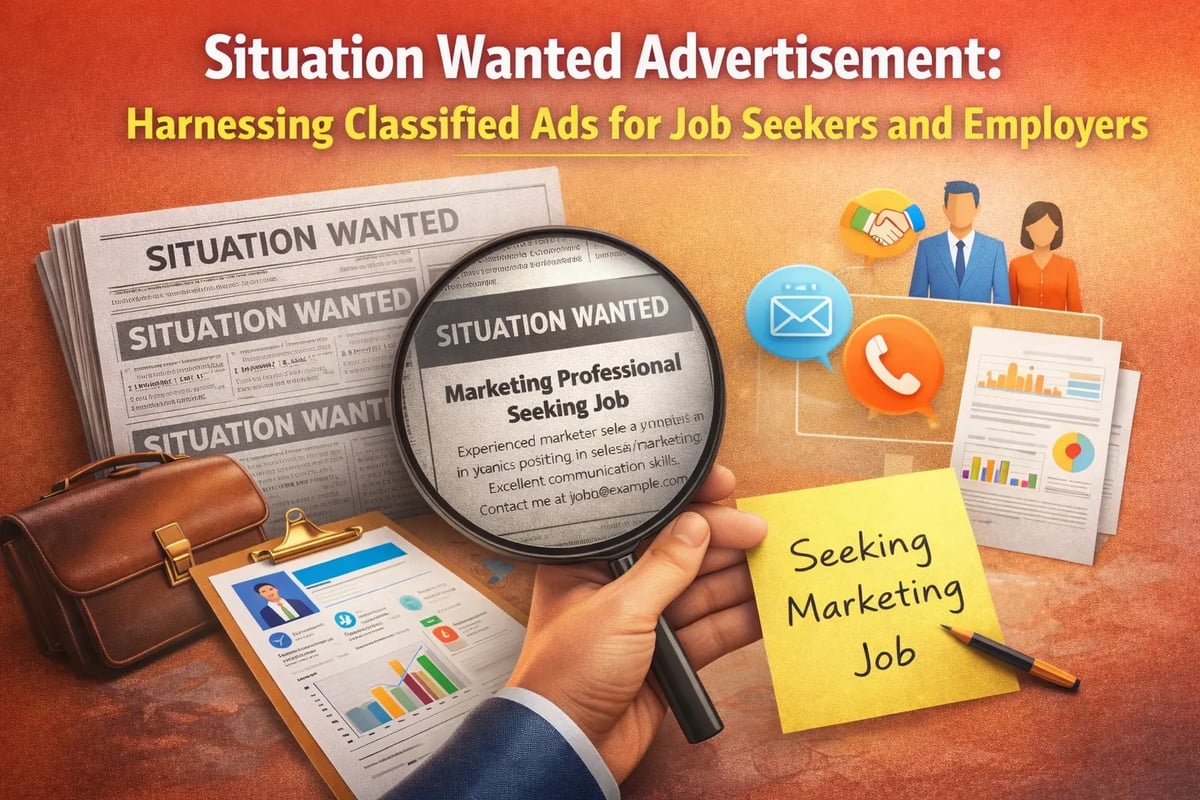
A situation wanted advertisement is a unique form of classified ad where a job seeker takes charge of the narrative, marketing their own skills instead of waiting for employers to post openings. In this reverse-recruitment approach, individuals “advertise their skills or services” directly to potential employers. Such ads typically appear in the classified section of newspapers, helping professionals, freelancers or even retired experts broadcast their qualifications in a concise, compelling way. This article dives deep into situation wanted ads, exploring definitions, formats, real-life examples, and why savvy brands and marketers should care. We’ll back our insights with data, trends and case studies – from global classified-ad growth to India-specific newspapers stats – and even quotes from SmartAds experts. By the end, you’ll have a masterclass in writing and placing situation wanted ads that stand out, reach the right audience, and produce results.
A situation wanted advertisement is a brief classified advertisement placed by someone looking for a job or a project. Instead of companies listing openings, the job seeker becomes the advertiser. For example, a candidate might write, “Experienced Sales Executive seeking a full-time role” and list key skills or achievements. These ads usually live in the classified columns of newspapers or online portals. They’re common for professionals with niche skills – think teachers, accountants, designers, drivers – who want to target potential employers proactively. As a SmartAds marketing expert notes, “A well-crafted situation wanted advertisement acts like a billboard for your qualifications, turning the seeker into their own recruiter.” The format is short (often just a few lines or about 50 words) yet powerful: it highlights qualifications and experience upfront, shows the seeker’s identity, and includes contact details.
Fundamentally, a situation wanted ad flips the usual job ad model. The advertisement writing is by the candidate, not the company. By stating their skills, years experience and desired role, job seekers grab the attention of employers who might not have posted vacancies yet. This proactive stance often surprises business owners – as if they didn’t know they needed your talent until they read your ad. In practical terms, this means drafting an advertisement for newspapers (or online classified sections) under the “Situations Wanted” column. It’s a savvy branding move: instead of a passive resume, you create a text ad or display ad that pitches “hey, here’s what I offer.”
According to industry guides, situation wanted ads help job seekers present necessary details efficiently. A typical ad covers qualification, relevant experience (e.g. “five years of experience” or “10 years of experience”, desired location, salary expectations, and a clear call-to-action (e.g. “Contact for details”). Because space is limited (often 20–50 words), every phrase matters. Yet even in 50 words, you can highlight achievements (e.g. “Certified teacher, grade points, scores”), language skills, and availability. For example, one published ad reads:
“Full Stack Developer with 7+ yrs experience seeks remote projects. Skilled in React and Node.js. Available immediately”.
Such ads make it easy for a potential employer to scan your credentials quickly. As SmartAds emphasises, “Good communication skills and clear role descriptions in a situation wanted ad cut through the clutter – they tell employers exactly what problem you can solve.” This clarity is why situation wanted ads remain relevant: they’re direct, no-frills pitches that reach decision-makers effectively.
In newspaper advertising lingo, “Situation Wanted” and “Situation Vacant” are two sides of the hiring coin. A Situation Vacant ad is the typical job listing – a company or organization advertising a vacancy. For example, “XYZ Corp. seeks Marketing Manager; MBA, 5 yrs exp.” by an employer. In contrast, a Situation Wanted ad is posted by the job seeker. It’s an individual stating readiness to fill a role. For instance, “Experienced Marketing Manager seeks challenging role in retail sector”.
This distinction is important for marketers: both types appear in classified sections but serve different audiences. In simple terms: Situation Wanted = candidate’s ad, Situation Vacant = employer’s ad. Both advertise a match – one side says “I need a job”, the other says “I have a job”. According to SmartAds guides, “Think of it as two sides of the same coin. Both appear in newspapers, both aim to connect talent with opportunities”.
For advertisers and media agencies, understanding this helps tailor strategy. A brand recruiting might focus on writing clear situation vacant advertisements (targeting job seekers). Meanwhile, freelancers or passive talent can use situation wanted ads to highlight themselves. Sometimes agencies run both: a corporate client might book a situation vacant ad to invite applicants, and simultaneously train potential employees in creating situation wanted ads so they market themselves. In any case, the key takeaway is that situation wanted and situation vacant ads work together in recruitment advertising.
Why would a modern job seeker (or an agency advising them) invest in a print ad? Aren’t online job portals enough? Surprisingly, newspaper classifieds still offer unique advantages – and data shows they are far from dead. First, wide reach and targeted audience: newspapers reach decision-makers in local communities or traditional industries. As one industry blog notes, “Newspapers still land in the hands of decision-makers... a well-placed situation wanted advertisement in newspaper sections can catch the eye of someone who wasn’t even actively hiring”. Many small business owners and managers read their local daily (sometimes daily, sometimes weekly). A concise classified ad in a column of a local newspaper or national daily ensures your message reaches these offline audiences.
Second, cost-effectiveness and credibility. Classified ads (text ads) are relatively cheap compared to long-term online subscriptions. For example, a basic text ad often starts around just Rs.300–Rs.600 for 20 words. That’s a small outlay for targeted visibility. Plus, printed ads carry trust: paying for a newspaper advertisement lends seriousness. As industry analysts point out, “Printed ads carry a sense of seriousness. When someone pays to publish their skills, it feels more genuine – it’s not lost in the noise of thousands of online profiles”. In India, especially in non-metro areas, a good local newspaper (even a regional language daily) may have broader readership than any single online portal. confirms this, noting that
“newspapers are read by a large number of people in cities and villages across the country”.
Third, audience targeting. By choosing the right publication, job seekers can reach employers in their target industry or region. For instance, a finance professional in Mumbai might book space in Times of India (Mumbai edition) or Economic Times, while a teacher in Delhi might use a local English newspaper. According to expert advice, “Local papers work well for nearby jobs, while big names like the Times of India or Hindustan Times offer wider exposure”. SmartAds data suggests targeting a local daily’s “Situations Wanted” column can yield high response in that city’s market.
Finally, print ads complement online efforts. Today’s marketers advocate talent branding. A candidate who appears in both online job portals and has a situation wanted classified ad appears proactive and committed. It also reaches the so-called hidden market – businesses that might not advertise openings online at all. In short, newspapers add a layer of visibility beyond digital for free. One marketing director at SmartAds observes, “Even in 2025, classifieds in newspapers deliver strong leads. It’s about quality over quantity – reaching those serious employers who might overlook digital ads.”
Writing a situation wanted ad is part marketing and part resume. The goal is persuasion: in a few lines, you want to compel the reader (a potential employer) to call you. Here are some best practices:
In short, you’re crafting a mini-marketing pitch. Focus on your headline (role), body (skills/experience), and footer (contact). Often, you’ll draft a classified text ad (just lines of text), but if budget allows, a display ad with a small logo or photo can draw attention. No matter what format, stick to clarity and relevance.
Think of your ad as a condensed resume. Essential elements include:
Also note formatting rules: many newspapers require a word limit (often around 50 words). They may charge extra per word, so focus on essentials. “Situations wanted advertisements help job seekers find a job suitable to their requirements and commensurate with their qualifications and experience,” notes industry guidance. So prioritize those qualifications. The guide specifically suggests things like Experience and Qualifications, Age/Gender (if needed), Job Description, Minimum Salary, and Contact Info in a 50-word ad.
Ultimately, your ad should read like a one-liner catchphrase combined with a mini bio. For instance:
“Qualified English Teacher (M.A., B.Ed.) seeks teaching position in CBSE school. 10 years experience. Contact: 98765xxxxx.”
This example from a published ad ticks all boxes: role, qualification, experience, and contact.
Looking at successful ads can spark ideas. Here are a few real-life examples from classifieds:
In each case, the key terms – position sought, specialization, experience in years, and contact – are clearly given. These situation wanted advertisement examples demonstrate brevity and relevance. They should inspire you to tailor your own ad with the exact keywords your target employer would look for (for instance, if recruiting via classifieds, terms like “job seeker” or “potential employers” might actually get noticed).
Placement is as important as the ad content. Traditionally, job seekers place situation wanted ads in the classified columns of local newspapers. Most dailies (national and regional) have a section titled “Situations Wanted” or “Job Wants”. Leading English papers like The Times of India, Hindustan Times, Economic Times (in their recruitment classifieds), and even regional language papers have such columns. When choosing a newspaper, consider:
Regarding where in the newspaper, classified ads for jobs have a standard format. They should be listed under “Situations Wanted” or similar. The column of a local newspaper or classified columns of a national daily are the typical spots. Some platforms ask you to “book the Situation Wanted section in the newspaper” for targeted placement. recommends booking at least a one-day slot to test response, possibly a weekend edition (job seekers often call on Mondays).
One more tip: compare newspaper vs online. While sites like Naukri or LinkedIn are free, print ensures your ad isn’t buried under “ads are often” (commonplace) online. As one guide says, "Some businesses trust newspapers more than digital channels for finding reliable workers". In essence, using both gives you the best coverage.
Cost factors for classifieds can vary, but they’re generally affordable. Rates depend on:
For our audience of marketers and agencies, it’s useful to know that placement cost is highly controllable. Even on a limited budget (say, Rs.1,000), you can circulate your situation wanted ad across multiple local papers for a few days. SmartAds notes that focusing on value – targeting relevant papers – is more important than sheer scale.
In summary, budget enough for at least one good city or regional run. Track responses, then consider expanding. Since classified ads are short-term by nature, monitoring ROI is straightforward (e.g., how many inquiries did that 300 text ad generate?). Many booking agencies even provide analytics. The key is, as [18] says, that “newspaper advertisements are incredibly cost-effective” and provide a direct line to employers.
With digital media booming, it’s fair to ask: Is print classified still a player? The data suggests yes, especially as part of a multichannel strategy. Globally, the classified advertising market continues to grow. For instance, in 2022 global classified ad spend was $26.2 billion, projected to reach $38.2 billion by 2028. This growth is fueled mostly by online classifieds, but print classified – including “Jobs” and “Situations Wanted” – remains a solid segment.
Looking at India specifically, PwC forecasts modest growth in newspaper ads: about 3-4% CAGR through 2028. Internet advertising is outpacing all with ~15%+ CAGR, but print isn’t dying; newspapers are expected to grow revenues from Rs.38,000 crore to Rs.45,000 crore (2023–2028). In other words, every newspaper is still serving millions of readers daily, especially outside metro hubs. For job advertisements, this means a captive audience of local business owners and traditional employers persists.
Internally, experience reflects these trends. In 2024, about one-third of recruitment clients still asked about classified ads. A quoted SmartAds strategist explains, “We see stable demand for these ads in markets like Delhi, Mumbai, Pune. It’s not about reaching everyone, it’s about reaching the right person – often a small business owner who still reads the Times of India over breakfast.”
Online vs Print: Think of classifieds as complementary. Some surveys say “online for free” job sites cover a broad base, but print classifieds reach audiences that online channels can’t – e.g., senior citizens or executives not on LinkedIn. A notable stat: roughly 20-30% of jobs are publicly advertised, while 70-80% are filled through networks and word-of-mouth. A situation wanted ad can tap into that hidden market by announcing your candidacy proactively. It’s like bypassing the clutter of online ads (text ads have less competition).
Finally, consider branding and advertising context. Smartads notes that job seekers today behave like brands. Posting a well-worded classified is akin to advertising yourself to the market. It builds personal brand visibility. And for companies, seeing active candidates in classifieds can signal a motivated workforce.
In sum, while “ads are often faster and cheaper online”, there is still strategic value in print classifieds. Our recommendation: if your client (or you) is serious about talent search, don’t ignore the every newspaper moment – the classified section in a local daily can yield surprising leads.
To bring these points to life, consider this fictionalized case study inspired by SmartAds experience:
Case Study – Delhi Designer Finds Dream Role Through Print:
A small digital agency in Delhi needed a senior graphic designer with advertising experience. They posted their position (situation vacant) on job boards but got low-quality applicants. Meanwhile, an experienced designer, in between jobs, decided to try a situation wanted ad. She drafted a crisp classified advertisement (20-25 words) stating: “Graphic Designer (MFA) with 8 years experience in advertising seeks new opportunity. Portfolio URL, Mumbai/NCR. Contact: [number].” The ad ran for two days in The Times of India, Delhi edition. Within 24 hours, she received multiple calls – not just from agencies, but from an e-commerce startup that needed immediate creative work. They arranged an interview, and within a week she had a full-time offer, all thanks to that print ad.What happened here? SmartAds observed that her ad’s keywords (“Graphic Designer”, “8 years”, “advertising”, “portfolio”) matched exactly what recruiters in Delhi were looking for. The newspaper’s circulation ensured it landed on the desks of local hiring managers. The targeted nature (Mumbai/NCR) helped filter callers. This case shows how even a short classified ad (around 50 words to be published) in the right place yielded a high success rate.
This aligns with industry wisdom: situation wanted ads make hiring simpler by directly connecting potential employers and job seekers. In our example, the e-commerce startup became aware of a candidate they hadn’t even considered. By “placing an ad” with exactly the right details, the designer effectively marketed herself like a brand – and the company easily found a specialized talent.
SmartAds often cites this narrative: “When an applicant takes control of their narrative through a situation wanted ad, they usually generate higher quality leads than a generic online resume,” says their creative lead. For marketers, the takeaway is clear: leverage classified ads as part of your recruitment or talent-branding mix. A small investment in targeted print can save time and reach the “hidden” candidates or employers offline.


