SmartAds
|
Media: BTLNoida Mall Advertising: Tapping Noida’s Mall of India for Maximum Brand Impact
DLF Mall of India in Noida is one of the country’s largest malls, drawing about 2–3 million shoppers every month. Advertising here means tapping a captive, high-spending audience – exactly the premium visibility marketers crave. This article dives into Noida Mall advertising , explaining why it matters and how to plan campaigns that engage this retail crowd. We’ll cover key advertising formats (from LED display ads to kiosks), online booking through SmartAds, budgeting, case studies of successful campaigns, and how mall advertising works alongside local newspaper ads to maximize reach and ROI. If you’re a brand, marketer, or media agency targeting Noida shoppers, read on for data-driven insights and practical tips.
Outline:
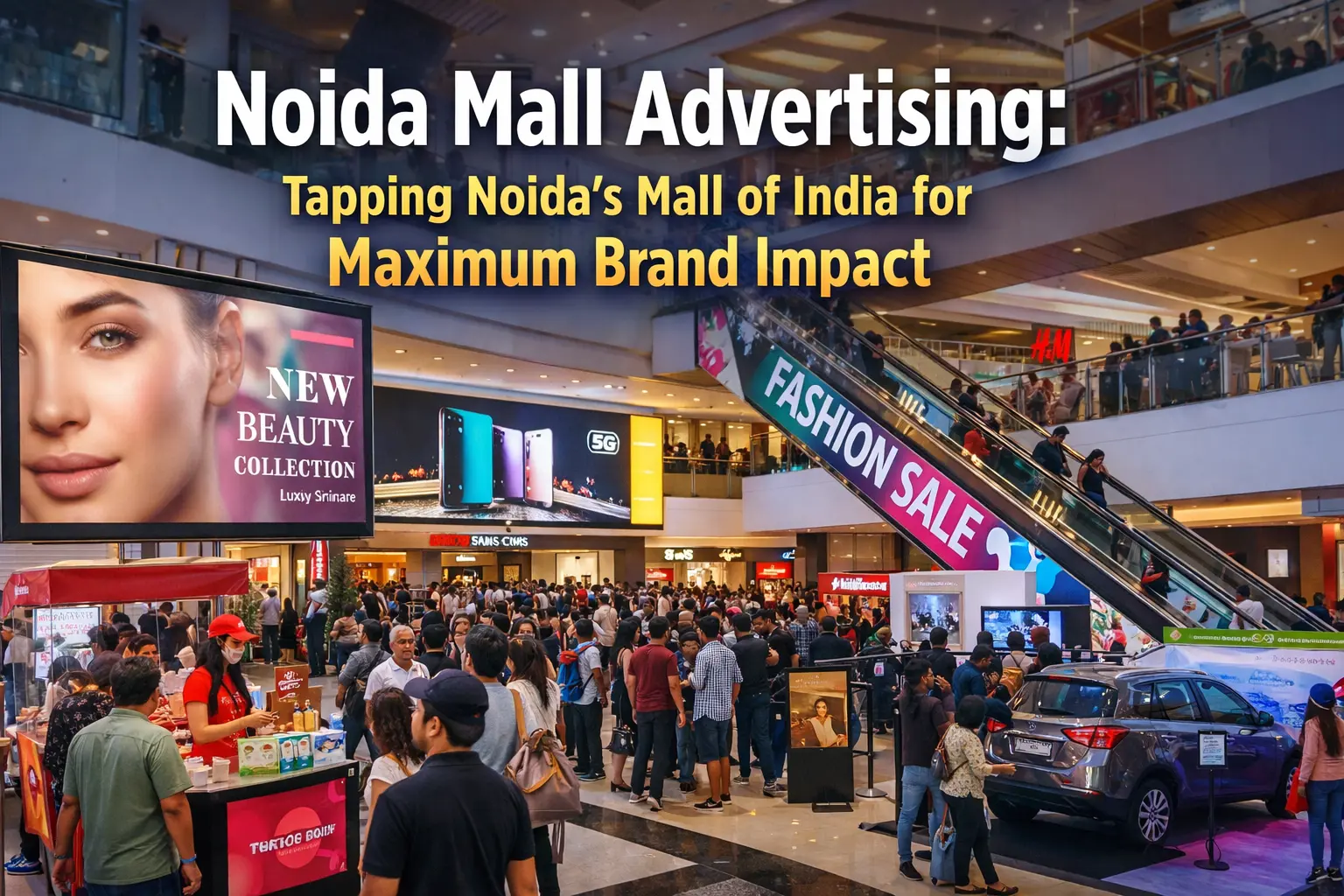
Noida Mall advertising refers to placing brand promotions inside the Mall of India environment. This includes digital signage, kiosks, billboards, standees, and other in-mall displays. Mall advertising is essentially a set of promotional activities within a shopping center intended to boost brand visibility and sales. For marketers, this means reaching a highly engaged retail audience: Mall of India in Noida attracts roughly 2–3 million visitors per month, including urban professionals and families. These visitors spend extended time in the mall, so ads get multiple exposures. In other words, Mall advertising gives your brand“high visibility and premium exposure”among shoppers who are already in a buying mindset, making each advertisement more impactful.
Understanding the audience is key to planning any campaign. Noida’s primary catchment area includes about 2.5 million mostly urban, middle-to-upper class residents. The Mall of India sees an estimated 2–3 million footfalls per month, especially on weekends and holidays. Crucially, these shoppers are diverse – the mall sees “visitors of all age groups and sections of society” – but skew toward higher-income families, young professionals, and students with disposable income. Studies indicate that mall visitors are more relaxed and receptive to marketing than street pedestrians. In fact, when marketers analyzed retail campaigns, they found that mall shoppers spend more time browsing, leading to higher engagement. For example, in one campaign malls produced 28% greater recall than static outdoor ads. In sum, Mall of India’s audience is large, affluent, and purchase-ready, making it a prime environment for targeted advertising.
Mall of India offers a wide range of advertising options for brands. You can choose from numerous formats to fit your campaign goals:
All these formats fall under the umbrella of mall advertising. Whether it’s a 4K video ad on a giant screen or a local classified-style listing in the mall guide, each serves to capture the mall audience’s attention in different ways. SmartAds notes that Mall of India advertisers have used everything from escalator wraps to digital billboards in past campaigns. In short, the options are vast: brands can tailor their strategy using any combination of these advertising options.
Planning a Mall advertising campaign follows a clear process, much like booking ads in a newspaper. First, define your objectives (brand awareness, foot traffic, event promotion, etc.) and choose dates (often 2–4 weeks for best effect). Then select formats and locations based on your target audience (e.g., kids might see ads near toy stores, foodies near the food court).
When it’s time to book, SmartAds.in makes it easy with an online portal. You simply select “Mall of India (Noida)” in the portal, choose the ad format(s) you want (LED screen, kiosk, poster, etc.), and pick your dates. The portal lets you upload the ad creative and complete a secure online payment. SmartAds handles the rest: they coordinate with the mall’s advertising team to reserve your spot and ensure the installation meets all specs. As SmartAds explains, “You can easily book your mall advertising campaign through SmartAds.in” .
Behind the scenes, mall management will review and approve the creative (for example, to ensure it’s appropriate). Once approved, you or the mall’s vendors produce the physical assets (printed banners or video files). Deadlines for creative are similar to newspaper ad deadlines: plan at least a few weeks out. After everything is set up, your ads run for the booked duration. The process mirrors newspaper ad booking (choose ad, submit content, pay), but tailored to the mall environment. Overall, the booking process is straightforward once you plan ahead and use a platform like SmartAds to streamline it.
Ad rates at Mall of India vary widely by format, location, and duration. Premium locations and formats cost more due to the mall’s high-quality audience. For example, a kiosk installation can cost on the order of Rs.6.8 lakh on offer, and a large indoor LED screen may be around Rs.14.4 lakh for a multi-week campaign. Even smaller placements have non-trivial rates: a backlit poster panel was listed around Rs.37,000. These numbers are significantly higher than typical newspaper ads, reflecting the mall’s ability to capture thousands of engaged shoppers.
However, advertisers have flexibility. Smaller ads or directory listings (the “classified” style spots) cost much less – sometimes only a few thousand rupees each. Longer campaigns or multi-location packages also bring down the effective cost. To get best rates , it’s wise to book in advance and ask about packages or off-season discounts. SmartAds can quote current rates for each format. For example, they may offer a deal if you book two different ad locations in the same campaign. Ultimately, you should balance your budget against expected ROI: even expensive mall ads can pay off if they deliver significant engagement.
Mall ad pricing often works on a per-week or per-month basis. Longer runs tend to be more cost-effective per day. When planning, remember to negotiate if possible and compare with standard newspaper rates for perspective. Mall advertising tends to be “comparatively expensive due to the visitors’ profile and purchase intent” , but it delivers a premium, targeted reach. By understanding these ad rates and planning your package wisely, you can maximize impact without overspending.
Mall advertising and local newspaper advertising often go hand-in-hand. Mall ads capture the attention of shoppers right at the point of sale , while newspaper ads reinforce messaging at home or office. In Noida, key newspapers include the Times of India (Noida edition) and popular Hindi dailies (Amar Ujala, Dainik Jagran, etc.). These publications offer display ads and classified ads targeted to the same demographics that visit the mall. For example, a retailer might promote a sale via an LED screen ad in the Mall of India and simultaneously run a small ad in the Times of India or Amar Ujala, reaching readers who might not yet be at the mall.
SmartAds integrates both channels. Through its online portal you can book a Mall of India ad and a newspaper ad in one campaign flow. Whether it’s a glossy display ad in the Times or a text classified in a Hindi paper, the platform helps synchronize campaigns. This synergy is powerful: your Noida Mall advertisement creates immediate awareness among in-mall shoppers, and the accompanying newspaper ad reminds everyone about your brand and promotions. In practice, brands see that combining Mall and print ads gives the broadest coverage and frequency, ensuring your message is seen by English and Hindi readers, by daily newspaper readers, and by weekend mall-goers alike.
Real-world campaigns highlight why Mall advertising pays off. In one case, a major beverage brand ran a summer activation in multiple malls (including the Mall of India) with LED video walls and product sampling kiosks. The results were striking: sales of the promoted product jumped 28% in six weeks, recall was 40% higher than with static posters, and over 50,000 customers engaged directly with the brand. In another example, a fashion retailer used escalator wraps, interactive kiosks, and influencer meet-ups in the mall. They saw store visits increase by 35% after the campaign, driven by the memorable in-mall experience.
These successes show that mall campaigns deliver measurable ROI. Advertisers tracked metrics like coupon redemptions and survey-based recall to confirm impact. In both cases, high-visibility ads combined with hands-on activation turned casual browser traffic into active customers. A key insight is that data and footfall analytics help refine campaigns: ads placed in the right spot at peak times drove the biggest lifts. The takeaway for marketers is clear: a well-executed Noida Mall advertising campaign – with compelling creative and smart placement – can significantly boost awareness, engagement, and sales for your brand.
Mall advertising is rapidly evolving with technology and data. One emerging trend is personalization : smart signage can change ads in real time. For instance, analysts predict AI-powered screens that detect viewer demographics and display tailored content. Programmatic DOOH (real-time ad bidding) is also arriving, letting brands target specific audiences on mall digital displays. Moreover, malls are integrating retail data: campaigns can be tied to point-of-sale and footfall analytics, allowing exact measurement of how many sales resulted from a given ad impression. Innovations like augmented reality (e.g. virtual try-on kiosks) and touchless gesture/voice interfaces are making in-mall ads more interactive. Even 5G connectivity will enable ultra-HD live streams and instant e-commerce links: shoppers might scan a QR code on a Mall advertisement and buy the product on the spot. In short, malls are becoming smart, connected platforms – blending the best of online targeting with offline reach.
Another major trend is experiential marketing. Brands are transforming Mall of India spaces into event-like campaigns. Think pop-up stores, sensory booths, and live influencer appearances in the mall. These immersive campaigns not only grab attention but also encourage social sharing, extending reach online. Sustainability and localization are also on the rise: we expect more eco-friendly displays and ads tailored to local culture or even local languages (Hindi vs English). For Noida specifically, this means bilingual campaigns that resonate. Overall, the future of Noida Mall advertising will be about using data to target effectively and creating memorable, interactive experiences that stand out. Savvy marketers will combine these trends to keep their campaigns innovative and impactful .