SmartAds
|
Media: BTLDiscover The Heart Of Central India: Nagpur Junction Railway Station
Nagpur Junction Railway Station situated in the central key of Maharashtra, India, is the focal point of widespread rail infrastructure in the world. This is a sophisticated write-up explicitly exploring the former history, current state of the art facilities, and the strategic weight of this iconic site. Are you a frequent flyer, a train devotee or just inquisitive about the country's traffic infrastructure? Then this complete guide is the best way to learn more about one of India's major railroad crossings.
From a modest origin to its present stature as a major transit point in India, the Nagpur junction has undergone an overall transition as the Indian Railways have made several changes over the years. We will be deepening our understanding of its captivating settings, technologic innovations, and the pivotal role the station plays in tying India together. Also, you will get to know how the station has shaped Nagpur's economy in detail and why it is considered vital for the railway system of India in general.
Join us as we turn back the clock to explore the time and space that make the Nagpur Junction Railway Station a marvel of the Indian transportation system. This article eventually strives to be a valuable piece of reading whether you are motivated by a trip or just want to expand your awareness.
Table of Contents
Theiling Station is so closely linked to the history of the Indian Railways, in that its birth can be traced back to the inception of the railways. It was just a small dot on the map of time when the Great Indian Peninsula railway founded it towards the end of the 19th century. The first period of the Nagpur Junction was a rapid growth as Nagpur became a significant center of trade and commerce in Central India and started growing.
Towards the beginning of the 20th century, with the expansion of the Indian Railway network, the station became strategically located and through its intermediation it would host many trains that would pass from various sides of the country. There was a progressive addition of platforms and better facilities at the station for an increasing number of passenger and freight trafficking. The implementation of wide-gauge lines alongside later improved the connectivity of Nagpur to other cities like Mumbai and Delhi, which ultimately made to develop.
In the last few years, this location has modernized and expanded several times to keep up with the pace of rail travel requirements. We see the use of steam engines converted into electric engines, the growth of manual signaling into digital systems, and so on. The station has been a mirror for the development process of the Indian Railways until now. It has tried to balance between its history and the current technology it uses.
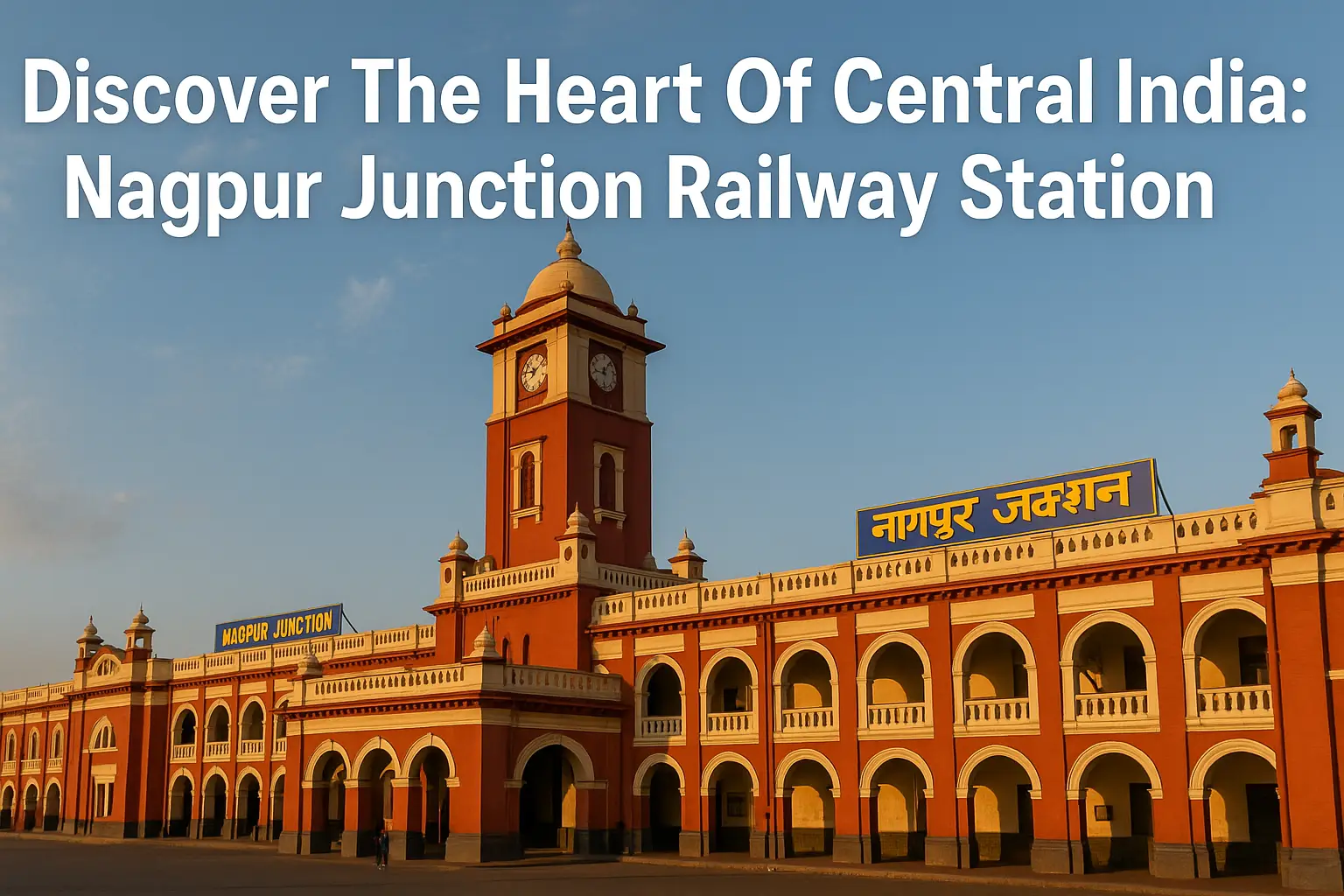
Apart from being a mere means of travel, Nagpur Junction Railway Station is also a majestic exemplar of Indo-Saracenic, featuring a blend of the Colonial era designs and modernity. The station building with its distinguished clock tower and very clear structural lines bears the character of the Indo-Saracenic style which was popular in the time of the British Raj. This unique architectural style is a vivid combination of Indian, Islamic, and European architectural elements, which makes it both eye-catching and historically relevant.
The concourse portion of the huge station consists of sunny interiors and big arched windows which give vent to the ample natural light as well as air exchange. On the platforms, visitors can see ironworks typical for British railway platforms back in the Victorian era which, indeed, make even functional places with a bit of charm. New sections are designed to match the original architectural lines, thus creating a perfect blend of old and modern.
The main attraction of Nagpur Junction toward the infinite skyline is an extensive roof structure. This striking feature not only shelters the passengers from the weather but is also a key point of identification visible from even far away. The openness of the facility and its multiple platforms alone can say about the quality design of the railway network in terms of congestion and shared spaces among them.
Keeping its status as a major railway hub, Nagpur Junction provides a vast range of amenities like modern facilities and amenities to travelers in order to make it the most comfortable and convenient it can be. The station is equipped with comfortable air-conditioned waiting rooms, hygienic restrooms, and various food outlets offering both local and national cuisine. The station ensures that special needs passengers can use the station without any problems by allowing them access to a special ramp and providing them with personal help.
Technologically-driven innovations in modest, yet captivating ways play an intricate role in at the Nagpur Junction. The digital boards at the station display essential real-time information on train arrivals and departures, as well as platform changes. Also, the automated ticket vending machines work in harmony with the typical booking counters to facilitate quicker bookings for passengers. Also, the connectivity provided allows travelers to access information on the move and keep in touch with family and friends.
The station has both the deployment of CCTV cameras and the constant presence of railway police officials. The safety of passengers in the station is preserved through luggage scanning machines and metal detectors. Furthermore, the station is equipped with a well-maintained first-aid station in case of any medical emergencies.
Nagpur Junction's unique location right in the middle of India makes it a cross major stopover in the whole Indian rail network. The main function of Nagpur is to connect the traffic corridors of the entire country, namely the North-South and East-West lines. The station offers one of the main train lines connecting the cosmopolitan cities of Mumbai and Delhi, and among other traffic corridors, which provide direct links between the eastern and western parts of India.
The station's main function is to serve as the transit point of domestic trains but it boasts direct connectivity on some international lines as well. It is a crucial stopping station on the Mumbai-Howrah route, that establishes a link with Bangladesh. This direct connection significantly raises Nagpur's importance as an essential node in the regional transport and trade system.
Nagpur Junction is the divisional headquarters of the Central Railway zone from the rod-operation aspect. Apart from the operational role, the station is also the administrative head of the zone that caters all rail activities of the Central Railways.
The Nagpur Junction acts as a major convergence point for various prime railway routes across India. The stop catches trains enroute to Howrah in West Bengal from Allahabad via Mumbai, which is not only the busiest route but also the shortest. In addition, the station is the terminus bridge for a number of major cities such as Chennai, Bengaluru, Hyderabad, and Kolkata thereby making it an essential node for the north-south and east-west paths.
A group of premier trains that traverse the Nagpur Junction holds pride of place among others. The regular services of the premiere trains on this route such as Rajdhani Express, Duronto Express, and Shatabdi Express under the trunk railway network. The trunk refers to the main high-speed railway that links the city to the other major cities like the financial capital, Mumbai and the capital city, Delhi.
Not only has this junction linked long-distance routes but it has also provided on-the-spot rail services to some cities and towns nearby through the support of a string of local and regional trains. Enhanced connectivity is positively affecting both trade and tourism which have substantially contributed to the regional economic uplift of Nagpur.
Nagpur's existence as a successful and big time railway junction has resonated positively to the overall economy growth of the Nagpur Township. The station also had been a vehicle for urban development; institutions, industries, and businesses were spurred to come to the area. The station accounts for a large portion of the traffic in and around the place with flowing logistics, retail, and service industries being the main sectors that have either been developed or have grown rapidly in the process.
Nagpur Junction has a pivotal position in agriculture, furniture, and freight transporting within the city together with extended links to its hinterlands and peripheral towns. This facility is a point from where cargoes are handled thus no trucks clog the roads; this opens up an opportunity for new economic activities like logistics and distribution. This makes the city an inland port with all the attendant economic benefits.
The largest part of the workforce in the area is employed directly and indirectly through a number of different positions such as the railway company employees, the service staff, the maintenance workers, the vendors and the taxi drivers. This fact directly impacts both the economy and the livelihoods of the city's dwellers to a large extent.
The Nagpur Junction has been set as one of the destinations and thus required to optimize and expand infrastructure allowing more movement of trains that can accommodate the increased demand for travel. This city is the latest strategic move by the Indian Railways for the plans to add more platforms, provide supplementary passenger amenities and improve the general infrastructure of the station. These changes are expected to improve the stations through the increase in the number of platforms and shedding of unnecessary operations, thus the train and the passenger handling efficiency.
Another project of huge importance that is currently in its preliminary phase is the connection line that is planned to built between Nagpur Railway Station and the upcoming metro system. This project is the central purpose why the mass transit will get maximized instantly in that it will foster connectivity in Nagpur, and the railway junction will find a pivotal role. Additionally, the development of commercial surfaces that would accommodate retail outlets, restaurants, and entertainment facilities is under contemplation and will be the vibrant center of both tourists and users.
Environmental sustainability is one of the key strategies in the future development plans. Solar power generation, water recycling, and green building practices are among the initiatives that are being deployed to reduce the station's environmental impact and create a more sustainable transit system.
Nagpur Junction's main mission is to create an extraordinary experience for all its passengers from the moment they go inside until the end of the journey. It means that all employees of the train station from the ticket collectors to the porters are provided with the necessary training to help people with various issues during the travel which will result in the pleasant and smooth trip. The stations provide information kiosks and heck desks all over the station so that passengers can get all the information they need, as well as get assistance in case of any query.
Those who face a lot of time in between their layovers or those who come way ahead of time have an option of retiring and peaceful spending of that time in one of the numerous comfort-zones or retiring rooms. In these cathedrals of wanderers serenity can be found as a resting area for passengers to recharge their spirits except for their trips that are lined up this is. Various kiosks and convenience shops selling merchandise from newspapers and magazines to travel supplies and local charms are also spotted around the station giving all travelers the opportunity to fulfill their needs.
The Nagpur Junction has a robust security system in place in the process of allowing patrolling and surveillance to be conducted. Passengers can easily find their way around and know the station's particularities as the station has regular announcements and clear signs. Besides, designated zones for women and those beyond sixty years ensure that none of the passengers feels unprotected or without their needs met during the journey.
Nagpur Junction has made a pointed effort over the last few years to actively join the 'call' for environmentally friendly stations. Thanks to the installation of energy-saving LED lights in the station, electricity consumption has been tremendously brought down. The Rooftop Photovoltanic Solar PV system supplying the station with clean energy and reducing the volume of CO2 released is another clean source of energy.
Water conservation measures include the comprehensive use of rainwater harvesting systems and the construction of water-recycling units. Besides reducing the dependence on municipal water, water conservation activities are positive in terms of groundwater recharge and water saving in the service area. A holistic waste management system at the station with separate waste bins and their proper disposal is in place at present.
The green spaces that have been included in the station's surroundings mainly benefit in the improvement of air quality. More so, the native species of trees have transformed small urban forests around the station areas that not only beautify them but also reduce local pollution.
As per the mandate of the station, it has enhanced its traffic appeal, comfortable facilities, and its strategic position. Though it has significantly less passenger traffic compared to giant stations such as New Delhi and Mumbai Central, due to its location, it wins on network connectivity.
Apart from being technologically identical, Nagpur Junction has undergone modernization steps similar to those of other major railway stations with the difference that this station marvels at its architectural heritage and riches of history which is visible in the Station's Structure.
This is a clear area where Nagpur Junction particularly outshines in comparison with other station as it is in its full integration with the urban setting whereby some of the larger terminals are far removed from the city reaching only sparsely from the future development of the city.
Nagpur Junction not only serves as a transport hub but also serves as a bazaar for the wide variety of regional foods. The station always stays busy with a continuous flow of people from many places in the country. Every person who comes to the area will bring with them some element of their place such as language, particular food, and some unique traditions that will make the place very interesting and provide a lot of entertainment with food stalls representing all food types within India.
During the holiday time and weekends, the Nagpur train station turns into a lively celebration of Indian customs. The lively atmosphere is supplemented with decorations, unique meal items, and festive songs which you can encounter at any point on the station's area. In the end, this multicultural dynamism makes Nagpur Junction more than merely a passageway, but a place where the spirit of India really comes to the fore.
The train station at Nagpur also plays a vital role in harnessing artworks and cultural events in the city. Artworks that pronounce the history of Nagpur and the cultural contribution of its people, for example, such as murals and art installations are placed as the inside & outside backdrops of the station to help depict a sense of place or region where history has occurred.