SmartAds
|
Media: BTLBus Shelter Advertising in Mumbai: The Best Bus Advertising Medium for Your Brand
In a city of 12 million commuters, bus shelters are more than just a rain cover – they’re powerful billboards. Bus shelter advertising in Mumbai puts your message literally at eye level, reaching thousands of people every day. This blog digs deep into the data, trends, and real-world examples behind bus stop ads in Mumbai (formerly Bombay). You’ll learn why this outdoor advertising medium deserves a spot in your marketing mix, especially for hyper-local brands. Read on for hard numbers on Mumbai’s transit audience, persuasive case studies, and best practices for running a cost-effective, high-impact campaign.
Article Outline for Bus Shelter Advertising in Mumbai
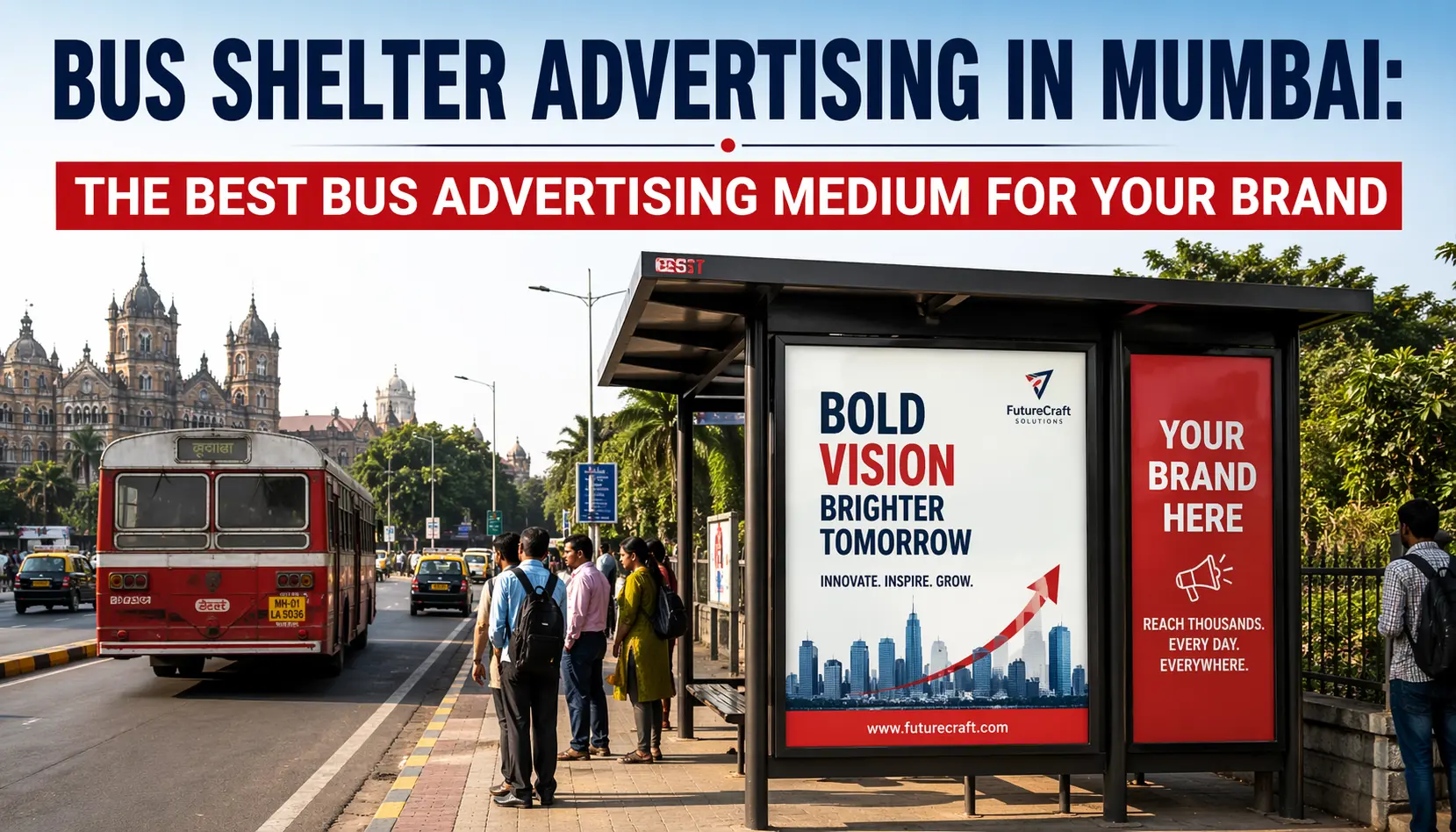
Bus shelter advertising means placing ads on the shelters and waiting areas at bus stops. These ads can be posters, backlit panels or digital screens mounted at shelters. In Mumbai’s dense urban environment, every bus stop is a potential mini-billboard . With 2,680+ BEST buses (Mumbai’s public fleet) carrying roughly 2.5 million riders daily , the city’s transit network is enormous. Each of those passengers spends minutes at shelters waiting for their bus – a captive audience for your brand. In fact, advertisers gained the rights to 258 bus queue shelters (with backlit panels) in Mumbai, all described as “vantage points” for high visibility .
At each shelter, posters sit at eye level for pedestrians, scooter riders, and waiting passengers . Campaigns here see repeated exposures : commuters often pass the same shelters on their daily route. This makes bus shelters a powerful way to boost brand recall. As a SmartAds analysis notes, transit ads achieve “mobile ubiquity and high frequency,” often costing far less per impression than TV or large hoardings . In short, bus shelter ads turn routine waits into marketing moments.
You might wonder: Do people actually pay attention to shelter ads? The data says yes. Outdoor advertising reaches nearly everyone on the street – studies show about 98% of urban consumers see outdoor ads, with an average of 12 daily exposures . In practice, a single well-placed bus shelter ad in Mumbai can rack up thousands of impressions per week. One SmartAds estimate found a wrapped bus can generate 30,000+ impressions per day ; shelters at busy junctions amplify that exposure.
What’s more, Mumbai commuters spend a lot of time in transit. Urban Indians average 45–60 minutes on public transport daily. When a person waits 5–10 minutes at a bus stop, they have time to notice and even “read” shelter ads. The advantage is clear: shelter ads capture attention during dwell time . By contrast, a highway billboard gets a split-second glance; a shelter sign meets the eyes of a relaxed or idle audience. And because many riders travel the same routes every day, these ads turn into familiar reminders – one SmartAds case found repeated exposure on transit builds brand recall much stronger than a one-off impression.
High visibility is built in. Shelter ads are often backlit and positioned at major corridors, pedestrian crossings or shopping areas. In Mumbai, media reports point out these bus queue shelters are “located at vantage points in the city”. That means your brand message sits right in the line of sight of shoppers, students and office-goers during peak footfall. Even drivers stuck at a red light see the panels. Overall, transit (bus) advertising has grown from ~25% to ~35% of India’s outdoor media spend recently, and is projected to hit 40% by 2026 – proof that brands are flocking to this channel for its proven audience reach.
Bus shelter ads in Mumbai reach a diverse commuter crowd . Think office employees, students, shoppers and even tourists. For many Mumbaiites, buses are a lifeline – the BEST network alone carries millions per day. These riders cover the entire city, so shelters serve hyper-local targeting : ads on a South Mumbai route hit a different audience than one in Thane or Navi Mumbai. Brands can choose shelters near schools, markets or tech parks based on their target audience .
Because shelters sit in local neighborhoods, they create a “locality effect.” Families, working professionals and college kids walking past regularly begin to associate your brand with their daily routine . A parent seeing a grocery store ad at her neighborhood stop every evening builds familiarity. Meanwhile, passerby and vehicular traffic benefit too: anyone walking or driving near the shelter gets a free second exposure. Studies note platforms like bus stops have an upscale, attentive audience during waits, often more so than a billboard along a highway. For example, a busy Bandra stop sees tens of thousands of commuters and pedestrians each day. Even after BEST fare hikes shrank ridership, the number was still around 2.5 million daily – all potential eyes on a shelter.
Brands also gain demographic insights . If you want young professionals, pick shelters on IT park routes in Andheri; for college kids, target campus-area stops. Campaign tools let planners “localize” ads for specific zones. This local precision is how bus shelter media enables brands to blend broad reach with targeted impact . Unlike metro ads or airport ads which draw general crowds, shelter ads tap public transportation riders at street level. In Mumbai and neighboring Maharashtra cities (Navi Mumbai, Thane, Pune, even Nagpur), this means covering densely populated belts where billboards might not exist or be too big. In short: if your target audience includes any regular city commuter or passerby, bus shelter advertising gets your brand in front of them – literally where they wait.
Bus stop ads in Mumbai come in various formats . The simplest is a printed poster panel inside the shelter, often backlit at night. These can be standard or larger “large formats” spanning the whole shelter facade. High-traffic stops sometimes have illuminated (backlit) displays for extra pop, or even digital LED panels that show rotating creatives. Advanced shelters may offer interactive bus stops with QR codes or NFC triggers – e.g. a digital kiosk that people can tap for offers. While truly digital bus shelters are still emerging in India, some premium downtown stops already feature bright LED screens that switch ads.
The choice of format depends on campaign goals and budget. Static posters are cost-effective and ideal for 24/7 presence. Backlit ads enhance impactful visuals , making colors pop day or night – important in Mumbai’s glare. (some report notes the 258 Mumbai shelters are “backlit,” maximizing night-time readability.) Digital shelters, where available, allow animation or quick updates, but come at a higher price. Advertisers can also wrap the bus queue shelter frame itself in vinyl for a more immersive “shelter branding” look.
In practice, campaigns often mix formats. For example, a launch might put branded static posters on 50 shelters citywide, then supplement with a few animated screens in Andheri and Bandra to capture attention . Smart creative tips include using bold imagery (a funny cartoon or 3D prop) since shelters sit at eye level. Anecdotally, the System1 study found humor and simplicity drove the most engagement on transit creatives. Whatever the choice, every shelter is strategically placed – intersections, malls, hospitals, schools – meaning your ad is integrated into the urban fabric. The result: thousands of “mini-campaigns” running in parallel across the city.
How do shelter ads compare to billboards, hoardings, or other out-of-home (OOH) media? Bus shelters typically cost far less than prime large-format hoardings or digital signages, yet still deliver strong recall. SmartAds data finds transit media often runs at a fraction of the CPM of TV or static billboards. In practice, a single billboard can cost lakhs per month, whereas a bus shelter with decent footfall might run in the tens of thousands. (Industry guides note global shelter ads go for roughly Rs.80k–Rs.240k – often far below a similarly placed hoarding.)
Cost aside, shelter ads have unique advantages. They are inherently hyper-local : a huge billboard on a highway reaches any driver, but a shelter at a neighborhood corner specifically reaches the local community . This makes them ideal for small businesses and local branches. They also enjoy protected real estate : unlike a roadside poster that can be hard to see in daytime glare, shelter ads have backlighting and a captive audience. Billboards rely on speed (targets moving vehicles) and hoardings rely on size; bus shelters rely on proximity and frequency.
For an advertising agency or media planner in Mumbai, bus shelters thus fill a gap. They complement broad OOH with focused brand-building touches . For example, a store might run billboard ads citywide but use nearby bus stop ads to drive footfall in one area. According to SmartAds, a unified OOH campaign (billboard + bus shelter + radio) can multiply impact – each channel reinforces the other. In short, while large hoardings raise awareness at scale, bus shelters punch above their size by targeting the right people repeatedly. They’re a cost-effective advertising solution especially when budgets are modest or when you want to dominate a specific catchment.
Successful campaigns start with strategy. First, identify your target audience and location : Which commuters do you want to reach? Do market research or use SmartAds analytics to map which routes serve your segment. Then select the shelters along those routes. For example, a brand targeting tech workers might pick shelters in Andheri East or Navi Mumbai IT hubs. A retail chain might pick shelters near shopping districts and residential areas. This hyper-local planning ensures you’re “planting” your message where your customers already are.
Next, define your message. Bus shelter ads should be simple and bold – people have only seconds to absorb them. Use large logos, clear calls-to-action, and visuals that pop in Mumbai’s busy streets. SmartAds advises syncing shelter ads with your other media: using the same slogan or theme on a shelter poster and a social video can greatly boost recall. Many planners add QR codes or short URLs on shelters to capture more engagement (especially effective if the creative piques curiosity).
Timing and frequency matter too. Shelters run 24/7, but tailor your booking duration to your campaign. Short promotions (1-2 weeks) can create bursts of awareness, while long-term branding needs multi-month leases. Agencies often negotiate packages – longer contracts at a few shelters can be more affordable. Remember, shelters have inventory limitations : not every shelter is available to all advertisers at once. Working with an experienced media planner or an advertising agency in Mumbai that specializes in transit can help navigate booking schedules, contracts, and permits.
Finally, integrate. The smartest campaigns use shelters as part of an omni-channel mix. For example, if a radio ad airs in the morning on Mumbai stations, place complementary messages on bus stops near train stations (where radio is playing). Or if launching in festival season, cover shelters along the main procession routes. According to media planning insights, a comprehensive approach (shelters + billboards + metro panels) “can dominate high-value traveler touchpoints”.
Budgets for bus shelter advertising vary. In general, shelter ads are very cost-effective compared to other channels. For perspective, SmartAds notes transit placements (like bus sides) can start around Rs.50,000 for small runs. Local data suggests international shelter ads average $1,000–$3,000 per month, which translates to roughly Rs.80,000–Rs.240,000 in India. Prime shelter locations (like airport bus stops or main junctions) can command higher rates within that range, while smaller suburban stops cost less.
The final rate depends on size, illumination and duration . Backlit or digital shelters cost more than plain prints. A 6-month contract usually gets a discount vs. a 1-month booking. Some agencies bundle multiple shelters for a package rate. Overall, bus shelter ads tend to be more affordable than billboard hoardings or mall screens, making them attractive for brands seeking high visibility on a modest budget.
Crucially, don’t overlook the ROI. Because shelters target high-footfall, they can deliver thousands of targeted impressions daily. One study found even a short shelter campaign saw measurable lifts in store visits and brand queries. In terms of CPM (cost per thousand impressions), bus shelters often beat radio or newspaper ads. In other words, the “bang for buck” is strong . Marketers should calculate total reach (impressions × frequency) when comparing rates. And remember, as SmartAds data confirms, saturation transit campaigns can significantly boost brand recall for a fraction of big media costs.
Let’s look at a couple of examples. SmartAds reports that a full-city bus branding campaign for a retail chain in Delhi drove a 25% jump in unprompted brand recall . In Mumbai, similar tactics apply. For instance, a home appliance brand once wrapped hundreds of buses (a cousin to shelter ads) and saw huge brand lift, which suggests that a coordinated bus-shelter presence would complement such gains.
At a more local level, consider a cafe in Andheri. By booking bus shelter panels at the nearby bus depot and university stop, the cafe could boost walk-ins by alerting commuters about its morning coffee offers. Another example: During a city festival, a cinema used shelters around suburban stations (Thane, Navi Mumbai) to run movie posters, leading to sold-out shows on opening weekend. These campaigns worked because they matched ad placement to the audience’s journey .
Even small brands see wins. A Mumbai NGO promoting a health camp placed posters on shelters near hospital routes and clinics. The result was a high turnout – buses literally brought people to the ad. The campaign ROI was tracked by counting sign-ups via a code on the shelter posters. Reports showed about 8,000 sign-ups traced to seeing the ads. This kind of data-driven case study shows how a clear call-to-action on a shelter can be traced to real-world outcomes, blending offline impact with measurable response.
Although detailed Mumbai case studies are scarce publicly, the evidence is clear: contextual, well-placed bus shelter ads drive awareness and footfall . Creative formats like wrap-around panels or interactive QR-driven displays tend to outperform plain posters. One national trend note: bus shelter campaigns are particularly effective in promoting events, retail launches, and FMCG brands in India, where audience familiarity often correlates with purchase.
The world of bus shelter advertising is evolving. Across India’s metros, we’re seeing growth in digital bus shelters and smart shelters. For example, Mumbai is piloting LED-enabled shelters that can run video ads. This aligns with the global move towards digital OOH (DOOH), where content can be updated in real-time. Another trend is interactive bus stops – imagine a shelter that responds to a touch or shows weather-based creative. While still rare in India, early signs suggest top advertisers will trial these tech touches.
Hyper-local marketing is another big trend. Brands now use GPS data to geo-target social ads in parallel with shelter ads in the same neighborhood – creating a multi-touchpoint blitz. Media planners recommend syncing radio spots with nearby bus stops, or using festive selfies with a shelter hashtag to go viral. Even classic theaters and malls tie-in by placing walk-in offers on nearby shelters.
Environmentally, there’s a push for green shelters (solar-powered lighting) – good PR for brands. Some shelters now double as mini-charging stations or Wi-Fi hotspots with sponsorship, which subtly boosts digital engagement around the ad.
Lastly, policy changes affect trends. The city’s new outdoor ad policy (2025) opens more shelters for private ads, and similar to Delhi’s metro auctions, Mumbai may see more structured tenders. That means more inventory and possibly more competition among advertisers – driving innovation in how shelters are used. In short, bus shelter advertising in Mumbai is becoming more tech-enabled and data-driven. Brands that experiment with dynamic content and hyperlocal placement will stand out.
Remember : Strategic placement, compelling creative and integration with your overall media plan will maximize the impact of your Mumbai bus shelter campaign.