SmartAds
|
Media: BTLBack-of-Bus Advertising: A High-Impact Mobile Billboard for Your Brand
In today’s bustling urban environment, outdoor advertising takes many forms – and back-of-bus advertising has emerged as a high-impact way to get brands noticed on the move. This guide will explain how back-of-bus (a type of outdoor advertising ) ads work, who they reach, and how to make them work for your brand using the latest data and trends. We’ll cover campaign planning, creative formats, measurement, and real-world case studies (including SmartAds insights) so marketers and media planners understand why this form of out-of-home advertising is worth considering. For example, one analysis found that 30 million people see a bus advertisement each week – underscoring the broad reach of this mobile billboard. Read on to discover why leveraging bus rear panels can drive your next marketing campaign.
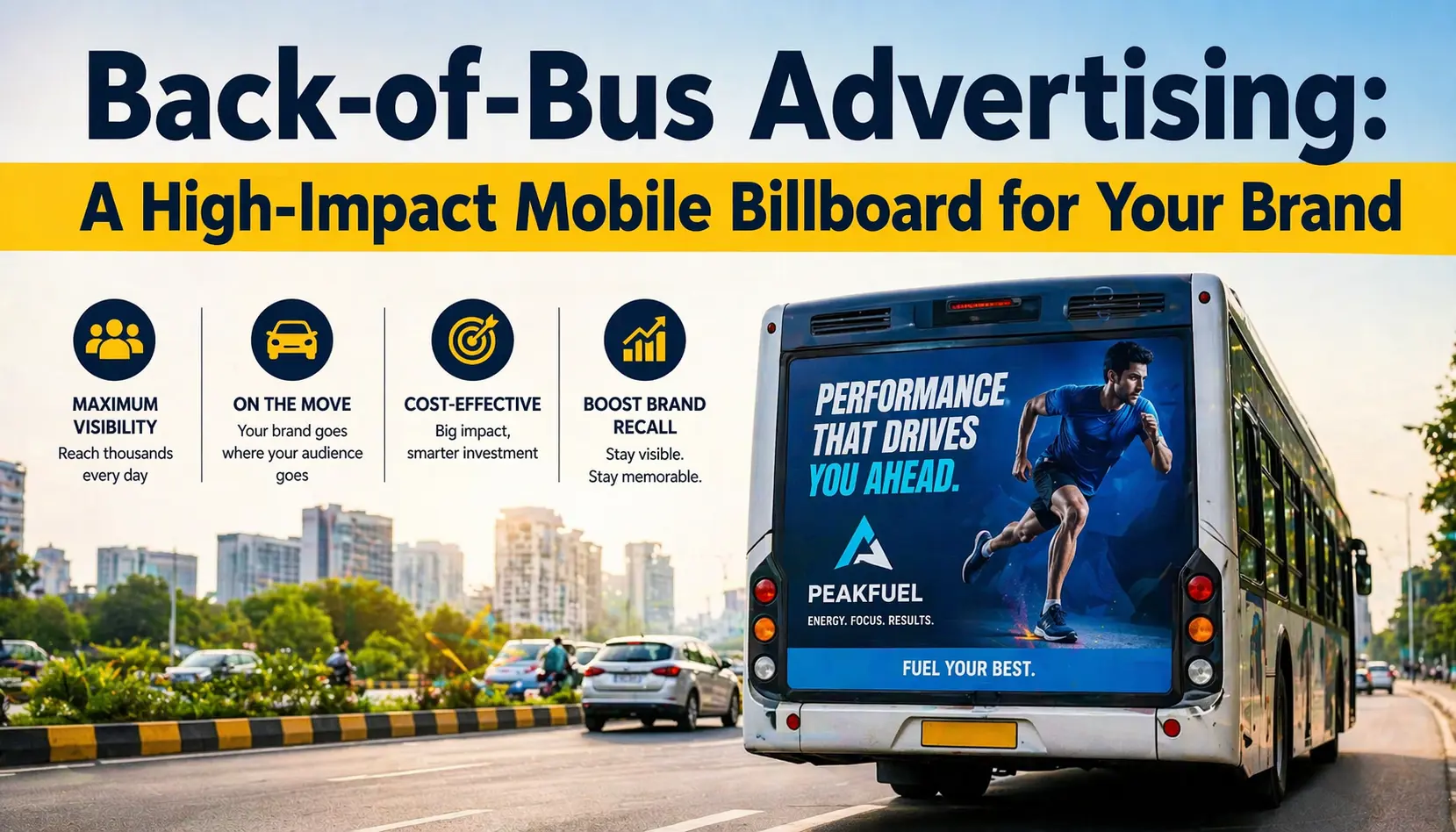
Back-of-bus advertising (also known as bus rear or bus-back advertising) is a transit marketing format that turns the rear panel of a public bus into a giant billboard. Advertisers cover the bus’s tail panel with branded artwork, effectively using the entire back surface as a display to promote a product or message (in transit terms, the back of bus panel). This bus ad travels city streets just like any other vehicle, exposing your brand to motorists, commuters, and pedestrians along the route. Buses typically have front, side and rear panels (also known as back panels ) for ads; here we focus on the rear panel. Since the bus’s back faces trailing traffic, it delivers the message directly to drivers and passengers in cars behind. In fact, industry experts note that back-of-bus ads “speak directly to drivers” and are ideal for targeting motorists. Advertisers use durable vinyl wraps or self-adhesive posters for these rear panels. In other words, back-of-bus ads give your brand high visibility on a flexible, mobile vehicle billboard (sometimes simply called “back of bus” advertising) that can reach a new audience on every trip.
Back-of-bus ads reach a diverse urban audience. When a branded bus travels through the city, its rear panel is seen by all motorists and passengers following in traffic, as well as by pedestrians at intersections and bus stops. In effect, the bus advertisement is exposed to everyone in the busy downtown flow. Studies underscore the scale of this reach: one analysis found that 30 million people saw a bus advertisement in a single week, and about 90% of people live within five minutes of a bus route. This means your bus campaign can pass in front of millions of potential viewers.
Moreover, the audience is relatively captive. Drivers stopped at signals and waiting passengers become a focused audience for a few moments as the bus idles. Research shows transit advertising generates strong recall – around 86% of bus commuters could recall seeing a bus advertisement. SmartAds notes that a well-wrapped city bus can generate over 30,000 impressions per day as it winds through traffic, crossing multiple neighborhoods. In short, by riding through high-traffic corridors, a single wrapped bus repeatedly puts your brand in front of thousands of commuters in one day, delivering broad citywide reach and repeated exposure.
Back-of-bus advertising offers marketers several advantages. First, it provides high-impact visibility . A moving bus billboard naturally attracts attention on city streets, especially in congested traffic. Because buses often stop in dense urban areas or at bus stops, the creative has extended exposure – drivers in stalled traffic will see the same ad repeatedly. This high frequency is a powerful way to build brand recall. In fact, transit media tends to cost less per impression than many other channels: SmartAds reports that their Delhi bus campaigns delivered about 30,000 impressions per bus per day at a CPM well below that of TV or large billboards. In practice, this means a transit advertising campaign can blanket a city at a fraction of the cost of a TV or print buy, delivering high ROI for budget-conscious advertisers.
Second, bus rears offer a targeted yet broad reach. Because buses run fixed routes, you can align a campaign with your audience. For example, place ads on buses that connect business districts during weekdays to reach professionals, or target routes near college campuses to hit students. The mobility of buses provides unmatched flexibility: routes and schedules can be chosen or rotated to match demographics or promotional timing. This contrasts with static billboards, which are fixed in one place. SmartAds often executes a fleet “takeover” strategy – wrapping multiple buses with the same creative across the city – to maximize impact. One such campaign in Delhi used 60 fully wrapped buses and achieved a 25% jump in unprompted brand recall.
Finally, bus advertising is cost-effective and trusted . Production costs (vinyl prints) are relatively low and ads last weeks or months. The medium often resonates well with audiences; some studies suggest consumers notice and remember bus ads better than many static ads. And because buses are part of public transit, they often carry a positive association – a bus ad feels like part of the city environment. In short, a back-of-bus ad is a bold, attention-grabbing format that helps brands stay top-of-mind among drivers and passengers alike.
Planning is critical to success. Start by defining your target market and mapping bus routes that intersect their daily paths. For instance, to reach tech professionals, target buses on weekday runs through IT parks or business districts. For a retail promotion, choose routes near shopping malls or busy markets on weekends. Traffic studies and transit data can guide these choices. Transit ads are often sold by route and duration. In India, SmartAds notes that single-bus placements can start around Rs.50,000 per month in major cities, with higher prices for premium corridors. Plan your budget and buy multiple buses if possible: covering several vehicles at once creates frequency and citywide saturation.
Next, coordinate with transit authorities or a knowledgeable media partner . They will handle permits, placement specifications, and technical details (e.g. avoiding lights or windows). A smart strategy is to book multiple buses and stagger them across different corridors – this “fleet” approach multiplies frequency and coverage. For example, SmartAds advised a fintech brand to target buses linking Gurgaon and Noida to Delhi’s tech hubs. By adding unique promo codes on each route, the campaign directly generated over 8,000 app sign-ups and cut customer acquisition costs by 30%, illustrating the power of targeted route planning and tracking.
Finally, integrate your bus ads into your broader marketing plan. Use strong CTAs like QR codes or trackable URLs on the back panel so you can measure response. Align the campaign with seasonal or local events (festivals, product launches) to boost relevance. With careful route selection, compelling creative and strategic timing, back-of-bus advertising becomes a powerful, targeted extension of your media plan. A good agency partner will handle creative production and execute the rollout – ensuring flawless installation and compliance with transit regulations.
Creativity is key to making a back-of-bus ad memorable. The standard format is a large vinyl wrap or panel covering the entire rectangular back of the bus. Designers use bold graphics, high-contrast colors and minimal text (usually a big logo or headline) so the message is clear even in passing traffic. Some advertisers only cover the lower rear panel (leaving the upper window area clear), while others wrap the full back. Unique cutouts around rear lights or bumpers can also add visual interest.
Overseas campaigns have shown that vehicle wraps can be stunning.Many campaigns use full bus wraps (sides and back) to immerse viewers in the brand. Double-decker buses offer even more space – in fact, double-decker buses have two levels of rear panels, effectively doubling the ad’s exposure on a single vehicle. For example, Kerala Tourism wrapped London’s iconic double-deckers in vibrant imagery of backwater scenery. Designers should aim for simplicity and boldness – too much detail is lost at speed. The creative should also match the campaign theme (e.g. festive imagery, humorous characters, or a clear promotional message).
Some advertisers take creativity even further. Designers sometimes use partially transparent window coverage techniques (perforated vinyl) on the rear windows to extend the image without obstructing the driver’s view. In other cases, 3D elements or props (like a giant product model protruding from the bus back) can create memorable, shareable ads. QR codes or simple phone numbers added to the rear panel turn the ad into a direct response tool. No matter the format, the goal is impact: a well-designed back-of-bus ad that’s clever, bold or interactive grabs attention and can even spark social media buzz – making the ad truly impactful .
Most back-of-bus advertising today is static: printed graphics on vinyl. However, digital innovations are emerging. Some cities are piloting LED panel buses or video screens mounted on buses, allowing animated or rotating ads. These digital bus ads can cycle through multiple messages and grab eyeballs with motion, though they require more power and higher production costs. For example, one industry report notes that by 2026, some buses in India began testing GPS-based dynamic displays and LED screens.
Despite these advances, static bus wraps remain highly effective and far more common. Once installed, static graphics have proven impact with virtually no running cost. That said, many bus campaigns now include digital touchpoints: unique URLs or QR codes on the wrap, mobile app integrations, and even AR filters to bridge the physical ad with online content. Programmatic OOH platforms are also making it possible to automate bus ad buys. In short, buses are becoming more data-driven and flexible, but the classic printed bus wrap continues to deliver strong results today.
Evaluating success is vital for any transit campaign. Fortunately, modern tools make bus ads quite measurable. A common tactic is to include trackable calls-to-action on the rear panel – such as a custom promo code, QR code or vanity URL. SmartAds reports that one fintech client added unique promo codes to each bus ad and saw over 8,000 app sign-ups tied to the campaign. Similarly, a SmartAds transit campaign for a quick-service retailer in Delhi boosted the store’s foot traffic by about 30% in three months, demonstrating that well-designed bus ads can drive offline response.
Agencies also use GPS and analytics to estimate digital metrics. By tracking a wrapped fleet’s route and stops, one can calculate impressions (for example, counting miles traveled or intersections crossed). Brand-lift surveys are another tool: measuring awareness before and after a campaign quantifies recall gains. In one industry study, about 80% of consumers said they would respond to seeing an advertisement on a bus , highlighting the strong engagement potential. The upshot is that a well-planned back-of-bus campaign can be evaluated much like any other channel: you can track website visits, coupon redemptions, app downloads or sales during and after the campaign to gauge ROI.
The OOH transit market is evolving fast. Data-driven buying (programmatic OOH) is gaining traction, allowing advertisers to automate purchases of bus ad space. Brands are layering technology onto transit: GPS and real-time data can trigger contextually relevant content (e.g. an ad for coffee when the bus nears a business district at 8AM). Interactive campaigns with social media hashtags, AR experiences or in-bus WiFi integration are also emerging. Sustainability has become a buzzword: many agencies now offer eco-friendly, PVC-free vinyl and recyclable materials for greener wraps.
At the same time, transit itself is expanding. In 2024, India’s OOH market grew 10% to 59.2 billion, and transit media now accounts for about 28% of that spend. With new metro lines, airports and dedicated bus corridors opening, the inventory for mobile ads is only increasing. For marketers, this means bus advertising will continue to be a flexible, high-traffic media format. Staying on top of trends (like mobile integrations, high-traffic planning and innovative graphics) will help ensure your campaigns stay ahead of the curve.